Fernweh: Home
ExploreGuideDestinationsMy tripsMy trip
de|en
All Places & RegionsRound tripsNight trains in EuropeAll highlightsAbout FernwehFAQPrivacy PolicyImprint
Download on the App StoreGet it on Google Play
ExploreGuideDestinationsMy tripsMy trip
    • Neighborhoods & highlights
    • Recommendations
    • Walking tours
    • Eat & drink
    • Food culture
    • Culture
    • Nightlife
    • Getting around
    • Accommodation
    • Plan trip
    • Nearby
    The City of London

    Photo: Unsplash

    Great Britain

    The City of London

    CityCulture

    The City of London, the "Square Mile" for short, is London's oldest part: Here the Romans founded Londinium around 47 AD, and its boundaries largely follow the medieval city wall to this day.

    by Felix Gillen

    1. Home
    2. Destinations
    3. Great Britain
    4. London
    5. The City of London
    The City of London, the "Square Mile" for short, is London's oldest part: Here the Romans founded Londinium around 47 AD, and its boundaries largely follow the medieval city wall to this day. The City has its own Lord Mayor and police force and, with banks, insurance companies, and the Bank of England, is one of the world's most important financial centers.Between skyscrapers like The Gherkin and the Walkie Talkie stand Wren's churches, which were built after the Great Fire of 1666, especially St Paul's Cathedral. During the week, the City is full of office workers; on weekends, it's noticeably quiet, and many pubs and restaurants are closed.
    Great Britain travel guideRound trips in Great BritainPlan a trip with The City of London

    Contents

    • Neighborhoods & highlights
    • Recommendations
    • Walking tours
    • Eat & drink
    • Food culture
    • Culture
    • Nightlife
    • Getting around
    • Accommodation
    • Nearby

    Sights in The City of London

    Discover the most important sights and attractions

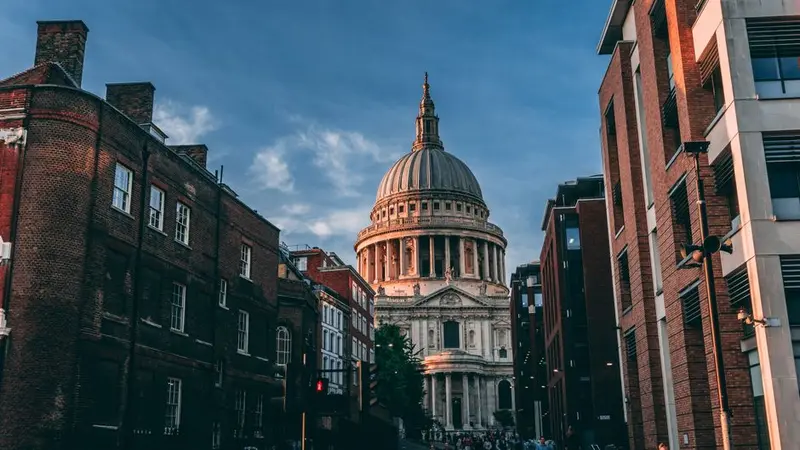
    St Paul's Cathedral

    Photo by Chait Goli on Pexels

    1St Paul's Cathedral

    St Paul's Cathedral on Ludgate Hill is Christopher Wren's masterpiece, built between 1675 and 1710 after its medieval predecessor was destroyed in the Great Fire of 1666. Its dome, approximately 111 meters high, shaped the city's skyline for centuries; during World War II, a photo of the intact dome amidst Blitz smoke became a symbol of perseverance.Ascend 257 steps to reach the Whispering Gallery, where a word whispered against the wall can be heard on the opposite side, and higher up, the Stone and Golden Galleries, offering views over London. In the crypt lie Nelson, Wellington, and Wren himself. Entry for sightseeing visits is subject to a fee; access to services is free.
    Open in Google Maps
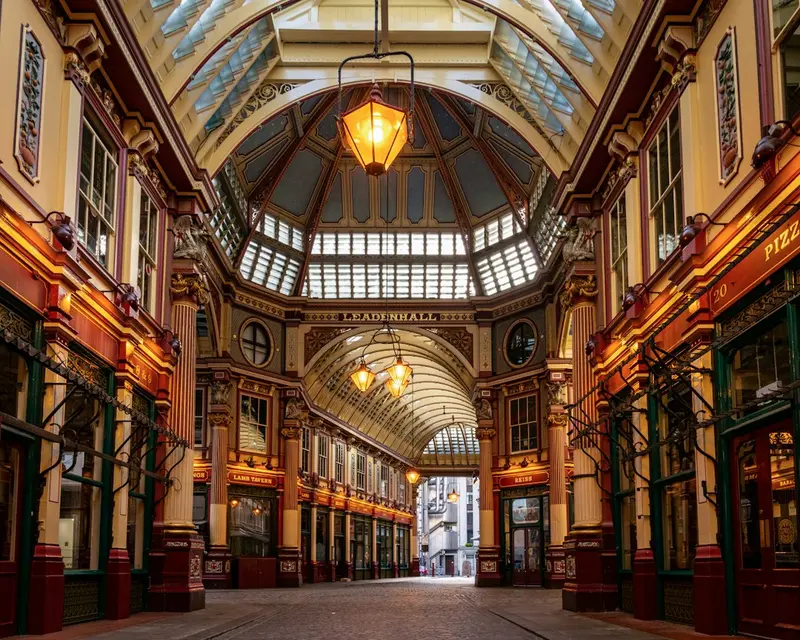
    Leadenhall Market

    Photo by Nicolas Lysandrou on Unsplash

    2Leadenhall Market

    Leadenhall Market stands on the site of the Roman Forum of Londinium, the centre of the ancient city. The location has been documented as a market since the 14th century, initially for poultry and game. The current hall with its glass roof, cast-iron girders, and painted stucco was designed in 1881 by Horace Jones, the same architect who also planned Tower Bridge and Smithfield Market.The passages are framed in green, wine red, and cream, and appear most lively in the evenings when the clientele from the financial district flocks to the pubs. Wine merchants, cheesemongers, and tailors have maintained their presence in the shops. The passage served as a filming location for Diagon Alley in the Harry Potter film adaptation. On weekends, the market is largely closed, like the entire financial district.
    Open in Google Maps
    Sky Garden

    Photo by How TO on Pexels

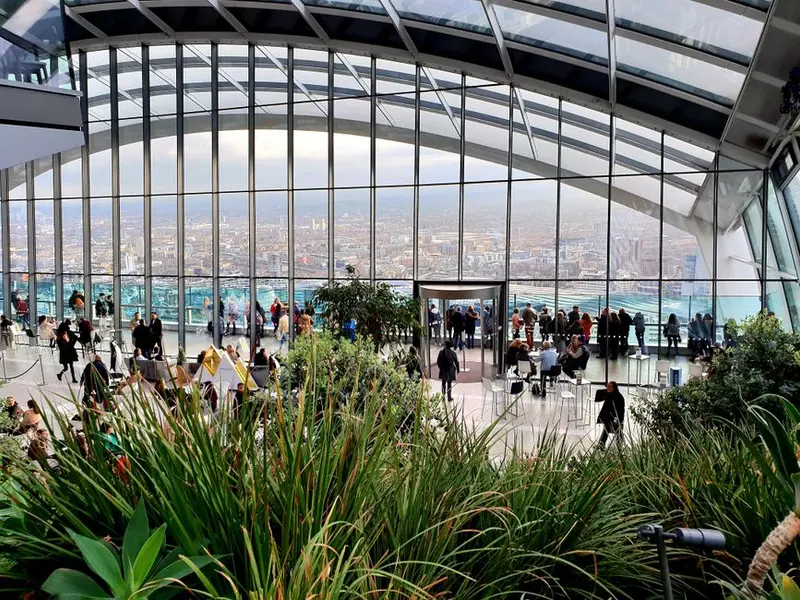
    3Sky Garden

    The Sky Garden is located on the top three floors of the skyscraper 20 Fenchurch Street, which is called the Walkie Talkie due to its outwardly curving shape. The rooftop gardens were the condition under which the city approved the controversial construction: publicly accessible space in exchange for building volume.Beneath the glass barrel vault, Mediterranean and South African plants grow on terraced beds. The viewing platform at 155 meters overlooks Tower Bridge, the Thames, and The Shard. Admission is free, but requires a timed entry booking in advance. In 2013, the concave facade focused sunlight so intensely that it melted car parts on the street; louvers have since remedied the problem.
    Open in Google Maps
    Barbican Centre

    Photo by Artem Zhukov on Pexels

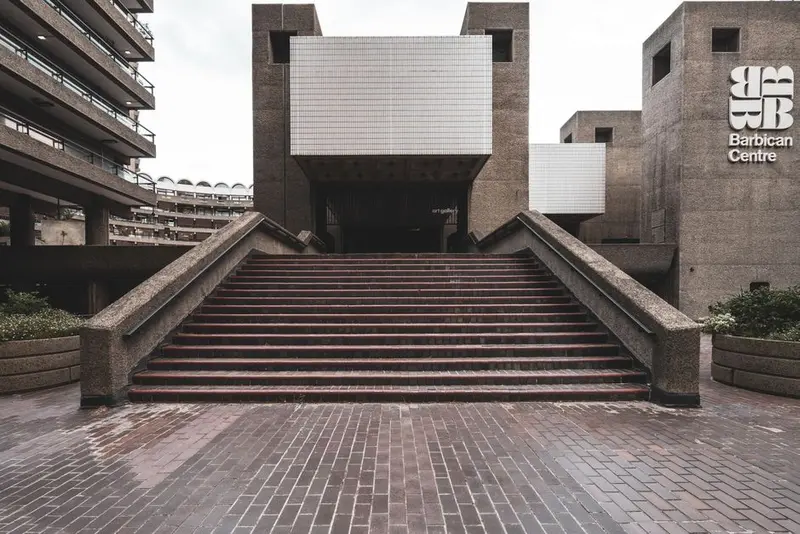
    4Barbican Centre

    The Barbican was built starting in the 1960s on a site completely obliterated by World War II air raids. Chamberlin, Powell and Bon designed a residential complex for around 4,000 people, featuring elevated pedestrian walkways, water features, and three residential towers, which were then London's tallest.The exposed concrete was hand-roughened with picks after curing, giving the facades their distinctive rough texture. At its heart, the Barbican Centre stands as Europe's largest multi-arts venue under one roof: home to the London Symphony Orchestra's concert hall, two theatres, cinemas, a gallery, and a tropical conservatory. The complex is regarded as a masterpiece of British Brutalism and continues to polarise opinion. Navigation can be challenging, but yellow lines on the floor provide guidance.
    Open in Google Maps

    City walks in The City of London

    Curated walking tours through the city's highlights, handpicked by experienced travel journalists.

    The Heart of London: History, Glamour and the Gherkin
    Discover the City of London, the historic and financial centre of London, on this 2-hour walk. From majestic St Paul's Cathedral to the imposing Tower of London, experience centuries of history, impressive architecture and pulsating city life. Immerse yourself in the stories of the Romans, the Great Fire and the modern financial world.
    ~2 Std. 15 Min.
    Open in Google Maps
    Stops (6)

    Restaurants in The City of London

    1

    Cloth Cornhill

    In Ball Court, an alley off Cornhill, Simpson's Tavern, one of the city's oldest chophouses, stood since 1757. After its closure in 2022, the team from Cloth restaurant in Farringdon reopened the premises in autumn 2026. British cuisine is served: grilled chops, steaks, and pies, while downstairs at the bar, small dishes like Welsh Rarebit or sausage rolls are available.
    Show on Google Maps
    2

    Hawksmoor Guildhall

    Huw Gott and Will Beckett's London steakhouse group operates a wood-paneled basement restaurant on Basinghall Street near the Guildhall. They grill British pasture-fed beef, served with beef dripping fries, Yorkshire Puddings, and crab on toast. During the week, many business people from the City dine here, so book for the evening.
    Show on Google Maps
    3

    Sweetings

    This wood-panelled fish restaurant on Queen Victoria Street has been serving oysters and fish since 1889, and it opens only at lunchtime, Monday to Friday. Many guests sit on stools at the counter. The menu is printed daily; classics are fish pie, smoked haddock with poached eggs and Dover sole, washed down with Black Velvet, Guinness and champagne served in a pewter tankard.
    Show on Google Maps

    Food & Drink

    The **City of London's dining scene** reflects its role as a financial hub, offering a diverse selection from traditional pubs to upscale restaurants. Around St Paul's Cathedral and Leadenhall Market, you'll discover modern British dishes as well as diverse international cuisine.

    Traditional Pubs

    Pubs like Ye Olde Cheshire Cheese, The Blackfriar, and the Jamaica Wine House partly date back to the 17th century.

    Smithfield

    Around the wholesale meat market on the edge of the City, you'll find restaurants serving British meat cuisine, including St. JOHN.

    Rooftop bars

    Skyscrapers house bars with city views, like the Sky Garden; reservations are often needed.

    Culture, Architecture and History of the City of London

    The City of London, often referred to as the “Square Mile,” looks back on over two thousand years of history, beginning with its founding as Roman Londinium. Over the centuries, it evolved into a central trading hub and the financial heart of Great Britain. A turning point was the Great Fire of London in 1666, which destroyed large parts of the city, but paved the way for extensive redevelopment that significantly shaped its current architectural identity.The City’s architecture is a fascinating blend of history and modernity. Masterpieces like St. Paul's Cathedral, designed by Sir Christopher Wren, and many of his surviving churches stand in stark contrast to contemporary skyscrapers dominating the skyline. Historic buildings such as the Guildhall, the Royal Exchange, and the Mansion House bear witness to the city's long tradition as a centre for trade and governance.Cultural peculiarities and traditions are deeply rooted in the City. These include the annual Lord Mayor's Show and the continued relevance of the ancient Livery Companies (guilds), which play a unique role in the administration and social life of the City. These institutions underscore the unique autonomy and rich cultural heritage of this historic financial centre.

    Nightlife

    1

    Ye Olde Cheshire Cheese

    A Fleet Street pub, rebuilt in 1667 after the Great Fire, with dark, winding rooms across multiple levels and vaulted cellars. Samuel Johnson, Charles Dickens, and Mark Twain reputedly drank here. Beer from Samuel Smith Brewery is served at relatively low prices; mobile phones and laptops are not welcome in their pubs.
    Show on Google Maps
    2

    The Blackfriar

    A wedge-shaped pub opposite Blackfriars Station, on the site of a medieval Dominican priory. Inside, it was fitted out around 1905 in the Arts-and-Crafts style with marble, mosaics, and bronze reliefs of jovial monks. In the 1960s, the poet John Betjeman successfully campaigned against its demolition. A pub to admire and for an after-work pint.
    Show on Google Maps
    3

    Jamaica Wine House

    A Victorian pub in narrow St Michael's Alley near the Bank of England, on the site where London's first coffee house opened in 1652. Its wood panelling and partitioned snugs date from the late 19th century. On weekdays after office hours, packed with City employees; closed weekends.
    Show on Google Maps

    Exploring locally

    Tube and RailBank, St Paul's, Liverpool Street, Moorgate, Farringdon and Tower Hill are key stations; the Elizabeth Line stops at Farringdon, Liverpool Street and Moorgate. Pay contactless or with an Oyster Card.On FootThe City is small enough to explore entirely on foot. The alleyways and courtyards between the main streets are often more beautiful than the main thoroughfares themselves.WeekendAt the weekend, many shops and establishments are closed, and some stations have reduced hours. However, the streets are empty, allowing you to admire the architecture in peace.

    Accommodations in The City of London

    Find perfect stay in The City of London

    Booking.com* (Affiliate link)
    Search Hotels
    Agoda* (Affiliate link)
    Search Hotels
    Airbnb
    Vacation Rentals

    * Affiliate link: if you book through it, we earn a small commission. The price stays the same for you.

    Campgrounds in The City of London

    Find perfect campground in The City of London

    Search via Google Maps
    Campgrounds nearby (15km)
    Camping.info
    Find Campgrounds
    Park4Night
    RV Parks & Camping

    Plan your trip to The City of London

    Save places, build a route and plan your city trip, all in one place.

    1. 1
      Sunrise over alpine peaks and a sea of clouds
      1234

      Round trip

      12 days · 4 stops

      Saved

      Pick a route

      Pick a ready-made one or save places and plan your own.

      Open bookmarks
    2. 2

      Trip to The City of London

      Live
      • 1St Paul's Cathedral3 days
      • 2Leadenhall Market4 days
      • 3Sky Garden5 days
      Budget

      Plan your trip

      The planner sorts stops, days and budget. Plan together in real time.

      Start trip planning
    3. 3
      9:41 No signal
      The City of London
      Available offline

      Photo: Unsplash

      Use it on the road

      Download the guide to your phone and use it on site, even offline.

    Nearby

    East End

    East End

    The East End begins east of the City of London and includes districts such as Spitalfields, Shoreditch, Whitechapel, and Bethnal Green. For centuries, it served as the city's arrival point: Huguenot silk weavers, Irish dockworkers, Eastern European Jews, and since the 1970s, families from Bangladesh successively shaped its streets.Today, Georgian weavers' houses, Victorian warehouses, and new office towers mix here. Brick Lane, with its curry houses and bagel bakeries, Spitalfields Market, and the bars of Shoreditch make the district one of London's liveliest. Sunday is the busiest day, when the markets are open.

    Alec Doualetas·Pexels

    South Bank

    South Bank

    The South Bank is the south bank of the Thames between Westminster Bridge and Tower Bridge. For centuries, this was London's entertainment district, outside the control of the City, with theaters, bear-baiting, and taverns; Shakespeare's Globe stood in Bankside. After the Second World War, the bank was transformed into a cultural hub with the Festival of Britain in 1951.Today, a continuous riverside path connects the London Eye, the Southbank Centre, the National Theatre, the Tate Modern, the Globe, and Borough Market. From here, you have the best views of Parliament, St Paul's, and the City on the opposite bank.

    Zeynep Elif Özdemir·Pexels

    West End

    West End

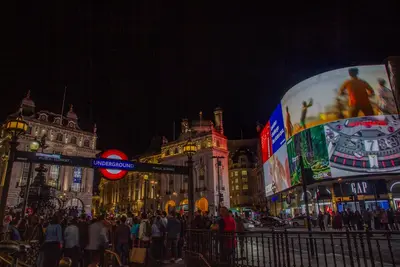
    The West End is London's entertainment and shopping hub, the area between Hyde Park, Oxford Street, Bloomsbury, and the Thames. It comprises neighbourhoods with unique character: Soho with its bars and restaurants, Covent Garden with market halls and street performers, Mayfair with luxury shops, and Theatreland around Shaftesbury Avenue and Leicester Square, home to around 40 theatres.Here you'll find the National Gallery at Trafalgar Square, the British Museum in Bloomsbury, and the shopping streets Oxford Street and Regent Street. The best place to buy theatre tickets is directly from the theatres or at the official TKTS booth on Leicester Square, not from street vendors.

    David Sams·Pexels

    London

    London

    London is the capital of the United Kingdom and, with around nine million inhabitants, one of Europe's largest cities. Along the Thames, two thousand years of history lie close together: the Tower, Westminster Abbey, and Parliament, plus world-class museums with free entry, the West End theaters, and neighborhoods that feel like separate cities.The city is too big for a single visit. Plan by neighborhoods instead of sights, and allow four to five days for a first overview.

    David Zherdenovsky·Pexels

    Westminster and St James's

    Westminster and St James's

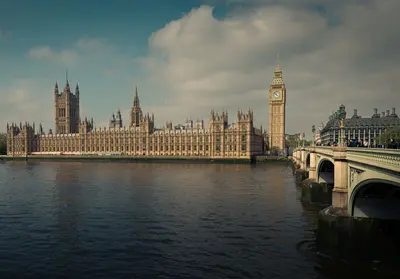
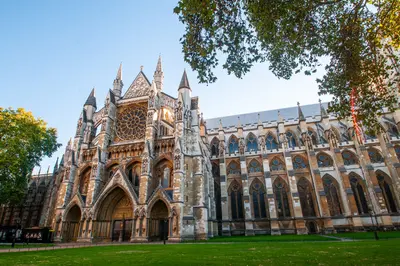
    Between the Thames, Whitehall and Buckingham Palace lies London's political and royal heart. Westminster Abbey and the Palace of Westminster together form a UNESCO World Heritage site; to its west, St James's Park adjoins, part of the chain of royal parks stretching to Kensington Gardens. To the north, The Mall leads to Trafalgar Square; beneath the government district lie the Churchill War Rooms. Most destinations here are easily reached on foot.

    William ZALI·Pexels

    Your next steps

    The City of London is in Great Britain. Ways to carry on from here.

    • More in Great Britain

      Highlights, areas, routes and the best time to travel for all of Great Britain.

      Great Britain travel guide
    • Round trips in Great Britain

      Ready-made routes through Great Britain, with stops, nights and a map.

      See the routes

    Sources & method

    • Photos: Unsplash, Pexels. Each photo carries its credit.
    • Place data such as addresses and ratings comes from Google Maps.
    • The content is based on web research from public, traceable sources. How the content is made · The role of AI