Fernweh
    ExploreTravel GuidesMy Trips
    de|en
    All Places & RegionsAbout FernwehImprintFAQPrivacy Policy
    ExploreTravel GuidesMy Trips
    West End

    West End

    CityCulture
    1. Home
    2. Destinations
    3. Great Britain
    4. London
    5. West End
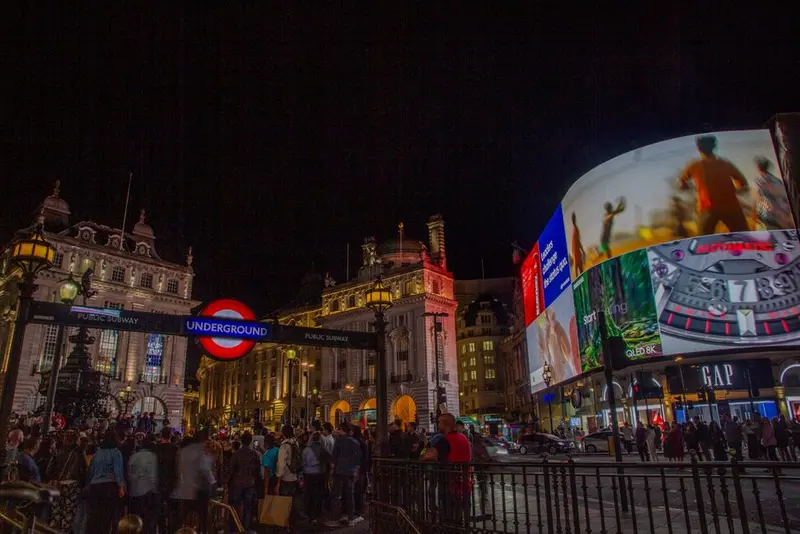
    London's West End forms the vibrant heart of the city's entertainment and culture. It's home to the famous Theatreland, with its numerous stages covering a wide spectrum from classical dramas to modern musicals. You'll find iconic landmarks like Piccadilly Circus with its distinctive neon signs, and the historic Trafalgar Square, home to the National Gallery. Beyond the cultural offerings, exclusive shopping on streets like Regent Street and Oxford Street define the district. Historically, the West End has been a significant hub for art and social life for centuries. To secure the best seats for a theatre performance, book tickets early, especially for popular shows. Ideally, plan your visit during the week to avoid weekend crowds.
    • Neighborhoods & highlights
    • Walking tours
    • Eat & drink
    • Food culture
    • Culture
    • Getting around
    • Excursions
    • Accommodation
    • Plan trip
    • Nearby
    • Neighborhoods & highlights
    • Walking tours
    • Eat & drink
    • Food culture
    • Culture
    • Getting around
    • Excursions
    • Accommodation
    • Plan trip
    • Nearby

    Overview

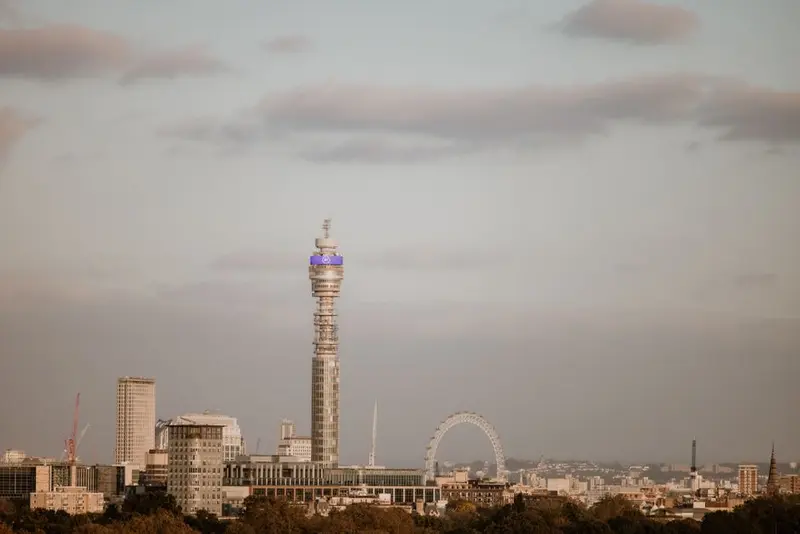
    London's West End represents the vibrant heart of urban entertainment and culture, a role it has held for centuries. Here you'll find the famous Theatreland, which with its numerous stages offers a wide spectrum of performances, from classical dramas to modern musicals. You'll discover iconic landmarks such as the bustling Piccadilly Circus with its distinctive neon signs, and the historic Trafalgar Square, home to the National Gallery. In addition to cultural offerings, exclusive shopping opportunities define the district, particularly in renowned streets like Regent Street and Oxford Street. Historically, the West End has long been a central meeting point for art, commerce, and social life. To secure the best seats for a theatre performance, it's advisable to book tickets early, especially for popular shows. Ideally, plan your visit during the week to avoid the largest crowds on weekends and experience the atmosphere more relaxed.

    Places in West End

    Discover the most important sights and attractions

    Sights in West End

    National Gallery

    1National Gallery

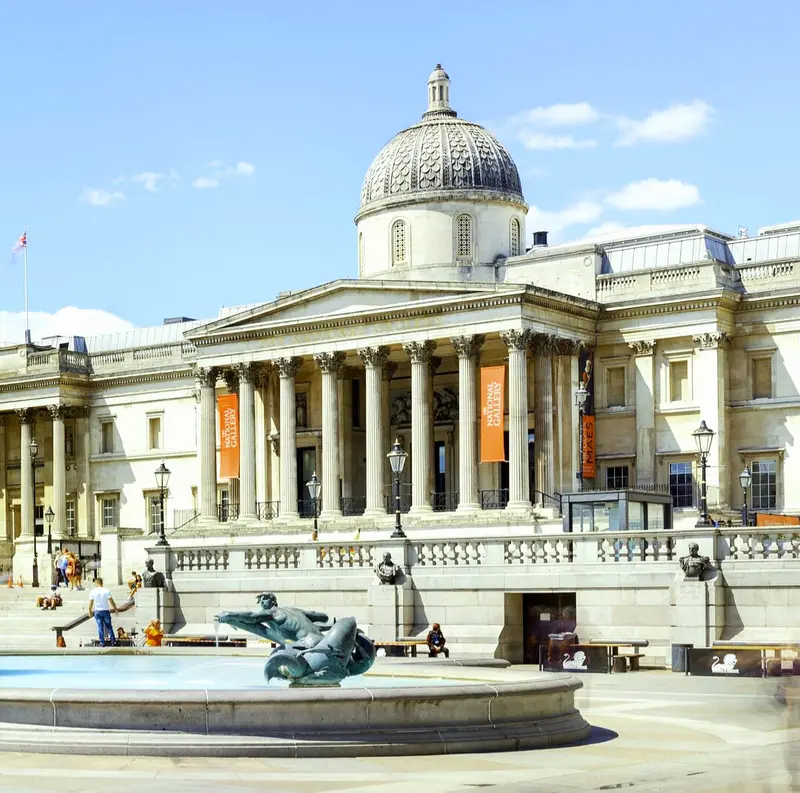
    The National Gallery, an outstanding art museum, is prominently situated on Trafalgar Square in London. Here you'll find one of the world's most significant collections of European painting. The exhibits include works tracing the development of art from the 13th century to the early 20th century.When visiting, you can admire masterpieces by artists from various periods and schools. The collection is chronologically and thematically arranged, offering you a comprehensive overview of European art history. From Renaissance masters and Dutch Baroque painters to French Impressionists – the diversity is impressive.The National Gallery serves not only as a repository for art treasures but also as an important venue for education and cultural exchange. Admission to the permanent collection is generally free, allowing every visitor access to this rich art collection. It is a central hub for art lovers and those interested in the history of painting.
    Open in Google Maps
    Covent Garden

    2Covent Garden

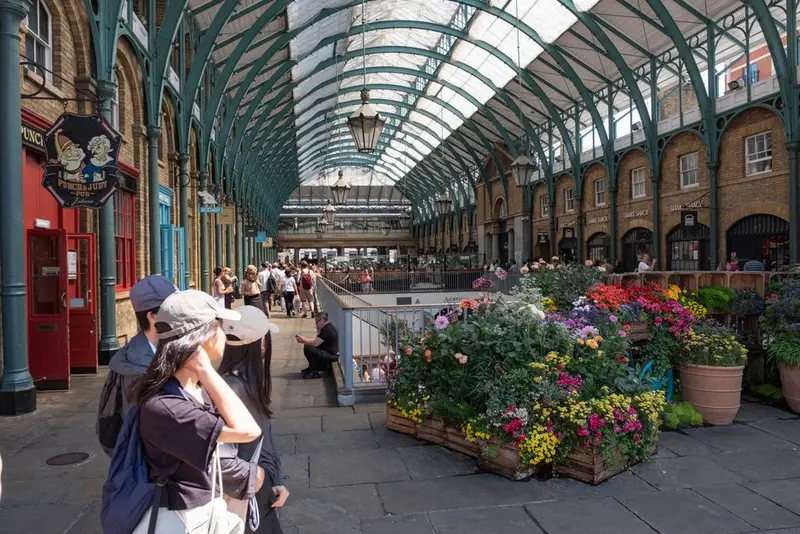
    Covent Garden was London's wholesale market for fruit and vegetables until 1974. Its name harks back to the monastery garden of Westminster Abbey. Inigo Jones designed the square in 1630 as London's first planned square, modelled after Italian piazzas, which permanently shaped London's cityscape.After the market moved out, the hall faced demolition but was preserved and now houses shops and cafés. Licensed street performers entertain on the cobblestones, a tradition dating back to 1662, when England's first Punch and Judy puppet show was documented here. The Royal Opera House and the London Transport Museum border the square. The surrounding alleys around Neal's Yard and Seven Dials are quieter than the hall itself.
    Open in Google Maps
    British Museum

    3British Museum

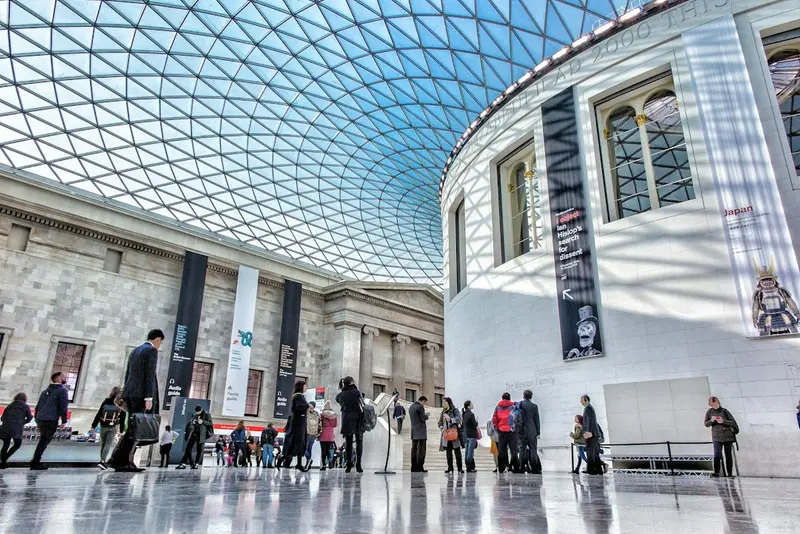
    The British Museum in Bloomsbury opened in 1759 as the world's first national public museum. Its foundation was the collection of physician Hans Sloane. Today, its collection comprises around eight million objects spanning two million years of human history.Well-known exhibits include the Rosetta Stone, the Parthenon Sculptures, the Assyrian reliefs from Nineveh, and the Anglo-Saxon ship burial from Sutton Hoo. Some of these holdings are subject to ongoing restitution claims, particularly the Parthenon Sculptures from Athens. The Great Court was covered by Norman Foster with a winding glass roof in 2000 and is now Europe's largest covered public square. At its centre stands the round Reading Room, where Karl Marx worked.
    Open in Google Maps
    Soho

    4Soho

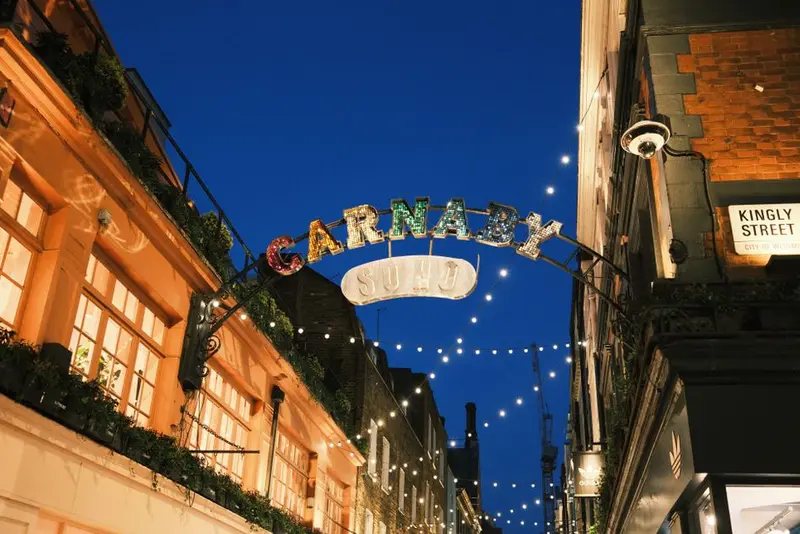
    Soho, between Oxford Street and Shaftesbury Avenue, was a royal hunting ground in the 17th century, its name said to stem from a hunting cry. Later, it became a refuge for Huguenot exiles, then London's entertainment district, and from the 1950s, the heart of the British jazz and rock scene.Ronnie Scott's Jazz Club on Frith Street dates back to 1959, and Denmark Street was once lined with music publishers. To this day, the British film industry is based around Golden Square and Wardour Street. The area around Old Compton Street has been the centre of London's gay life for decades. To the south, Gerrard Street marks London's Chinatown. On Broadwick Street stands a replica of the pump where John Snow proved cholera was a waterborne disease in 1854.
    Open in Google Maps

    5National Portrait Gallery

    The National Portrait Gallery, located behind the National Gallery, was founded in 1856 with an unusual mission: to collect portraits of significant Britons, where the importance of the subject counts, not the artistic quality of the work. This rule applies to this day.The collection ranges from Tudor portraits, including the only contemporary likeness of Shakespeare with documented provenance, through the Brontë sisters, to photographs of contemporary musicians and athletes. After a three-year closure, the building reopened in 2023 with newly arranged halls and an additional north entrance. The collection is arranged chronologically from top to bottom; the tour logically begins on the top floor.
    Open in Google Maps

    City walks in West End

    Curated walking tours through the city's highlights — handpicked by experienced travel journalists.

    Der Puls des West Ends: Theater, Mode & Königliche Plätze

    Erleben Sie das vibrierende Herz Londons auf diesem 2-stündigen Spaziergang durch das West End. Von lebhaften Märkten über ikonische Theater bis hin zu eleganten Einkaufsstraßen und historischen Plätzen – tauchen Sie ein in die einzigartige Atmosphäre dieser weltberühmten Gegend. Entdecken Sie die Orte, wo Geschichte, Unterhaltung und Lifestyle aufeinandertreffen.

    ~2 Std. 30 Min.
    In Google Maps öffnen
    Stopps (6)

    Restaurants in West End

    Food & Drink

    In the West End, you'll find a wide range of culinary offerings, from traditional British pubs to international restaurants in Soho. Especially before a theatre visit, many establishments offer special menus that allow for an efficient yet enjoyable meal.

    Local specialities

    In West End you'll find local restaurants, cafés and markets with regional specialities. Taste your way through the dishes typical of the region.

    West End's Cultural Heritage and Architectural Splendor

    London's West End historically evolved as a fashionable residential district west of the ancient City of London, gaining increasing importance from the 17th century. Originally an area for the aristocracy and wealthy citizens, the construction of palaces and squares transformed it into a hub of social life. Urban development in the 18th and 19th centuries profoundly influenced its architecture, which is defined by elegant Georgian and Victorian buildings.Characteristic examples from these eras include the magnificent townhouses of Mayfair and Soho, alongside grand squares such as Trafalgar Square and Leicester Square. Architectural jewels like the Royal Opera House and a multitude of historic theatres reflect the Neoclassical and Baroque influences that shape the cityscape. Culturally, the West End has evolved into a global epicentre for the performing arts, notably due to the concentration of theatres that earned it the moniker “Theatreland.”Among its deep-rooted traditions are the countless performances of musicals, dramas, and operas that have graced its stages for centuries. The National Gallery and The National Portrait Gallery, also located on Trafalgar Square, underscore the district's significance for visual arts and historical documentation. The vibrant tradition of street art, especially in Covent Garden, adds a unique touch to the West End's cultural diversity and testifies to its dynamic history as a meeting place for art and entertainment.

    Getting Around Here

    London's West End boasts excellent connectivity, and getting around is easy thanks to its dense transport network. The London Underground, known as the "Tube," is the backbone of public transport, efficiently connecting all districts; Oyster Card or contactless payment are the most practical and often cheaper options for this. Complementing this, the iconic red buses offer a scenic alternative, taking you directly to many attractions.For shorter distances, rental bikes (e.g., Santander Cycles) and licensed e-scooters are available via apps. Classic black taxis are easy to find, and ride-sharing services are also widely available and conveniently bookable via app.Notably, the West End's excellent pedestrian-friendly nature makes it ideal for walks between theatres, shops, and restaurants. It's best to plan your routes with a transport app and avoid peak hours for a more relaxed journey.

    Excursions & Activities

    Recommended activities

    Around West End there are rewarding day trips and activities – from sights and nature to the surrounding area.

    Accommodations in West End

    Accommodation

    Places to stay

    In and around West End there are places to stay across different categories and price ranges – from simple to comfortable.

    Accommodations in West End

    Find perfect stay in West End

    Booking.com
    Search Hotels
    Agoda
    Search Hotels
    Airbnb
    Vacation Rentals
    Hotels.com
    Hotels Worldwide
    Hostelworld
    Hostels

    Campgrounds in West End

    Find perfect campground in West End

    Search via Google Maps
    Campgrounds nearby (15km)
    Camping.info
    Find Campgrounds
    Park4Night
    RV Parks & Camping

    Plan your trip to West End

    Save places, build a route and plan your city trip — all in one place.

    Save places

    Bookmark sights, restaurants and neighborhoods you're interested in.

    Build your route

    Turn your bookmarks into a route — define order, days and budget.

    Refine with AI

    Let Mein Fernweh suggest experiences and put together a tailored daily plan.

    Start trip planningOpen bookmarks

    Locations nearby

    These places are nearby — perfect for additional days or a day trip.

    London

    London

    London is a vibrant metropolis that uniquely combines history, culture, and modernity. From royal palaces to trendy districts, the city offers an endless variety of experiences that will continually captivate you.
    South Bank

    South Bank

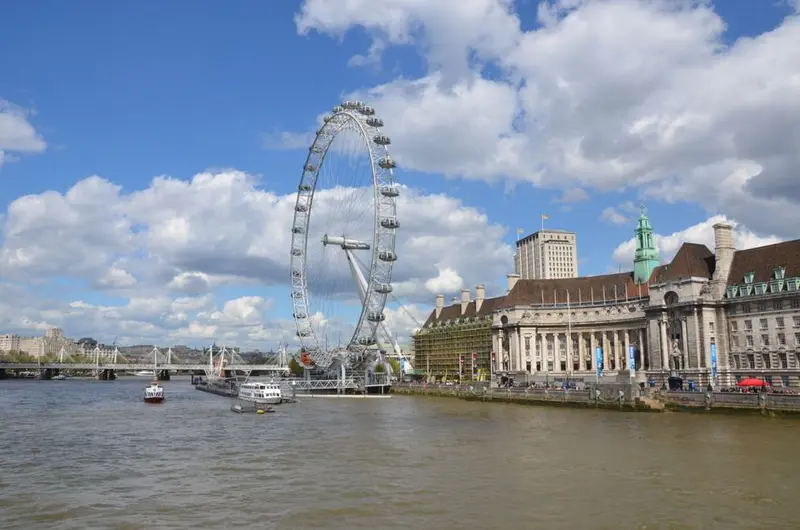
    London's South Bank is a vibrant cultural and entertainment district stretching along the River Thames, from Westminster Bridge to Tower Bridge. Here, you'll discover an impressive concentration of leading art and cultural institutions, including the Tate Modern, Shakespeare's Globe Theatre, and the Southbank Centre. Once known for its entertainment venues beyond the city walls, the area has transformed into a modern hub, with the former Bankside Power Station now housing the Tate Modern. A stroll along the riverside promenade offers not only views of the London Eye and St. Paul's Cathedral but also takes you through lively street performer zones. Visit Borough Market for culinary discoveries, just a short walk away, offering a wide array of international specialties. In the evening, numerous restaurants and bars invite you to enjoy the illuminated skyline; for the London Eye, it's best to plan your visit outside peak travel times.
    The City of London

    The City of London

    The City of London, the original Roman settlement, forms the historical and financial heart of the British capital. Here you'll experience a unique contrast of centuries-old history and modern architecture that shapes the skyline. Must-see attractions include the impressive St. Paul's Cathedral, the historic Tower of London, and the Monument to the Great Fire of London. Explore the Victorian charm of Leadenhall Market or the imposing buildings of the financial district, such as the Bank of England. While the City buzzes with the financial world's hustle and bustle during the week, it offers remarkable tranquility on weekends, ideal for relaxed strolls through historic lanes.
    East End

    East End

    Das East End von London ist ein historisch gewachsenes Viertel, das sich durch seine dynamische Mischung aus Tradition und Moderne auszeichnet. Einst Zentrum der Arbeiterklasse und Einwanderung, beherbergt es heute eine lebendige Kunstszene und zahlreiche kreative Unternehmen. Du findest hier ikonische Orte wie die Brick Lane, bekannt für ihre Curryhäuser, Vintage-Märkte und beeindruckende Street Art, besonders am Sonntag. Das historische Spitalfields Market und das trendige Shoreditch bieten eine Fülle von Boutiquen, Galerien und Restaurants. Die Gegend um Whitechapel erzählt von ihrer bewegten Geschichte, oft verbunden mit den Jack the Ripper Touren. Für ein authentisches Erlebnis empfiehlt sich ein Besuch des Columbia Road Flower Market am Sonntagmorgen. Plane genügend Zeit ein, um die verborgenen Gassen und die vielfältige Kulinarik abseits der Hauptstraßen zu erkunden.
    Kensington & Chelsea

    Kensington & Chelsea

    The London borough of Kensington & Chelsea stands out as one of the city's most elegant and culturally rich districts. Here you'll find an impressive concentration of world-class museums like the Victoria and Albert Museum (V&A), the Natural History Museum, and the Science Museum, all easily explorable on foot. Magnificent Victorian buildings and verdant squares define the landscape, while King's Road in Chelsea boasts exclusive boutiques and galleries. In Kensington Gardens, you can enjoy leisurely strolls and visit Kensington Palace, the former residence of Princess Diana. Historically established as a royal borough, Kensington & Chelsea continues to reflect an affluent lifestyle and a deep appreciation for art and education. To experience the museums unhurriedly, a weekday morning visit is recommended; the area is also perfectly explored on foot or by bus.