Indonesia
Kalimantan (Indonesian Borneo)
Region
Kalimantan comprises the Indonesian part of Borneo, the world's third-largest island.
by Felix Gillen
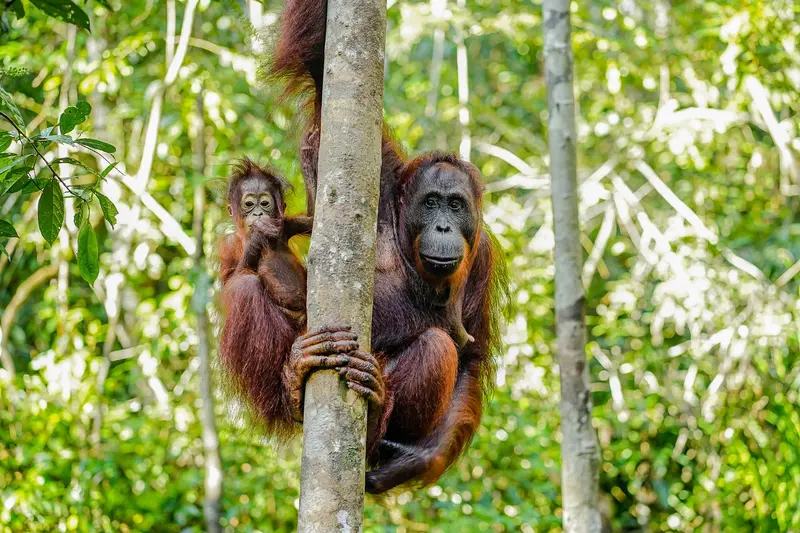
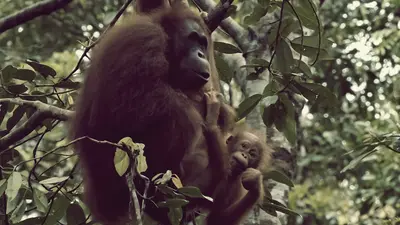
Kalimantan comprises the Indonesian part of Borneo, the world's third-largest island. Travelers primarily come for the orangutans in Tanjung Puting National Park, river trips to Dayak villages on the Mahakam, and the river landscapes around Pontianak.
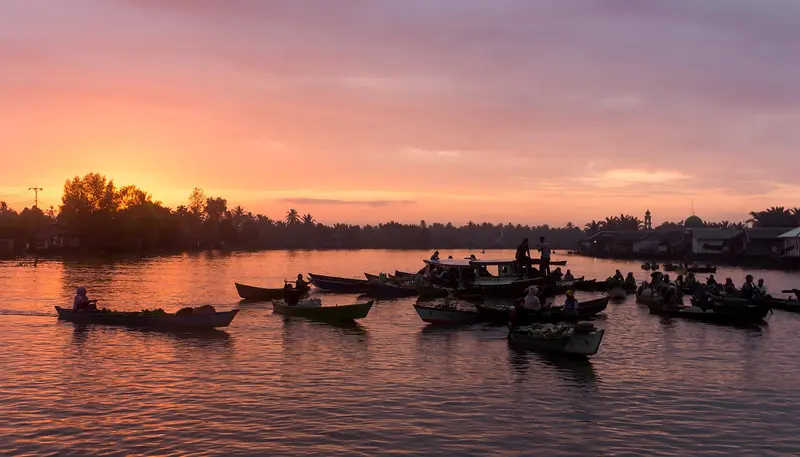
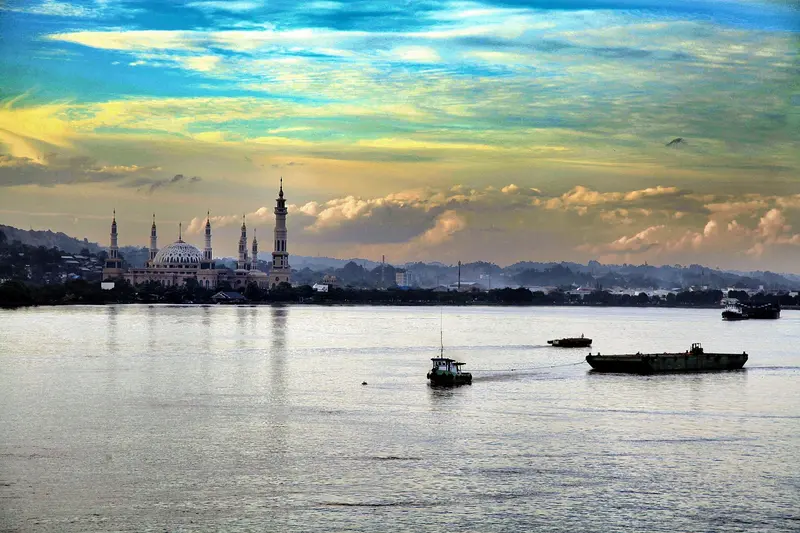
Kalimantan is divided into five provinces and is mostly sparsely populated. Rainforests, peat swamps, and wide rivers shape the land, alongside large palm oil plantations and mining areas. The most famous excursion is a Klotok houseboat trip to Tanjung Puting National Park in Central Kalimantan. In East Kalimantan, boat tours from Samarinda go up the Mahakam, and in West Kalimantan, Pontianak is right on the equator. The new capital, Nusantara, is also emerging in East Kalimantan. Distances are great, and you usually fly between provinces.
Crisco 1492 / Wikimedia Commons / CC BY-SA 4.0, mod.
Iwandimas84 / Wikimedia Commons / CC BY-SA 4.0, mod.
Hendrojkson / Wikimedia Commons / CC BY-SA 4.0, mod.
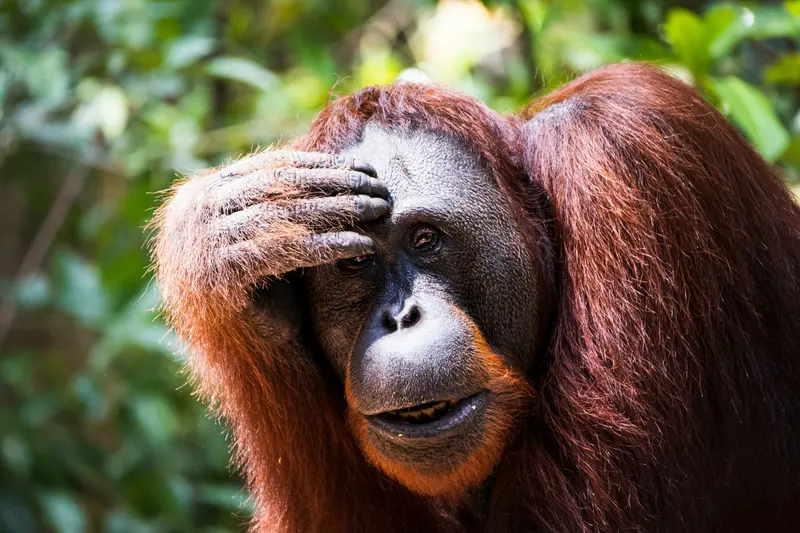
Photo: Unsplash
More places in Kalimantan (Indonesian Borneo)
SunDawnCC BY-SA 4.0
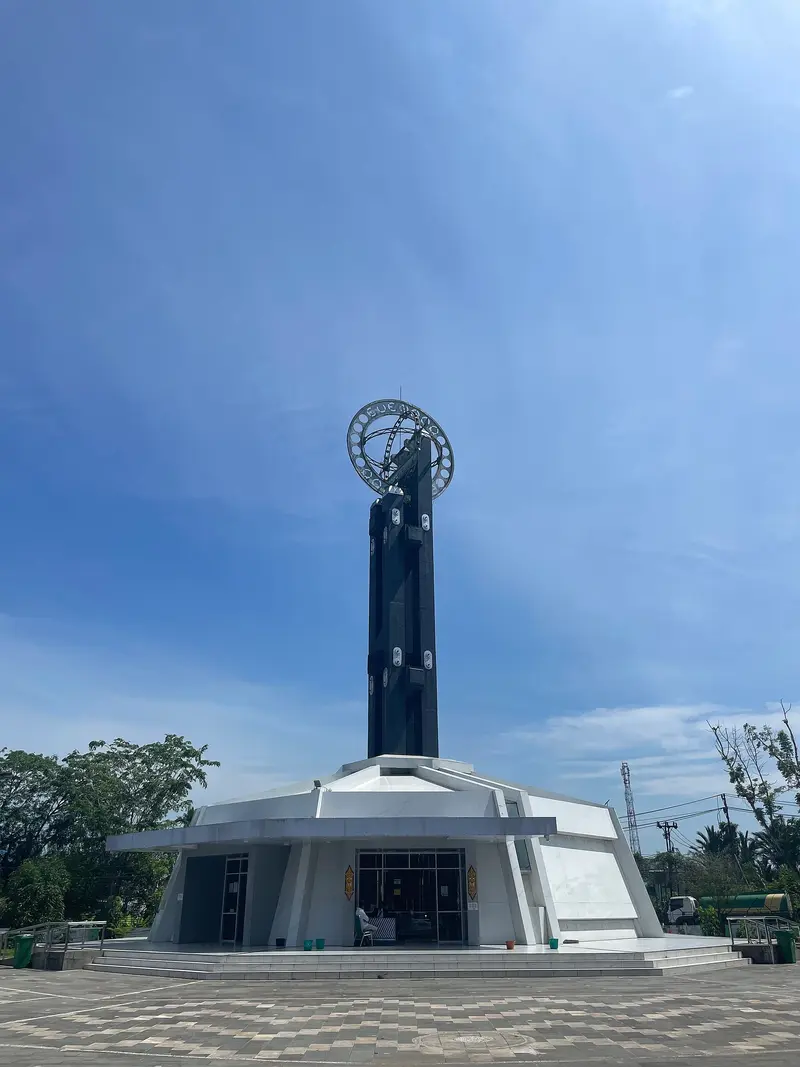
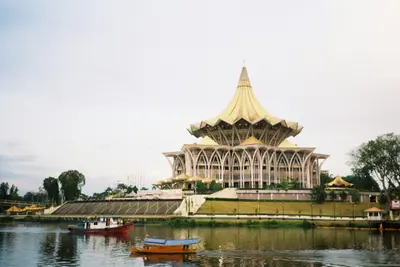
Pontianak, capital of West Kalimantan, lies directly on the equator at the confluence of the Kapuas and Landak. The city is a trade center with a large Chinese community, a Sultan's Palace, and an equator monument.
Food and Beverages
Soto Banjar
Clear chicken soup with rice cakes and spices from South Kalimantan.
River fish
Fish like Patin and Baung from the rivers, grilled or in curry sauce.
Bubur Pedas
Savory rice porridge with vegetables and herbs, typical for the Malays in West Kalimantan.
Best Time to Visit
When is the best time for your trip?
27–27°C·87–167 mm(heavy rain)
From June to September, it rains the least in Kalimantan, and boat trips on the Sekonyer to the orangutans in Tanjung Puting National Park are most pleasant then. Even in these months, there are regular showers.
The monthly figures are for Palangka Raya in the lowlands of Central Kalimantan (climate normals 1991 to 2020 of the World Meteorological Organization (WMO)). In August, 87 mm of rain fall there, and 332 mm in March. It is around 27 °C warm all year round.
Seasons
Jan
Feb
Mar
Apr
May
Jun
Jul
Aug
Sep
Oct
Nov
Dec
The drier months
Shoulder months
Wet season
Best Time to Visit
▶Show detailed monthly data
| Month | Temp (°C) | Rain (mm) | Sun (h) |
|---|---|---|---|
| January | 26.8 | 296 | 4.0 |
| February | 26.9 | 255 | 4.1 |
| March | 27.0 | 332 | 4.1 |
| April | 26.9 | 312 | 4.7 |
| May | 27.4 | 215 | 5.3 |
| June | 27.0 | 167 | 4.7 |
| July | 26.7 | 104 | 5.4 |
| August | 26.8 | 87 | 5.2 |
| September | 27.0 | 118 | 4.7 |
| October | 27.1 | 194 | 4.2 |
| November | 27.0 | 318 | 4.4 |
| December | 26.9 | 321 | 4.1 |
Culture
HistoryOn the Mahakam River in East Kalimantan, seven stone pillars (yupa) with 4th-century Sanskrit inscriptions were discovered. They date back to King Mulawarman and the Kingdom of Kutai Martadipura, the archipelago's earliest known Hindu kingdom. In the 17th century, it merged into the Sultanate of Kutai Kartanegara, which came under Dutch suzerainty in the 19th century. In 1771, Syarif Abdurrahman Alkadrie, whose family originated from Hadramaut, founded the Sultanate of Pontianak; his Kadriah Palace still stands at the confluence of the rivers. The Sultanates of Pontianak and Kutai shaped the history of the coasts.Religion and BeliefsAmong the Dayak, roughly a third each are Catholic, Muslim, and Protestant. Additionally, there is the animistic religion of Kaharingan, which reveres ancestors and spirits and was recognized as part of Hinduism in 1980. Its most important festival among the Ngaju in Central Kalimantan is the Tiwah, a secondary burial lasting about 30 days: the bones of the deceased are exhumed, cleaned, and reburied in a charnel house (sandung), with buffalo, cattle, pigs, and chickens sacrificed.Society and CustomsThe indigenous inhabitants of the interior are collectively known as Dayak, though they comprise over 200 ethnic groups with their own languages. Typical are longhouses (lamin, betang), some over 200 meters long, containing dwellings for many families and communal spaces for ceremonies. Also notable are wood carvings, beadwork, and tattoos, which indicate origin, rank, and life events. The feared practice of headhunting (ngayau) was ended by Dayak groups in 1894 at a peace meeting in Tumbang Anoi. Along the coasts live Malay, Banjar, Bugis, and Chinese populations.Visitor ConductIn a longhouse, you are a guest of the entire community, which lives by its own rules. Register with the village chief, enter dwellings only by invitation, and ask before taking photos. Attend ceremonies like the Tiwah only with an invitation and a local guide.
Getting Here & About
The main airports are in Balikpapan, Banjarmasin, Pontianak and Pangkalan Bun, with connections to Jakarta, Surabaya and Bali. Within Kalimantan, roads are long and slow; many destinations are only accessible by boat. For Tanjung Puting and the Mahakam, it's best to book a tour with boat and guide.
Nearby
Your next steps
Kalimantan (Indonesian Borneo) is in Indonesia. Ways to carry on from here.
More in Indonesia
Highlights, areas, routes and the best time to travel for all of Indonesia.
Indonesia travel guideRound trips in Indonesia
Ready-made routes through Indonesia, with stops, nights and a map.
See the routesPlan a trip with Kalimantan (Indonesian Borneo)
The Guide asks about season, length and who is coming, and suggests a trip with Kalimantan (Indonesian Borneo).
Plan the trip