Fernweh: Home
    ExploreTravel GuidesPlan a tripMy tripLast visited
    de|en
    All Places & RegionsAll highlightsAbout FernwehFAQPrivacy PolicyImprint
    ExploreTravel GuidesPlan a tripMy tripLast visited
    • Neighborhoods & highlights
    • Walking tours
    • Eat & drink
    • Food culture
    • Culture
    • Getting around
    • Accommodation
    • Plan trip
    • Nearby
    Alberobello

    Italy

    Alberobello

    CityCultureFor Families

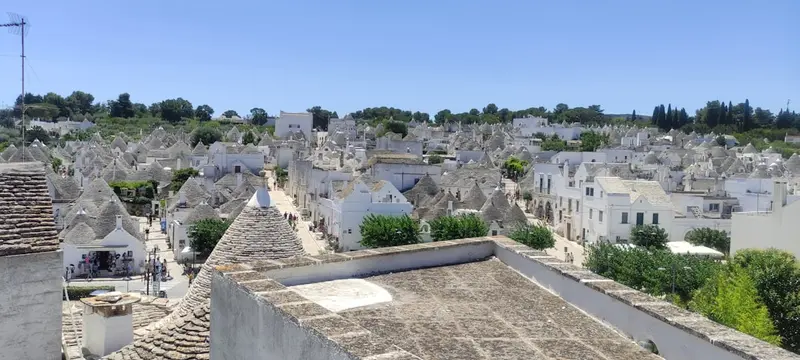
    Alberobello is located in the Valle d'Itria in the Metropolitan City of Bari and is known for its Trulli, houses built of roughly hewn limestone using dry-stone techniques without mortar, with conical roofs made of stone slabs.

    by Felix Gillen

    1. Home
    2. Destinations
    3. Italy
    4. Apulien
    5. Alberobello
    Alberobello is located in the Valle d'Itria in the Metropolitan City of Bari and is known for its Trulli, houses built of roughly hewn limestone using dry-stone techniques without mortar, with conical roofs made of stone slabs. Since 1996, they have been a UNESCO World Heritage site.The two Trulli districts are Rione Monti and Aia Piccola.

    Sights in Alberobello

    Discover the most important sights and attractions

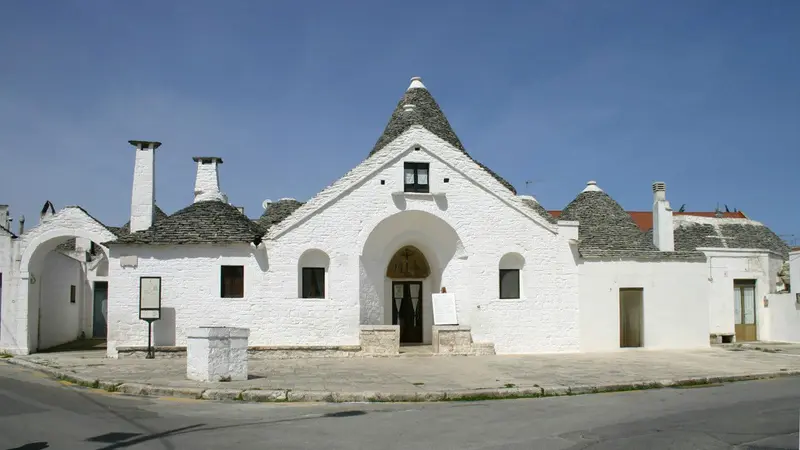
    Trulli, Rione Monti

    1Trulli, Rione Monti

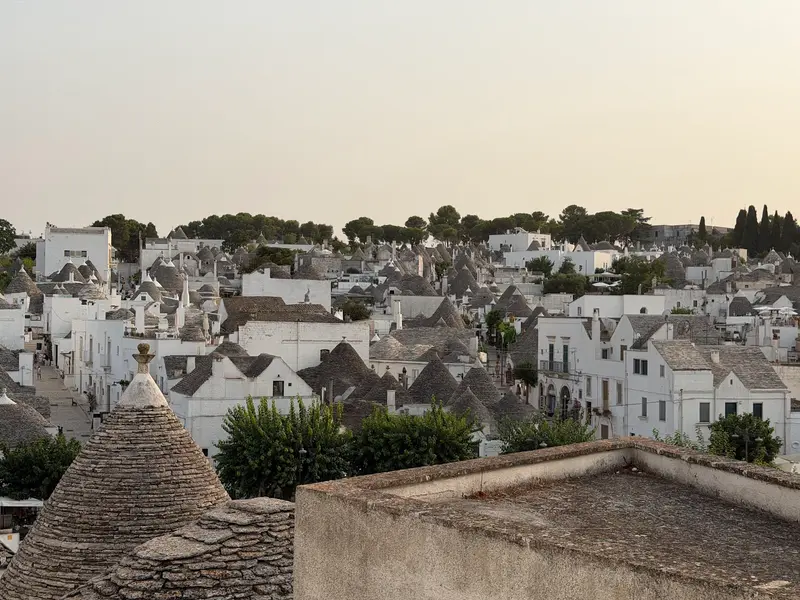
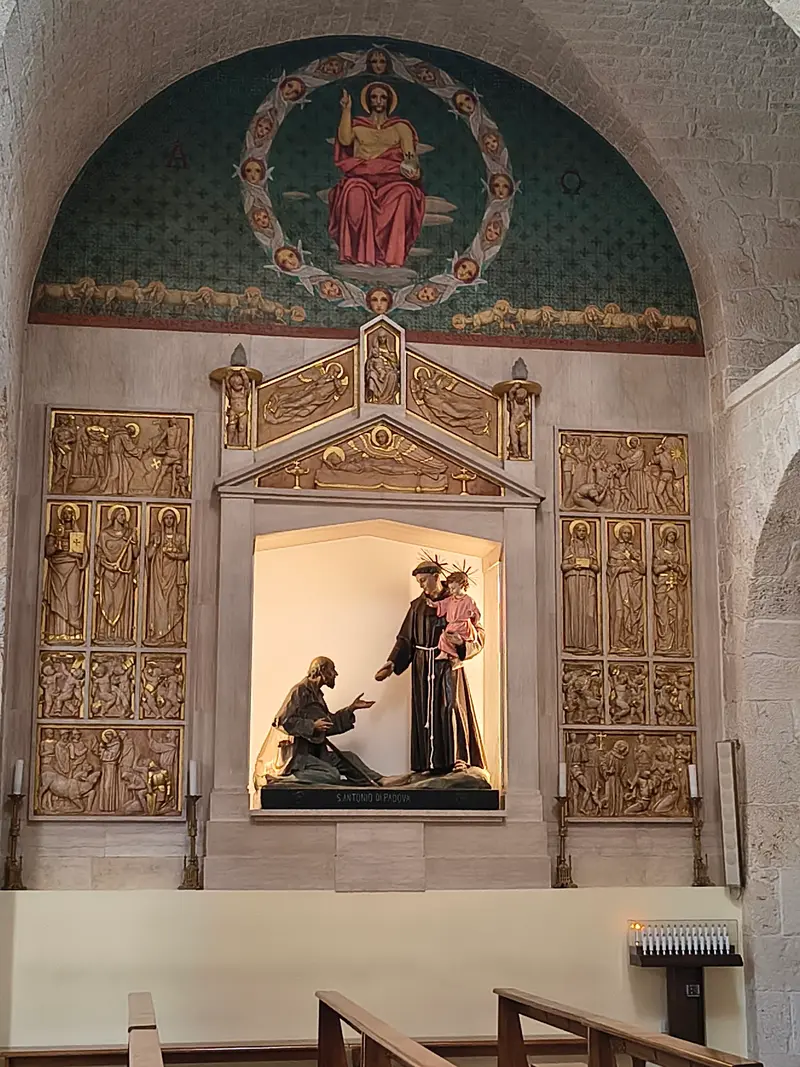
    The larger and older of the two Trulli quarters comprises over 1,000 Trulli. Among the Trulli, there are also workshops selling linen goods. On Via Monte Pertica stands the Church of Sant'Antonio, built from 1926 to 1927, which replicates the shape of the Trulli.
    Open in Google Maps
    Trullo Sovrano
    Museum

    2Trullo Sovrano

    Two-story trullo from the mid-18th century on Piazza Sacramento behind the Church of Santi Medici, with a dome about 14 meters high. Since 1994, it has been a house museum with appropriately furnished rooms.
    Open in Google Maps
    Belvedere Santa Lucia
    Attraction

    3Belvedere Santa Lucia

    Viewpoint, named after Saint Lucia, the patron saint of eyesight. From here you overlook the conical roofs of Rione Monti.
    Open in Google Maps

    City walks in Alberobello

    Curated walking tours through the city's highlights, handpicked by experienced travel journalists.

    The Magic of the Trulli: A Walk Through Alberobello

    Discover Alberobello, the enchanting town of the trulli, on this 2-hour walk. Immerse yourself in the unique architecture of the conical-roofed houses, explore historic districts and enjoy picturesque views of this UNESCO World Heritage Site. An unforgettable experience for every visitor.

    ~2 Std.
    Open in Google Maps
    Stops (7)

    Food & Drink

    1

    Ristorante La Cantina

    Restaurant with Italian cuisine in Vico Francesco Lippolis, a side street in the center near the Trulli quarters.
    Show on Google Maps
    2

    Il Guercio di Puglia

    Restaurant and Pizzeria on Via Imbriani in the center of Alberobello.
    Show on Google Maps
    3

    Ristorante Il Pinnacolo

    Restaurant in a Trullo in Rione Monti, with Itria Valley cuisine, pizza, and Apulian wines.
    Show on Google Maps
    4

    Ristorante Trullo D'Oro

    Restaurant in several interconnected Trulli, offering Apulian cuisine made from seasonal ingredients.
    Show on Google Maps
    5

    Trattoria Terra Madre

    Trattoria on Piazza Sacramento near Trullo Sovrano, serving Italian cuisine and vegetarian dishes.
    Show on Google Maps

    Food and Drink

    The cuisine of the Itria Valley is rustic, with lots of vegetables, durum wheat pasta, and grilled meat.

    Orecchiette with broccoli rabe

    Typical dish of Apulia and Basilicata: Orecchiette with broccoli rabe, in an Apulian version also with anchovies.

    Bombette

    Small grilled meat rolls from Murgia, usually made from pork neck and filled with Provolone or Caciocavallo, traditionally prepared in butcher shops with their own oven.

    Capocollo di Martina Franca

    Sausage specialty of Murgia dei Trulli and a Slow Food Presidium: salted for 15 to 20 days, washed with Vincotto and lightly smoked.

    History of the Trulli

    In the early 16th century, Count Andrea Matteo III. Acquaviva d'Aragona settled peasant families here. He only allowed houses made of dry stone masonry without mortar; this allowed him to avoid paying taxes to the Spanish Viceroy in the Kingdom of Naples.In 1797, King Ferdinand IV. elevated Alberobello to a royal town, thereby ending feudal rule.The tips of the conical roofs, the pinnacoli, are often decoratively designed and were considered by many to be the signature of the respective master builder.

    Local explorations

    The Trulli districts are small and best explored on foot.Alberobello has a Ferrovie del Sud Est station on the Bari–Taranto line, which also serves Noci and Locorotondo. Check the current timetable before your journey.

    Accommodations in Alberobello

    Find perfect stay in Alberobello

    Booking.com* (Affiliate link)
    Search Hotels
    Agoda* (Affiliate link)
    Search Hotels
    Airbnb
    Vacation Rentals

    * Affiliate link: if you book through it, we earn a small commission. The price stays the same for you.

    Campgrounds in Alberobello

    Find perfect campground in Alberobello

    Search via Google Maps
    Campgrounds nearby (15km)
    Camping.info
    Find Campgrounds
    Park4Night
    RV Parks & Camping

    Plan your trip to Alberobello

    Save places, build a route and plan your city trip, all in one place.

    1. 1
      Sunrise over alpine peaks and a sea of clouds
      1234

      Round trip

      12 days · 4 stops

      Saved

      Pick a route

      Pick a ready-made one or save places and plan your own.

      Open bookmarks
    2. 2

      Trip to Alberobello

      Live
      • 1Trulli, Rione Monti3 days
      • 2Trullo Sovrano4 days
      • 3Belvedere Santa Lucia5 days
      Budget

      Plan your trip

      The planner sorts stops, days and budget. Plan together in real time.

      Start trip planning
    3. 3
      9:41 No signal
      Alberobello
      Available offline

      Use it on the road

      Download the guide to your phone and use it on site, even offline.

    Nearby

    Apulien

    Apulien

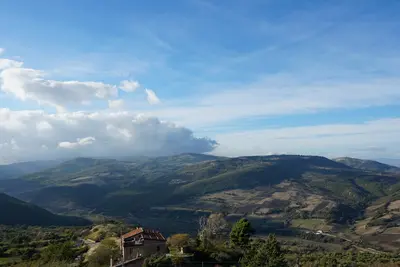
    Puglia is the heel of Italy's boot and, with approximately 865 kilometers, has the longest coastline of all mainland regions of Italy. Between the Adriatic and Ionian Seas lie the Trulli villages of Valle d'Itria, the Baroque city of Lecce, Romanesque cathedrals by the sea, and vast olive groves.
    Polignano a Mare

    Polignano a Mare

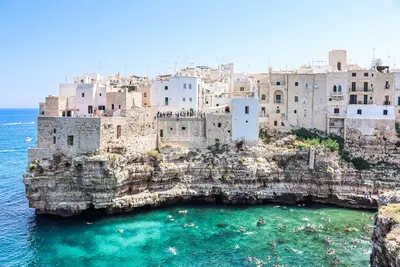
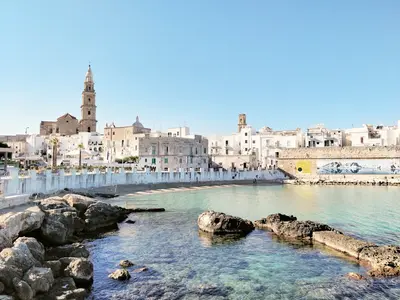
    Polignano a Mare lies about 33 kilometers south of Bari on the Adriatic coast. The oldest part of its old town sits on a rocky spur, dropping steeply to the sea; beneath, along the coast, lie numerous sea caves.In the town's center, the Lama Monachile cove cuts into the coast, spanned by the early 19th-century Bourbon Bridge; beneath it ran the ancient Via Traiana. Polignano is the birthplace of singer Domenico Modugno, commemorated by a statue on the waterfront.
    Ostuni

    Ostuni

    Ostuni is situated on three hills at the edge of the Murgia, about 7.5 kilometers from the Adriatic coast. The lime-whitewashed houses of the old town have earned it the nickname Città Bianca, the white city.In the old town, alleys, stairs, and arches lead up to the cathedral with its late Gothic facade and a large rose window. Surrounding the city lies the Piana degli Ulivi with numerous monumental olive trees.
    Bari

    Bari

    Bari is the capital of Apulia and has approximately 315,000 inhabitants. In the winding old town, Bari Vecchia, stand the Basilica San Nicola with the relics of Saint Nicholas and the San Sabino Cathedral; on Via dell'Arco Basso, women shape orecchiette pasta outside their doorways.
    Matera

    Matera

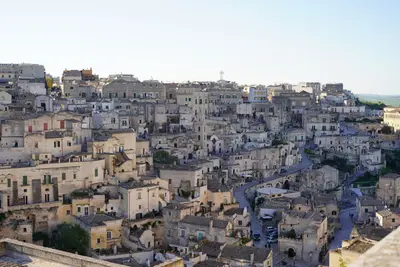
    Matera in Basilicata is considered one of the oldest continuously inhabited cities in the world. Its old town, the Sassi, comprises cave dwellings, rock churches, and houses carved over centuries into the tufa stone on the edge of a deep gorge. In the 1950s, the Sassi were evacuated due to poverty and poor hygiene; since 1993, they have been a UNESCO World Heritage site and are now re-inhabited, with hotels, restaurants, and museums in the caves. In 2019, Matera was a European Capital of Culture. Opposite the city, across the Gravina gorge, lies the Murgia Park, featuring more cave churches and the most famous view of the Sassi. The alleys and stairs are steep; comfortable shoes are necessary.
    Sources & method

    • Photos: Unsplash, Google Maps. Each photo carries its credit.
    • Place data such as addresses and ratings comes from Google Maps.
    • The content is based on web research from public, traceable sources. How the content is made · The role of AI