Fernweh: Home
    ExploreTravel GuidesPlan a tripMy tripLast visited
    de|en
    All Places & RegionsAll highlightsAbout FernwehFAQPrivacy PolicyImprint
    ExploreTravel GuidesPlan a tripMy tripLast visited
    • Overview
    • Places in the region
    • Food culture
    • Culture
    • Getting around
    • Round trips
    • Nearby
    Apulien

    Italy

    Apulien

    Region

    Puglia is the heel of Italy's boot and, with approximately 865 kilometers, has the longest coastline of all mainland regions of Italy.

    by Felix Gillen

    1. Home
    2. Destinations
    3. Italy
    4. Apulien
    Puglia is the heel of Italy's boot and, with approximately 865 kilometers, has the longest coastline of all mainland regions of Italy. Between the Adriatic and Ionian Seas lie the Trulli villages of Valle d'Itria, the Baroque city of Lecce, Romanesque cathedrals by the sea, and vast olive groves.
    Apulia stretches from the Gargano peninsula in the north to the southern tip of Salento near Santa Maria di Leuca. The region's main airport is located in Bari. Southeast of there is the Valle d'Itria with Locorotondo and its Trulli, plus the white Ostuni. The Salento around Lecce offers Baroque architecture, a rocky Adriatic coast with grottoes and long sandy beaches on the Ionian Sea. On the coast north of Bari stands the Romanesque Cathedral of Trani, and inland, Castel del Monte. A rental car is recommended for a round trip.
    Bari

    Place 1 of 4

    Bari

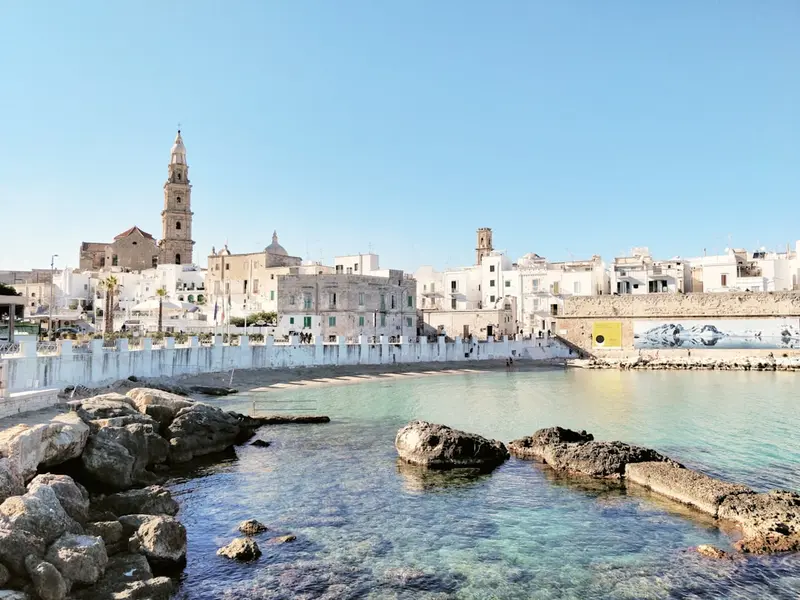
    Bari is the capital of Apulia and has approximately 315,000 inhabitants.

    Discover
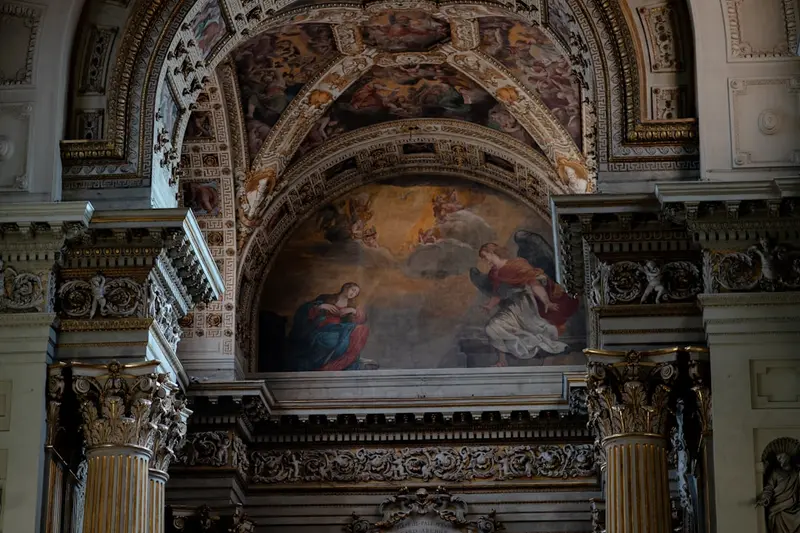
    Otranto

    Place 2 of 4

    Otranto

    Otranto is located on the Adriatic coast of Salento. Just south of the city, Punta Palascìa marks Italy's easternmost point, and is also the closest point to Albania.

    Discover
    Alberobello

    Place 3 of 4

    Alberobello

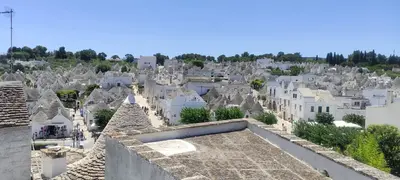
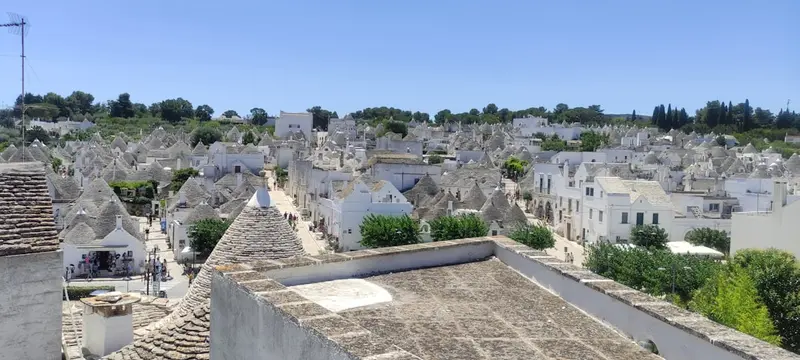
    Alberobello is located in the Valle d'Itria in the Metropolitan City of Bari and is known for its Trulli, houses built of roughly hewn limestone using dry-stone techniques without mortar, with conical roofs made of stone slabs.

    Discover
    Lecce

    Place 4 of 4

    Lecce

    Lecce, Salento's provincial capital, has an old town shaped by baroque churches and palaces, built from the region's light, soft, dense limestone, the *pietra leccese*.

    Discover

    More places in Apulien

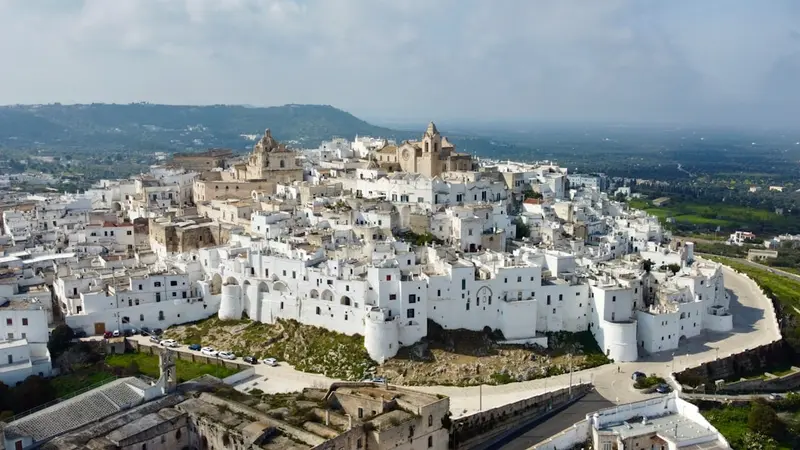
    Ostuni

    Ostuni

    Ostuni is situated on three hills at the edge of the Murgia, about 7.5 kilometers from the Adriatic coast. The lime-whitewashed houses of the old town have earned it the nickname Città Bianca, the white city.In the old town, alleys, stairs, and arches lead up to the cathedral with its late Gothic facade and a large rose window. Surrounding the city lies the Piana degli Ulivi with numerous monumental olive trees.
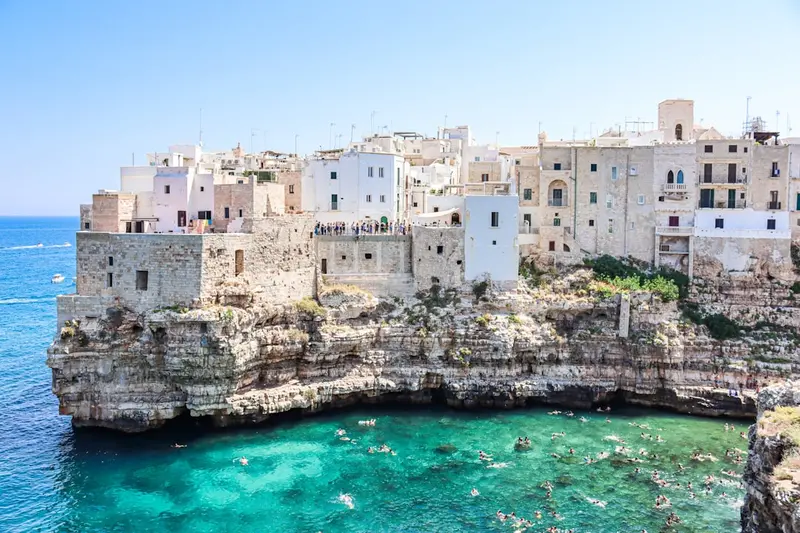
    Polignano a Mare

    Polignano a Mare

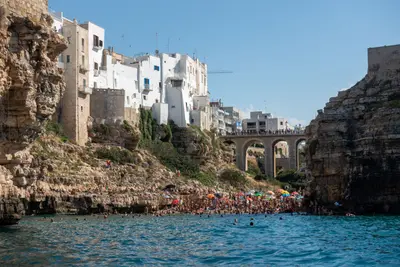
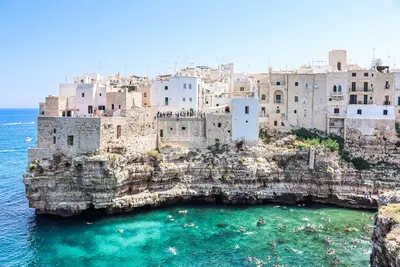
    Polignano a Mare lies about 33 kilometers south of Bari on the Adriatic coast. The oldest part of its old town sits on a rocky spur, dropping steeply to the sea; beneath, along the coast, lie numerous sea caves.In the town's center, the Lama Monachile cove cuts into the coast, spanned by the early 19th-century Bourbon Bridge; beneath it ran the ancient Via Traiana. Polignano is the birthplace of singer Domenico Modugno, commemorated by a statue on the waterfront.
    Salento Peninsula

    Salento Peninsula

    Salento is the southernmost part of Apulia, the "heel" of the Italian boot between the Adriatic and Ionian Seas. On the east coast, limestone cliffs with grottoes drop steeply into the sea, while on the west coast, near Porto Cesareo and Gallipoli, there are long sandy beaches with shallow water.Inland, olive groves, dry stone walls, and small towns with Baroque churches define the landscape. In the towns of Grecìa Salentina, such as Corigliano d'Otranto and Melpignano, a Greek dialect is still spoken today. Lecce is the cultural center; Otranto and Gallipoli are the best-known coastal towns.
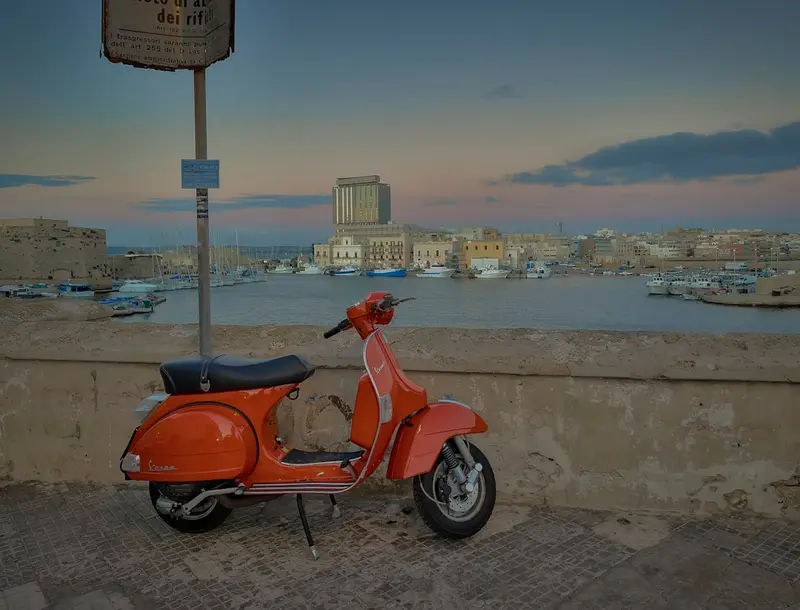
    Gallipoli

    Gallipoli

    Gallipoli is located on the west coast of Salento on the Ionian Sea. The old town is situated on a small limestone island, connected by a 17th-century bridge to the new town on the mainland. A waterfront promenade circles around it, linking the bastions of the old city wall.In the narrow streets of the old town stand Baroque churches and palazzi, including the Cathedral Sant'Agata. South of the city, sandy beaches such as Baia Verde and Punta della Suina stretch along the coast.

    Sights in Apulien

    Discover the most important sights and attractions

    Castel del Monte

    Castel del Monte

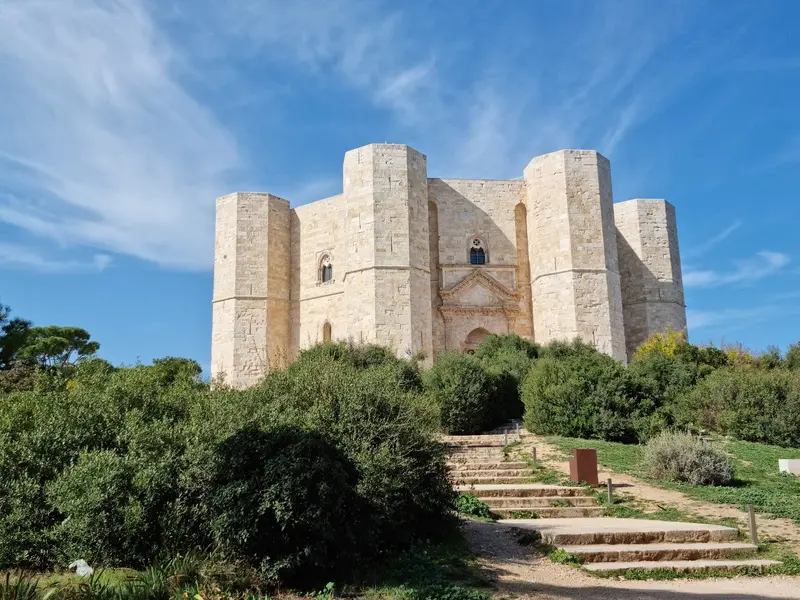
    Emperor Frederick II commissioned its construction in 1240; the castle was probably unfinished at his death in 1250. Its floor plan, inner courtyard, and eight corner towers are all octagonal; the exact purpose of the building remains debated. Castel del Monte has been a UNESCO World Heritage site since 1996 and is depicted on the Italian one-cent coin. A shuttle bus runs from the car park up.
    Open in Google Maps
    Locorotondo

    Locorotondo

    The old town of Locorotondo is circular, its small white houses stand in concentric rings; hence its name. Characteristic are the cummerse, dry-stone houses with pitched roofs. The town in the Valle d'Itria is known for its eponymous DOC white wine.
    Open in Google Maps
    Grotte di Castellana
    Museum

    Grotte di Castellana

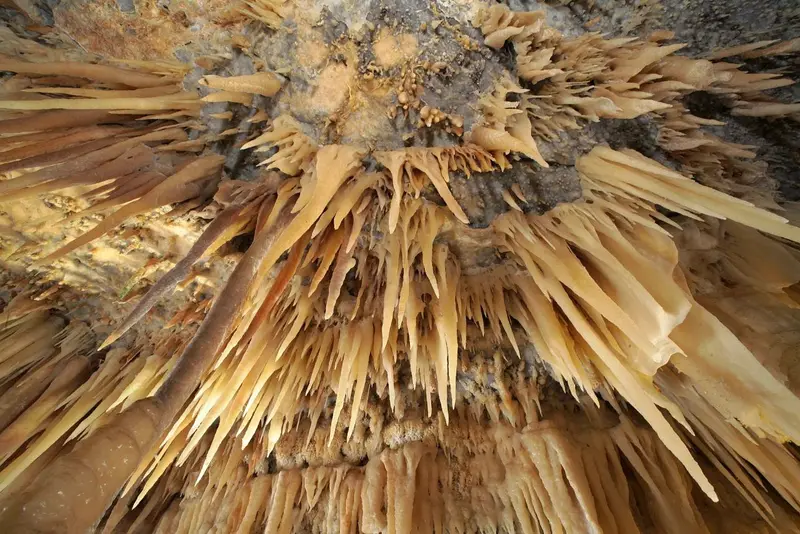
    Speleologist Franco Anelli discovered the karst cave system in 1938. The long tour covers about three kilometers in approximately 100 minutes, through halls with dripstones to the brightly gleaming Grotta Bianca; the shorter tour is about one kilometer long and lasts approximately 50 minutes. The caves are approximately 16.5°C. Find current times and prices on the Grotto's website.
    Open in Google Maps
    Cathedral of Trani
    Church

    Cathedral of Trani

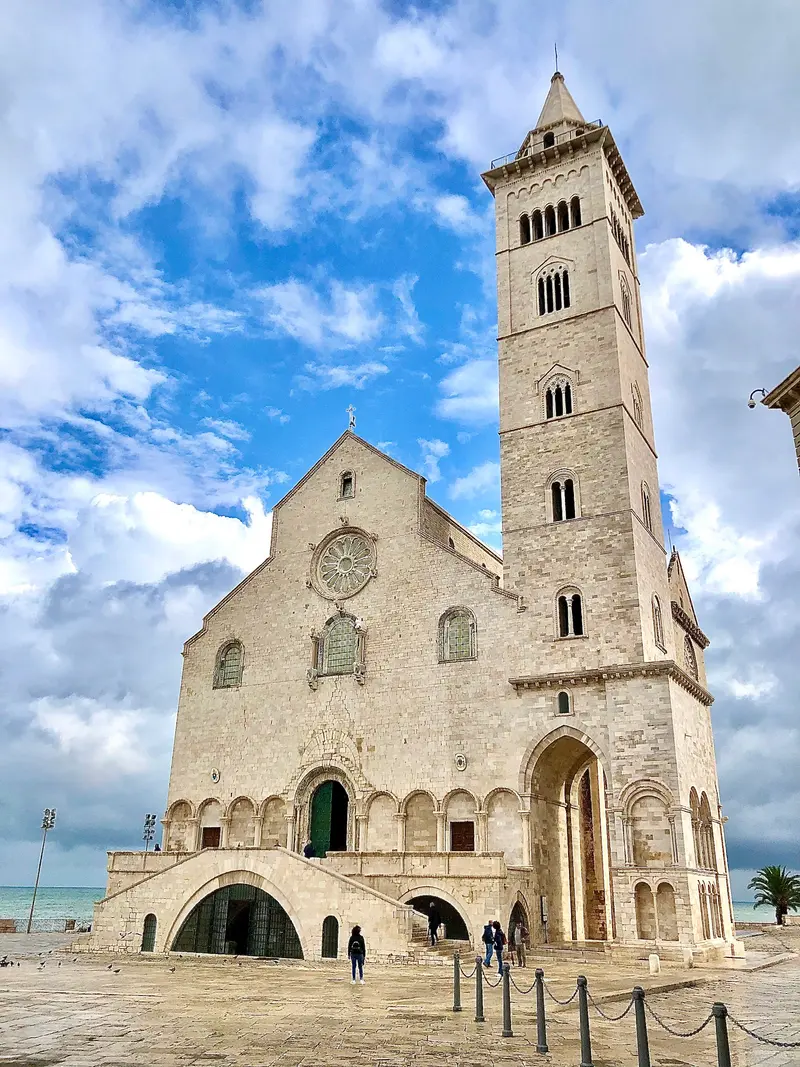
    The Romanesque Cathedral, popularly known as San Nicola Pellegrino, stands directly by the sea in Trani. It is built from light, almost white Trani stone, its bell tower is 59 meters high. Beneath the upper church lie crypts and the remains of the older church Santa Maria della Scala.
    Open in Google Maps
    Pizzomunno in Vieste
    Attraction

    Pizzomunno in Vieste

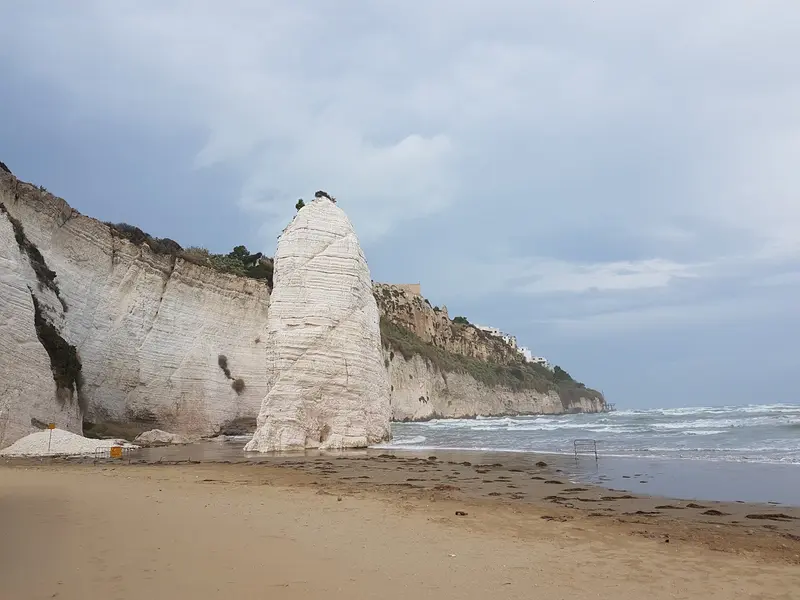
    The approximately 25-meter-high white limestone cliff rises on Spiaggia del Castello beach, south of Vieste's town center, on the Gargano coast.
    Open in Google Maps

    Food & Drink in Apulia

    Puglia produces roughly half of Italy's olive oil, and its cuisine lives on vegetables, durum wheat, and fish.

    Orecchiette with broccoli rabe

    Small orecchiette with turnip greens are a typical dish of Apulia and Basilicata; in Apulia, anchovies are often added.

    Burrata

    The pasta filata cheese ball is filled with Stracciatella, a mixture of cream and threads of the same cheese paste. Legend has it that it was invented in the early 20th century on a farm near Andria.

    Focaccia barese

    Soft focaccia from Bari, classically topped with fresh tomatoes and olives; also in variations with potatoes or coarse salt and rosemary.

    Raw Seafood Dishes

    In Bari, octopus and small cuttlefish are enjoyed raw, often straight from fishermen at Molo San Nicola. Sea urchins may not be caught in Apulia until late June 2029.

    Primitivo di Manduria

    Full-bodied DOC red wine from the Primitivo grape, primarily produced in the province of Tarent; fruity, with notes of red and dark berries.

    Culture and History

    Between East and WestMessapians, Greeks, Romans, Byzantines, Normans, and Staufer shaped the region. In nine towns of Grecìa Salentina in Salento, *Griko* is still spoken today, a Greek dialect primarily mastered by older people.Romanesque and BaroqueOtranto Cathedral was consecrated in 1088 during the Norman period; Trani Cathedral stands directly by the sea. Emperor Frederick II had Castel del Monte built from around 1240. Between the 16th and 18th centuries, master builders adorned Lecce with Baroque facades made from soft Pietra leccese.TrulliThe cone-shaped Trulli, built from dry stone with self-supporting stone roofs, characterize mainly the Valle d'Itria.PizzicaThis folk dance from Salento once accompanied the healing rituals of Tarantism for people who believed they had been bitten by a tarantula. In August, the Notte della Taranta festival concludes with a grand final concert in Melpignano.

    Traveling in Apulia

    ArrivalThe main airport is Bari; Brindisi Airport is closer for Salento. Frecciarossa trains connect Bari and Lecce with Rome and Milan.Train and BusAlong the Adriatic route Bari–Brindisi–Lecce, long-distance trains also stop in Monopoli, Fasano, and Ostuni. For the Valle d'Itria, the Ferrovie del Sud Est regional railway runs from Bari via Locorotondo and Martina Franca. Electrification work is underway on several Ferrovie del Sud Est lines in Salento; check the current timetable before your trip.By CarA rental car is the most flexible solution for reaching masserias, beaches, and small towns.

    Round trips through this region

    Puglia & Salento

    Puglia & Salento

    The route leads from Bari via Polignano a Mare, Alberobello and Ostuni into the Salento region to Lecce, Otranto and Gallipoli. The stages are short and rarely last more than an hour's drive. In August, beaches and accommodations are heavily booked.

    16 Days
    7 stops
    Southern Italy Motorhome (2–3 Weeks)

    Southern Italy Motorhome (2–3 Weeks)

    The route leads from Bari via Alberobello and Ostuni into Salento to Lecce and Otranto, then across Apulia to Matera and to the Tyrrhenian Coast to Maratea. The longest leg from Otranto to Matera takes a good three hours. In Matera, park your campervan outside the Sassi.

    16 Days
    7 stops

    Nearby

    Alberobello

    Alberobello

    Alberobello is located in the Valle d'Itria in the Metropolitan City of Bari and is known for its Trulli, houses built of roughly hewn limestone using dry-stone techniques without mortar, with conical roofs made of stone slabs. Since 1996, they have been a UNESCO World Heritage site.The two Trulli districts are Rione Monti and Aia Piccola.
    Polignano a Mare

    Polignano a Mare

    Polignano a Mare lies about 33 kilometers south of Bari on the Adriatic coast. The oldest part of its old town sits on a rocky spur, dropping steeply to the sea; beneath, along the coast, lie numerous sea caves.In the town's center, the Lama Monachile cove cuts into the coast, spanned by the early 19th-century Bourbon Bridge; beneath it ran the ancient Via Traiana. Polignano is the birthplace of singer Domenico Modugno, commemorated by a statue on the waterfront.
    Ostuni

    Ostuni

    Ostuni is situated on three hills at the edge of the Murgia, about 7.5 kilometers from the Adriatic coast. The lime-whitewashed houses of the old town have earned it the nickname Città Bianca, the white city.In the old town, alleys, stairs, and arches lead up to the cathedral with its late Gothic facade and a large rose window. Surrounding the city lies the Piana degli Ulivi with numerous monumental olive trees.
    Bari

    Bari

    Bari is the capital of Apulia and has approximately 315,000 inhabitants. In the winding old town, Bari Vecchia, stand the Basilica San Nicola with the relics of Saint Nicholas and the San Sabino Cathedral; on Via dell'Arco Basso, women shape orecchiette pasta outside their doorways.
    Matera

    Matera

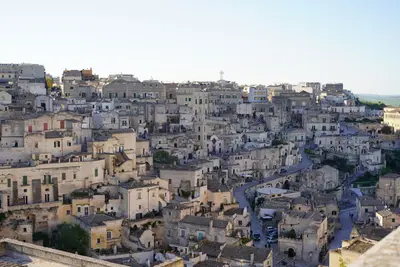
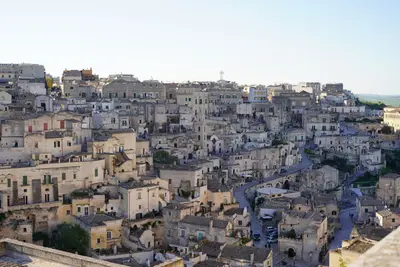
    Matera in Basilicata is considered one of the oldest continuously inhabited cities in the world. Its old town, the Sassi, comprises cave dwellings, rock churches, and houses carved over centuries into the tufa stone on the edge of a deep gorge. In the 1950s, the Sassi were evacuated due to poverty and poor hygiene; since 1993, they have been a UNESCO World Heritage site and are now re-inhabited, with hotels, restaurants, and museums in the caves. In 2019, Matera was a European Capital of Culture. Opposite the city, across the Gravina gorge, lies the Murgia Park, featuring more cave churches and the most famous view of the Sassi. The alleys and stairs are steep; comfortable shoes are necessary.

    Sources & method

    • Photos: Unsplash, Google Maps. Each photo carries its credit.
    • Place data such as addresses and ratings comes from Google Maps.
    • The content is based on web research from public, traceable sources. How the content is made · The role of AI