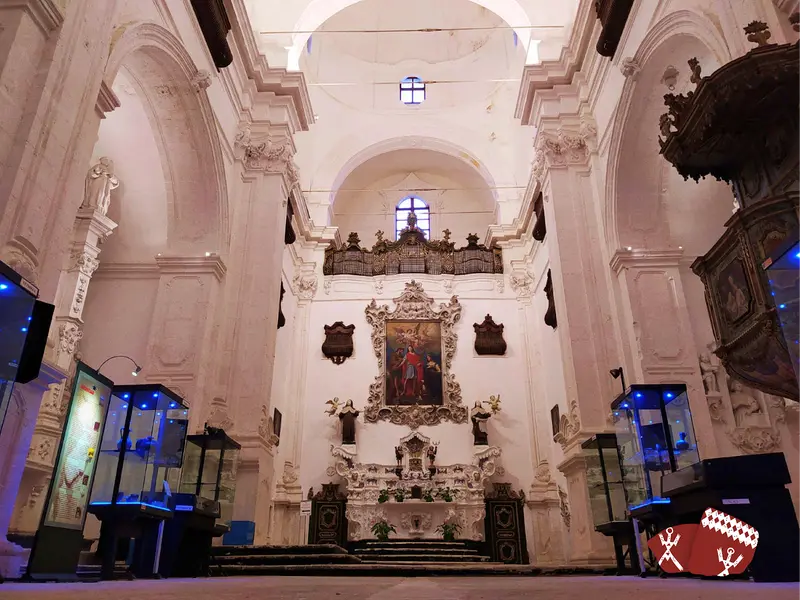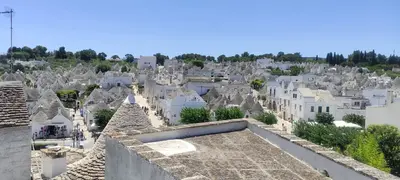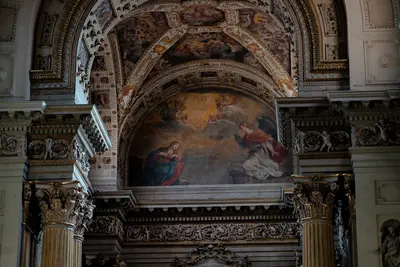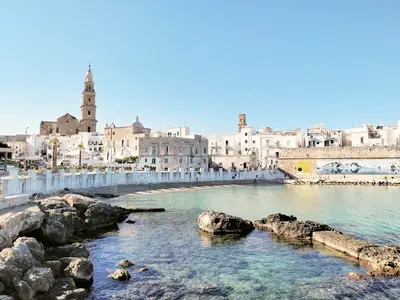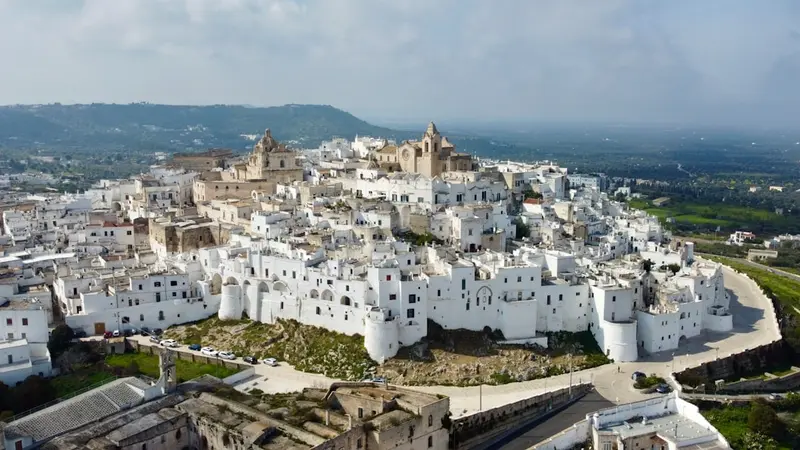
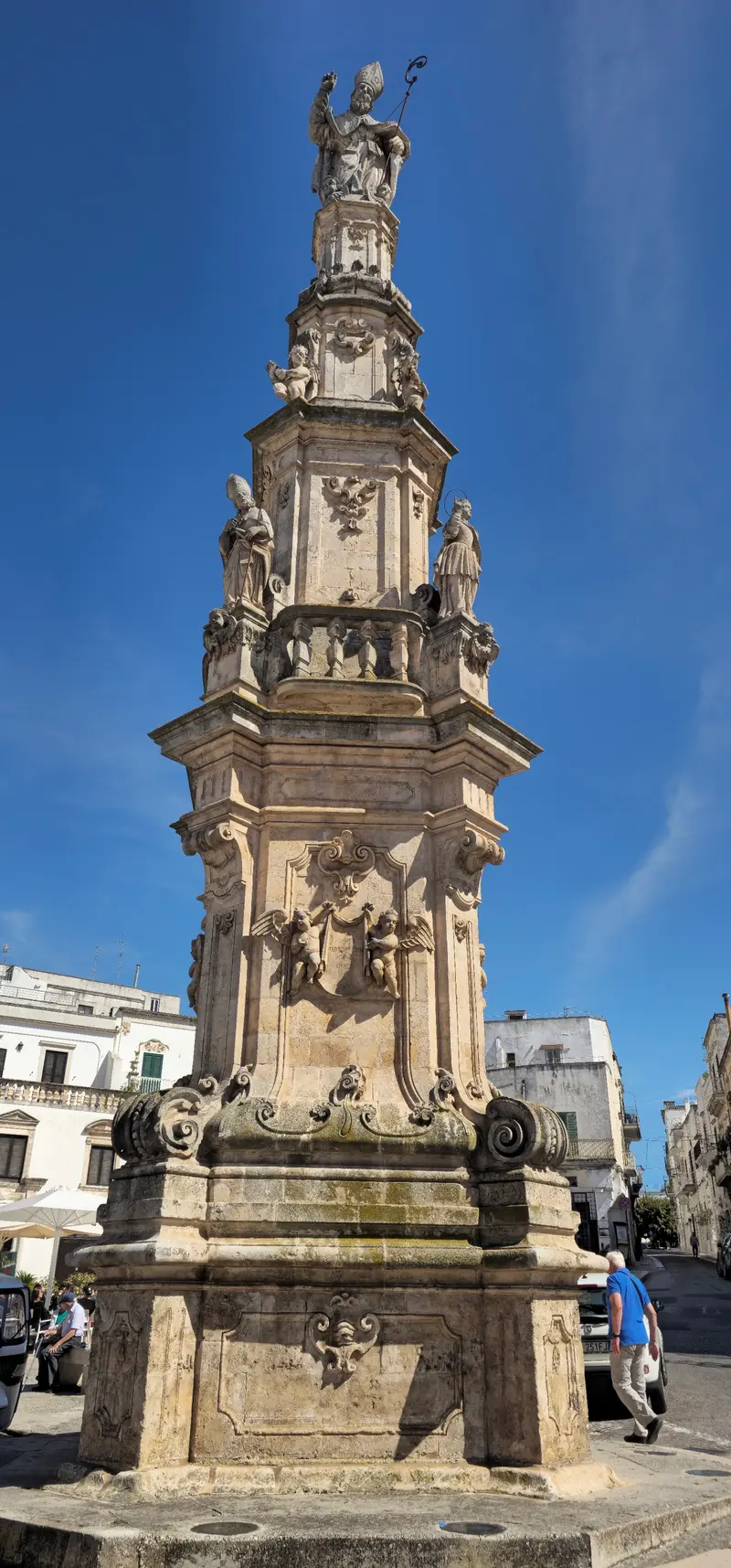
Ostuni, die Città Bianca, thront als strahlend weißes Juwel auf einem Hügel in Apulien und prägt das Landschaftsbild. Du navigierst durch ein faszinierendes Labyrinth aus engen Gassen, steilen Treppen und Bögen, die sich zwischen den charakteristischen Kalksteinhäusern schlängeln; deren traditionelle Kalkung schützte historisch vor Hitze. Im Herzen der Altstadt erhebt sich die imposante Kathedrale Santa Maria Assunta mit ihrer markanten Barockfassade und dem Rosettenfenster. Von der belebten Piazza della Libertà, dem Hauptplatz, blickst du auf den Obelisco di Sant'Oronzo und das Stadtgeschehen. Die erhöhte Lage Ostunis bietet zudem malerische Ausblicke über die endlosen Olivenhaine bis zur Adria. Für ein ruhigeres Erlebnis empfiehlt sich ein Besuch am späten Nachmittag, wenn das Licht die weißen Fassaden in warme Töne taucht. Plane genügend Zeit ein, um die versteckten Ecken und charmanten Cafés abseits der Hauptwege zu entdecken.
Places in Ostuni
Discover the most important sights and attractions
Curated walking tours through the city's highlights — handpicked by experienced travel journalists.
Durch Ostunis weiße Gassen: Ein Spaziergang durch die Città Bianca
Erleben Sie den einzigartigen Charme von Ostuni, der 'Weißen Stadt' Apuliens. Dieser 2-stündige Rundgang führt Sie von der belebten Piazza della Libertà hinauf zu den architektonischen Wundern der Altstadt und bietet atemberaubende Panoramablicke sowie versteckte, malerische Gassen.
Ostuni, known as the "White City," boasts a rich and multifaceted history, with origins dating back to the Paleolithic era. The current settlement evolved from a Messapian foundation, later adopted by the Romans. Its strategic hilltop location made it a coveted site over the centuries for various cultures and rulers, including Byzantines, Normans, and Spaniards, whose influences significantly shaped the city.Ostuni's architecture is its most iconic feature, defined by the characteristic whitewashed houses that shape the historic center. At the heart of the old town stands the Concattedrale di Santa Maria Assunta, a remarkable example of Late Gothic and Baroque architecture, with its impressive rose window. Narrow alleys, stairs, and arches weave through the labyrinth, lined with historic palazzi and defensive walls, testament to the city's resilience.The local culture is deeply rooted in its agricultural heritage and religious traditions. Since ancient times, the region has been renowned for its olive groves and the production of high-quality olive oil, a central component of Ostuni's identity. The annual Cavalcata di Sant'Oronzo, a solemn procession honoring the patron saint, manifests its deep roots in time-honored customs. These festivals and the regional Apulian cuisine are expressions of a vibrant tradition.
Getting Around Town
Ostuni, the radiant white city perched on the hill, is perfectly suited for exploration on foot. The winding, narrow streets of the historic old town are mostly pedestrian zones, inviting visitors to stroll, though comfortable footwear is essential due to the cobblestones and natural inclines.Ostuni does not have a metro or tram network. For longer distances, such as to the picturesque beaches along the coast or to the surrounding towns and villages, the local bus service is recommended. The lines are well-connected, and tickets can usually be purchased directly from the driver or at local kiosks.Bicycles and e-scooters offer a flexible way to explore the picturesque landscape with its olive groves and the coast; rental stations can often be found near the city center. For convenient arrivals from the train station or late-night journeys, taxis are available. These are best ordered by phone or found at designated stands, such as at Piazza della Libertà.Ride-sharing services are less common in this region compared to larger cities. Visitors arriving by car should consider parking outside the old town, as the historic center is closed to traffic and parking spaces are scarce.
These places are nearby — perfect for additional days or a day trip.
Puglia
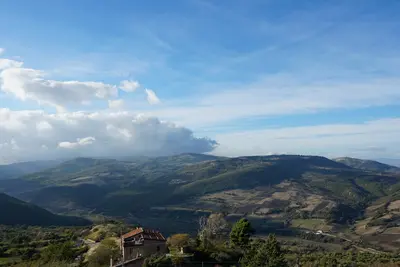
Apulia (Puglia), the "heel" of Italy's boot, enchants with its distinctive blend of pristine coastlines, historic towns, and a rich culinary tradition. This sun-drenched region is famous for its unique Trulli, magnificent baroque buildings, and olive groves that stretch to the horizon.
Alberobello
Alberobello, a UNESCO World Heritage site, fascinates with its unique Trulli architecture. These characteristic, whitewashed houses with their cone-shaped roofs significantly shape the town's appearance. Particularly the districts of Rione Monti and Aia Piccola offer an authentic insight into this traditional construction. The Trullo Sovrano, the only two-story trullo, and the Trullo Church of Sant'Antonio are remarkable examples of local architecture. Historically, the Trulli served farmers as quickly dismantled dwellings, often to evade taxes. To experience the unique atmosphere in peace, it's best to visit Alberobello in the early morning or late afternoon. Away from the main tourist paths, you'll find authentic craft shops and quieter corners in the narrow streets.
Apulien
Willkommen in Apulien, dem malerischen Absatz des italienischen Stiefels! Hier erwartet dich eine faszinierende Mischung aus azurblauem Meer, goldenen Olivenhainen und einzigartiger Architektur, die deine Sinne verzaubern wird. Entdecke die authentische Schönheit dieser Region, wo Geschichte, Kultur und eine unvergleichliche Küche harmonisch miteinander verschmelzen und dich auf eine unvergessliche Reise mitnehmen.
Polignano a Mare
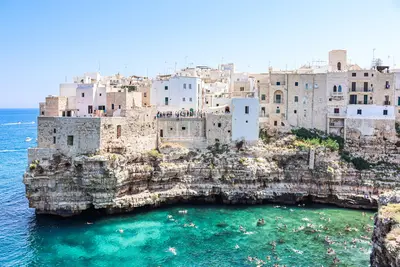
Polignano a Mare, picturesquely situated on limestone cliffs overlooking the Adriatic Sea, is a jewel of Apulia. The town is renowned for its dramatic coastal scenery and charming old town with its winding alleys and whitewashed houses. A standout feature is Lama Monachile, an iconic rocky cove with a pebble beach that stretches spectacularly between the cliffs. Stroll through the historic center, discover hidden squares, and enjoy panoramic views from the terraces. Along the Lungomare, you'll find the statue of the town's famous son, Domenico Modugno, the composer of "Volare". To experience the authentic atmosphere without large crowds, a visit in spring or autumn is ideal. Sample the local fish cuisine at one of the restaurants with sea views.
Lecce
Lecce, often called the "Florence of the South," impresses with its opulent Baroque architecture crafted from golden tufa stone.The Basilica di Santa Croce and the Piazza Duomo are outstanding examples of this artistry that defines the city's appearance.A Roman amphitheater in the Piazza Sant'Oronzo and the Castello Carlo V bear witness to the city's rich and multifaceted history.For a relaxed exploration, a visit in spring or autumn is recommended, when temperatures are pleasant and crowds are smaller.Be sure to try local specialties like the sweet Pasticiotto Leccese or the savory Rustico to discover Lecce's culinary side.