Fernweh: Home
    ExploreTravel GuidesPlan a tripMy tripLast visited
    de|en
    All Places & RegionsAll highlightsAbout FernwehFAQPrivacy PolicyImprint
    ExploreTravel GuidesPlan a tripMy tripLast visited
    • Neighborhoods & highlights
    • Recommendations
    • Walking tours
    • Eat & drink
    • Food culture
    • Culture
    • Nightlife
    • Getting around
    • Accommodation
    • Plan trip
    • Nearby
    Bologna

    Italy

    Bologna

    CityCulture

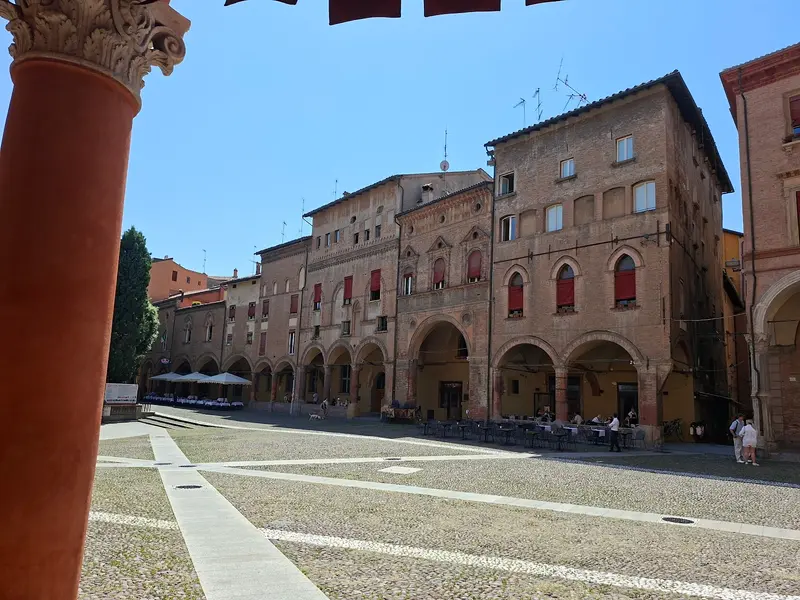
    Bologna is the capital of Emilia-Romagna and lies on the edge of the Po Plain at the foot of the Apennines. The old town, with its arcades and medieval towers, defines the cityscape.

    by Felix Gillen

    1. Home
    2. Destinations
    3. Italy
    4. Emilia-Romagna
    5. Bologna
    Bologna is the capital of Emilia-Romagna and lies on the edge of the Po Plain at the foot of the Apennines. The old town, with its arcades and medieval towers, defines the cityscape. The university, founded in 1088, is considered the oldest continuously operating university, and the city is known for its hearty cuisine.

    Sights in Bologna

    Discover the most important sights and attractions

    Neptunbrunnen
    Historic Landmark

    1Neptunbrunnen

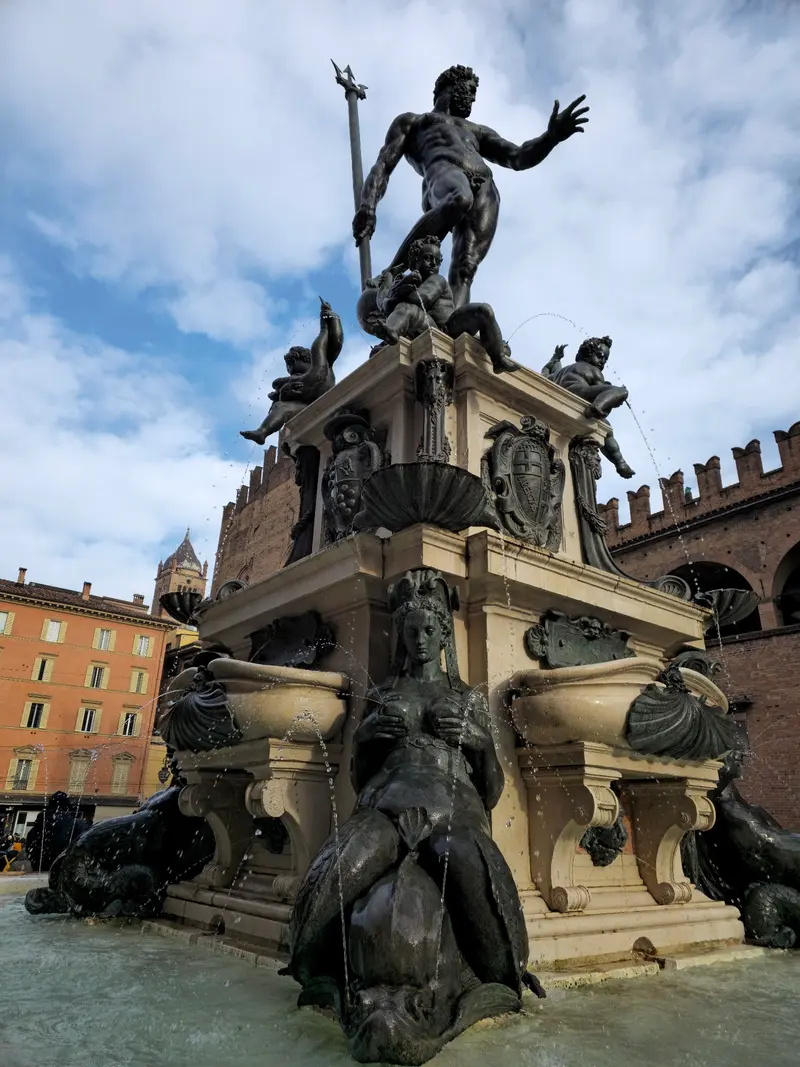
    Fountain at Piazza del Nettuno next to Piazza Maggiore, dating from the 1560s. The bronze figure of the sea god was created by the Flemish sculptor Giambologna.
    Open in Google Maps
    San Pietro Cathedral
    Church

    2San Pietro Cathedral

    Bologna's Bishop's Church. After the collapse of the vaults in 1599, the main structure was rebuilt from 1605; its interior is Baroque, and the facade was built from 1743 to 1747. The bell tower dates from the 12th and 13th centuries and encloses an even older tower.
    Open in Google Maps
    Museo di San Colombano - Collezione Tagliavini
    Museum

    3Museo di San Colombano - Collezione Tagliavini

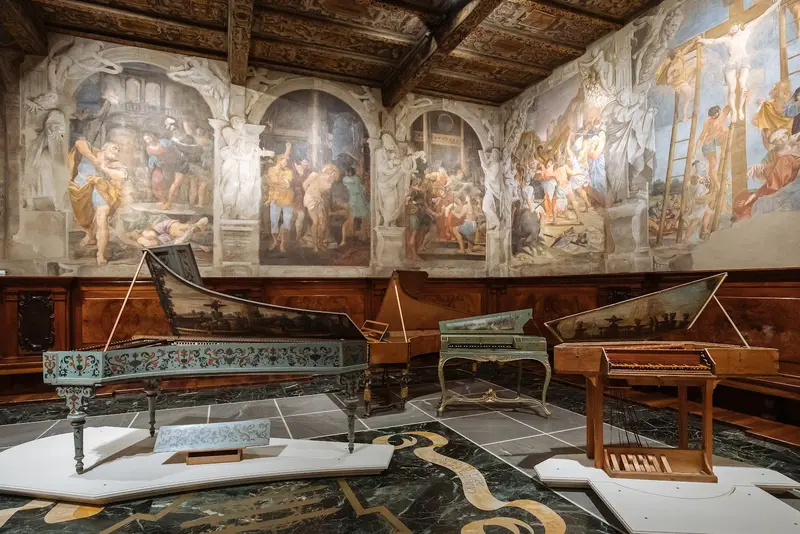
    Music Museum in the restored church complex of San Colombano on Via Parigi, showcasing the collection of historical keyboard instruments by musician Luigi Ferdinando Tagliavini, including harpsichords, spinets, and organs.
    Open in Google Maps
    Two Towers (Asinelli and Garisenda)
    Attraction

    4Two Towers (Asinelli and Garisenda)

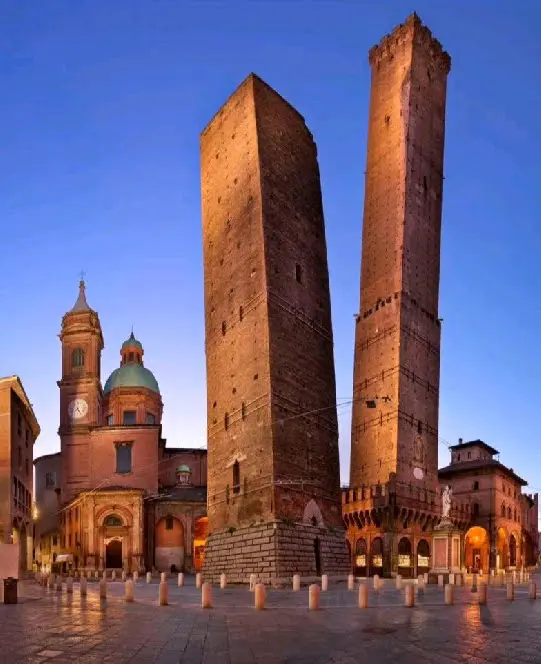
    The two towers on Piazza di Porta Ravegnana were built in the 12th century and are the city's landmark. The Torre degli Asinelli is around 97 meters high, while the smaller Garisenda measures 47 meters and leans significantly to the side. The Garisenda is being restored and is not accessible; according to Bologna Welcome, climbing the Asinelli is also currently closed (as of October 2026), please check the current status before your visit.
    Open in Google Maps
    Palazzo dell'Archiginnasio
    Attraction

    5Palazzo dell'Archiginnasio

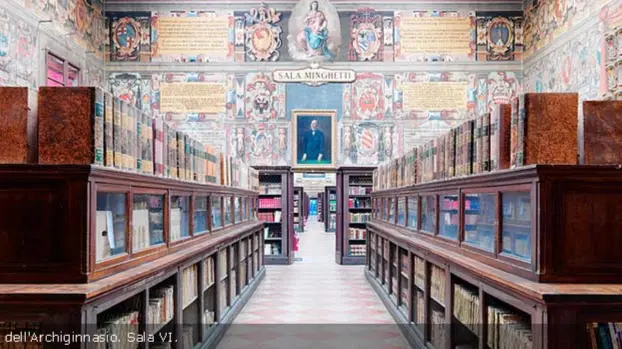
    Built 1562-1563, it served as the University's main seat until 1803, today housing the City Library. Walls and ceilings boast around 6,000 coats of arms of former students. The 1636 wooden Anatomical Theatre is on the upper floor.
    Open in Google Maps
    Santo Stefano (Seven Churches)
    Church

    6Santo Stefano (Seven Churches)

    A nested complex of churches, chapels, courtyards, and a cloister at Piazza Santo Stefano, popularly known as “Sette Chiese” (Seven Churches).
    Open in Google Maps

    City walks in Bologna

    Curated walking tours through the city's highlights, handpicked by experienced travel journalists.

    Bologna's Heartbeat: A Walk Through the Red City

    Discover the soul of Bologna on this two-hour walk through historic lanes and across magnificent squares. Immerse yourself in the rich history, admire impressive architecture and be enchanted by the vibrant life of the student city. From medieval towers to hidden culinary treasures, an unforgettable experience awaits you.

    ~2 Std. 5 Min.
    Open in Google Maps
    Stops (5)

    Food and Drink

    1

    Restaurant Il Veliero

    Fish restaurant and pizzeria north of the main station, with terrace.
    Show on Google Maps
    2

    Zenzero Bologna

    Bistro restaurant on Via Fratelli Rosselli, north of the main station.
    Show on Google Maps
    3

    Centro Natura

    Vegetarian and vegan restaurant on Via degli Albari, part of a center that also offers yoga and courses.
    Show on Google Maps
    4

    Trattoria dal Biassanot

    Trattoria serving Bolognese cuisine on Via Piella, near the small canal window.
    Show on Google Maps

    Food and Drink

    Many classics of Italian cuisine have their origins in Bologna. Fresh pasta is traditionally rolled by hand here.

    Tagliatelle with ragù

    Tagliatelle with meat ragu, known outside Italy as Bolognese sauce.

    Tortellini in broth

    Small filled dough pockets, served in broth.

    Mortadella

    Sausage specialty closely associated with the city.

    Lasagne

    It belongs to the classic specialties of Bolognese cuisine.

    Quadrilatero

    Old market district of medieval origin between Piazza Maggiore and the Due Torri, with traditional shops, many of which have been family-owned for generations.

    History and Culture

    Bologna traces its origins to the Etruscan settlement Felsina and the Roman colony Bononia, founded in 196 BC. In the Middle Ages, leading families built residential towers, some of which remain standing today, including the Due Torri. The university was founded in 1088.From 1506 to 1796 and again from 1815, Bologna belonged to the Papal States; in March 1860, the city voted to join the new Kingdom of Italy. The nickname la Rossa also refers to the city's long left-wing political imprint.

    Nightlife

    1

    Petroni Caffe

    Bar on Via Giuseppe Petroni in the University Quarter.
    Show on Google Maps
    2

    Osteria del Sole

    Historic osteria in the Quadrilatero market district that only serves wine. Guests bring their own food, perhaps from the surrounding delis.
    Show on Google Maps
    3

    Celtic Druid Irish Pub

    Irish Pub in the center with draught beer and simple food.
    Show on Google Maps
    4

    Bravo Caffè

    Bar on Via Mascarella in the university district.
    Show on Google Maps
    5

    Il Punto

    Bar on Via San Rocco, west of the Old Town.
    Show on Google Maps
    6

    Caffè Rubik

    Bar on Via Marsala, between Via Indipendenza and the University Quarter.
    Show on Google Maps
    7

    Cantina Bentivoglio

    Wine bar in a former wine cellar on Via Mascarella, in the university district.
    Show on Google Maps
    8

    Covo Club

    Music club with live concerts on Viale Zagabria, northeast of the center.
    Show on Google Maps
    9

    SensoVerso

    Bar on Via Guglielmo Oberdan in the center.
    Show on Google Maps
    10

    EL CAPO Barrio Latino

    Bar on Via Parigi, north of Via Ugo Bassi.
    Show on Google Maps

    Exploring Locally

    The Old Town is best explored on foot; the arcades provide shelter from rain and heat. Buses are operated by TPER; single tickets are valid for 75 minutes and are available at TPER sales points, tobacco shops, and vending machines, and on some buses, also by credit card on board. The historic center is largely a restricted traffic zone (ZTL) with a 30 km/h speed limit.Bologna Centrale station is one of Italy's most important railway hubs. From Guglielmo Marconi Airport, the elevated monorail Marconi Express travels to the station in a good seven minutes.

    Accommodations in Bologna

    Find perfect stay in Bologna

    Booking.com* (Affiliate link)
    Search Hotels
    Agoda* (Affiliate link)
    Search Hotels
    Airbnb
    Vacation Rentals

    * Affiliate link: if you book through it, we earn a small commission. The price stays the same for you.

    Campgrounds in Bologna

    Find perfect campground in Bologna

    Search via Google Maps
    Campgrounds nearby (15km)
    Camping.info
    Find Campgrounds
    Park4Night
    RV Parks & Camping

    Plan your trip to Bologna

    Save places, build a route and plan your city trip, all in one place.

    1. 1
      Sunrise over alpine peaks and a sea of clouds
      1234

      Round trip

      12 days · 4 stops

      Saved

      Pick a route

      Pick a ready-made one or save places and plan your own.

      Open bookmarks
    2. 2

      Trip to Bologna

      Live
      • 1Neptunbrunnen3 days
      • 2San Pietro Cathedral4 days
      • 3Museo di San Colombano - Collezione Tagliavini5 days
      Budget

      Plan your trip

      The planner sorts stops, days and budget. Plan together in real time.

      Start trip planning
    3. 3
      9:41 No signal
      Bologna
      Available offline

      Use it on the road

      Download the guide to your phone and use it on site, even offline.

    Nearby

    Emilia-Romagna

    Emilia-Romagna

    Emilia-Romagna stretches across northern Italy from the Apennines over the Po Plain to the Adriatic coast; the Po forms its northern border. Along the ancient Roman road Via Emilia, cities like Piacenza, Parma, Reggio Emilia, Modena and Bologna, the region's capital, are strung.To the east, in the Romagna, lie Ravenna with its Byzantine mosaics and the Adriatic beach resorts around Rimini. The region is known for its cuisine, from Parma ham and Parmigiano Reggiano to balsamic vinegar and egg pasta.
    Modena

    Modena

    Modena lies on the southern edge of the Po Valley between Bologna and Parma and has around 184,000 inhabitants. The historic center clusters around Piazza Grande, home to the Romanesque Cathedral and Ghirlandina bell tower, a joint UNESCO World Heritage site since 1997.The city is known for its traditional balsamic vinegar and its automotive connection: Enzo Ferrari was born in Modena, and Maranello, with the Ferrari factory, lies south of the city.
    Ferrara

    Ferrara

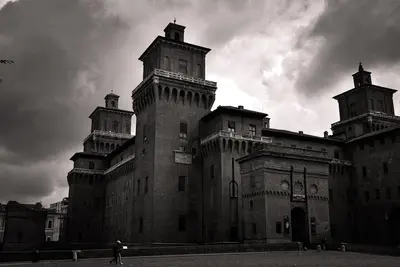
    Ferrara is located in the Po Valley, approximately 44 kilometres northeast of Bologna. From 1264 to 1598, the d'Este family ruled here, under whom the city became an important Renaissance court.The old town is enclosed by an almost completely preserved city wall, approximately nine kilometres long. To the north lies the Addizione Erculea, a city extension systematically planned from 1492. Since 1995, Ferrara has been a UNESCO World Heritage site; in 1999, the listing was expanded to include the Po Delta.
    Ravenna

    Ravenna

    Ravenna is located inland in Romagna and is connected to the Adriatic Sea via the Candiano Canal. In the 5th century, the city was the capital of the Western Roman Empire, then the residence of the Ostrogothic King Theodoric, and the seat of the Byzantine administration in Italy.Dating from this period are churches, baptisteries, and mausoleums with early Christian mosaics; those of San Vitale are among the largest and best-preserved Byzantine mosaics outside Istanbul. Eight of these 5th and 6th-century structures have been UNESCO World Heritage sites since 1996. Additionally, Ravenna is home to the tomb of the poet Dante Alighieri.
    Florence

    Florence

    Florence, Tuscany's capital, birthplace of the Renaissance. The Duomo (Brunelleschi's Dome), Palazzo Vecchio, Uffizi, and Ponte Vecchio over the Arno are tightly grouped. Michelangelo's David is in the Galleria dell'Accademia. Across the river, Oltrarno features Palazzo Pitti, the Boboli Gardens, and artisan workshops. A UNESCO World Heritage site since 1982, the Old Town is easily explored on foot. Florence is roughly 1.5 hours from Rome by high-speed train. You should reserve tickets for Uffizi, Accademia, and Duomo Dome in advance.

    Sources & method

    • Photos: Unsplash, Google Maps. Each photo carries its credit.
    • Place data such as addresses and ratings comes from Google Maps.
    • The content is based on web research from public, traceable sources. How the content is made · The role of AI