Fernweh: Home
    ExploreTravel GuidesPlan a tripMy tripLast visited
    de|en
    All Places & RegionsAll highlightsAbout FernwehFAQPrivacy PolicyImprint
    ExploreTravel GuidesPlan a tripMy tripLast visited
    • Overview
    • Places in the region
    • Food culture
    • Culture
    • Getting around
    • Nearby
    Emilia-Romagna

    Italy

    Emilia-Romagna

    Region

    Emilia-Romagna stretches across northern Italy from the Apennines over the Po Plain to the Adriatic coast; the Po forms its northern border.

    by Felix Gillen

    1. Home
    2. Destinations
    3. Italy
    4. Emilia-Romagna
    Emilia-Romagna stretches across northern Italy from the Apennines over the Po Plain to the Adriatic coast; the Po forms its northern border. Along the ancient Roman road Via Emilia, cities like Piacenza, Parma, Reggio Emilia, Modena and Bologna, the region's capital, are strung.To the east, in the Romagna, lie Ravenna with its Byzantine mosaics and the Adriatic beach resorts around Rimini. The region is known for its cuisine, from Parma ham and Parmigiano Reggiano to balsamic vinegar and egg pasta.
    Emilia-Romagna has approximately 4.5 million inhabitants and consists of two historic regions: Emilia in the west and Romagna in the east, separated by the Sillaro river. About two-thirds of the population lives in the cities along the Via Emilia. Several sites are UNESCO World Heritage sites, including the Porticoes of Bologna, Modena Cathedral and Piazza Grande, the early Christian monuments of Ravenna, and Ferrara with the Po Delta. In summer, the Adriatic coast attracts many beachgoers.
    Bologna

    Place 1 of 4

    Bologna

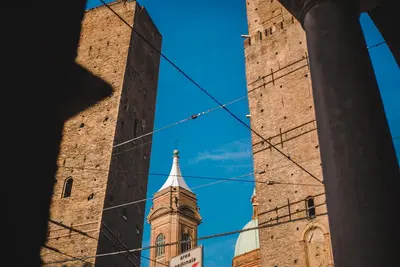
    Bologna is the capital of Emilia-Romagna and lies on the edge of the Po Plain at the foot of the Apennines. The old town, with its arcades and medieval towers, defines the cityscape.

    Discover
    Ferrara

    Place 2 of 4

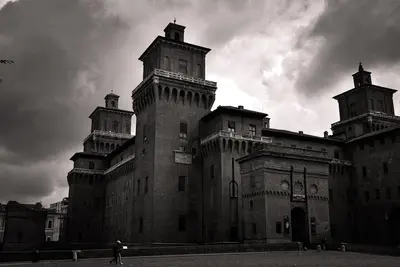
    Ferrara

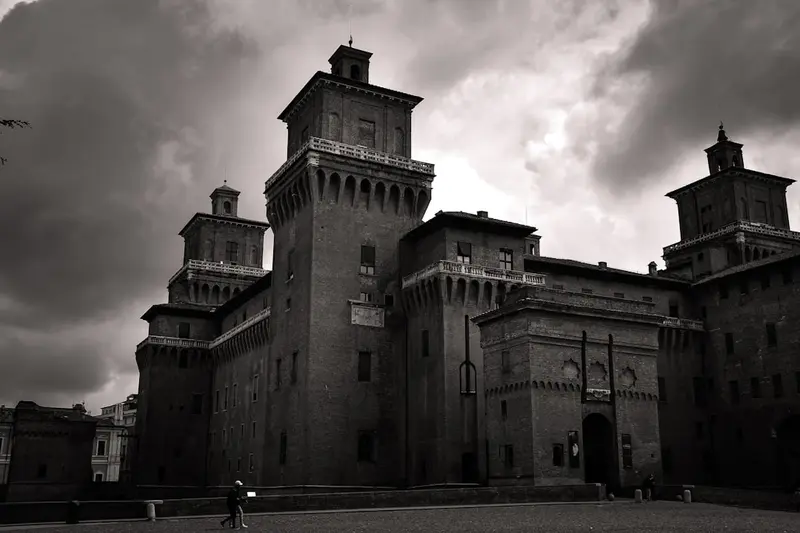
    Ferrara is located in the Po Valley, approximately 44 kilometres northeast of Bologna. From 1264 to 1598, the d'Este family ruled here, under whom the city became an important Renaissance court.

    Discover
    Modena

    Place 3 of 4

    Modena

    Modena lies on the southern edge of the Po Valley between Bologna and Parma and has around 184,000 inhabitants.

    Discover
    Parma

    Place 4 of 4

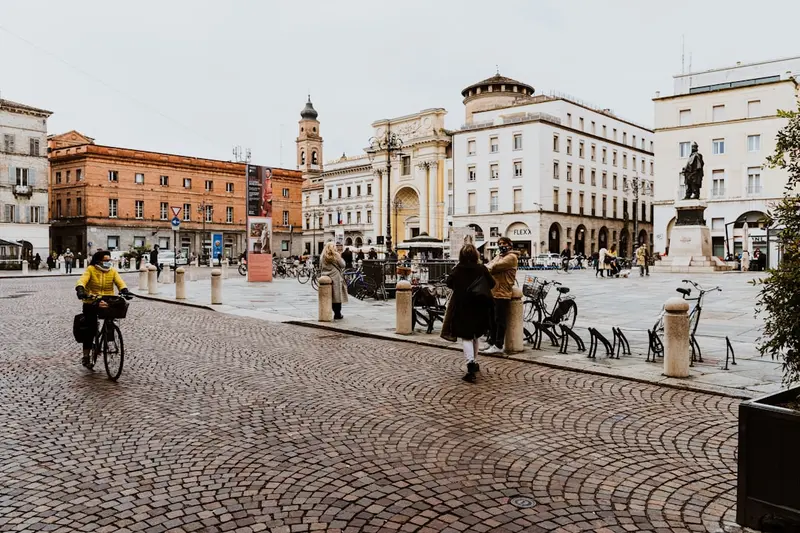
    Parma

    Parma is located in Emilia-Romagna on the Via Emilia and, with around 200,000 inhabitants, is the region's second-largest city after Bologna.

    Discover

    More places in Emilia-Romagna

    Ravenna

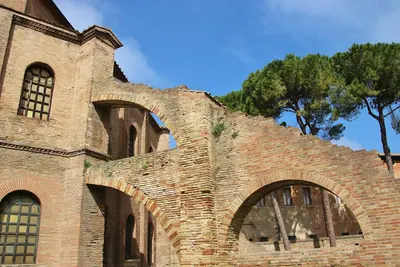
    Ravenna

    Ravenna is located inland in Romagna and is connected to the Adriatic Sea via the Candiano Canal. In the 5th century, the city was the capital of the Western Roman Empire, then the residence of the Ostrogothic King Theodoric, and the seat of the Byzantine administration in Italy.Dating from this period are churches, baptisteries, and mausoleums with early Christian mosaics; those of San Vitale are among the largest and best-preserved Byzantine mosaics outside Istanbul. Eight of these 5th and 6th-century structures have been UNESCO World Heritage sites since 1996. Additionally, Ravenna is home to the tomb of the poet Dante Alighieri.
    Rimini

    Rimini

    Rimini, located on the Adriatic Sea in southern Emilia-Romagna, is known primarily as a seaside resort with some 15 kilometers of sandy beach. The city also features an old town with Roman structures, the Renaissance Tempio Malatestiano, and the Borgo San Giuliano district. Film director Federico Fellini was born in Rimini in 1920; the Fellini Museum is dedicated to him.

    Sights in Emilia-Romagna

    Discover the most important sights and attractions

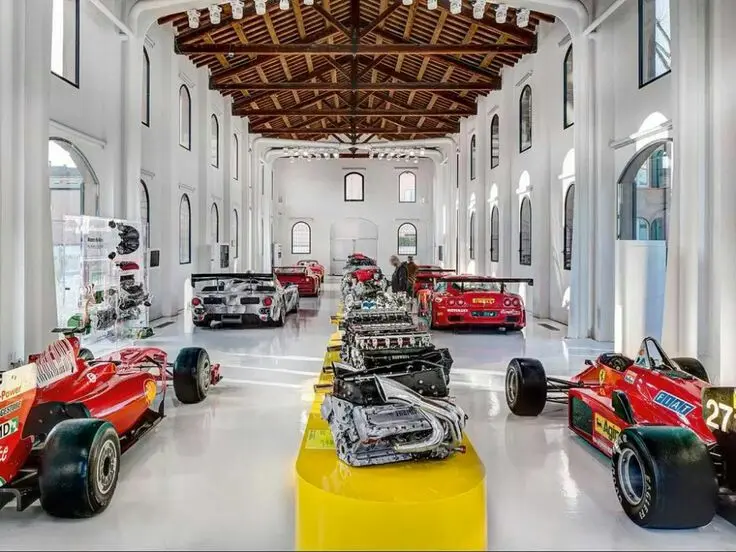
    Enzo Ferrari Museum, Modena
    Museum

    Enzo Ferrari Museum, Modena

    Museum in Modena, opened 2012, around the birthplace and workshop where Enzo Ferrari was born in 1898. The yellow new building, shaped like a car bonnet, was designed by Jan Kaplický. On display are sports cars, 1950s Ferraris, and Formula 1 cars. Since 2014, Ferrari has operated the house jointly with the Museo Ferrari in Maranello.
    Open in Google Maps
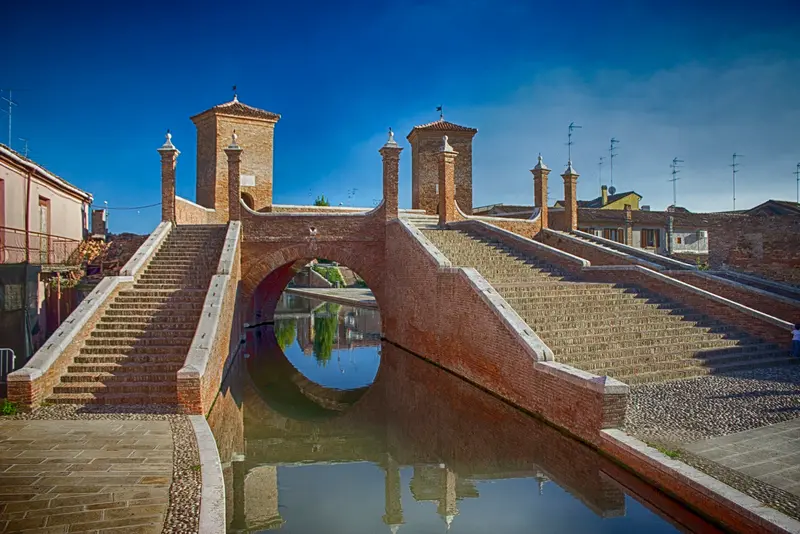
    Trepponti, Comacchio
    Attraction

    Trepponti, Comacchio

    The bridge, built around 1638 with five staircases of Istrian stone, is the landmark of Comacchio, a small town crisscrossed by canals in the lagoon at the Po Delta. Wetlands, fish farms, and salt pans surround the area; Comacchio is part of the Po Delta Regional Park.
    Open in Google Maps
    Rocca di Brisighella
    Castle

    Rocca di Brisighella

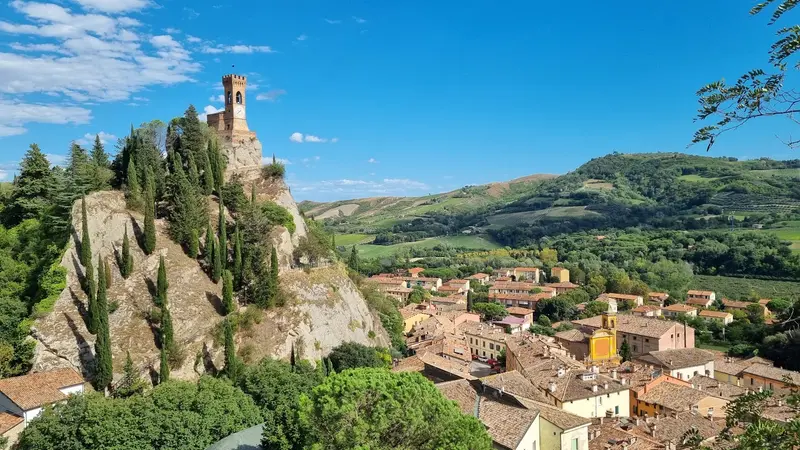
    Castle from 1228 above Brisighella in the province of Ravenna, later extended by Francesco Manfredi, with a tall tower added in 1503. In the village runs the elevated, mostly vaulted Via degli Asini; and a 19th-century clock tower.
    Open in Google Maps
    Castello di Torrechiara
    Castle

    Castello di Torrechiara

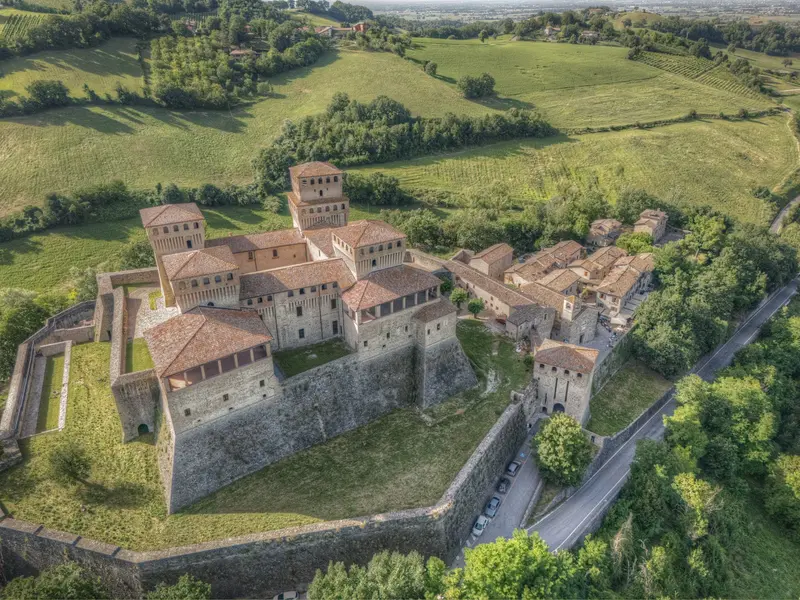
    Castle on a hill south of Parma, built 1448 to 1460 for Pier Maria II de' Rossi, featuring four towers and views over the Parma Valley. The frescoes of the Camera d'Oro, attributed to Benedetto Bembo, depict Bianca Pellegrini searching for her beloved.
    Open in Google Maps

    Dining & Drinks

    Emilia-Romagna is considered one of Italy's most important gourmet regions.

    Parmigiano Reggiano

    Hard cheese from unpasteurized cow's milk, aged for at least twelve months and produced in the provinces of Parma, Reggio Emilia, Modena, and parts of Bologna and Mantua.

    Prosciutto di Parma

    Air-dried ham, permitted for production only in the Parma region.

    Aceto Balsamico Tradizionale

    Traditional Balsamic Vinegar from Modena and Reggio Emilia, aged for at least twelve years in wooden casks.

    Tortellini and Tagliatelle

    Egg pasta is typical for the region, like Tortellini in broth and Tagliatelle with ragù.

    Piadina

    Flatbread from Romagna, since 2014 with Protected Geographical Indication (IGP).

    Lambrusco

    Dry, sparkling red wine, including from the Modena region.

    Heritage and Culture

    The Romans completed the Via Aemilia from Rimini to Piacenza in 187 BC, a road that gave Emilia its name. In the 5th century, Ravenna served as the capital of the Western Roman Empire and later as the seat of Byzantine administration in Italy; its mosaics date from this period.During the Middle Ages and Renaissance, powerful families like the Este ruled in Ferrara and Modena, and the Farnese in Parma and Piacenza. Bologna boasts the oldest continuously operating university, founded in 1088.The region is a hub for vehicle manufacturing: Ferrari is based in Maranello, Lamborghini in Sant'Agata Bolognese, joined by Maserati, Pagani, and Ducati.

    On the way in Emilia-Romagna

    Bologna Centrale is one of Italy's most important railway hubs, at the intersection of North-South and East-West lines. Modena and Parma are located on the Milan–Bologna line, Ferrara on the Padua–Bologna line; from Ravenna, trains run to Bologna, Ferrara and Rimini, among others.The main airport is Bologna Guglielmo Marconi, connected to the central station by the Marconi Express monorail. For the Apennine hills and the Po Delta, a car is practical.

    Nearby

    Bologna

    Bologna

    Bologna is the capital of Emilia-Romagna and lies on the edge of the Po Plain at the foot of the Apennines. The old town, with its arcades and medieval towers, defines the cityscape. The university, founded in 1088, is considered the oldest continuously operating university, and the city is known for its hearty cuisine.
    Modena

    Modena

    Modena lies on the southern edge of the Po Valley between Bologna and Parma and has around 184,000 inhabitants. The historic center clusters around Piazza Grande, home to the Romanesque Cathedral and Ghirlandina bell tower, a joint UNESCO World Heritage site since 1997.The city is known for its traditional balsamic vinegar and its automotive connection: Enzo Ferrari was born in Modena, and Maranello, with the Ferrari factory, lies south of the city.
    Ferrara

    Ferrara

    Ferrara is located in the Po Valley, approximately 44 kilometres northeast of Bologna. From 1264 to 1598, the d'Este family ruled here, under whom the city became an important Renaissance court.The old town is enclosed by an almost completely preserved city wall, approximately nine kilometres long. To the north lies the Addizione Erculea, a city extension systematically planned from 1492. Since 1995, Ferrara has been a UNESCO World Heritage site; in 1999, the listing was expanded to include the Po Delta.
    Ravenna

    Ravenna

    Ravenna is located inland in Romagna and is connected to the Adriatic Sea via the Candiano Canal. In the 5th century, the city was the capital of the Western Roman Empire, then the residence of the Ostrogothic King Theodoric, and the seat of the Byzantine administration in Italy.Dating from this period are churches, baptisteries, and mausoleums with early Christian mosaics; those of San Vitale are among the largest and best-preserved Byzantine mosaics outside Istanbul. Eight of these 5th and 6th-century structures have been UNESCO World Heritage sites since 1996. Additionally, Ravenna is home to the tomb of the poet Dante Alighieri.
    Florence

    Florence

    Florence, Tuscany's capital, birthplace of the Renaissance. The Duomo (Brunelleschi's Dome), Palazzo Vecchio, Uffizi, and Ponte Vecchio over the Arno are tightly grouped. Michelangelo's David is in the Galleria dell'Accademia. Across the river, Oltrarno features Palazzo Pitti, the Boboli Gardens, and artisan workshops. A UNESCO World Heritage site since 1982, the Old Town is easily explored on foot. Florence is roughly 1.5 hours from Rome by high-speed train. You should reserve tickets for Uffizi, Accademia, and Duomo Dome in advance.

    Sources & method

    • Photos: Unsplash, Google Maps. Each photo carries its credit.
    • Place data such as addresses and ratings comes from Google Maps.
    • The content is based on web research from public, traceable sources. How the content is made · The role of AI