Fernweh: Home
    ExploreTravel GuidesPlan a tripMy tripLast visited
    de|en
    All Places & RegionsAll highlightsAbout FernwehFAQPrivacy PolicyImprint
    ExploreTravel GuidesPlan a tripMy tripLast visited
    • Overview
    • Places in the region
    • Recommendations
    • Food culture
    • Culture
    • Getting around
    • Round trips
    • Nearby
    Melaka

    Malaysia

    Melaka

    RegionCulture

    Melaka was one of Asia's most important ports in the 15th century. Portuguese, Dutch, and British left their mark on the Old Town, while Chinese, Indian, and Malay communities built their temples, mosques, and kitchens.

    by Felix Gillen

    1. Home
    2. Destinations
    3. Malaysia
    4. Melaka
    Melaka was one of Asia's most important ports in the 15th century. Portuguese, Dutch, and British left their mark on the Old Town, while Chinese, Indian, and Malay communities built their temples, mosques, and kitchens. Since 2008, the Old Town, along with George Town, has been a UNESCO World Heritage site.The distances are short: From the red Dutch Square, you cross the river to Jonker Street or head up St. Paul's Hill. Two days are enough for the city; many visit as a day trip from Kuala Lumpur.
    Melaka is located on the west coast of the peninsula, about 150 kilometers southeast of Kuala Lumpur. The bus journey takes two to three hours. The historic center stretches across both banks of the Melaka River: On the east bank lie Dutch Square and St. Paul's Hill with their colonial buildings and museums, and on the west bank, Chinatown with Jonker Street. To the north lie Little India and the village of Kampung Morten; to the southeast, the Portuguese Settlement. On weekdays, the city is significantly quieter than on weekends, when the night market operates and day-trippers arrive.
    Dutch Square

    Place 1 of 4

    Dutch Square

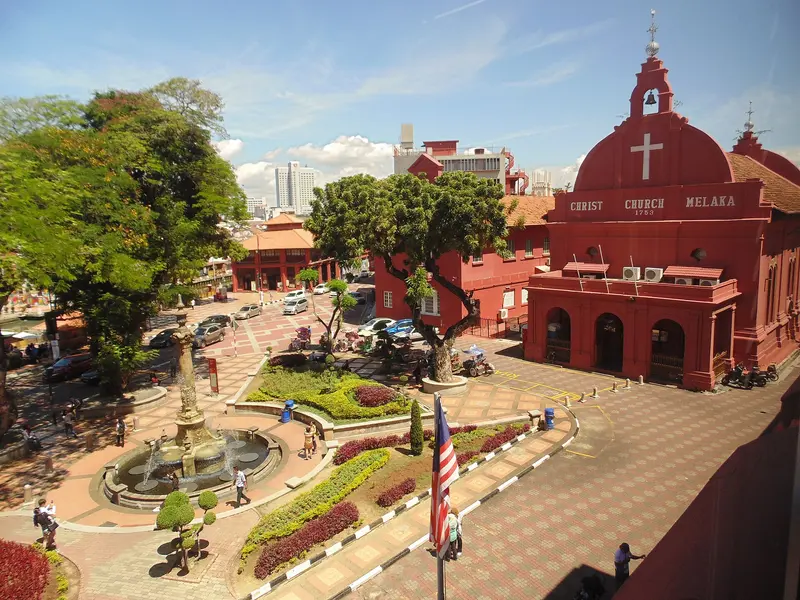
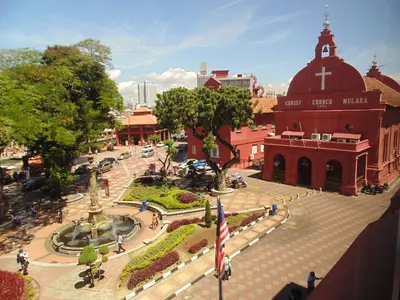
    The Dutch Square is the heart of Melaka's Old Town. Surrounding the square are the red-painted buildings from the Dutch era: the Stadthuys, formerly the governors' administrative seat, and the Christ Church from 1753.

    Discover
    Jonker Street
    Jack No1 / Wikimedia Commons / CC BY-SA 3.0

    Place 2 of 4

    Jonker Street

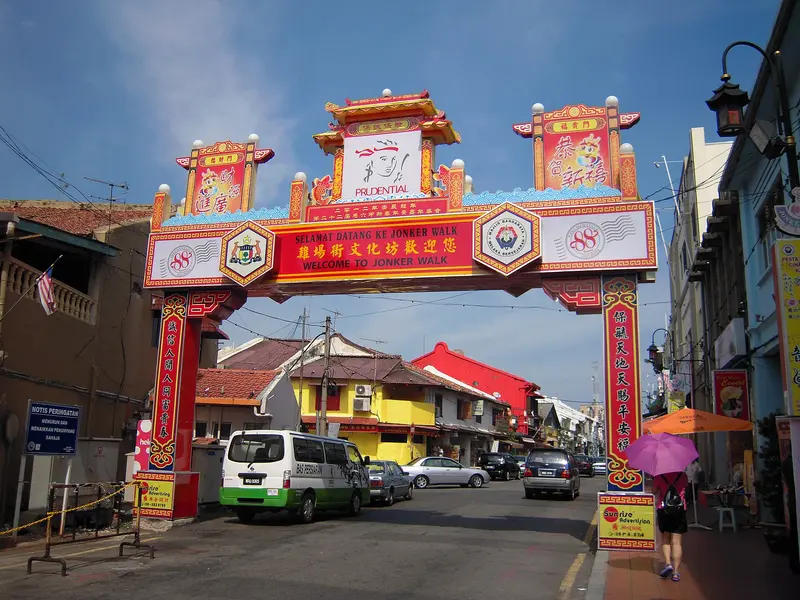
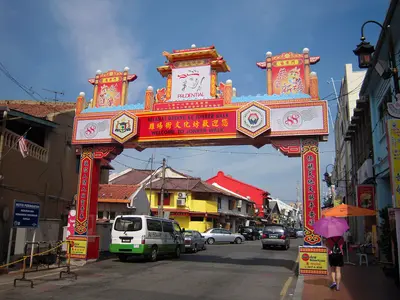
    The Jonker Street, officially Jalan Hang Jebat, is the main street of Melaka's Chinatown. In the narrow shophouses, you'll find antique shops, cafés, galleries, and food stalls.

    Discover
    Little India (Melaka)
    Chongkian / Wikimedia Commons / CC BY-SA 4.0

    Place 3 of 4

    Little India (Melaka)

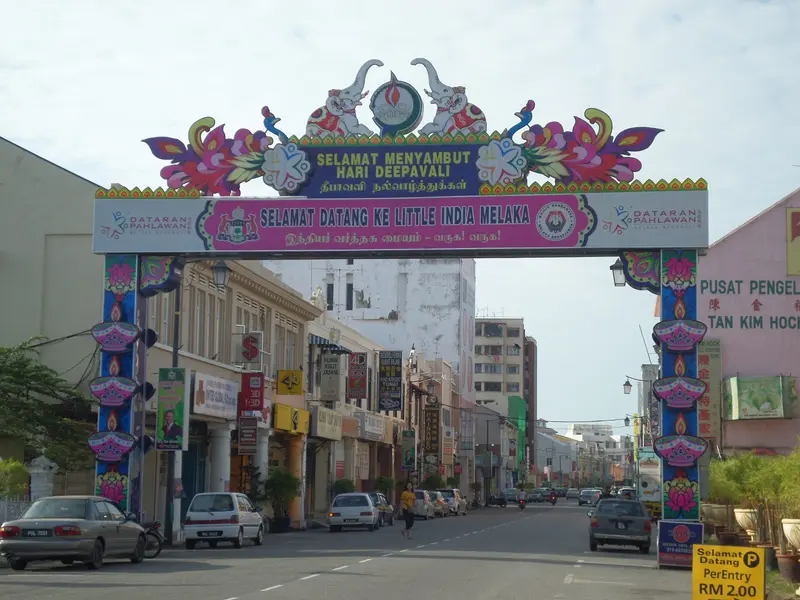
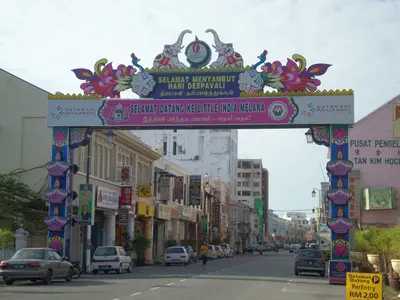
    Melaka's small Indian Quarter is located a few minutes' walk north of Dutch Square. In the shophouses, vendors sell saris, Punjabi suits, fabrics, and spices, interspersed with banana leaf restaurants.

    Discover
    Melaka River
    Bjørn Christian Tørrissen / Wikimedia Commons / CC BY-SA 3.0

    Place 4 of 4

    Melaka River

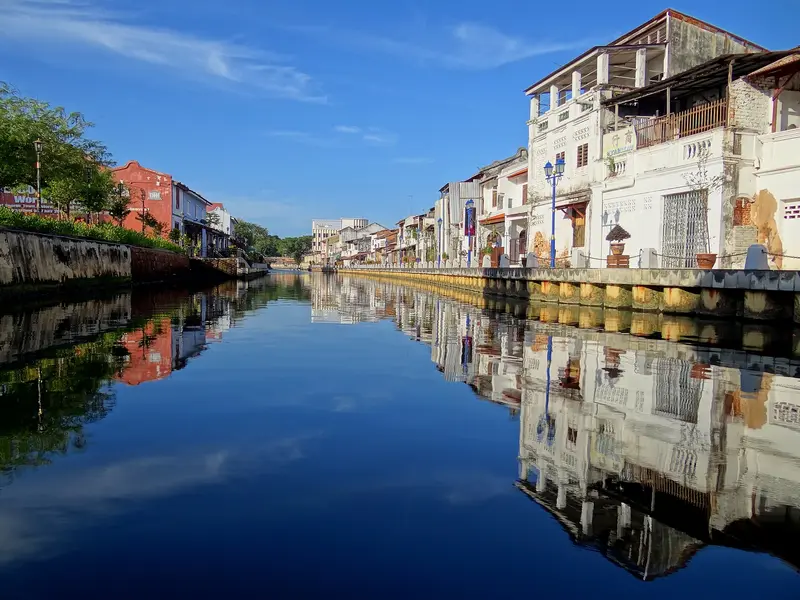
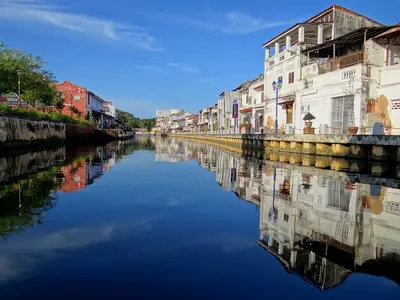
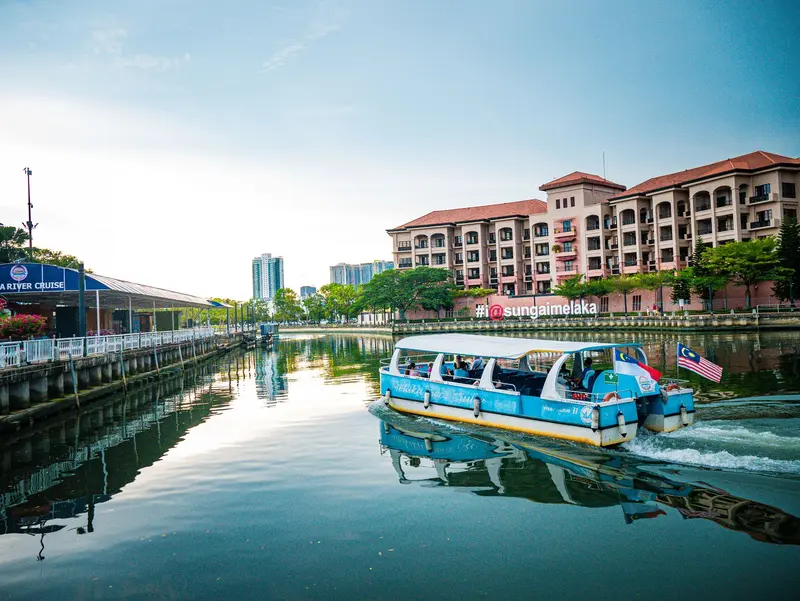
    The Melaka River was for centuries the lifeblood of the port city. Today, a riverside promenade passes restored warehouses, cafes, and large murals.

    Discover

    More places in Melaka

    Portuguese Settlement

    Portuguese Settlement

    In the **Portuguese Settlement**, known in Malay as Kampung Portugis, live the descendants of Portuguese sailors and local women. Some residents still speak Kristang, a Portuguese-influenced Creole language.The district is located a few kilometers southeast of the Old Town, in the Ujong Pasir area by the sea. It is quiet during the day; in the evenings and on weekends, the eateries on Medan Portugis fill up, serving seafood and Kari Debal.
    St. Paul's Hill & A Famosa

    St. Paul's Hill & A Famosa

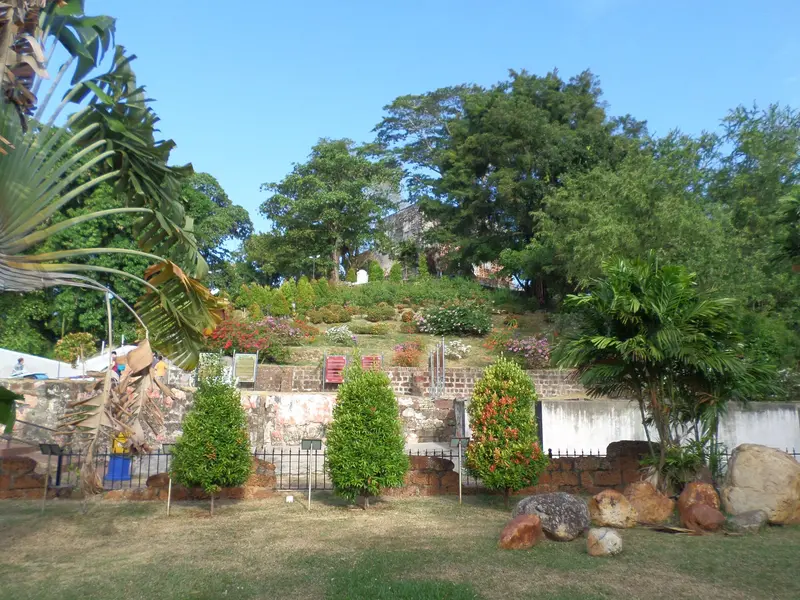
    The St. Paul's Hill, known in Malay as Bukit St. Paul, is the historical heart of Melaka. Around the hill, the Portuguese built their fort A Famosa after 1511. On its summit stands the ruin of St. Paul's Church, while at its foot are the Porta de Santiago gate and several museums.The ascent takes only a few minutes. From the top, you have a view over the rooftops of the old town.

    Dining and Drinking

    Melaka is known for the Nyonya cuisine of the Peranakan, which combines Chinese ingredients with Malay spices.

    Chicken Rice Balls

    Steamed chicken with rice formed into small balls. The most famous eateries are on Jonker Street.

    Nyonya Laksa

    Noodle soup with spicy coconut broth, prawns and tofu, the Peranakan version of Laksa.

    Ayam Pongteh

    Braised chicken with fermented soybeans, potatoes, and palm sugar, a classic of Nyonya cuisine.

    Cendol

    Shaved ice with green rice flour noodles, coconut milk and Gula Melaka syrup, the region's dark palm sugar.

    Kari Debal

    Spicy curry of the Kristang community, best tried in the Portuguese Settlement.

    History and Culture

    Sultanate and Colonial EraAround 1400, Parameswara, a prince from Sumatra, founded the Sultanate of Melaka. It controlled the strait between the Indian Ocean and the South China Sea, becoming a hub for spices, silk, and porcelain.In 1511, the Portuguese conquered the city, followed by the Dutch in 1641. With the Anglo-Dutch Treaty of 1824, it was ceded to Great Britain and became part of the Straits Settlements.Peranakan and KristangFrom the union of Chinese traders with Malay families emerged the Peranakan culture, featuring its own cuisine, clothing, and architecture. Descendants of Portuguese settlers continue to preserve their Kristang creole language to this day.

    Getting There and Around

    Getting ThereBuses from Kuala Lumpur's TBS terminal take about two to three hours to Melaka Sentral bus station. Direct buses from KLIA Airport take around two and a half hours. From Melaka Sentral to the Old Town, take Grab or a city bus.Getting AroundEverything in the center is within walking distance. For the Portuguese Settlement or returning to your hotel in the evening, take Grab. The decorated Trishaws are more of an attraction than transport; agree on the price beforehand.
    Round trips through this region

    Malaysia Culture & Cuisine

    Malaysia Culture & Cuisine

    The route starts in the port city of Melaka, about two and a half bus hours from Kuala Lumpur Airport, and continues via Kuala Lumpur and Ipoh to George Town on Penang, finishing in Langkawi. ETS trains run between Kuala Lumpur, Ipoh, and Butterworth. To Langkawi, you fly from Penang in around 40 minutes or take the ferry from Kuala Kedah; currently, there's no direct ferry from Penang.

    19 Days
    5 stops

    Nearby

    Dutch Square

    Dutch Square

    The Dutch Square is the heart of Melaka's Old Town. Surrounding the square are the red-painted buildings from the Dutch era: the Stadthuys, formerly the governors' administrative seat, and the Christ Church from 1753. From the British period come the clock tower, built by merchant Tan Jiak Kim in 1886 in honor of his father Tan Beng Swee, and a fountain commemorating Queen Victoria.In front of the church, trishaws await, bicycle rickshaws adorned with plastic flowers, fairy lights, and loud music. Early in the morning, you'll have the square almost to yourself.
    Melaka River

    Melaka River

    The Melaka River was for centuries the lifeblood of the port city. Today, a riverside promenade passes restored warehouses, cafes, and large murals. At night, the banks are illuminated, and tour boats slowly cruise by.Upstream is the Malay village Kampung Morten with its wooden houses. You can easily explore the route on foot or by boat in one evening.
    St. Paul's Hill & A Famosa

    St. Paul's Hill & A Famosa

    The St. Paul's Hill, known in Malay as Bukit St. Paul, is the historical heart of Melaka. Around the hill, the Portuguese built their fort A Famosa after 1511. On its summit stands the ruin of St. Paul's Church, while at its foot are the Porta de Santiago gate and several museums.The ascent takes only a few minutes. From the top, you have a view over the rooftops of the old town.
    Jonker Street

    Jonker Street

    The Jonker Street, officially Jalan Hang Jebat, is the main street of Melaka's Chinatown. In the narrow shophouses, you'll find antique shops, cafés, galleries, and food stalls. In the parallel street, the Cheng Hoon Teng Temple, a mosque, and a Hindu temple stand just a few steps from each other.From Friday to Sunday evenings, the street transforms into a night market. During the week, it's quieter, allowing you to peacefully admire the facades.
    Little India (Melaka)

    Little India (Melaka)

    Melaka's small Indian Quarter is located a few minutes' walk north of Dutch Square. In the shophouses, vendors sell saris, Punjabi suits, fabrics, and spices, interspersed with banana leaf restaurants. Not far away stands St. Peter's Church, dating from 1710.The quarter is smaller and quieter than Little India in Kuala Lumpur, but is well-suited for lunch away from the main tourist routes.

    Sources & method

    • Photos: Pexels. Each photo carries its credit.
    • The content is based on web research from public, traceable sources. How the content is made · The role of AI