Fernweh: Home
    ExploreTravel GuidesPlan a tripMy tripLast visited
    de|en
    All Places & RegionsAll highlightsAbout FernwehFAQPrivacy PolicyImprint
    ExploreTravel GuidesPlan a tripMy tripLast visited
    • Overview
    • Places in the region
    • Food culture
    • Best travel time
    • Culture
    • Getting around
    • Round trips
    • Nearby
    Yucatán Peninsula

    Mexico

    Yucatán Peninsula

    Region

    The Yucatán Peninsula in southeastern Mexico comprises the states of Yucatán, Quintana Roo, and Campeche. It is flat, covered by scrubland, and has few rivers; water flows underground through limestone and emerges in thousands of cenotes.

    by Felix Gillen

    1. Home
    2. Destinations
    3. Mexico
    4. Yucatán Peninsula
    The Yucatán Peninsula in southeastern Mexico comprises the states of Yucatán, Quintana Roo, and Campeche. It is flat, covered by scrubland, and has few rivers; water flows underground through limestone and emerges in thousands of cenotes. Here lie the great Maya sites, the colonial cities of Mérida and Campeche, and the Caribbean coast from Cancún to Tulum.
    The peninsula is divided into three very distinct regions. Along the Caribbean coast in Quintana Roo are Cancún, the tranquil fishing village of Puerto Morelos, Playa del Carmen and Tulum, plus the islands of Isla Mujeres, Cozumel and Holbox; further south lies the Bacalar Lagoon. Behind Puerto Morelos, the Ruta de los Cenotes leads into the forest. In the state of Yucatán are Mérida, Valladolid, Izamal and the Maya sites of Chichén Itzá, Uxmal and Ek Balam. Campeche on the Gulf is the quietest corner, featuring its walled capital and Calakmul in the rainforest. The roads are good, buses run frequently, and since late 2023, the Tren Maya connects the most important places. For cenotes and smaller sites, a rental car is most practical. The dry season from November to April is the most pleasant time to travel, while June to November is hurricane season.
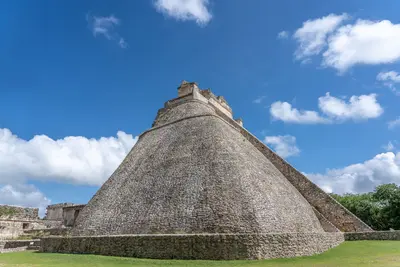
    Uxmal
    Sybz / Wikimedia Commons / CC BY-SA 3.0

    Place 1 of 4

    Uxmal

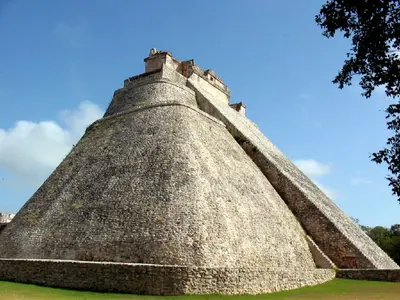
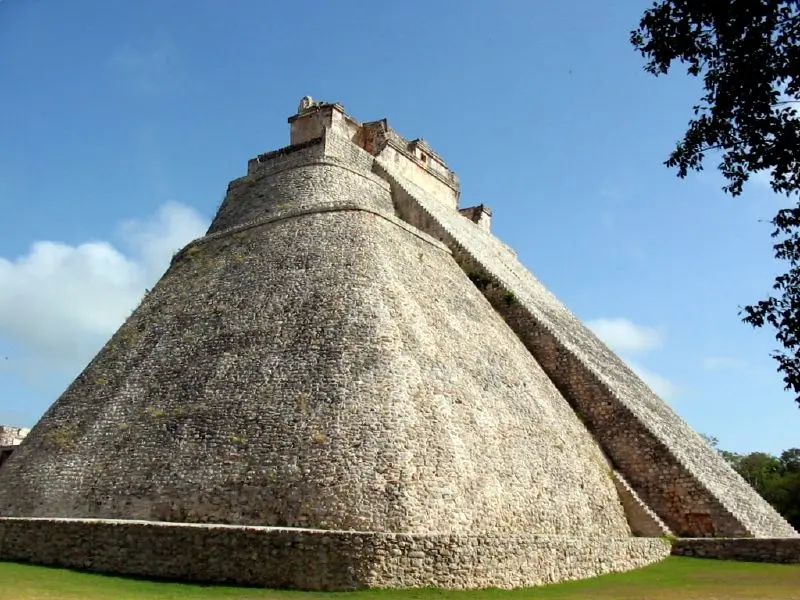
    Uxmal, about an hour's drive south of Mérida, was the political center of the Puuc region in western Yucatán from the 8th to 10th centuries.

    Discover
    Isla Holbox

    Place 2 of 4

    Isla Holbox

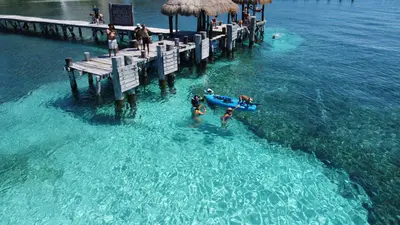
    Holbox is a narrow island, approximately 40 kilometers long, off the north coast of Quintana Roo, between the Caribbean and the Gulf of Mexico. In its only village, golf carts and bicycles travel over sand roads instead of cars.

    Discover
    Akumal

    Place 3 of 4

    Akumal

    Akumal is located on the Riviera Maya between Playa del Carmen and Tulum, about a half-hour drive from both places. Its name means "Place of the Turtles" in Maya.

    Discover
    Puerto Morelos
    Luis Fernández García / Wikimedia Commons / CC BY-SA 2.5 es

    Place 4 of 4

    Puerto Morelos

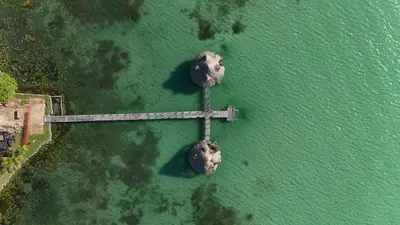
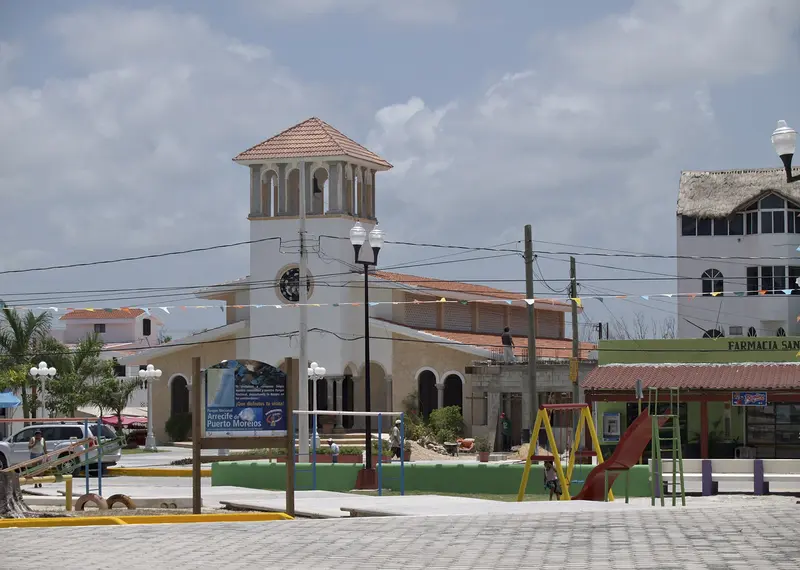
    Puerto Morelos is a quiet fishing village on the Caribbean coast, located about 38 kilometers south of Cancún and between Cancún and Playa del Carmen.

    Discover

    More places in Yucatán Peninsula

    Valladolid

    Valladolid

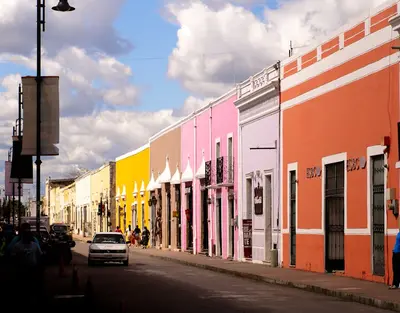
    Valladolid, located in the east of the state of Yucatán, is a colonial city with nearly 57,000 inhabitants, colorfully painted houses, and a lively main square. It lies approximately 40 kilometers from Chichén Itzá and is surrounded by cenotes, making it a peaceful base between Cancún and Mérida. Valladolid holds the title of Pueblo Mágico.
    Isla Mujeres

    Isla Mujeres

    Isla Mujeres is located approximately 13 kilometers northeast of Cancún and can be reached by ferry in about 20 minutes. The island is about seven kilometers long and less than a kilometer wide at its widest point. In the north lies the small town with colorful houses and Playa Norte, while the south features a rocky coast and the lighthouse of Punta Sur.
    Cancún

    Cancún

    Planned as a 1970s resort, Cancún is now Quintana Roo's largest city, home to nearly 900,000. Its two worlds: the Zona Hotelera, on a narrow isthmus between the Caribbean and the lagoon, and El Centro (downtown), where residents live and work. The airport is the most important gateway to the peninsula.
    Mérida

    Mérida

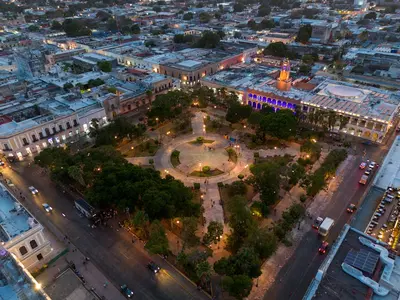
    Mérida, capital of the state of Yucatán in the northwest of the peninsula, was founded in 1542 on the ruins of the Maya city T'hó. You come here for the colonial center with churches, plazas, and colorful townhouses, for the Yucatecan cuisine, and for a rich, often free cultural program in the plazas. The city is also a good base for excursions to Maya sites like Uxmal, to cenotes and haciendas.
    Playa del Carmen

    Playa del Carmen

    Playa del Carmen, located about 70 kilometers south of Cancún, is the largest city on the Riviera Maya. In just a few decades, this fishing village grew into a city of over 300,000 residents. Life unfolds along Quinta Avenida, a pedestrian street parallel to the beach. From here, ferries depart for Cozumel.
    San Francisco de Campeche

    San Francisco de Campeche

    San Francisco de Campeche, usually just Campeche, is the capital of its eponymous state on the Gulf of Mexico. Its Old Town is surrounded by a city wall with bastions, built in the 17th and 18th centuries to ward off pirate attacks. It has been a UNESCO World Heritage site since 1999. Compared to Cancún and Tulum, it is significantly quieter here.
    Tulum

    Tulum

    Tulum is located on the Caribbean coast of the Yucatán Peninsula, south of Cancún on the Riviera Maya. It is known for its Maya ruins on a cliff directly above the sea, for cenotes in the hinterland, and a long beach lined with boutique hotels and beach clubs. Tulum has grown significantly in recent years, with prices increasing accordingly.
    Cozumel

    Cozumel

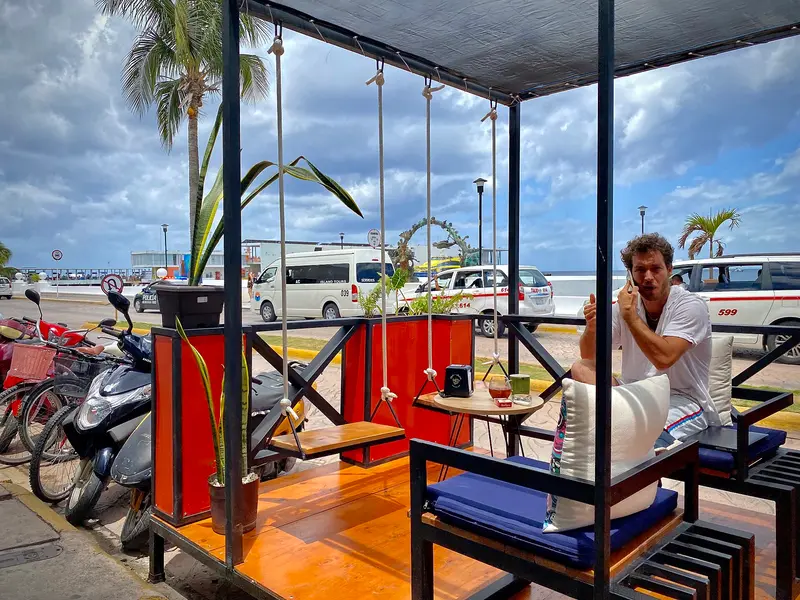
    Cozumel is an approximately 48-kilometer-long Caribbean island off the Riviera Maya, a good half-hour by ferry from Playa del Carmen. You primarily come for diving and snorkeling in the reefs of the Arrecifes de Cozumel National Park, which belong to the Mesoamerican Reef System. The main town is San Miguel de Cozumel on the west coast, where the ferries dock; Cozumel is also Mexico's most important cruise port. Beyond that, you'll find the Mayan site San Gervasio and, at the southern tip, the Punta Sur Natural Park.
    Bacalar

    Bacalar

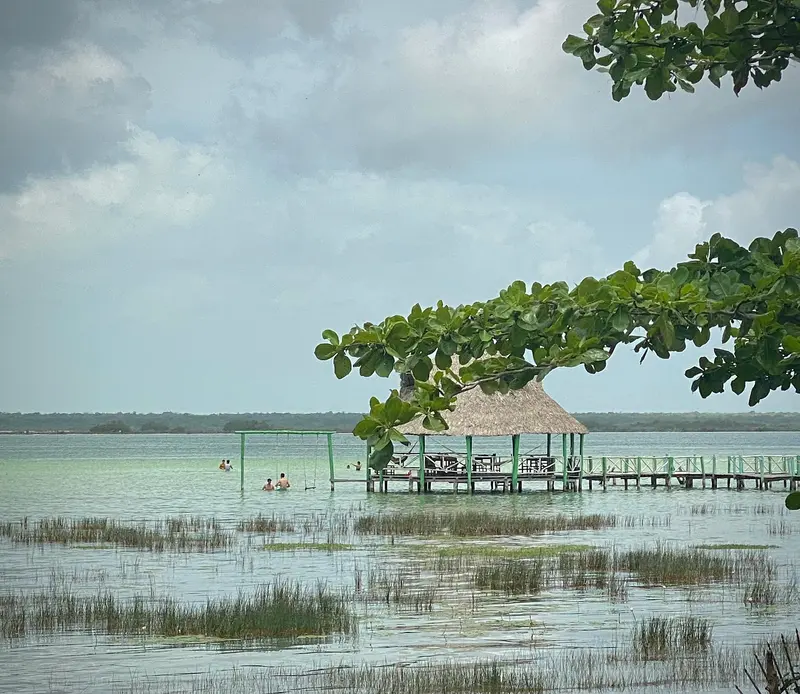
    Bacalar is a small town in southern Quintana Roo, about 40 kilometers north of Chetumal, on the shore of the lagoon of the same name. You come for the Lagoon of Seven Colors, whose water changes from turquoise to deep blue depending on the depth, and for the living stromatolites in its canals. Overlooking the shore is the 18th-century Spanish Fort San Felipe. Since 2006, the town bears the title Pueblo Mágico.
    Chichén Itzá

    Chichén Itzá

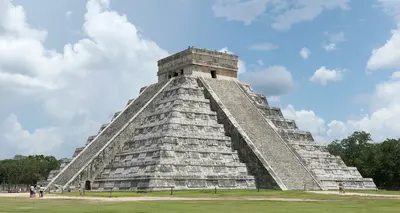
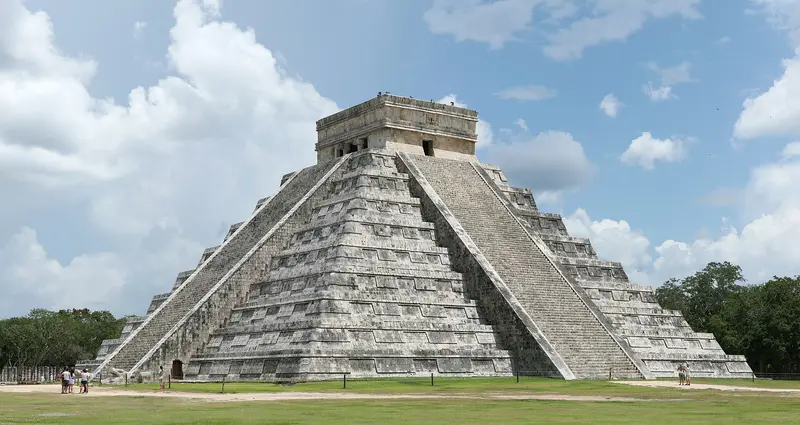
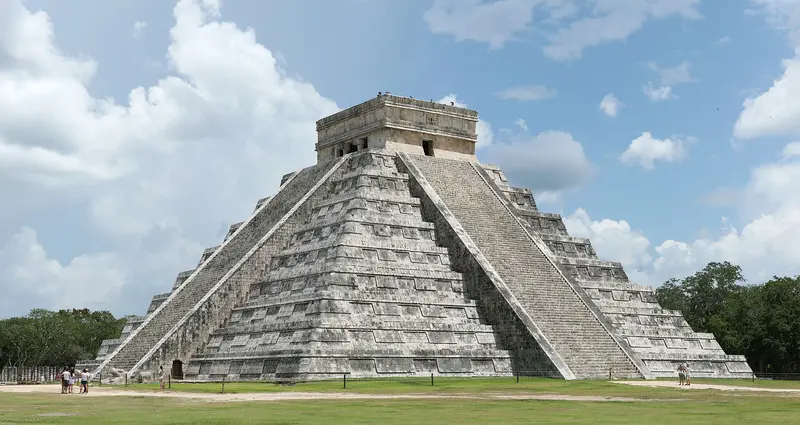
    Chichén Itzá, in eastern Yucatán, 120 km from Mérida and over 40 km from Valladolid, was one of the Maya's most powerful centers from the 9th-12th centuries. You come for the stepped pyramid El Castillo, the 168m Great Ball Court, and the Sacred Cenote, a day trip doable from Mérida, Valladolid, or Cancún. Since 1988, it's been a UNESCO World Heritage Site; in 2007, El Castillo was chosen in a private vote as one of the New Seven World Wonders. Around the equinoxes, the afternoon light on the pyramid's north staircase casts the shadow of a descending snake.

    Sights in Yucatán Peninsula

    Discover the most important sights and attractions

    Chichén Itzá
    Attraction

    Chichén Itzá

    Most famous Maya site on the peninsula and UNESCO World Heritage Site, located between Mérida and Cancún. See the El Castillo pyramid, the Great Ball Court, the Temple of the Warriors, and the Sacred Cenote. The pyramid cannot be climbed. Arrive at opening before buses from Cancún arrive.
    Open in Google Maps
    Attraction

    Ek Balam

    Maya site north of Valladolid. The Acropolis features a well-preserved stucco frieze with winged figures at the entrance to the tomb of ruler Ukit Kan Le'k Tok'. Much quieter than Chichén Itzá. Nearby lies Cenote X'Canché.
    Open in Google Maps
    Church

    Izamal and Convento de San Antonio de Padua

    Small town east of Mérida, whose houses are almost all painted yellow. The Franciscan monastery was built from 1549 on a massive Maya platform, its stones used for construction; a huge, arcade-lined atrium surrounds the church. Additional pyramids stand in the town, including Kinich Kak Moo.
    Open in Google Maps
    Park

    Ría Celestún

    A mangrove lagoon in the eponymous Biosphere Reserve on the peninsula's west coast, a popular day trip from Mérida. Boat tours lead to flamingos, through mangrove tunnels, and to a freshwater spring. Large flamingo flocks overwinter here, so winter is the best time.
    Open in Google Maps
    Historic Landmark

    Cobá

    Vast Maya city in the jungle between the Cobá and Macanxoc lagoons, approx. 47 km northwest of Tulum. Its building groups are linked by ancient causeways (Sacbeob), which you explore on foot, by rental bike, or bicycle taxi. The Nohoch Mul pyramid is approx. 42 meters tall; from late 2025, a wooden staircase will again lead up.
    Open in Google Maps

    Yucatán Cuisine

    Yucatecan cuisine differs significantly from the rest of Mexico. It combines Maya techniques like cooking in an earth oven with ingredients from the Caribbean and Europe.

    Cochinita pibil

    Pork in Achiote and bitter orange, traditionally cooked in an earth oven. Served on Sunday mornings in tacos and tortas.

    Sopa de lima

    Chicken broth served with lime and fried tortilla strips.

    Panuchos and Salbutes

    Small tortillas with turkey, onions, and avocado topping, served evenings at food stalls.

    Xtabentún

    Honey and anise liqueur, named for a flower.

    Best Time to Visit

    When is the best time for your trip?

    November
    December
    January
    February
    March
    April
    24–28°C·20–40 mm(little rain)
    During the dry season from November to April, it is warm, sunny, and less humid. From May, temperatures rise; June to October bring rain and hurricane season.
    Air and precipitation figures apply to the interior around Mérida, while water temperatures are for the Caribbean coast. On the Gulf coast near Progreso, the sea is about two degrees cooler in winter. The hurricane season officially runs until late November. In summer, Sargassum seaweed can affect Caribbean beaches.

    Seasons

    Jan
    Feb
    Mar
    Apr
    May
    Jun
    Jul
    Aug
    Sep
    Oct
    Nov
    Dec
    Dry season
    Peak season
    Rainy season (Hurricane season June to November)
    Best Time to Visit
    ▶Show detailed monthly data
    MonthTemp (°C)Rain (mm)Sun (h)
    January23.5357.0
    February24.5258.0
    March26.5208.0
    April28.0259.0
    May29.0759.0
    June28.51408.0
    July28.01508.0
    August28.01408.0
    September27.51807.0
    October26.51007.0
    November25.0407.0
    December23.5357.0

    Maya Culture and History

    The MayaOn the peninsula, from around 600 to 1200, cities like Uxmal, Chichén Itzá and Cobá thrived. Hundreds of thousands of people still speak Yucatec Maya today; in villages around Valladolid, you can hear it daily.Colonial Era and HenequenThe Spanish founded Mérida in 1542 on the ruins of the Mayan city T'hó. In the 19th century, the trade with the agave fiber henequen brought great wealth; the haciendas and villas on Paseo de Montejo date from this period. In the Caste War from 1847, Maya rose up against white rule.

    On the Road on the Peninsula

    Bus and TrainADO buses reliably connect all major towns, such as Cancún and Mérida in about four hours. The Tren Maya has been operating since December 2023, and since December 2024, on its planned full route around the peninsula, from Palenque via Campeche, Mérida, Valladolid and Cancún to Tulum, Bacalar and Chetumal. Some stations are located outside the city centers; for example, Mérida's Teya station is about eight kilometers east of the city. Schedules are sparse, book in advance.Car RentalRoads are well-maintained; the highway between Cancún and Mérida is a toll road. Watch out for Topes, speed bumps in every village. Many rural roads are unlit, so plan longer journeys during daylight hours.

    Round trips through this region

    Yucatán Classic Round Trip

    Yucatán Classic Round Trip

    From Cancún, you travel by bus and ferry from Chiquilá to Isla Holbox, then to the Caribbean coast to Tulum and inland to Valladolid. From there, it's a good 40 kilometers to Chichén Itzá: If you stay a night in Pisté, you'll be at the pyramid for its 8 AM opening. After that, the route continues to Mérida and the Puuc site of Uxmal. The longest leg, from Holbox to Tulum, takes about three hours by ferry and around 170 kilometers of road; you can also reach Chichén Itzá and Mérida with the Tren Maya. For Uxmal and the Ruta Puuc, a rental car is worthwhile; you fly back from Mérida.

    20 Days
    7 stops
    Open jaw
    Yucatán relaxed & family-friendly

    Yucatán relaxed & family-friendly

    From Cancún, a 20-minute ferry crosses to Isla Mujeres. Then it's along the Riviera Maya to Akumal, and finally inland to Valladolid. The longest leg, from Akumal to Valladolid, takes almost two hours.

    17 Days
    4 stops
    Caribbean Coast, Cozumel & Bacalar

    Caribbean Coast, Cozumel & Bacalar

    From Playa del Carmen, the ferry crosses to Cozumel in 35 to 45 minutes, where you dive or snorkel at the Reef National Park. Back on the mainland, it's about 65 kilometers south to the Mayan ruins and cenotes of Tulum, and finally another 170 kilometers to the Bacalar Lagoon. For the Tulum–Bacalar route, you'll need just under three hours by bus; Tulum and Bacalar also have Tren Maya stations.

    14 Days
    4 stops
    Open jaw

    Nearby

    Mérida

    Mérida

    Mérida, capital of the state of Yucatán in the northwest of the peninsula, was founded in 1542 on the ruins of the Maya city T'hó. You come here for the colonial center with churches, plazas, and colorful townhouses, for the Yucatecan cuisine, and for a rich, often free cultural program in the plazas. The city is also a good base for excursions to Maya sites like Uxmal, to cenotes and haciendas.
    Uxmal

    Uxmal

    Uxmal, about an hour's drive south of Mérida, was the political center of the Puuc region in western Yucatán from the 8th to 10th centuries. The site is known for its oval Pyramid of the Soothsayer and the finely decorated stone friezes of the Governor's Palace. It has been a UNESCO World Heritage site since 1996.
    Chichén Itzá

    Chichén Itzá

    Chichén Itzá, in eastern Yucatán, 120 km from Mérida and over 40 km from Valladolid, was one of the Maya's most powerful centers from the 9th-12th centuries. You come for the stepped pyramid El Castillo, the 168m Great Ball Court, and the Sacred Cenote, a day trip doable from Mérida, Valladolid, or Cancún. Since 1988, it's been a UNESCO World Heritage Site; in 2007, El Castillo was chosen in a private vote as one of the New Seven World Wonders. Around the equinoxes, the afternoon light on the pyramid's north staircase casts the shadow of a descending snake.
    Valladolid

    Valladolid

    Valladolid, located in the east of the state of Yucatán, is a colonial city with nearly 57,000 inhabitants, colorfully painted houses, and a lively main square. It lies approximately 40 kilometers from Chichén Itzá and is surrounded by cenotes, making it a peaceful base between Cancún and Mérida. Valladolid holds the title of Pueblo Mágico.
    San Francisco de Campeche

    San Francisco de Campeche

    San Francisco de Campeche, usually just Campeche, is the capital of its eponymous state on the Gulf of Mexico. Its Old Town is surrounded by a city wall with bastions, built in the 17th and 18th centuries to ward off pirate attacks. It has been a UNESCO World Heritage site since 1999. Compared to Cancún and Tulum, it is significantly quieter here.

    Sources & method

    • Photos: Wikimedia Commons, Pexels. Each photo carries its credit.
    • Place data such as addresses and ratings comes from Google Maps.
    • The content is based on web research from public, traceable sources. How the content is made · The role of AI