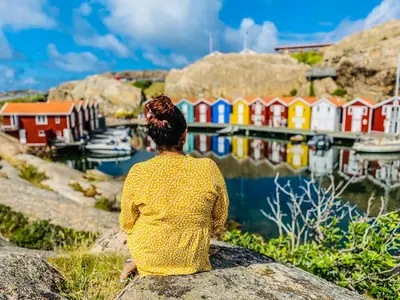
The Bohuslän archipelago coast north of Gothenburg is characterized by reddish, smoothly polished granite rocks and fishing villages. Far to the north lie the Koster Islands in Kosterhavet, which was established in 2009 as Sweden's first marine national park. Further south, Marstrand with Carlsten Fortress and Smögen with Smögenbryggan and its colourful boathouses are worthwhile. The region is known for seafood; a lobster or crab safari offers insight into fishing. Midsummer is suitable for island hopping, autumn for quieter days.
The Bohuslän Archipelago Coast in western Sweden is characterized by smoothly sculpted granite rocks and thousands of islands and skerries. Here lie fishing villages like Smögen with its long wooden pier and Fjällbacka, known as the setting for Camilla Läckberg's crime novels. Marstrand, with Carlsten Fortress, is culturally significant. The region is ideal for kayaking, sailing, and hiking on coastal trails with views of the Skagerrak. Gastronomically, Bohuslän is famous for seafood, especially lobster, oysters, and shrimp. For water sports, summer from June to August is the best time; for a quieter exploration, early autumn.
Place 1 of 3
Fjällbacka
Fjällbacka is a small fishing village in the municipality of Tanum in northern Bohuslän. Red and white wooden houses stand at the foot of the steep Vetteberget, with the archipelago in front.
Marstrand is a small island town north of Gothenburg, characterized by its maritime history and Carlsten Fortress. You reach the car-free island of Marstrandsön from Koön via a ferry that runs 24/7 and takes only about two minutes.
Discover the most important sights and attractions
Norra Buskärs brygga
The Norra Buskärs brygga is a jetty on the island of Norra Buskär, west of Kungshamn in the municipality of Sotenäs. From here, you'll see the outer archipelago and the open sea. The island is only accessible by boat; check connections in advance.
Kung Tryggves grav is a large burial mound on the summit of the island of Tryggö in Ramsvikslandet. The name stems from a legend linking it to the Norwegian King Tryggve Olafsson; this is unconfirmed, as the mound is believed to be significantly older, likely from the Bronze Age. From the car park at Nötö, it's about 2 km; the final stretch involves wading through a shallow sound at appropriate water levels. Sturdy shoes and sandals for the water are advisable.
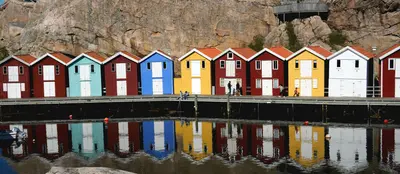
The **Smögenbryggan** is one of Sweden's most famous wooden piers and the pulsating heart of the fishing village of Smögen on the Bohuslän archipelago coast. Historically, this long boardwalk was the central hub for fishing and the maritime industry, significantly shaping the village's development. Today, along its approximately 600-meter length, countless colorful boathouses line it, transformed into small shops, galleries, and restaurants. Here you'll find a diverse selection of fresh seafood, local handicrafts, and regional specialties.Strolling along the Bryggan, you'll experience its unique atmosphere, shaped by a blend of traditional fishing village and vibrant summer destination. Its characteristic boathouses, often built on stilts and painted in bright colors, are a popular photo opportunity and reflect its maritime history. *Our Tip:* Visit Smögenbryggan early in the morning to enjoy the tranquility before the tourist rush and observe the fishermen at work. For undisturbed photos of the colorful row of houses, a stroll on the opposite side of the canal or a short boat trip is recommended.
Slätte hälla is a rocky area on the coast of Sotenäs. As in many places in Bohuslän, smoothly polished granite surfaces define the landscape here. Get information on access and special features locally or at the Sotenäs Tourist Office.
Bronze AgeThe history of the Bohuslän coast dates back to the Bronze Age. Numerous rock carvings, such as those at Tanum, and burial mounds like Kung Tryggves grav on Tryggö attest to this.Herring and Fishing VillagesIn several periods, herring fishing shaped the economy and led to the growth of many of today's fishing villages. Typical are wooden houses, often painted red or white, on foundations of local granite, as well as the sjöbodar, boathouses directly on the water.Life with the SeaLocal traditions still revolve around the sea and fishing, which is reflected in the way of life and cuisine.
Exploring Locally
Bus and FerryA network of buses and archipelago ferries run by Västtrafik forms the backbone of local transport. Timetables and tickets can be found in the Västtrafik To Go app. Ferry times vary by season, so check them before each journey.Bike and On FootOn the islands and in the coastal towns, you can get around well by bike or on foot; most places are compact.TaxiTaxis are available, but outside larger towns, they are expensive and should be pre-booked.