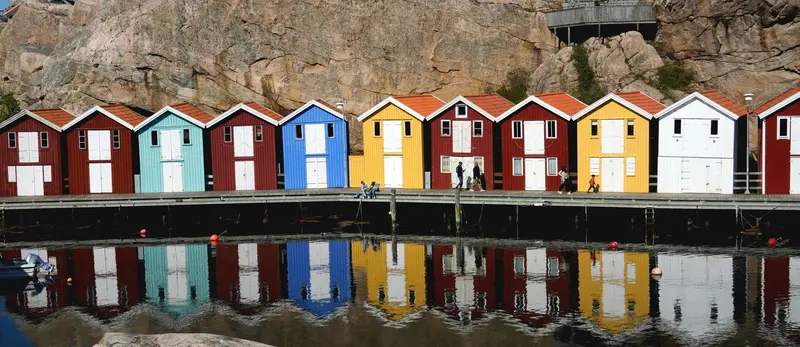
The route leads from Malmö and Helsingborg in Skåne up the west coast: via Halmstad and Varberg with their sandy beaches to Göteborg and further into the Bohuslän archipelago to Smögen and Fjällbacka. The E6 connects all locations, and the stages usually take less than two hours. In summer, the fish restaurants and bathing spots are open all day.
16 Days / 15 Nights
June to August
RV Friendly
7 stops
Why This Route?
For all who want to combine seafood, sandy beaches, and coastal walks in short stages.
Hidden Gems
Kullaberg north of Helsingborg with its lighthouse and steep cliffs
Kallbadhuset in Varberg, a cold bathhouse from 1903 in Moorish style
Vetteberget in Fjällbacka with the rock cleft Kungsklyftan and views over the archipelago.
Itinerary
Stop 1 • 2 Nights
Malmö
City
Perfect for an exciting city trip. Rich in culture and history and Culinary highlights.
Malmö has a good 360,000 inhabitants, making it Sweden's third-largest city, and lies on the Öresund, about 40 minutes by train from Copenhagen. The old town around Stortorget and Lilla Torg, the Renaissance castle Malmöhus and the Turning Torso residential tower in the Västra Hamnen harbour district show the range of the city. More than a third of residents were born abroad, which is clearly noticeable in its markets, snack bars and restaurants.
7 Sights
4 Restaurants
Culture and History
From Herring City to Bridge CityMalmö was a Danish trading city in the Middle Ages, sustained by herring fishing. The brick Gothic of Sankt Petri kyrka dates from this era, and the merchant houses around Lilla Torg from the following centuries of Danish rule. In 1658, the city fell to Sweden. In the 20th century, the Kockums shipyard shaped the cityscape until civil shipbuilding ended in 1986. With the Öresund Bridge (2000) and the redevelopment of the shipyard area into Västra Hamnen, Malmö reinvented itself.Cultural LifeModerna Museet Malmö and the Konsthall showcase contemporary art, while Malmö Live Konserthus presents classical and pop music. In August, the Malmöfestivalen city festival transforms the city centre for a week into an open-air stage with free admission.
Perfect for an exciting city trip. Rich in culture and history and Perfect for unwinding and relaxation.
Helsingborg lies at the narrowest point of the Öresund, just four kilometers from Danish Helsingør. Its landmark is the medieval Kärnan tower above the old town. With its harbor promenade, the Dunkers Cultural Centre, and Sofiero Castle north of the city, Helsingborg is good for a day trip or as a base on the west coast of Skåne.
6 Sights
6 Restaurants
Øresund border city
Between Denmark and SwedenHelsingborg is mentioned in sources as early as 1085 and belonged to Denmark until 1658. Together with Helsingør Fortress on the opposite side, Helsingborg Castle controlled the entrance to the Öresund Strait. Of this complex, only the brick tower Kärnan from the 1310s remains. After its transfer to Sweden, the city changed hands in several wars, until in 1710 the Swedish army repelled the last Danish attempt to regain Skåne at the Battle of Helsingborg. Also dating from the Middle Ages is the Gothic brick church Sankta Maria kyrka near Stortorget.Industrial City and Royal SeatIn the 19th century, Helsingborg grew with its harbour, railway, and industry; in 1892, Sweden's first steam ferry service to Helsingør began operating here. The Neo-Gothic Town Hall from 1897 by the harbour dates from this period. Sofiero Palace served as a summer residence for the Swedish royal family; King Gustaf VI Adolf and Crown Princess Margaret established the famous rhododendron collection there. Today, institutions like the Dunkers Culture Centre, with art exhibitions and stages, and the Fredriksdal Open-Air Museum shape the city's cultural offerings.
Halmstad, Halland's capital, is on the Kattegat midway between Göteborg and Malmö. It is primarily known for the roughly 4-km-long sandy beach of Tylösand. Halmstad gained town rights in 1307 and was a fortified Danish outpost until 1645 against Sweden; the castle on the Nissan dates from then. The centre retains many half-timbered houses; Picasso's Kvinnohuvud stands on the Nissan.
4 Sights
5 Restaurants
History and Culture
Danish HeritageHalmstad has been a town since 1307 and was considered the largest town on Halland's west coast during the Middle Ages. From 1598, a fortress was built, enclosing the center from the castle in the south to Norre Katt Park in the north. Its northern town gate, the Norre port, still stands today. Danish King Christian IV commissioned the castle, which was completed in 1619. In August 1645, Halmstad became Swedish; today, the provincial governor resides in the castle, and its gardens are freely accessible.Church and Old TownSt. Nikolai kyrka on Stora Torg dates from the 14th century and is known for its stained-glass windows; the large windows were created by Einar Forseth. Half-timbered houses are preserved around the church. The square also features Carl Milles' fountain Europa and the Bull.The Halmstad GroupIn 1929, six artists, including brothers Axel and Erik Olson, formed the Halmstad Group here, Sweden's first Surrealists. Their works are exhibited at Mjellby Konstgård, approximately three kilometers northwest of the center. The Museet i Halmstad by the river showcases painted tapestries and living spaces from the 17th to 19th centuries.
Rich in culture and history. Perfect for unwinding and relaxation and For adventure seekers.
Varberg on the Kattegat coast in Halland combines fortress history with a long bathing tradition. The Varbergs fästning was built in the 1280s, was the most important fortress on the Kattegat coast during the Kalmar Union, and today houses the Halland Museum of Cultural History with the bog body find of the Bockstensmannen. In the sea stands the Kallbadhuset from 1903, an oriental-style cold bathhouse on stilts, with separate areas and saunas for women and men. The beach promenade leads approximately 2.5 km from the Kallbadhuset to Apelviken. Nature enthusiasts are drawn to the Getterön peninsula, a nature reserve with wetlands that attract many birds. June to August are suitable for beach and water sports, spring and autumn for quieter tours along the coast.
4 Sights
4 Restaurants
History and Culture
Fortress and Danish PeriodThe city dates back to the 12th century, but was originally located about seven kilometers further south. Built in the 1280s, the fortress was the most important on the Kattegat under the Kalmar Union. It was abandoned in 1830 and subsequently served as a feared prison. Varberg belonged to Denmark until 1645.Bathing and Spa TraditionToday's Kallbadhuset, dating from 1903, is already the third cold bathhouse on this site. After a restoration, it was reopened in 1997, with traditional naked bathing in separate areas.Radio HistoryEast of the city stands the Grimeton Radio Station, the world's only preserved electromechanical radio transmitter.
Perfect for an exciting city trip. Rich in culture and history and Culinary highlights.
Gothenburg, Sweden's second-largest city, is shaped by its maritime heritage and characteristic canals. Here, you'll discover a mix of historic charm and modern city life. The Haga district, with its cobblestone streets and well-preserved wooden houses, invites you to a traditional Fika. Along the grand boulevard Avenyn, you'll find numerous shops, restaurants, and cultural institutions. The Feskekôrka, a fish market hall shaped like a church, offers fresh seafood. For a glimpse into nature and the archipelago landscape, it's best to take a ferry to the nearby islands. Exploring the city on foot or with the efficient trams is recommended to experience Gothenburg's diverse facets.
5 Sights
3 Restaurants
Gothenburg's Cultural Heritage
Göteborg, 1621 von König Gustav II. Adolf gegründet, verdankt seine Stadtstruktur und frühe Architektur maßgeblich niederländischen Ingenieuren und Siedlern. Das zeigt sich bis heute in den Kanälen und den Steinbauten entlang des Stora Hamnkanalen. Die Stadt entwickelte sich schnell zu einem bedeutenden Handelszentrum, was ihren weltoffenen Charakter prägte.Im 19. Jahrhundert erlebte Göteborg durch Industrialisierung und Hafenausbau einen starken Aufschwung. Diese Zeit zeigt sich in Neorenaissance- und Jugendstilbauten, aber auch in den typischen Landshövdingehus: dreigeschossigen Häusern mit steinernem Erdgeschoss und Holzetagen darüber. Die maritime Vergangenheit prägt die Stadt bis heute, sichtbar etwa im Seefahrtsmuseum.Das kulturelle Leben wird von zahlreichen Galerien und dem Göteborgs konstmuseum am Götaplatsen geprägt, das eine bedeutende Sammlung nordischer Kunst beherbergt. Fest verankert ist die Kaffeepause Fika, besonders in Vierteln wie Haga mit seinen Holzhäusern und Kopfsteinpflastergassen.
Stunning nature and outdoors. Dreamy beaches and Culinary highlights.
Smögen, located in the municipality of Sotenäs, is one of the most famous and frequently visited fishing villages on Sweden's west coast. In summer, the approximately one-kilometre-long Smögenbryggan is bustling with activity; in the off-season and shoulder season, the place is quieter. Smoothly polished granite rocks, archipelago islands, and a long fishing tradition characterize the scenery.
4 Sights
4 Restaurants
Smögen's cultural heritage
Centuries of FishingFishermen were already using Smögen's sheltered harbour by the mid-16th century. The fish auction was established in 1919, initially for herring and mackerel, and from 1939 also for shellfish. The current auction hall dates from 1961, and since 2005, auctions have been conducted online with buyers from all over Europe.Boathouses and Wooden ArchitectureAlong Smögenbryggan stand brightly painted boathouses and former fishermen's huts, which today house shops, cafés, and restaurants. In the alleys behind them, white and colourful wooden houses dominate the scene, typical of the fishing villages of Bohuslän.SeafoodSmögen sees itself as the capital of shellfish, particularly famous for its Smögen prawns. The strong connection to the sea continues to shape its cuisine and daily life to this day.
Stunning nature and outdoors. Perfect for relaxation and Romantic atmosphere for couples.
Fjällbacka is a small fishing village in the municipality of Tanum in northern Bohuslän. Red and white wooden houses stand at the foot of the steep Vetteberget, with the archipelago in front. Today, the village is primarily known as the home and setting for Camilla Läckberg's crime novels, and for its connection to actress Ingrid Bergman.
4 Sights
4 Restaurants
The Culture, Art, and History in Fjällbacka
Herring, Cans, and StoneFjällbacka grew primarily during the great herring period from the 1750s, and by the mid-19th century, it was the province's busiest fishing village. The local cannery is considered the origin of Swedish "Ansjovis," and from around 1890 to 1940, stone processing also played an important role.Wooden Houses on the RocksNarrow alleys wind their way between traditional wooden houses, often painted red or white, built closely against the granite rocks. The building style is adapted to the sparse archipelago landscape.Ingrid Bergman and Camilla LäckbergThe square by the harbor is named after actress Ingrid Bergman, and in the park opposite stands her granite bust by Gudmar Olovsson from 1983. Author Camilla Läckberg, born in Fjällbacka, has made the town internationally famous with her crime novels. Additionally, scenes for the film adaptation of Astrid Lindgren's Ronia the Robber's Daughter were shot in Kungsklyftan.