Fernweh: Home
    ExploreTravel GuidesPlan a tripMy tripLast visited
    de|en
    All Places & RegionsAll highlightsAbout FernwehFAQPrivacy PolicyImprint
    ExploreTravel GuidesPlan a tripMy tripLast visited
    • Overview
    • Places in the region
    • Round trips
    • Nearby
    Central Vietnam

    Vietnam

    Central Vietnam

    Region

    Central Vietnam is the narrow central part of the country between mountains and the South China Sea.

    by Felix Gillen

    1. Home
    2. Destinations
    3. Vietnam
    4. Central Vietnam
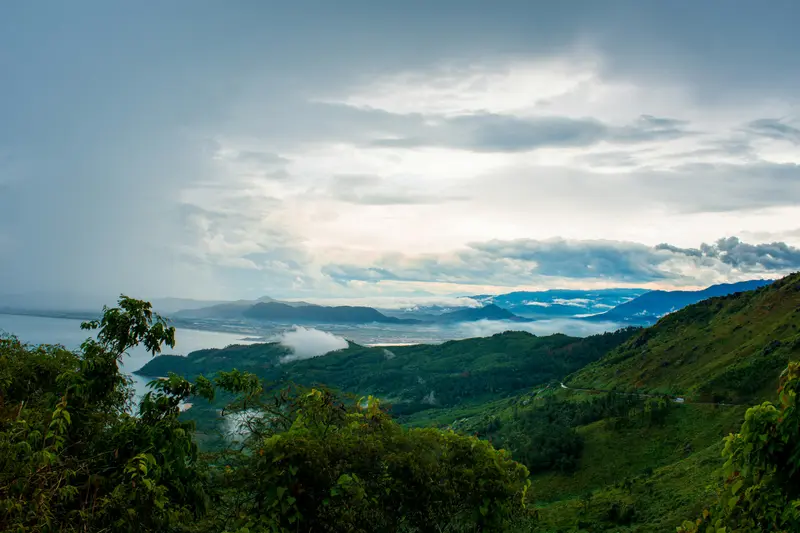
    Central Vietnam is the narrow central part of the country between mountains and the South China Sea. Here lie the ancient imperial city of Huế, the Old Town of Hội An, the beach city of Đà Nẵng and further north the caves of Phong Nha-Kẻ Bàng National Park.The region has its own weather calendar: The rainy season here is mainly from October to December, when typhoons can also hit the coast. The first months of the year are usually pleasant and dry.
    Central Vietnam is easy to explore from Đà Nẵng, whose airport lies right in the city. Huế and Hội An are about 120 kilometres apart, with the Hải Vân Pass in between.Huế: imperial capital of the Nguyễn dynasty from 1802 to 1945, with the Citadel and royal tombs along the Perfume River.Hội An: old town of a trading port from the 15th to 19th centuries, a UNESCO World Heritage Site since 1999, with An Bàng beach and the Mỹ Sơn temple ruins nearby.Đà Nẵng: Mỹ Khê city beach, the Marble Mountains, the Dragon Bridge and the Golden Bridge in the Bà Nà Hills.Phong Nha-Kẻ Bàng: national park with caves on the border with Laos, reached via Đồng Hới.The dry, sunny months run roughly from February to August. September to December is the rainy season, peaking in October, when floods and typhoons are possible. For current advice, see the UK FCDO Travel Advice (gov.uk/foreign-travel-advice).
    Đà Nẵng

    Place 1 of 4

    Đà Nẵng

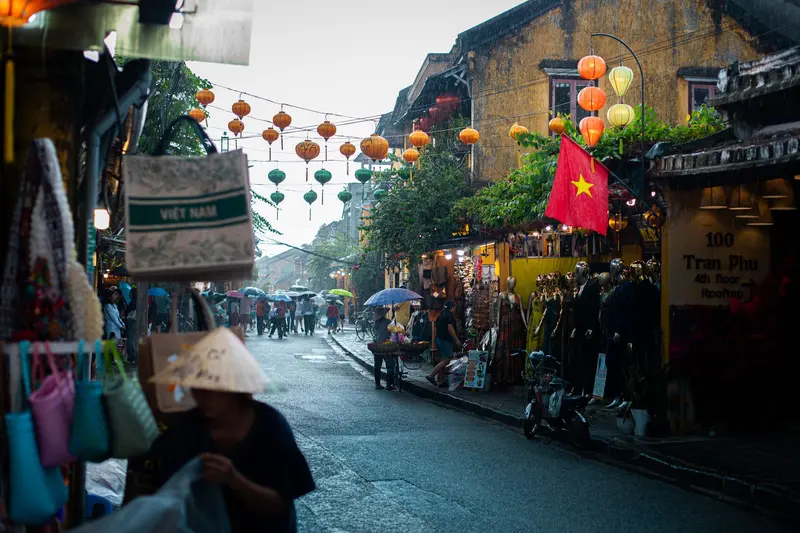
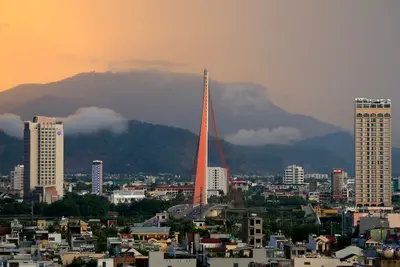
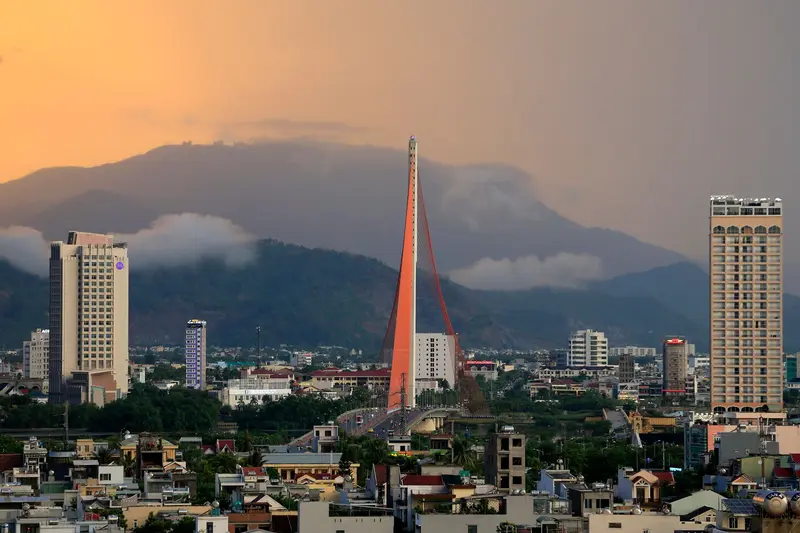
    Đà Nẵng is Central Vietnam's largest city, situated on the Han River between mountains and the South China Sea, approximately 764 kilometers south of Hanoi.

    Discover
    Huế

    Place 2 of 4

    Huế

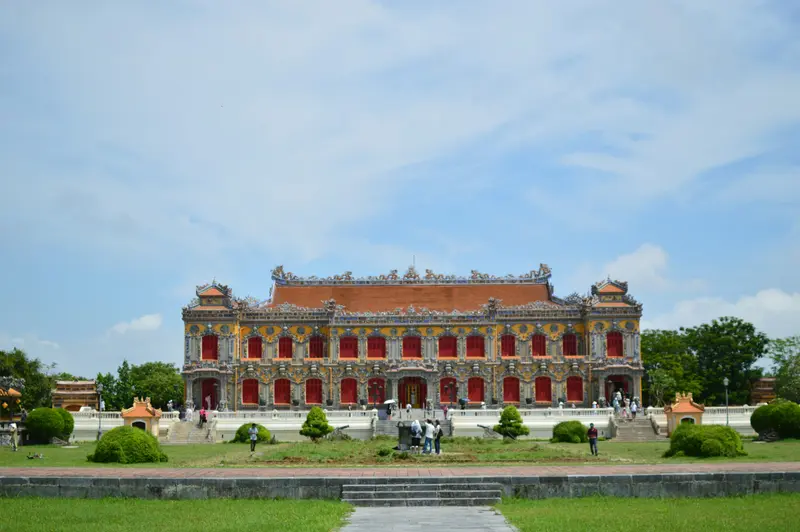
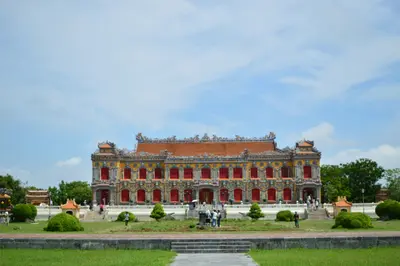
    Located on the Perfume River in Central Vietnam, Huế served as the national capital from 1802 to 1945 under the Nguyễn Dynasty.

    Discover
    Hội An

    Place 3 of 4

    Hội An

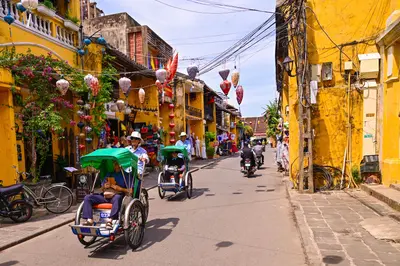
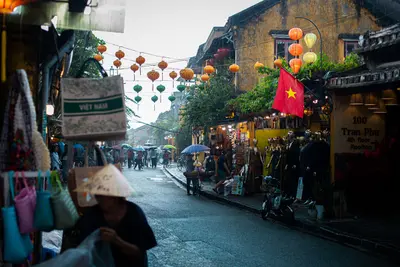
    Hội An is a small port city at the mouth of the Thu Bồn River in central Vietnam, about 30 kilometers south of Đà Nẵng.

    Discover
    Phong Nha-Kẻ Bàng

    Place 4 of 4

    Phong Nha-Kẻ Bàng

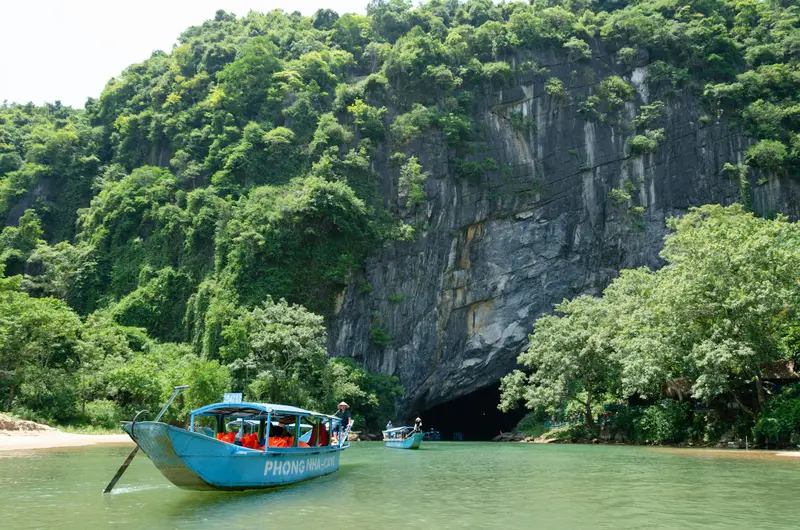
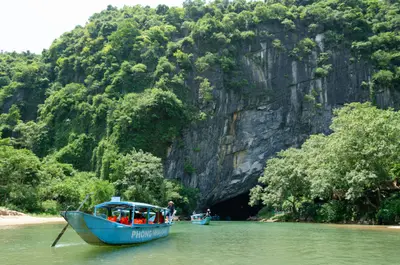
    Phong Nha-Kẻ Bàng National Park is located in the karst mountains of Central Vietnam, on the border with Laos, north of Huế.

    Discover

    Round trips through this region

    From Hanoi to the Mekong Delta

    From Hanoi to the Mekong Delta

    The classic North-South trip links the country's key destinations: Hanoi with its Old Quarter, an overnight boat stay in Halong Bay, the karst landscape around Ninh Bình, the Imperial City of Huế, and Hoi An's Ancient Town. The South features Ho Chi Minh City, concluding with the Mekong Delta and its floating markets. The overnight train is ideal between Ninh Bình and Huế, while a domestic flight covers Đà Nẵng to Ho Chi Minh City.

    17 Days
    7 stops
    Open jaw

    Nearby

    Huế

    Huế

    Located on the Perfume River in Central Vietnam, Huế served as the national capital from 1802 to 1945 under the Nguyễn Dynasty. You visit for the Citadel with the Imperial City and the upstream Imperial Tombs, which have been a UNESCO World Heritage site since 1993.The Citadel, housing the Imperial City and the Forbidden Purple City, is located on the north bank of the river, while buildings from the French colonial era stand on the south bank. Along the upper Perfume River, the imperial tomb complexes are spread out, along with temples such as the Thiên Mụ Pagoda, the city's landmark. You should plan at least two full days for the Imperial City and the tombs.Huế boasts its own unique cuisine, rooted in the imperial court: spicy and served in small portions. The most famous dish is Bún bò Huế, a beef noodle soup. Since 2025, Huế has been a centrally administered city, encompassing the area of the former province of Thừa Thiên Huế.
    Đà Nẵng

    Đà Nẵng

    Đà Nẵng is Central Vietnam's largest city, situated on the Han River between mountains and the South China Sea, approximately 764 kilometers south of Hanoi. Most travelers arrive via the airport in the city center, using Đà Nẵng as a base for Hội An and Huế, though many also stay for the long urban beach Mỹ Khê and the Marble Mountains.The Han River divides the city center: The Han Market and Cham Museum are on the west bank, and the Dragon Bridge spans the river. North of the city, the mountainous Sơn Trà peninsula juts into the sea; to the south are the Marble Mountains, and to the west, the Bà Nà Hills mountain resort with the Golden Bridge. The Hải Vân Pass separates Đà Nẵng from Huế; a 6.28-kilometer tunnel has shortened the journey since 2005.As of July 1, 2025, the city will also encompass the former province of Quảng Nam, which includes Hội An. With approximately three million inhabitants, it is now the country's fourth-largest city.
    Hội An

    Hội An

    Hội An is a small port city at the mouth of the Thu Bồn River in central Vietnam, about 30 kilometers south of Đà Nẵng. You go there for the Old Town, an exceptionally well-preserved trading port from the 15th to 19th centuries, which has been a UNESCO World Heritage site since 1999.Over 1,000 wooden houses, assembly halls of Chinese merchants, pagodas, and ancestral homes stand in its narrow alleys, where Vietnamese, Chinese, and Japanese influences mingle. Its landmark is the Japanese Bridge with its small temple. In the evenings, lanterns illuminate the riverside alleys.About five kilometers to the east lies An Bàng Beach, easily reachable by bicycle. Approximately 40 to 45 kilometers to the west is the temple city of Mỹ Sơn, a popular day trip. As of July 1, 2025, Hội An will administratively belong to the city of Đà Nẵng.
    Phong Nha-Kẻ Bàng

    Phong Nha-Kẻ Bàng

    Phong Nha-Kẻ Bàng National Park is located in the karst mountains of Central Vietnam, on the border with Laos, north of Huế. You visit for its caves, including Sơn Đoòng, the world's largest known cave, and several stalactite caves that you can visit without an expedition.The karst is around 400 million years old and is considered Asia's oldest major karst region, with over 220 kilometers of documented caves and underground rivers. Since 2003, the park has been a UNESCO World Heritage site, and in 2025, the site was expanded to include the adjacent Hin Nam No National Park in Laos.The starting point is Phong Nha town, about 45 kilometers west of the coastal city of Đồng Hới, with guesthouses and tour operators. Two to three days are sufficient for the accessible caves, while multi-day cave tours must be booked long in advance. Since July 1, 2025, the area has belonged to Quảng Trị Province, which was merged with Quảng Bình.
    Ubon Ratchathani

    Ubon Ratchathani

    Ubon Ratchathani is the largest city in eastern Isan, located near the border with Laos and on the Mun River. It is an administrative and university city, relying less on tourism and more on its role as a regional hub.City temples include Wat Thung Si Muang, featuring a wooden scripture library set on stilts in the middle of a pond, and Wat Nong Bua, whose white chedi is modeled after the Bodhgaya stupa in India. The National Museum, housed in a former royal residence, showcases the region's history.Ubon is best known for its Candle Festival (Hae Thian Phansa) in July, marking the start of Buddhist Lent: City temples commission large wax relief sculptures, which are then paraded through the city center. Accommodation is scarce during this period.The surrounding area features Pha Taem National Park with prehistoric rock paintings high above the Mekong, and the water-eroded rock pools of Sam Phan Bok, exposed during low water levels. The cooler dry season from November to February is the most pleasant time to visit.

    Sources & method

    • Photos: Unsplash. Each photo carries its credit.
    • The content is based on web research from public, traceable sources. How the content is made · The role of AI