The classic North-South trip links the country's key destinations: Hanoi with its Old Quarter, an overnight boat stay in Halong Bay, the karst landscape around Ninh Bình, the Imperial City of Huế, and Hoi An's Ancient Town. The South features Ho Chi Minh City, concluding with the Mekong Delta and its floating markets. The overnight train is ideal between Ninh Bình and Huế, while a domestic flight covers Đà Nẵng to Ho Chi Minh City.
17 Days / 16 Nights
February to April
7 stops
Why This Route?
The route follows the country's geography from North to South, avoiding backtracks. You'll experience three climate zones, three cuisines, and key UNESCO sites, and with an open-jaw flight, you'll save yourself the long return journey.
Hidden Gems
In Tràng An, it's worth being at the boat pier before 9 AM, as queues form later
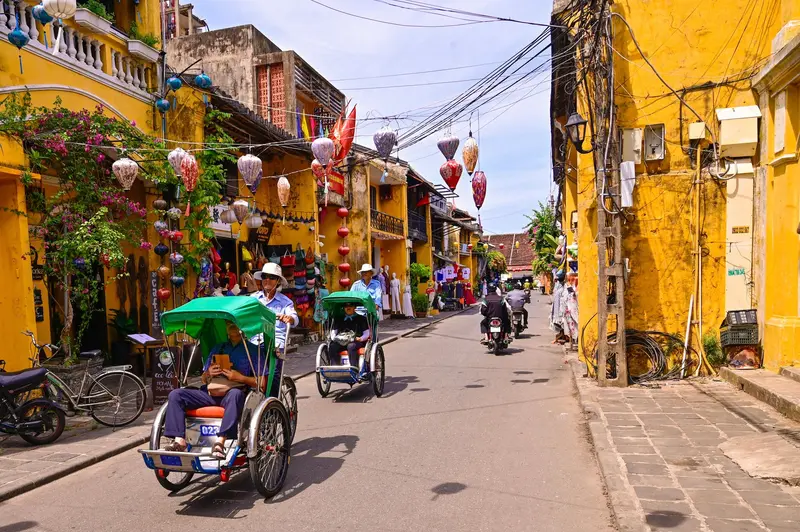
Plan Hội An so you are there on the 14th day of the lunar month, then the Old Town is lit only by lanterns in the evening
For those who prefer it quieter than in Cái Răng, head to the smaller floating market Phong Điền.
Getting there and back
Open jaw: start and end are in different places
Arrival
Flight · Hanoi (HAN)From Nội Bài Airport, bus line 86 goes to the Old Quarter, alternatively taxi or Grab, around 35 kilometers.
Departure
Flight · Ho-Chi-Minh-Stadt (SGN)Starting December 2026, long-haul flights will gradually shift to the new Long Thanh Airport (LTH). Check your ticket for your departure airport.
Itinerary
Stop 1 • 3 Nights
Hanoi
City
Route highlight
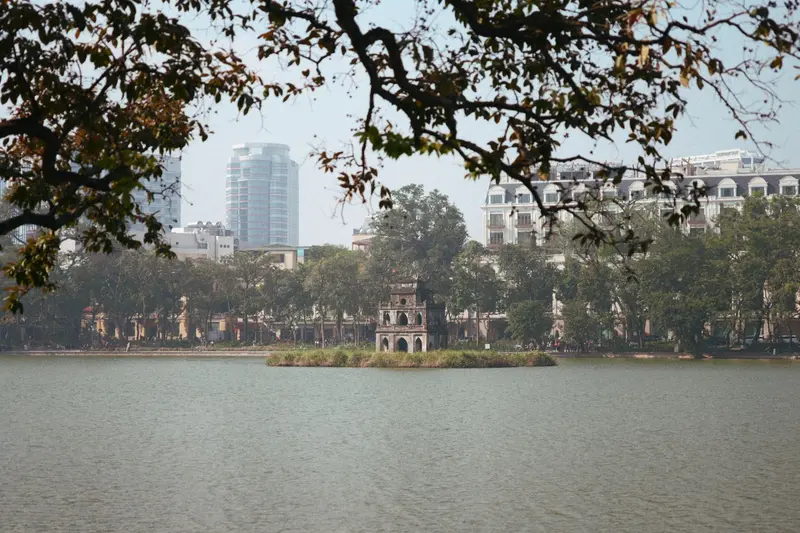
Hanoi is the capital of Vietnam and the political and cultural center of the North, situated on the Red River. Visitors come for its over a thousand-year history, the vibrant Old Quarter around Hoàn Kiếm Lake, and the street food stalls, which are among the best in the country.
In 1010, Lý Thái Tổ, the first ruler of the Lý Dynasty, made the place his capital and named it Thăng Long, "Ascending Dragon." The city has borne the name Hà Nội since 1831. From 1902, it served as the capital of French Indochina, and since 1976, it has been the capital of reunified Vietnam. Buildings from all these eras are preserved, ranging from Confucian temples to colonial villas.
Key Neighborhoods
Old Quarter: The dense maze of alleys north of the lake has largely preserved its historic street layout. Many streets still bear the names of the goods once traded there, such as Hàng Bạc, named after the silver shops. Most budget accommodations and street food stalls are located here.
Hoàn Kiếm Lake: The lake is the heart of the city. Via the red Thê Húc Bridge, you reach Ngọc Sơn Temple on a small island; on another stands the Turtle Tower.
French Quarter: South of the lake, wide avenues, colonial villas, embassies, and ministries define the area. Here you'll find the Opera House, the Hotel Metropole, and the National Museum of Vietnamese History.
Ba Đình: To the west lie most of the governmental and imperial sites: the Hồ Chí Minh Mausoleum, the One Pillar Pagoda, and the Imperial Citadel of Thăng Long, a UNESCO World Heritage site since 2010.
West Lake (Tây Hồ): The city's largest lake boasts approximately 17 kilometers of shoreline. On a small island near its southeastern shore stands the Trấn Quốc Pagoda, Hanoi's oldest pagoda. This district is quieter, featuring cafés, villas, and many foreign residents.
Old Town, literary temple, water puppet theater
7 Sights
2 Restaurants
History and Culture
From 1010, Hanoi, then known as Thăng Long, was the seat of the Lý Dynasty. The 1070 Temple of Literature and the Imperial Academy, established in 1076 as the nation's first university, reflect the Confucian scholarly tradition.The colonial era brought the French Quarter and the Opera House, where August Revolution rallies were held in August 1945. On September 2, 1945, Hồ Chí Minh proclaimed the Declaration of Independence in what is now Ba Đình Square.
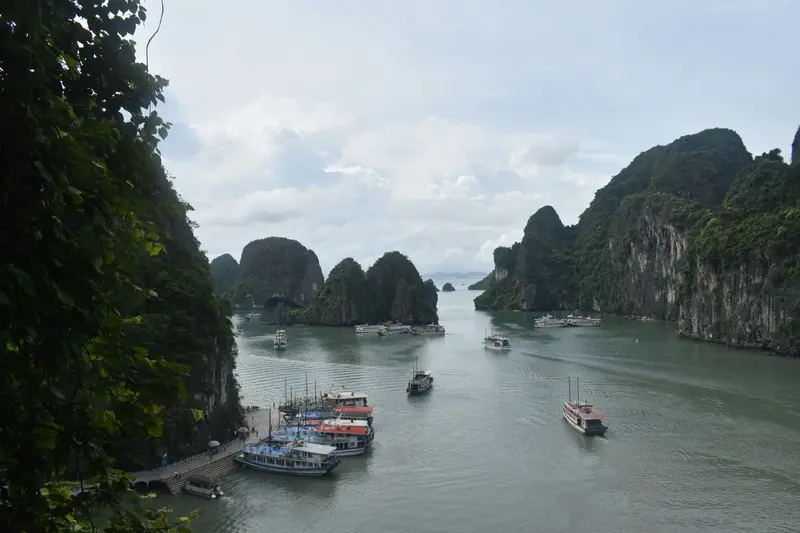
Halong Bay is a sea bay in the Gulf of Tonkin on Vietnam's northeast coast, about 170 kilometers east of Hanoi. You travel there to cruise by boat among hundreds of forested limestone karsts, visit stalactite caves, and spend a night on board on the water.
Hạ Long means 'descending dragon.' According to UNESCO, the bay is considered the most extensive and well-known example of a submerged tower karst landscape worldwide. It has been a World Heritage site since 1994, and in 2023, the site was expanded to include the Cát Bà Archipelago, now encompassing 1,133 islands and islets across 65,650 hectares. To the northeast lies Bái Tử Long Bay, and to the south, Lan Hạ Bay.
The starting point is Hạ Long on the bay's north shore. Excursions follow designated routes set by the bay administration, which, depending on the route, visit caves, swimming islands, kayaking areas, and pearl farms. In floating villages like Cửa Vạn, fishing families lived on boats; since 2014, many of them have been relocated to land.
Overnight on board, travel time approx. 2.5 to 3.5 hours
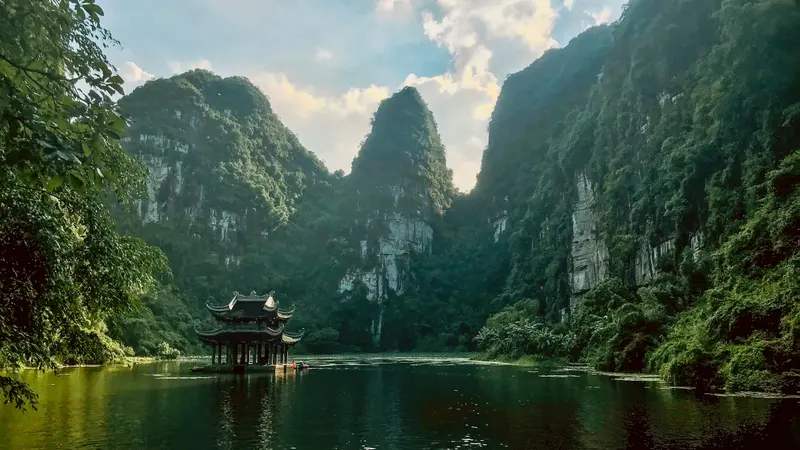
Ninh Bình is a city in the southern Red River Delta, about two hours by bus or train south of Hanoi. You come for the surrounding karst landscape, where you travel by rowboat on rivers and through caves amidst rice paddies and limestone cliffs.
The centerpiece is the Tràng An Landscape Complex, a UNESCO World Heritage Site (mixed cultural and natural) since 2014. It spans around 6,226 hectares, encompassing the ancient capital Hoa Lư, the waterways of Tràng An and Tam Cốc, and protected forests. Discoveries in the caves prove that people have lived here for over 30,000 years. From 968 to 1010, Hoa Lư was the capital of Vietnam before the court moved to Thăng Long, today's Hanoi.
The city itself is primarily a transport hub. Many travellers stay overnight in Tam Cốc village, where boat docks, restaurants, and bicycle rentals are located. Good times to visit are September to November and March to May. Local specialties include goat meat from the karst slopes and Cơm cháy, deep-fried crispy rice.
Boat trip in Tràng An or Tam Cốc, Hang Múa
5 Sights
1 Restaurant
Heritage
Hoa Lư served as the capital from 968 to 1010 under the Đinh and early Lê Dynasties. Two temples remain: One honors Đinh Bộ Lĩnh, founder of the Đinh Dynasty, while the other, about 300 meters north, commemorates Lê Hoàn, founder of the early Lê Dynasty. In 1010, Lý Công Uẩn relocated the court to Thăng Long.The Tràng An caves preserve shell middens, stone tools, and hearths, revealing how hunter-gatherers adapted to climate and sea level fluctuations over 30,000 years.
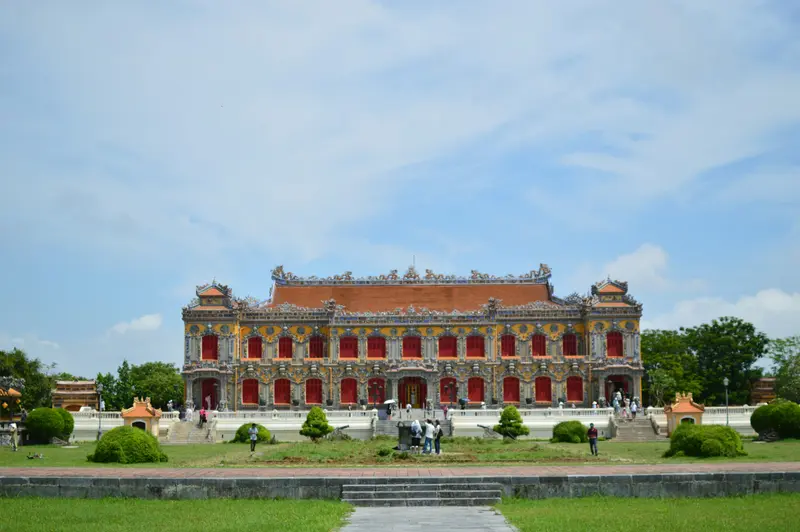
Located on the Perfume River in Central Vietnam, Huế served as the national capital from 1802 to 1945 under the Nguyễn Dynasty. You visit for the Citadel with the Imperial City and the upstream Imperial Tombs, which have been a UNESCO World Heritage site since 1993.The Citadel, housing the Imperial City and the Forbidden Purple City, is located on the north bank of the river, while buildings from the French colonial era stand on the south bank. Along the upper Perfume River, the imperial tomb complexes are spread out, along with temples such as the Thiên Mụ Pagoda, the city's landmark. You should plan at least two full days for the Imperial City and the tombs.Huế boasts its own unique cuisine, rooted in the imperial court: spicy and served in small portions. The most famous dish is Bún bò Huế, a beef noodle soup. Since 2025, Huế has been a centrally administered city, encompassing the area of the former province of Thừa Thiên Huế.
Night train from Ninh Binh, Imperial City & Tombs
5 Sights
2 Restaurants
Imperial City and Gateway
Hue was the capital of a unified Vietnam from 1802 to 1945 under the Nguyen Dynasty, the country's last imperial dynasty. The complex was planned according to the principles of Eastern geomancy; the Perfume River and Ngu Binh Mountain are part of the overall composition.Admission (as of 2026, approximate values):Imperial City: 200,000 VNDTombs of Minh Mang, Tu Duc, or Khai Dinh: 150,000 VND eachCombo ticket Imperial City plus these three tombs: 530,000 VNDPrices are subject to change; please refer to local information for definitive rates.During the 1968 Tet Offensive, Hue was the scene of one of the longest and bloodiest battles of the Vietnam War; the Citadel was also heavily damaged.
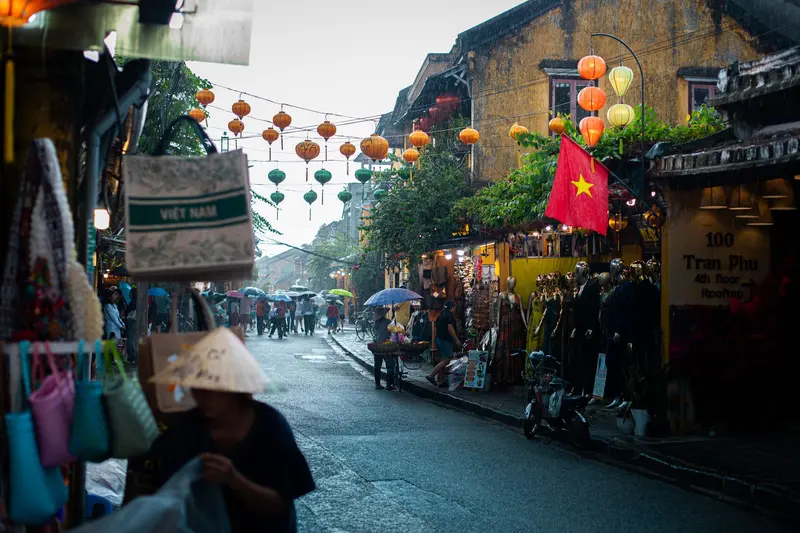
Hội An is a small port city at the mouth of the Thu Bồn River in central Vietnam, about 30 kilometers south of Đà Nẵng. You go there for the Old Town, an exceptionally well-preserved trading port from the 15th to 19th centuries, which has been a UNESCO World Heritage site since 1999.Over 1,000 wooden houses, assembly halls of Chinese merchants, pagodas, and ancestral homes stand in its narrow alleys, where Vietnamese, Chinese, and Japanese influences mingle. Its landmark is the Japanese Bridge with its small temple. In the evenings, lanterns illuminate the riverside alleys.About five kilometers to the east lies An Bàng Beach, easily reachable by bicycle. Approximately 40 to 45 kilometers to the west is the temple city of Mỹ Sơn, a popular day trip. As of July 1, 2025, Hội An will administratively belong to the city of Đà Nẵng.
About 120 km from Huế, Old Town, An Bàng Beach, trip to Mỹ Sơn
5 Sights
2 Restaurants
Old Town Ticket, Lantern Evenings and Rainy Season
Ticket: To enter the Old Town you need a ticket valid for up to three days. There are two options (as of January 2026):80,000 VND: Old Town, Japanese Bridge or Quan Công Temple, and two additional sites120,000 VND: Old Town, Japanese Bridge or Quan Công Temple, one museum and three additional sitesChildren under 16 are exempt. The ticket also covers traditional music and dance performances and the evening cultural programmes. The Old Town is a pedestrian zone from 9 am to 9.30 pm in summer and until 9 pm in winter.Lantern evenings: On the 14th day of each lunar month, the full-moon evening, the electric lights in the Old Town are dimmed from about 6 pm to 9 pm. The lanes then glow in the light of paper lanterns, and lanterns are set afloat on the Thu Bồn River in memory of ancestors.Rainy season: September to January is the rainy season, with the highest flood risk in October and November, when the low-lying Old Town can be flooded within a few hours. Before you travel, check the UK FCDO Travel Advice (gov.uk/foreign-travel-advice).
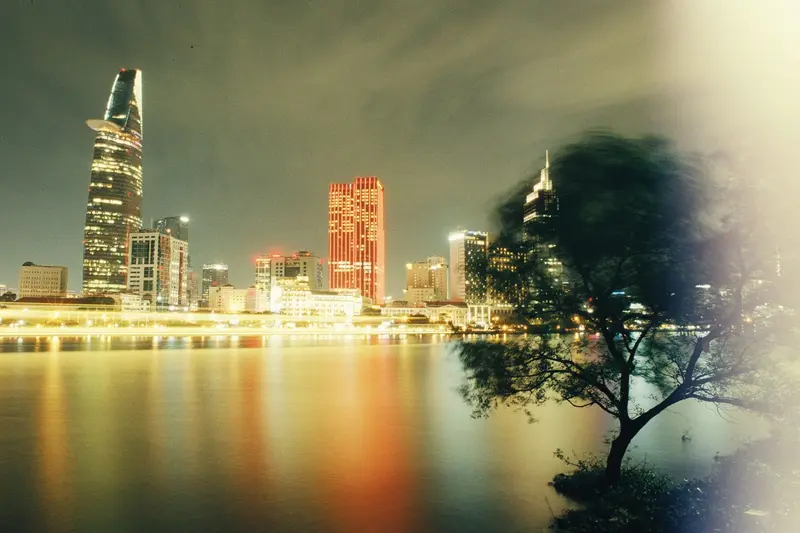
Ho Chi Minh City, still called Saigon by many, is Vietnam's largest city and the economic hub of the south. You'll come for its blend of French colonial architecture, war history, street food stalls on every corner, and a pace that will captivate you from the very first evening.As of July 1, 2025, there are no longer any districts in Vietnam; the city is divided into Wards (phường) and has simultaneously incorporated the former provinces of Bình Dương and Bà Rịa-Vũng Tàu. However, in daily life and on many signs, the old district names persist, which is why they are helpful for orientation.Former District 1: The city center, home to the grand avenue Đồng Khởi, the Opera House, Central Post Office, Cathedral, and Bến Thành Market. Today, it belongs to the Wards Sài Gòn, Bến Thành, Tân Định, and Cầu Ông Lãnh.Former District 3: Quieter streets with villas, cafés, and street food stalls, plus the War Remnants Museum. Today, these are the Wards Bàn Cờ, Xuân Hòa, and Nhiêu Lộc.Chợ Lớn: The historic Chinese quarter in former Districts 5 and 6, featuring assembly halls, temples, and the Bình Tây Market.Thảo Điền: On the other side of the Saigon River in former District 2, popular with expats, with cafés, restaurants, and a Metro Line 1 station. Today, it is part of Ward An Khánh.Two to three days are sufficient for the main sights. The city also serves as the usual starting point for tours into the Mekong Delta.
Flight from Đà Nẵng, Independence Palace, War Remnants Museum, Chợ Lớn
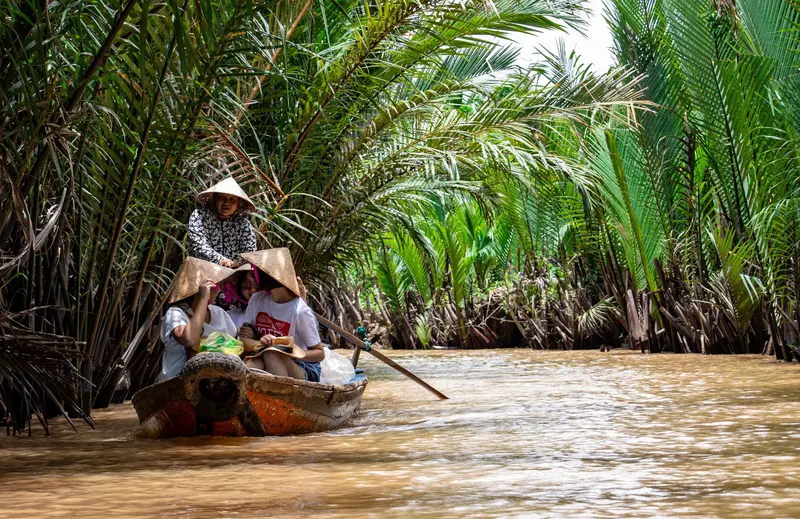
The Mekong Delta, in Vietnam's far south, is a flat landscape of river arms, canals, rice fields, and fruit orchards, beginning southwest of Ho Chi Minh City. You travel there to experience life on and by the water: boat trips through narrow channels, early floating markets, and villages where coconuts and fruits are processed.Cần Thơ, about 170 km and three to four hours' drive from Ho Chi Minh City, is the delta's largest city and the best base for several days. From Ninh Kiều waterfront, boats depart early in the morning for the Cái Răng floating market. The market has become significantly smaller than before and is now strongly geared towards visitors. If you want to see more authentic trade, continue to the smaller Phong Điền market.Bến Tre, approximately 90 km from Ho Chi Minh City, is the delta's coconut region. In small workshops, you can see how coconut candies (kẹo dừa) are made, and on rowboats, you journey through canals lined with water palms. Since the administrative reform of 2025, Bến Tre has belonged to Vĩnh Long Province.
Bus to Cần Thơ in three to four hours, early morning floating market
4 Sights
Riverside Life
Waterborne trade has shaped the Delta for generations. The Cái Răng Floating Market was recognized as a national intangible cultural heritage in 2016. Vendors prominently display what they sell on a long pole.Bến Tre harvests approximately 600 million coconuts annually. This is the home of coconut candies (kẹo dừa), which originally consisted only of coconut milk and sugar, and are now also made with durian, pandan, or peanuts.