Fernweh: Home
    ExploreTravel GuidesPlan a tripMy tripLast visited
    de|en
    All Places & RegionsAll highlightsAbout FernwehFAQPrivacy PolicyImprint
    ExploreTravel GuidesPlan a tripMy tripLast visited
    • Overview
    • Places in the region
    • Culture
    • Getting around
    • Round trips
    • Nearby
    Bregenzerwald
    Uoaei1 / Wikimedia Commons / CC BY-SA 4.0

    Austria

    Bregenzerwald

    RegionMountainsArchitecture

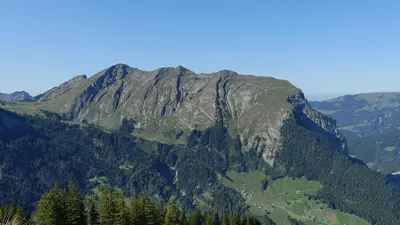
    Beyond Bregenz, the land ascends along the Bregenzer Ach through green hills, mountain villages, and alpine pastures, up to the Hochtannberg Pass.

    by Felix Gillen

    1. Home
    2. Destinations
    3. Austria
    4. Bregenzerwald
    Beyond Bregenz, the land ascends along the Bregenzer Ach through green hills, mountain villages, and alpine pastures, up to the Hochtannberg Pass. The Bregenzerwald is known for its mountain cheese, its three-tier farming system (Tal, Vorsäß, Alpe), and a wooden architecture that combines old Wälder houses with contemporary design.
    The Bregenzer Ach ValleyThe Bregenzerwald primarily covers the catchment area of the Bregenzer Ach southeast of Bregenz. It borders the Allgäu to the north, the Hochtannberg to the east, and the Große Walsertal to the south. Bezau is traditionally considered the main town; Egg, Andelsbuch, and Schwarzenberg form the Central Bregenzerwald. Its landmark is the Kanisfluh above Mellau, whose highest point, the Holenke, reaches 2,044 meters.Cheese, Alps, and CraftsOver 1,000 farms with around 13,000 cows shape the valley. In summer, cattle move from the valley farms, via the Vorsäß, to the Alpe – a three-stage farming system recognized by UNESCO in 2011 as intangible cultural heritage. Since 1998, the KäseStrasse Bregenzerwald has united dairies, alpine farms, inns, and cheese cellars.Tips for your visitStay three nights or more between May 1st and October 31st in partner communities to receive the Gäste-Card Bregenzerwald & Großes Walsertal. It covers buses and trains in Vorarlberg, plus mountain railways like the Mellaubahn and Diedamskopf.From the Mellaubahn mountain station, a moderate hike with about 700 meters of elevation gain leads to the Holenke of the Kanisfluh.

    Sights in Bregenzerwald

    Discover the most important sights and attractions

    Wälderbähnle (Bregenzerwaldbahn)
    Point of Interest

    Wälderbähnle (Bregenzerwaldbahn)

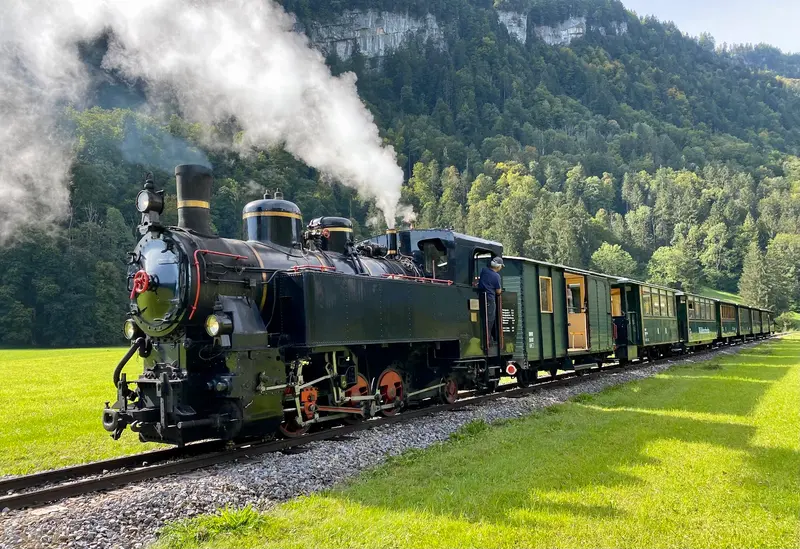
    The narrow-gauge railway operated from 1902 to 1983 over 35.3 kilometers between Bregenz and Bezau. Today, the Wälderbähnle runs as a heritage railway on an approximately five-kilometer section from Bezau via Reuthe to Schwarzenberg.
    Open in Google Maps
    Juppe Workshop Riefensberg
    Museum

    Juppe Workshop Riefensberg

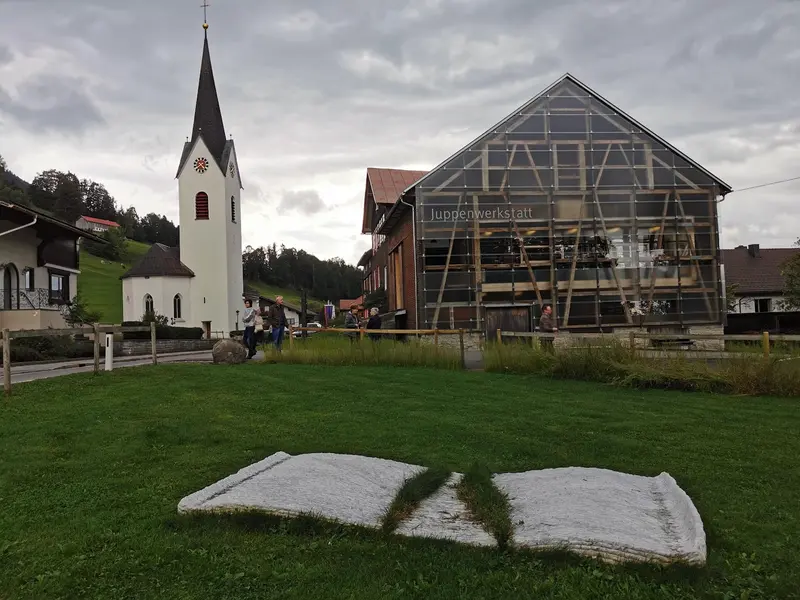
    In the workshop in Riefensberg, the Juppe, the black, pleated Bregenzerwald women's traditional costume, is still made today. A museum explains its production and history.
    Open in Google Maps
    Angelika Kauffmann Museum
    Museum

    Angelika Kauffmann Museum

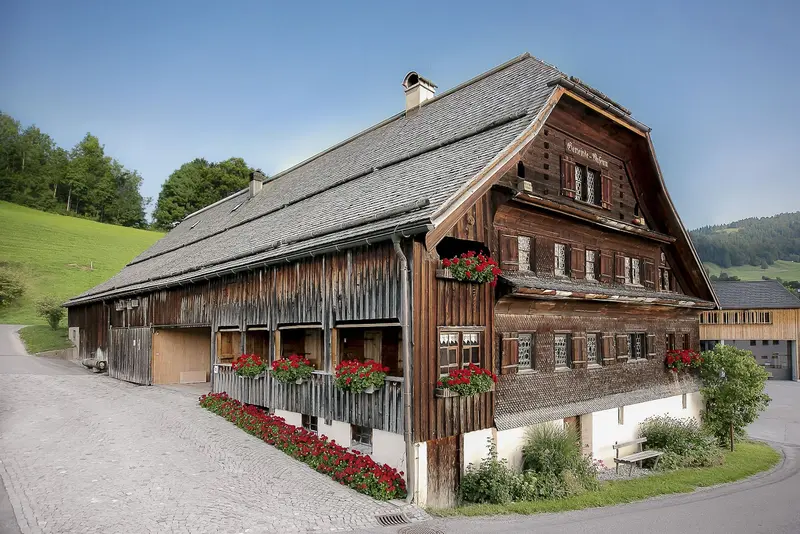
    The Schwarzenberg museum displays changing exhibitions of original works by classicist painter Angelika Kauffmann, whose father was from the town. It opened in 2007 on her 200th death anniversary and is situated in the approx. 450-year-old Kleberhaus, whose front part houses the local history museum with traditional costumes, tools, and furnished rooms.
    Open in Google Maps
    Mellaubahn and Kanisfluh
    Attraction

    Mellaubahn and Kanisfluh

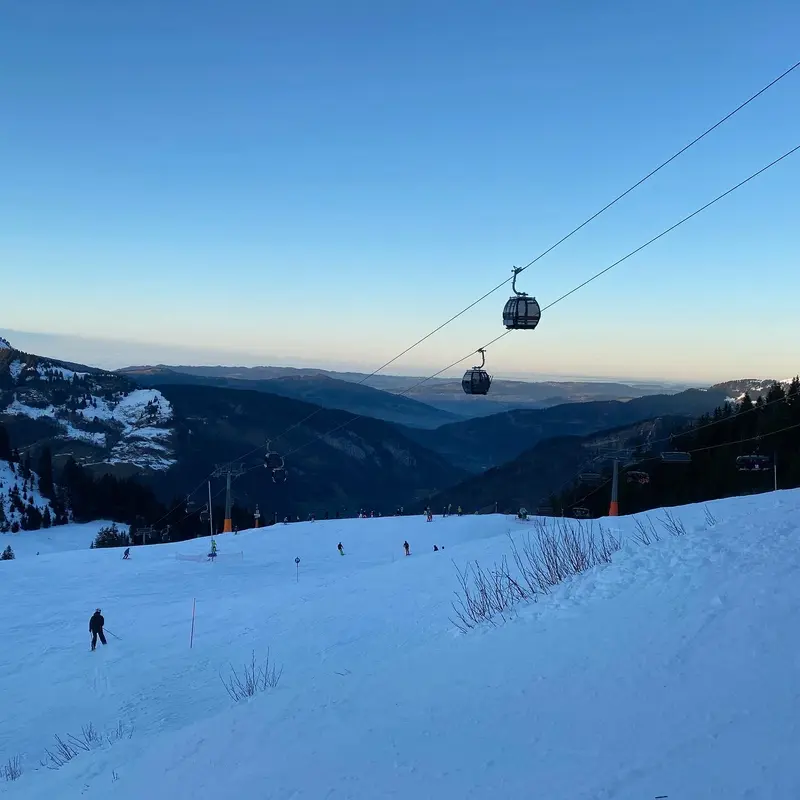
    The gondola lift brings you from Mellau to the Rossstelle mountain station at around 1,395 meters. From there, a moderately difficult hike leads over the Kanisalpe to the Holenke (2,044 m), the highest point of the Kanisfluh, the landmark of the Bregenzerwald. The south-facing slopes are home to ibex.
    Open in Google Maps

    Culture and Tradition

    Wälderhaus and New ArchitectureThe Bregenzerwälderhaus, built of stone and wood, is typical, with its oldest examples dating from the 15th century. Since 1651, the Auer Zunft, an association of master builders founded by Michael Beer, has existed. Today, the region is known for contemporary timber construction: The Werkraumhaus in Andelsbuch was designed by Swiss architect Peter Zumthor, opened in 2013, and showcases the skills of the craft businesses in Werkraum Bregenzerwald.Juppe and ArtThe women's traditional costume, the black pleated Juppe, is still produced today in the Juppenwerkstatt in Riefensberg. The painter Angelika Kauffmann was connected to Schwarzenberg through her father and painted the Apostles' pictures in the parish church there. A museum in the village displays her works.Music in SchwarzenbergThe Schubertiade, founded in 1976 by Hermann Prey, brings Lieder recitals and chamber music to the Angelika-Kauffmann-Saal in Schwarzenberg. Those wishing to attend should book tickets and accommodation early.

    Out & About Locally

    Getting ThereBregenz and Dornbirn train stations are the usual starting points; from there, regional buses run to the villages of the Bregenzerwald. On the German side, Oberstaufen in the Allgäu is a good option. You can find connections at vmobil.at.By Bus and Guest CardThe Gäste-Card is valid for buses and trains throughout Vorarlberg, starting from three overnight stays in the summer season, from your arrival to your departure day.Hiking shuttles and bicycles on the bus are not included.By CarBy car, you can easily reach the villages via the regional roads. To the east, the road leads over the Hochtannberg Pass to Warth and further towards Lech am Arlberg.

    Round trips through this region

    Western Austria: Lake Constance, Arlberg and Zillertal

    Western Austria: Lake Constance, Arlberg and Zillertal

    The trip starts in Bregenz on Lake Constance and leads through the Bregenz Forest, with its cheese-making alpine dairies, over the Hochtannberg Pass to the Arlberg and the villages of Lech and St. Anton. From there you continue into the Ötztal Valley with the Stuibenfall waterfall and the summit lifts of Sölden, then on to Innsbruck, and finally into the Zillertal Valley with the Schlegeis Reservoir and a side trip over the Gerlos Alpine Road to the Krimml Waterfalls. A car gives you the most flexibility, and most legs take 45 minutes to an hour. Bregenz, St. Anton, Ötztal station, Innsbruck and Jenbach are on the rail network, and buses serve the valleys, often free with local guest cards. This is a summer route: the road between Warth and Lech is closed in winter, and many cable cars and hiking buses only run during the summer season.

    13 Days
    6 stops
    Open jaw

    Nearby

    Bregenz & Bodensee

    Bregenz & Bodensee

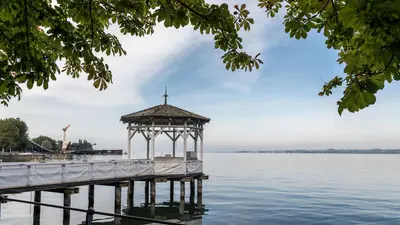
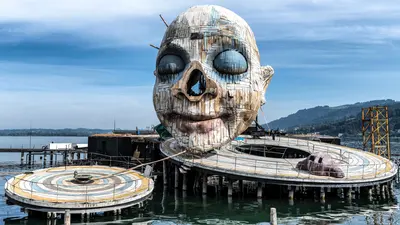
    In the very west, Vorarlberg borders Lake Constance. Bregenz is home to the Seebühne, where summer operas are staged directly on the water.
    Bregenz

    Bregenz

    Bregenz is located on Lake Constance in the far west of Austria. The city is known for the Bregenz Festival: Since 1946, opera has been performed directly on the water on the Lake Stage every July and August, in front of almost 7,000 spectators.
    Lindau

    Lindau

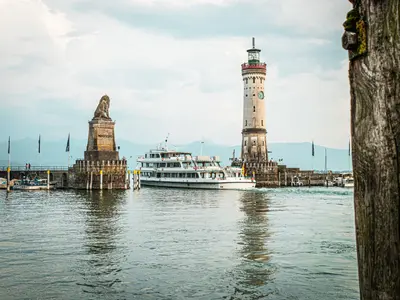
    Lindau is the Bavarian town on Lake Constance, its old town situated on an approximately 0.69-square-kilometer island in the eastern Obersee. A road bridge and the railway embankment connect it to the mainland, on which trains travel to Lindau-Insel station.The landmark is the harbor entrance: On one side, the six-meter-high Bavarian Lion made of Kelheim marble, is enthroned; opposite stands the New Lighthouse, completed in 1856, Germany's southernmost. Also featured are the 12th-century Mangturm and the painted Old Town Hall dating from 1422.
    Appenzell

    Appenzell

    Appenzell is the capital of the canton of Appenzell Innerrhoden and lies in gently rolling hills at the foot of the Alpstein range, south of St. Gallen. The heart of the village is the Hauptgasse, with more than 60 shops and colorfully painted facades. Many shop and inn signs still hang here in the traditional style known as Tafeen.On the Landsgemeindeplatz, the Landsgemeinde meets on the last Sunday in April, when eligible voters decide by a show of hands in the open air. Nearby are the Town Hall, with its facade painted in 1928, and St. Mauritius Parish Church, whose parish dates back to 1071.A short train ride away, the mountains of the Alpstein begin at Wasserauen. A cable car takes six minutes to reach Ebenalp at 1,644 meters. From there, you hike down to the Wildkirchli caves and the Berggasthaus Aescher, built against the cliff, and on to the Seealpsee. Other cable cars run up the Hoher Kasten and the Kronberg.
    Arlberg

    Arlberg

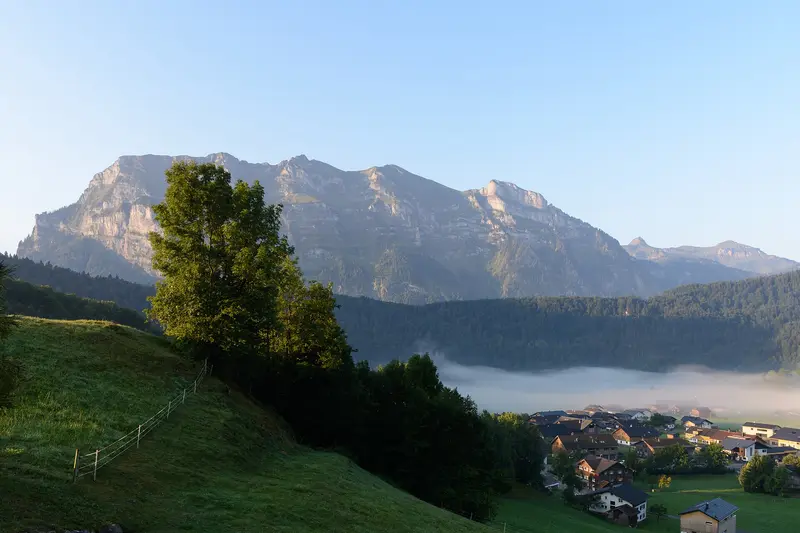
    The Arlberg Pass, at 1,793 meters, separates Vorarlberg and Tyrol. On the Tyrolean side lies St. Anton; on the Vorarlberg side, the road leads over the Flexen Pass to Zürs and Lech. Known as the cradle of alpine skiing, the region is a summer hiking area with mountain lakes, cable cars and the Skyspace by James Turrell.

    Sources & method

    • Photos: Wikimedia Commons, Google Maps. Each photo carries its credit.
    • Place data such as addresses and ratings comes from Google Maps.
    • The content is based on web research from public, traceable sources. How the content is made · The role of AI