The trip starts in Bregenz on Lake Constance and leads through the Bregenz Forest, with its cheese-making alpine dairies, over the Hochtannberg Pass to the Arlberg and the villages of Lech and St. Anton. From there you continue into the Ötztal Valley with the Stuibenfall waterfall and the summit lifts of Sölden, then on to Innsbruck, and finally into the Zillertal Valley with the Schlegeis Reservoir and a side trip over the Gerlos Alpine Road to the Krimml Waterfalls. A car gives you the most flexibility, and most legs take 45 minutes to an hour. Bregenz, St. Anton, Ötztal station, Innsbruck and Jenbach are on the rail network, and buses serve the valleys, often free with local guest cards. This is a summer route: the road between Warth and Lech is closed in winter, and many cable cars and hiking buses only run during the summer season.
13 Days / 12 Nights
Mid-June to late September. That is when most cable cars and hiking buses run and the guest cards are valid. The Warth–Lech road is closed in winter, and the Timmelsjoch pass at the end of the Ötztal Valley is usually open only from mid-June to mid-October.
6 stops
Why This Route?
For travelers who want to see Austria's west beyond the big cities: hiking across alpine meadows and to mountain lakes, scenic pass roads, and cheese straight from the alpine dairy. The route complements the classic Vienna to Innsbruck trip with the valleys of Vorarlberg and Tyrol.
Hidden Gems
Wälderbähnle, the heritage railway between Bezau and Schwarzenberg in the Bregenz Forest
Skyspace Lech by James Turrell on the Tannegg alp, bookable for sunrise or sunset
a guided tour inside the 131-meter-high dam of the Schlegeis Reservoir, May to October
Getting there and back
Open jaw: start and end are in different places
Arrival
Flight · Zürich (ZRH)From Zurich Airport a direct train takes about 1 hour 20 minutes to Bregenz; by car it is about 1.5 hours. From Germany you can reach Bregenz by train via Munich and Lindau-Reutin.
Departure
Flight · München (MUC)From Mayrhofen take the Zillertal Railway to Jenbach and continue via Kufstein to Munich; the whole trip to the airport takes about 3 hours 45 minutes. By car it is about 2 hours 15 minutes. Innsbruck Airport is closer, less than an hour from the Zillertal Valley.
Itinerary
Stop 1 • 1 Night
Bregenz
City
Bregenz is located on Lake Constance in the far west of Austria. The city is known for the Bregenz Festival: Since 1946, opera has been performed directly on the water on the Lake Stage every July and August, in front of almost 7,000 spectators.
About 1 hour 20 minutes by train from Zurich Airport. The Pfänder cable car takes you up to 1,064 meters in six minutes, with views over Lake Constance.
Breathtaking mountain views. Great hiking spots and Stunning architecture and historic buildings.
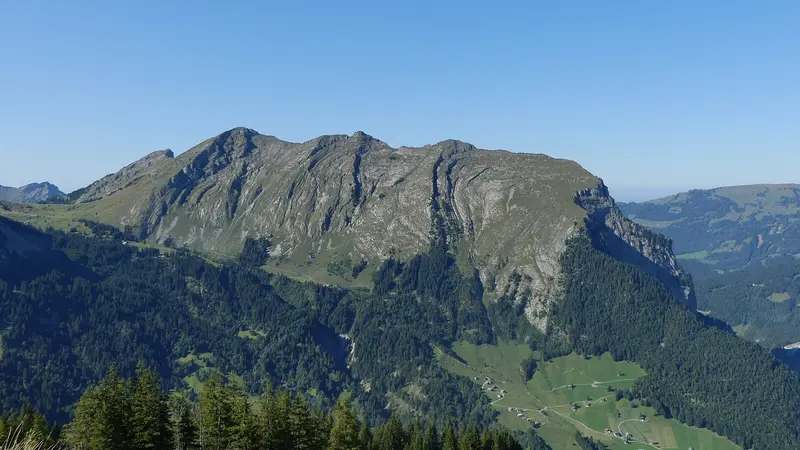
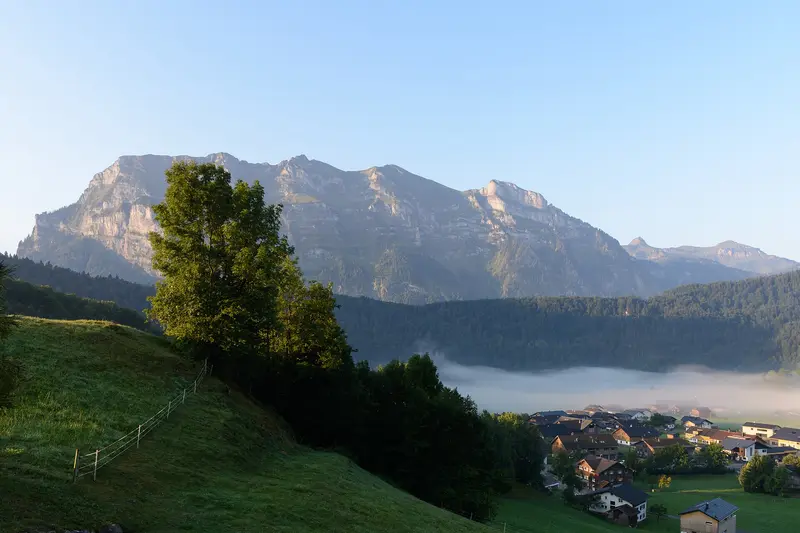
Beyond Bregenz, the land ascends along the Bregenzer Ach through green hills, mountain villages, and alpine pastures, up to the Hochtannberg Pass. The Bregenzerwald is known for its mountain cheese, its three-tier farming system (Tal, Vorsäß, Alpe), and a wooden architecture that combines old Wälder houses with contemporary design.
About 45 minutes to Bezau. Ride the Mellau gondola toward the Kanisfluh; along the way are dairies and alpine farms of the Cheese Road (KäseStrasse).
4 Sights
Culture and Tradition
Wälderhaus and New ArchitectureThe Bregenzerwälderhaus, built of stone and wood, is typical, with its oldest examples dating from the 15th century. Since 1651, the Auer Zunft, an association of master builders founded by Michael Beer, has existed. Today, the region is known for contemporary timber construction: The Werkraumhaus in Andelsbuch was designed by Swiss architect Peter Zumthor, opened in 2013, and showcases the skills of the craft businesses in Werkraum Bregenzerwald.Juppe and ArtThe women's traditional costume, the black pleated Juppe, is still produced today in the Juppenwerkstatt in Riefensberg. The painter Angelika Kauffmann was connected to Schwarzenberg through her father and painted the Apostles' pictures in the parish church there. A museum in the village displays her works.Music in SchwarzenbergThe Schubertiade, founded in 1976 by Hermann Prey, brings Lieder recitals and chamber music to the Angelika-Kauffmann-Saal in Schwarzenberg. Those wishing to attend should book tickets and accommodation early.
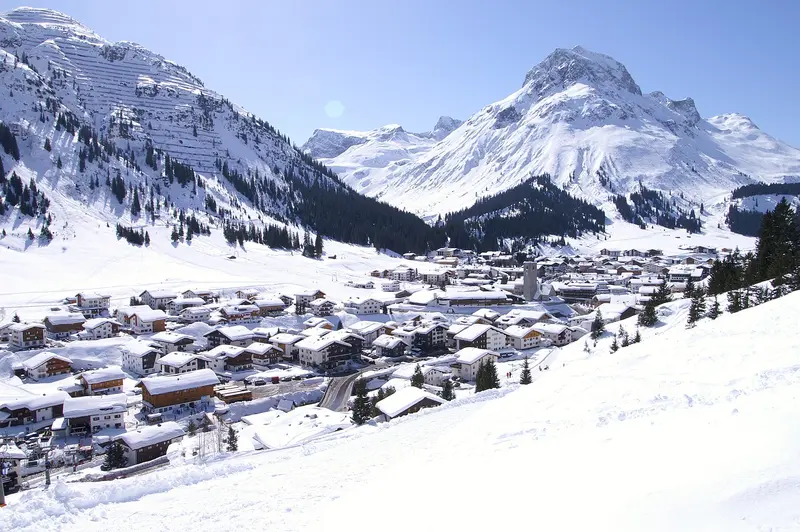
The Arlberg Pass, at 1,793 meters, separates Vorarlberg and Tyrol. On the Tyrolean side lies St. Anton; on the Vorarlberg side, the road leads over the Flexen Pass to Zürs and Lech. Known as the cradle of alpine skiing, the region is a summer hiking area with mountain lakes, cable cars and the Skyspace by James Turrell.
Over the Hochtannberg Pass and Warth you reach Lech in about 45 minutes; the Warth–Lech stretch is closed in winter. A hiking bus runs from Lech to Lake Formarin, and the Flexen Pass takes you on to St. Anton.
4 Sights
Culture and History
Ski History at Villa TrierThe Museum St. Anton am Arlberg is located in the Art Nouveau Villa Trier, which Bernhard Trier had built around 1910 above today's Galzigbahn. It tells of the village's rise to a winter sports center, of railway and tunnel construction, and the local culture of the Stanzertal.Light and Sky in OberlechAt Alpe Tannegg near Oberlech, at 1,780 meters, stands the Skyspace Lech by US light artist James Turrell, opened in September 2018. You can access the booked light sequences at sunrise and sunset.One Region, Two StatesThe name Vorarlberg means 'before the Arlberg'. St. Anton and St. Christoph belong to Tyrol, Stuben, Zürs, Lech and Warth to Vorarlberg.
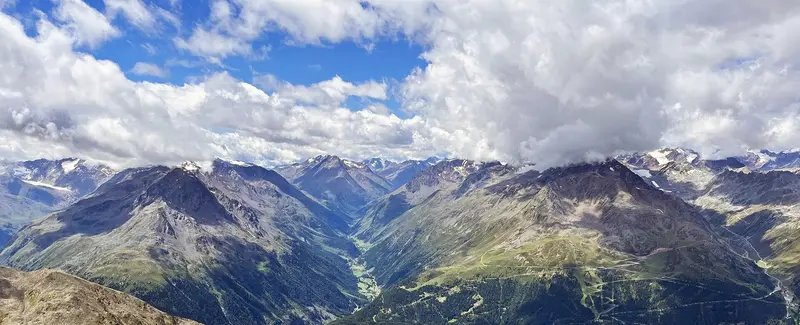
Spanning approximately 65 kilometers, the Ötztal extends from the Inntal, west of Innsbruck, south into the glacier world of the Ötztal Alps. Along the route are Tyrol's highest waterfall near Umhausen, the thermal spa in Längenfeld, Sölden with its summit lifts, and at its far end, Vent and Obergurgl. The glacier mummy Ötzi was discovered at the Tisenjoch in 1991.
Just under an hour from St. Anton to Längenfeld. The Stuibenfall near Umhausen drops 159 meters, and in Sölden the Gaislachkogl gondola takes you to just over 3,000 meters.
4 Sights
Culture and History
Ötzi and the Neolithic AgeIn 1991, the glacier mummy, who lived around 3300 BC, was found at Tisenjoch high above the Venter Valley. At Ötzi Village in Umhausen, an archaeological open-air park with a birds of prey park, you can learn more about his world. The season runs from May to October.Sheep and DialectIn mid-June, shepherds drive more than 3,000 sheep from Schnalstal in South Tyrol to the pastures near Vent; they return in September. The Ötztal dialect has been listed in the Austrian Inventory of Intangible Cultural Heritage since 2010.Bond on the SummitIn 2015, scenes for the James Bond film Spectre were shot on the Gaislachkogl above Sölden. Since July 2018, the 007 Elements installation there, at around 3,050 meters, tells the story of the filming.
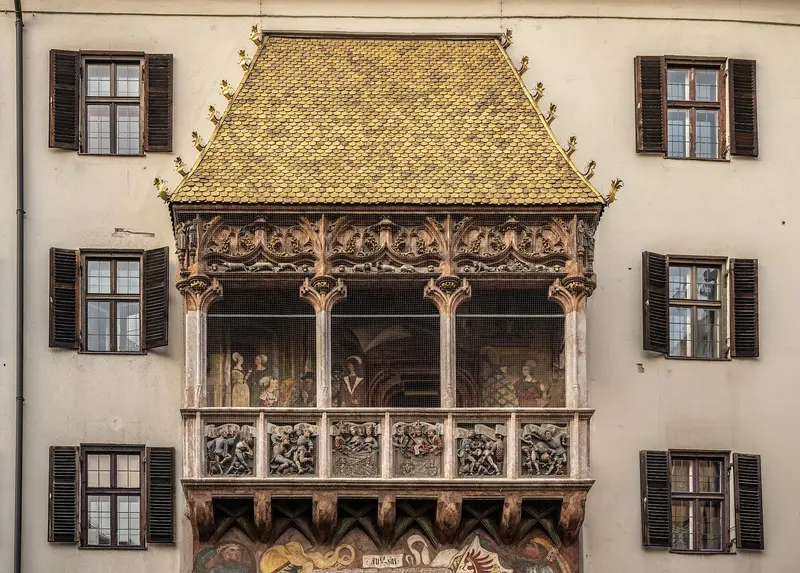
The capital of Tyrol is located in western Austria right in front of the Alps. In the Old Town, the Golden Roof shines with its 2,657 gilded copper shingles; from there, the Hungerburgbahn, designed by Zaha Hadid, takes you up to the Nordkette.
About 50 minutes from the Ötztal Valley. From the Old Town the Hungerburg funicular reaches the Hungerburg in eight minutes, and cable cars continue to Seegrube and Hafelekar.
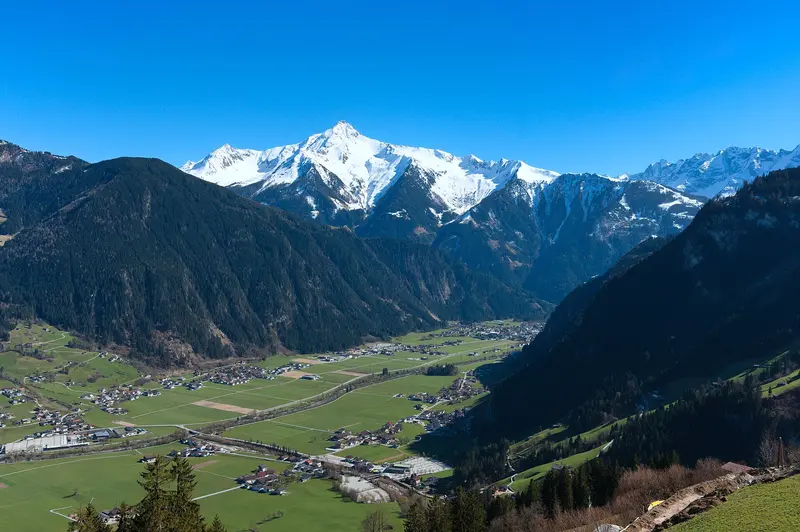
From Strass im Inntal, the Ziller Valley stretches about 32 kilometers south to Mayrhofen, where it branches into the valleys of the Zillertal Alps. A narrow-gauge railway opens up the valley, mountain lifts lead to the alpine pastures, and alpine roads take you to the Schlegeis Reservoir or over the Gerlos Pass to the Krimml Waterfalls.
Just under an hour from Innsbruck by car, about 1.5 hours by train via Jenbach. Drive up to the Schlegeis Reservoir, and spend a day crossing the Gerlos Alpine Road, about 45 minutes, to the 380-meter Krimml Waterfalls.
3 Sights
Culture and Tradition
Folk MusicThe Zillertal has a long tradition of folk music. Groups like the Zillertaler Schürzenjäger gained fame beyond the region.Dairy and "Krapfen"At the Erlebnissennerei Zillertal in Mayrhofen, you can see in a glass dairy how milk is turned into butter, yogurt, and cheese. There's also a show farm featuring Grauvieh cattle. Typical of the valley's cuisine are the Zillertaler Krapfen.Valley HubsZell am Ziller is the economic and educational center of the valley. Mayrhofen, with around 4,000 inhabitants, is the largest holiday resort; the Penkenbahn opened here as early as 1954.
Best Time to GoMid-June to late September. That is when most cable cars and hiking buses run and the guest cards are valid. The Warth–Lech road is closed in winter, and the Timmelsjoch pass at the end of the Ötztal Valley is usually open only from mid-June to mid-October.