Fernweh: Home
ExploreGuideDestinationsMy tripsMy trip
de|en
All Places & RegionsRound tripsNight trains in EuropeAll highlightsAbout FernwehFAQPrivacy PolicyImprint
Download on the App StoreGet it on Google Play
ExploreGuideDestinationsMy tripsMy trip
    • Neighborhoods & highlights
    • Eat & drink
    • Culture
    • Getting around
    • Accommodation
    • Plan trip
    • Nearby
    Phuket Town (Old Town)

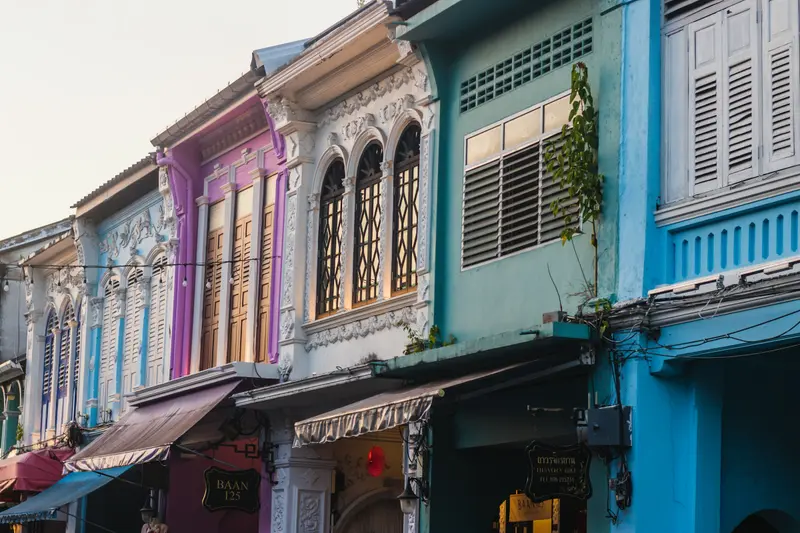
    Photo by Sadiq Ahmad on Unsplash

    Thailand

    Phuket Town (Old Town)

    CityCulture

    The provincial capital in the southeast of the island is the cultural counterpoint to the beach resorts on the west coast.

    by Felix Gillen

    1. Home
    2. Destinations
    3. Thailand
    4. Phuket
    5. Phuket Town (Old Town)
    The provincial capital in the southeast of the island is the cultural counterpoint to the beach resorts on the west coast. In the Old Town around Thalang Road, Phang Nga Road, Krabi Road, and Dibuk Road stand Sino-Portuguese shophouses, built by Hokkien-Chinese tin merchants and miners in the 19th century; many today house cafés, shops, small hotels, and museums. From the union of Hokkien immigrants and Siamese families, the Baba culture emerged with its own language, clothing, and cuisine. On Sunday evenings, Thalang Road transforms into the Lard Yai market, and the free electric bus Dragon Line makes a loop through the Old Town every 15 minutes.
    Thailand travel guideRound trips in ThailandPlan a trip with Phuket Town (Old Town)

    Contents

    • Neighborhoods & highlights
    • Eat & drink
    • Culture
    • Getting around
    • Accommodation
    • Nearby

    Sights in Phuket Town (Old Town)

    Discover the most important sights and attractions

    Museum

    1Chinpracha House

    This privately run mansion on Krabi Road, once home to a tin-trading family, illustrates how wealthy Baba families lived: with a Chinese courtyard layout and European elements in its decor and facade. Guided tours are available through the living quarters. Admission is around 150 Baht, open daily until approximately 4 PM.
    Open in Google Maps
    Thalang Road and Soi Romanee

    Ryomaandres / Wikimedia Commons / CC BY-SA 4.0, mod.

    Attraction

    2Thalang Road and Soi Romanee

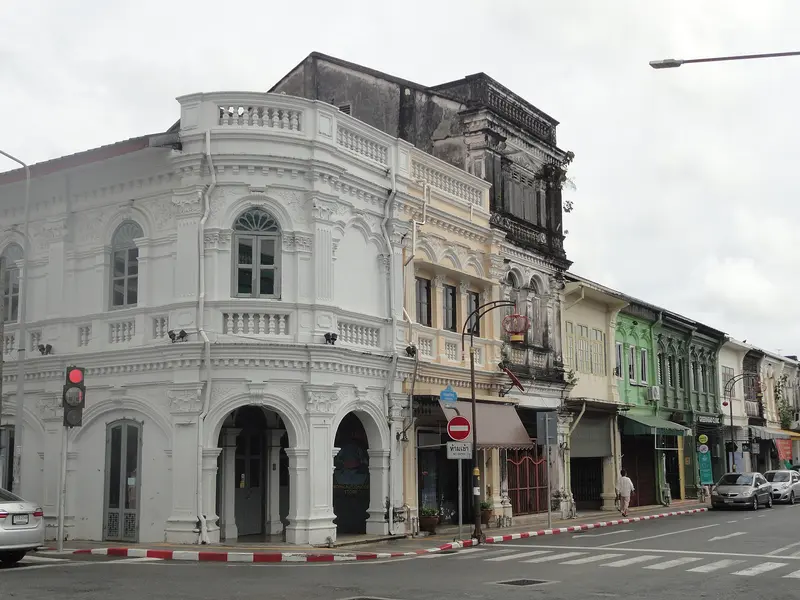
    Around Thalang Road, the Old Town's main street, stand the Sino-Portuguese shophouses built by 19th-century tin merchants: narrow facades with arcades, stucco, and shutters, interspersed with Chinese shrines and old coffee houses. The narrow Soi Romanee branches off towards Dibuk Road; during the tin boom, it was the lane of gambling dens and brothels, today it has been restored with pastel-colored houses and is full of cafés. On Sundays from 4 PM to 10 PM, Thalang Road is closed to cars and transforms into the Lard Yai Market. A stroll in the late afternoon, when the heat subsides, is most pleasant.
    Open in Google Maps

    3Saphan Hin

    The public park at the southern end of Phuket Town is located on reclaimed land by the sea. Today it is the city's sports and leisure area with jogging paths, sports fields, and bay views; street food stalls appear in the evenings. A 1969 monument commemorates Captain Edward Miles, who deployed Thailand's first tin dredge here. A good place to observe the city's daily life.
    Open in Google Maps

    4Wat Khao Rang Samakkhitham

    The temple is located on the slope of Khao Rang in Phuket Town and is known for its large golden seated Buddha, one of the first of its kind on the island. You reach the newer temple building via a long Naga staircase. Admission is free; cover shoulders and knees. Accessible via Soi Wachira on Yaowarat Road near Vachira Hospital.
    Open in Google Maps
    Museum

    5Phuket Thai Hua Museum

    The building on Krabi Road was built in 1934 as a Chinese-language school and has been a museum since 2010. The exhibition tells of Hokkien Chinese immigration, tin mining, Baba culture, and island cuisine, and is a good prelude to an Old Town tour. Entry for foreign guests approx. 200 Baht, open daily 9 AM - 5 PM; the closing day varies, check before a weekday visit. The Dragon Line stops in front of the building.
    Open in Google Maps

    Restaurants in Phuket Town (Old Town)

    1

    One Chun

    South Thai restaurant on Thep Krasatti Road in Old Town, awarded a Bib Gourmand in the Guide Michelin Thailand 2026. Recommended dishes include fresh prawns in creamy yellow curry with coconut milk and Mu Hong, braised pork belly Phuket-style. Open daily from 10 AM, reservations by phone.
    Show on Google Maps
    2

    Blue Elephant Phuket

    Restaurant and cooking school in a colonial-style villa on Krabi Road, surrounded by a garden; inside, wood-paneled rooms, rattan furniture, and shutters. The Guide Michelin features the establishment with classic Thai cuisine and a sharing Peranakan menu, such as king mackerel in coconut curry. Significantly pricier than neighboring eateries; book cooking classes in advance.
    Show on Google Maps

    Baba Culture and Tin Age

    Hokkien HeritagePhuket's Old Town emerged in the 19th century with the arrival of Hokkien Chinese tin traders and miners. Marriages between immigrants and Siamese families led to the Baba culture, with its distinct language, attire, and cuisine. Their Sino-Portuguese shophouses, Chinese shrines, and mansions define the district to this day; the Phuket Thai Hua Museum details its history.Festivals and MarketsVegetarian Festival: nine days in October (2026 from Oct 10-18) with processions and ceremonies at Chinese shrines, such as Jui-Tui Shrine, and vegetarian street food stalls.Lard Yai: Sundays from 4 PM to 10 PM, Thalang Road transforms into a market.Cover shoulders and knees in shrines and temples; maintain distance during processions.

    Getting There & Around

    ArrivalA bus operates from Bus Terminal 1 to Patong, approximately 6 AM - 8 PM.Taxis and Grab go from the airport to the city. Confirm prices beforehand or via the app.In the Old TownThe Old Town is best explored on foot, most pleasant in the late afternoon.The free electric bus Dragon Line runs a 15-minute loop with 16 stops through the Old Town, approx. 10 AM - 9 PM (TAT 2025).For destinations outside, such as Wat Chalong or Saphan Hin, take Grab or a tuk-tuk.

    Accommodations in Phuket Town (Old Town)

    Find perfect stay in Phuket Town (Old Town)

    Booking.com* (Affiliate link)
    Search Hotels
    Agoda* (Affiliate link)
    Search Hotels
    Airbnb
    Vacation Rentals

    * Affiliate link: if you book through it, we earn a small commission. The price stays the same for you.

    Plan your trip to Phuket Town (Old Town)

    Save places, build a route and plan your city trip, all in one place.

    1. 1
      Sunrise over alpine peaks and a sea of clouds
      1234

      Round trip

      12 days · 4 stops

      Saved

      Pick a route

      Pick a ready-made one or save places and plan your own.

      Open bookmarks
    2. 2

      Trip to Phuket Town (Old Town)

      Live
      • 1Chinpracha House3 days
      • 2Thalang Road and Soi Romanee4 days
      • 3Saphan Hin5 days
      Budget

      Plan your trip

      The planner sorts stops, days and budget. Plan together in real time.

      Start trip planning
    3. 3
      9:41 No signal
      Phuket Town (Old Town)
      Available offline

      Photo by Sadiq Ahmad on Unsplash

      Use it on the road

      Download the guide to your phone and use it on site, even offline.

    Nearby

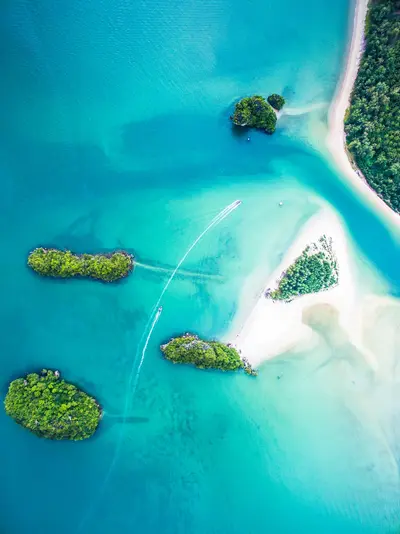
    Andaman Sea Coast

    Andaman Sea Coast

    The Andaman Coast forms the western side of the Thai peninsula. It is characterized by limestone karsts that rise from the sea and the plains, often dropping vertically, and are particularly dense in Phang Nga Bay.Off the coast lie the well-known island groups, from Phuket and the Phi Phi Islands to Koh Lanta and the far-flung Similan Islands. Several coastal sections and island groups are protected as national parks, home to some of the country's most renowned diving areas.The season is clearly defined: From approximately November to April is the dry season with calmer seas, while from May to October, the southwest monsoon brings waves and rain. During the monsoon months, many island businesses and some marine national parks close, and dangerous currents can form on some beaches. Pay attention to red flags and do not enter the water then. Current safety advice can be found at the German Federal Foreign Office.

    Unsplash

    Phuket

    Phuket

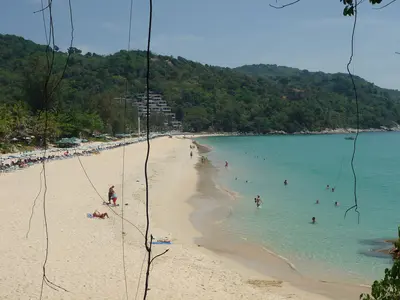
    Phuket, Thailand's largest island, is more than its famed beaches. Phuket Town's Old Town, with Sino-Portuguese shophouses, street art, and old cafes, recounts its tin mining past. In the south stand the Big Buddha on Nakkerd Hill and *Wat Chalong* temple; the west coast has bays from lively Patong to quieter Kata Noi and Nai Harn. Hokkien noodles, Moo Hong, seafood define the island's cuisine. Best travel time: November to February.

    ADwarf·public domain

    Patong

    Patong

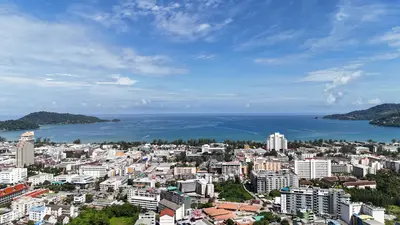
    Patong on the west coast is Phuket's largest and most developed beach resort. The approximately 2.8-kilometer-long beach attracted mainly European travelers from the late 1980s onwards, and since then, the town has been the island's hub for nightlife and shopping. Hotels, restaurants, and shops line up behind the beachfront promenade. Bangla Road, perpendicular to the beach, is a pedestrian zone in the evenings with bars and clubs open until the early morning hours. Those seeking peace are better off in Kata, Karon, or Nai Harn; those wanting infrastructure and nightlife will find it here. The 2004 tsunami severely damaged the coastal area, but the town has long since been rebuilt.

    Pimon Kumsri·Pexels

    Kata and Karon

    Kata and Karon

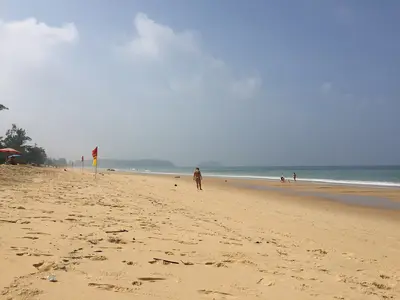
    Kata and Karon are two beach resorts on the west coast of Phuket, south of Patong. Karon Beach is approximately 3.5 kilometers long, wide, and quieter; the resort thrives mainly on beach life and has little nightlife. The crescent-shaped Kata Beach is about 1.5 kilometers long, with restaurants, shops, and bars within walking distance around the bay; surfing is popular here in the low season.To the south lies the small bay of Kata Noi. From Karon Viewpoint on the coastal road towards Nai Harn, you'll see all three beaches one after another. For swimming safety, especially during monsoon season, observe the advice from the German Federal Foreign Office and the warning flags on site.

    HutheMeow·CC BY-SA 4.0

    Koh Yao Noi

    Koh Yao Noi

    Koh Yao Noi is located in Phang Nga Bay between Phuket and Krabi, offering views of limestone karsts rising from the shallow waters. Its name translates to "small long island." To its south lies the larger sister island, Koh Yao Yai.The island is predominantly Muslim and thrives on fishing, rubber cultivation, and rice farming. It features villages, a ring road, mosques, and a number of resorts and homestays, but no nightlife. You'll mostly get around by scooter.The beaches on the east coast are very shallow, and the tidal range is significant. At low tide, the sea recedes considerably. The beaches are only suitable for swimming around high tide; plan according to the tide calendar.Nonetheless, the island is an excellent base for kayak and boat tours to the bay's rocky islands. As the population lives conservatively, swimwear is inappropriate outside of beach and pool areas.

    Vyacheslav Argenberg·CC BY 4.0

    Your next steps

    Phuket Town (Old Town) is in Thailand. Ways to carry on from here.

    • More in Thailand

      Highlights, areas, routes and the best time to travel for all of Thailand.

      Thailand travel guide
    • Round trips in Thailand

      Ready-made routes through Thailand, with stops, nights and a map.

      See the routes

    Sources & method

    • Photos: Wikimedia Commons, Unsplash. Each photo carries its credit.
    • Place data such as addresses and ratings comes from Google Maps.
    • The content is based on web research from public, traceable sources. How the content is made · The role of AI