
TitiNicola / Wikimedia Commons / CC BY-SA 4.0, mod.
Round trip · Argentina
Waterfalls, Jesuit Missions and Wetlands: Iguazú and Iberá
by Felix Gillen
- 12 Days / 11 Nights
- Buenos Aires → Buenos Aires
From Buenos Aires, you fly just under two hours to Iguazú and have time for both sides of the falls. A long-distance bus then takes about four to five hours along Ruta 12 through Misiones Province to San Ignacio, home to the ruins of the Jesuit mission of San Ignacio Miní. After a bus ride of just under an hour to Posadas, a private transfer takes four to six hours, the last stretch on gravel and dirt roads, to the Esteros del Iberá, one of South America's great wetlands, with caimans, capybaras and marsh deer. You fly back from Posadas to Buenos Aires in about an hour and a half. The route is quieter than the classic circuit and centers on nature and wildlife in the subtropical northeast.
At a glance
- Duration
- 12 Days / 11 Nights
- Stops
- 5 · Buenos Aires → Buenos Aires
- Arrival
- Flight · Buenos Aires Ezeiza (EZE)
- Best Time to Go
- April, May, and September: It’s mild then, with monthly averages at the waterfalls between 18 and 22 °C
More on when to go
Rain falls year-round, most in October, least in July and August, when nights are cool. After heavy rain, the tracks to Colonia Carlos Pellegrini are often only manageable with a high-clearance vehicle or 4x4. December to February it’s very hot and humid.
5 stops
Why This Route?
Most travelers fly into Iguazú and quickly move on. This route remains in the Northeast, connecting the waterfalls with the UNESCO-protected Jesuit Missions and the Esteros del Iberá, where you can observe wildlife up close. It is suitable as a standalone trip or as an addition to a Patagonia tour.
Hidden Gems
- At Iguazú, take the first train to the Devil's Throat (Garganta del Diablo)
- early in the morning there are fewer people on the walkway
- Stay overnight in San Ignacio for the evening light-and-sound show among the ruined walls
- tickets are sold only on site shortly before it starts
- In Colonia Carlos Pellegrini, walk the short Sendero Carayá
- on this trail of about one kilometer you often see howler monkeys
Getting there and back
Round trip, returning to where you started
- Arrival
- Flight · Buenos Aires Ezeiza (EZE)From Ezeiza to the city, you can take a taxi, remis, or transfer bus. Domestic flights to Iguazú and back from Posadas usually depart from and arrive at the city-located Aeroparque Jorge Newbery.
- Departure
- Flight · Buenos Aires Ezeiza (EZE)Plan the night in Buenos Aires as a buffer for the Ezeiza departure, as domestic flights are often delayed.
Itinerary
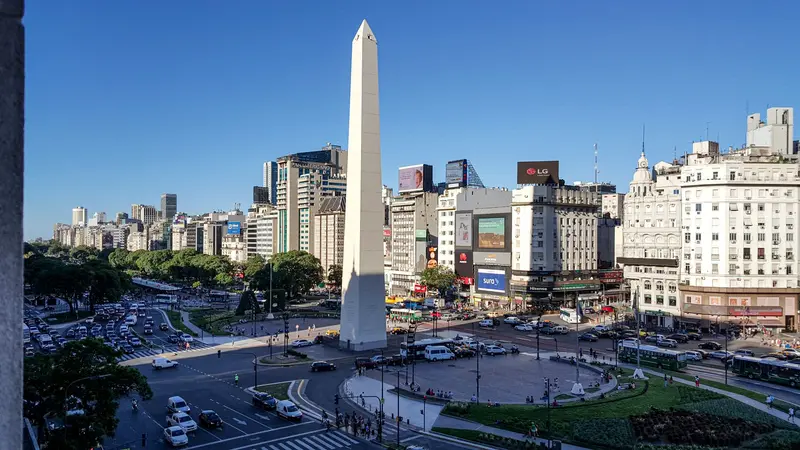
Buenos Aires
Buenos Aires is Argentina's capital and, with over three million inhabitants in the city proper and many more in the greater metropolitan area, it is the country's political and cultural center. The city is located on the west bank of the Río de la Plata and is divided into 48 barrios, each with its own distinct character. Wide boulevards, Belle Époque architecture, traditional cafés, and a vibrant tango scene define its image.The historic center, with Plaza de Mayo, Casa Rosada, and the Cabildo, is located close to the river. South of it lies San Telmo, one of the oldest neighborhoods, with cobblestone streets, antique shops, and its Sunday market. Even further south, by the old port, is La Boca, with its brightly painted houses along Caminito and the La Bombonera stadium. To the north, you'll find elegant Recoleta with its famous cemetery and beyond that, Palermo, the largest barrio, with parks, boutiques, and the nightlife districts of Palermo Soho and Palermo Hollywood. Finally, by the water, lies Puerto Madero, the newest neighborhood in the converted docklands.
San Telmo, La Boca, Recoleta and Palermo; in the evening, a milonga or a tango show.
6 Sights
6 Restaurants
Tango, Cafes and Football
Tango originated in the late 19th century in the port districts along the Río de la Plata and has been a UNESCO intangible cultural heritage since 2009. In Buenos Aires, you encounter it in two ways: as a show for visitors and in the Milongas, the dance evenings that the Porteños themselves attend. In San Telmo, couples also dance on the street on weekends.Football is equally influential. In La Boca stands La Bombonera, the stadium of Boca Juniors, where Diego Maradona became famous. And in the evenings, many restaurants only fill up from 9 PM onwards.
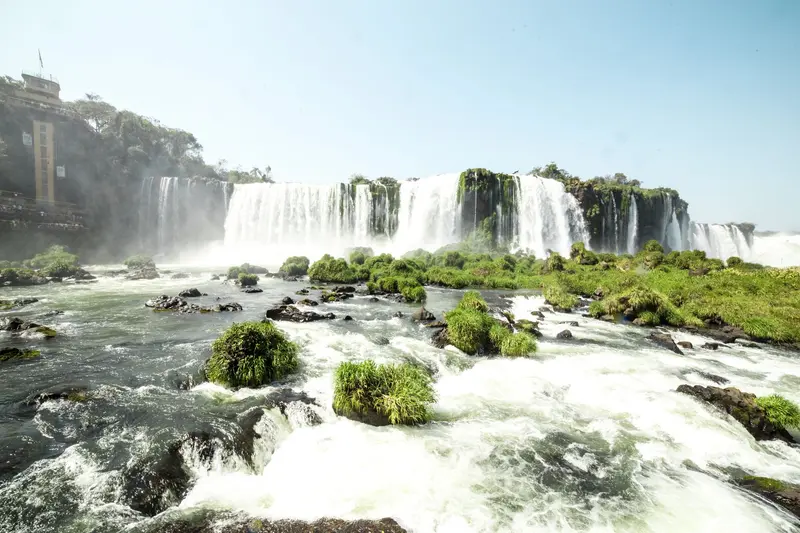
Iguazú Falls
Current Information (as of mid-November 2026): The boardwalk to Garganta del Diablo, the most powerful fall, was preventatively dismantled due to flood risk starting August 3, 2026. There is no set date for its reopening; reconstruction will take at least around 60 days after approval. The Sendero Macuco is also closed. Circuito Superior, Circuito Inferior, Sendero Verde, and the park train are open depending on water levels. Check the National Park for current status before your visit.The Iguazú Falls on the border with Brazil form an almost three-kilometer-wide cascade front, over which the Río Iguazú plunges up to around 80 meters. Depending on water levels, there are over 250 individual falls. The Argentine National Park was established in 1934 and has been a UNESCO World Heritage site since 1984.Within the park, boardwalks connect the Circuito Superior, running above the fall edges, and the Circuito Inferior, which leads visitors close to individual falls from below. The narrow-gauge train Tren Ecológico de la Selva runs every 30 minutes from the entrance to the stations. The name originates from the Guaraní language and means "big water."
Just under two hours by air from Aeroparque; stay in Puerto Iguazú. A full day on the Argentine side with the Devil's Throat and the Upper and Lower Circuits; for the Brazilian side, check Brazil's current entry requirements.
3 Sights
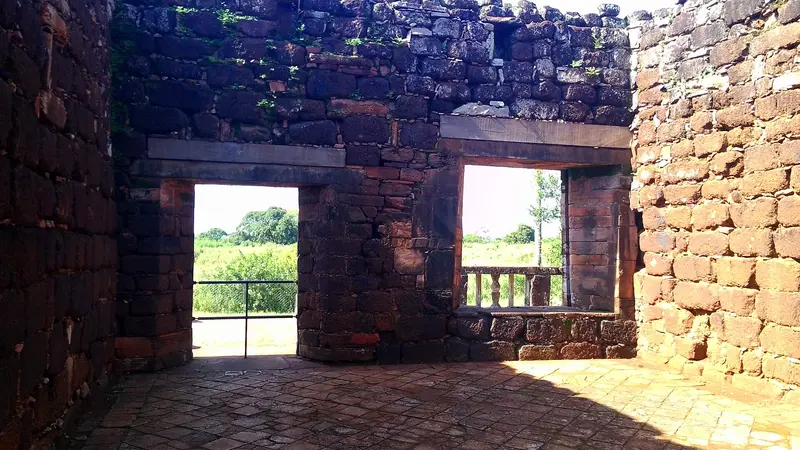
San Ignacio Miní
The ruins of San Ignacio Miní, about 60 kilometers northeast of Posadas, are among Argentina's best-preserved Jesuit reductions. Here, Guaraní and Jesuit priests lived together until the order was expelled from the Spanish colonies in 1767. Mighty red sandstone walls with baroque architectural decoration, arranged around a large square with a church and Cabildo, remain.Since 1984, San Ignacio Miní, along with other reductions in Argentina and São Miguel in Brazil, has been part of the UNESCO World Heritage Site of the Jesuit Missions of the Guaraní. An exhibition room at the entrance explains its history; inquire locally about the evening light and sound show. From Puerto Iguazú, it's about 240 kilometers via Ruta Nacional 12.
Long-distance buses leave Puerto Iguazú several times a day and take about four to five hours through Misiones, depending on the service. The mission was established on its present site in 1695 and has been a UNESCO World Heritage Site since 1984.
3 Sights
Reduction of the Guaraní
San Ignacio Miní is part of the UNESCO World Heritage Jesuit Missions of the Guaraní, along with Santa Ana, Loreto, Santa María la Mayor, and São Miguel in Brazil. These reductions were established in the 17th and 18th centuries on Guaraní land in the rainforest.In the evenings, a sound and light show among the walls recounts the history of the reduction, now enhanced with laser technology.

Esteros del Iberá
The Esteros del Iberá in Corrientes province are, after Brazil's Pantanal, among South America's largest freshwater wetlands. Lagoons, floating islands, and grasslands provide habitat for caimans, capybaras, swamp and pampas deer, howler monkeys, and over 350 bird species. For years, vanished species have been reintroduced here, including giant anteaters and jaguars; jaguars now roam freely through the park once again.The most important starting point is Colonia Carlos Pellegrini, a village of around 900 inhabitants on Laguna Iberá. From there, boats depart onto the lagoon, and short trails lead into the surrounding area. Access from Mercedes or Ituzaingó is partly via gravel roads; inquire about their condition beforehand.
About an hour by bus to Posadas, then four to six hours by private transfer to Colonia Carlos Pellegrini; the last 145 kilometers or so (90 miles) are on gravel and dirt roads, and after rain you need a high-clearance or 4WD vehicle. Boat trips of 1.5 to 2 hours in the early morning or late afternoon, horseback rides and short trails.
1 Sight
National Park est. 2018
The Esteros del Iberá, in Corrientes province, are one of South America's great wetlands. In December 2018, Congress approved the establishment of the Parque Nacional Iberá. Boat trips on Laguna Iberá lead to caimans, capybaras, and marsh deer.
Buenos Aires
Buenos Aires is Argentina's capital and, with over three million inhabitants in the city proper and many more in the greater metropolitan area, it is the country's political and cultural center. The city is located on the west bank of the Río de la Plata and is divided into 48 barrios, each with its own distinct character. Wide boulevards, Belle Époque architecture, traditional cafés, and a vibrant tango scene define its image.The historic center, with Plaza de Mayo, Casa Rosada, and the Cabildo, is located close to the river. South of it lies San Telmo, one of the oldest neighborhoods, with cobblestone streets, antique shops, and its Sunday market. Even further south, by the old port, is La Boca, with its brightly painted houses along Caminito and the La Bombonera stadium. To the north, you'll find elegant Recoleta with its famous cemetery and beyond that, Palermo, the largest barrio, with parks, boutiques, and the nightlife districts of Palermo Soho and Palermo Hollywood. Finally, by the water, lies Puerto Madero, the newest neighborhood in the converted docklands.
Transfer back to Posadas and a flight of about an hour and a half to Aeroparque; last evening in the city.
6 Sights
6 Restaurants
Tango, Cafes and Football
Tango originated in the late 19th century in the port districts along the Río de la Plata and has been a UNESCO intangible cultural heritage since 2009. In Buenos Aires, you encounter it in two ways: as a show for visitors and in the Milongas, the dance evenings that the Porteños themselves attend. In San Telmo, couples also dance on the street on weekends.Football is equally influential. In La Boca stands La Bombonera, the stadium of Boca Juniors, where Diego Maradona became famous. And in the evenings, many restaurants only fill up from 9 PM onwards.
Plan this route as your trip
All stops, trains and nights go into your trip planner. You adjust dates and places to stay afterwards.
This route is a suggestion from our research. Please check timetables, times in port, opening hours and prices before you book – what your tour operator or carrier says is what counts.
Fernweh is a free travel guide and trip planner: routes researched by people, taken over in one click, used day by day on the road. More about Fernweh
5 stops
Route Summary
Duration12 Days
Stops5 Places
TypeAdventure