Fernweh: Home
    ExploreTravel GuidesPlan a tripMy tripLast visited
    de|en
    All Places & RegionsAll highlightsAbout FernwehFAQPrivacy PolicyImprint
    ExploreTravel GuidesPlan a tripMy tripLast visited
    • Neighborhoods & highlights
    • Recommendations
    • Eat & drink
    • Culture
    • Getting around
    • Accommodation
    • Plan trip
    • Nearby
    Buenos Aires

    Argentina

    Buenos Aires

    City

    Buenos Aires is Argentina's capital and, with over three million inhabitants in the city proper and many more in the greater metropolitan area, it is the country's political and cultural center.

    by Felix Gillen

    1. Home
    2. Destinations
    3. Argentina
    4. Buenos Aires and Region
    5. Buenos Aires
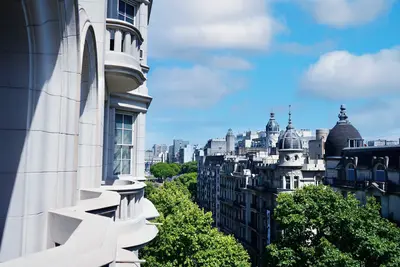
    Buenos Aires is Argentina's capital and, with over three million inhabitants in the city proper and many more in the greater metropolitan area, it is the country's political and cultural center. The city is located on the west bank of the Río de la Plata and is divided into 48 barrios, each with its own distinct character. Wide boulevards, Belle Époque architecture, traditional cafés, and a vibrant tango scene define its image.The historic center, with Plaza de Mayo, Casa Rosada, and the Cabildo, is located close to the river. South of it lies San Telmo, one of the oldest neighborhoods, with cobblestone streets, antique shops, and its Sunday market. Even further south, by the old port, is La Boca, with its brightly painted houses along Caminito and the La Bombonera stadium. To the north, you'll find elegant Recoleta with its famous cemetery and beyond that, Palermo, the largest barrio, with parks, boutiques, and the nightlife districts of Palermo Soho and Palermo Hollywood. Finally, by the water, lies Puerto Madero, the newest neighborhood in the converted docklands.

    More districts in Buenos Aires

    Palermo

    Palermo is Buenos Aires' largest barrio and is divided into several unofficial sub-districts. Palermo Soho and Palermo Hollywood are the entertainment and design districts with boutiques, cafés, bars, and street art; around Plaza Serrano (officially Plazoleta Julio Cortázar), a handicraft market takes place on weekends. Palermo Chico, in contrast, is a quiet, upscale residential area with villas and museums.To the east are the Bosques de Palermo, officially Parque Tres de Febrero, the city's largest green space, featuring lakes, a rose garden, a planetarium, a botanical garden, and a Japanese garden. Admission to the park, the Rosedal, and the Botanical Garden is free.

    San Telmo

    San Telmo, south of Plaza de Mayo, is one of Buenos Aires' oldest neighborhoods: cobblestone streets, faded facades, antique shops, and a vibrant tango and art scene characterize the area. After the cholera and yellow fever epidemics of the 1870s, wealthy families moved north, and immigrants moved into their houses.Plaza Dorrego is the heart of the district. Every Sunday, Calle Defensa transforms into a long street market with antiques, handicrafts, musicians, and tango dancers. In the evenings, the bars and Parrillas fill up, and on weekends, San Telmo becomes one of the city's liveliest nightlife districts.

    Recoleta

    Recoleta is the elegant district of Buenos Aires. After the epidemics of the 1870s, wealthy families settled here and built city palaces in Parisian style, many of which now house embassies. The district gets its name from a Recollects monastery, whose church Nuestra Señora del Pilar from 1732 still stands.The main attraction is the cemetery with its magnificent mausoleums, including the tomb of Eva Perón. Nearby are the Centro Cultural Recoleta, the Museo Nacional de Bellas Artes, and the steel flower Floralis Genérica. On weekends, a large arts and crafts market takes place on Plaza Francia.

    La Boca

    La Boca, situated by the old port at the mouth of the Riachuelo, is the city's most photographed neighborhood. In the 19th century, mainly Italian immigrants settled here in conventillos, simple corrugated iron tenement houses painted brightly with ship's paint. The painter Benito Quinquela Martín shaped the neighborhood's image and advocated for Caminito to be declared a street museum in 1959.Besides Caminito, the La Bombonera stadium of Boca Juniors and the Fundación Proa art center attract visitors. Two to three hours are sufficient for a tour. Stick to the tourist area between Caminito, Proa, and the stadium, and visit the neighborhood during the day; the city's tourism authority advises against walking through La Boca in the evening.

    Puerto Madero

    Puerto Madero is Buenos Aires' newest barrio, located in the former port docks on the Río de la Plata, just a few minutes' walk from Plaza de Mayo. Restored brick warehouses, now housing restaurants and offices, line the basins, behind which rise glass residential and office towers. Many streets in the district are named after important women.Its landmark is Santiago Calatrava's Puente de la Mujer. Two historic ships serve as museums at the quay, and east of the docks lies the Reserva Ecológica Costanera Sur, a large riverside nature reserve that is ideal for exploring on foot or by bike.

    Sights in Buenos Aires

    Discover the most important sights and attractions

    Casa Rosada
    Attraction

    1Casa Rosada

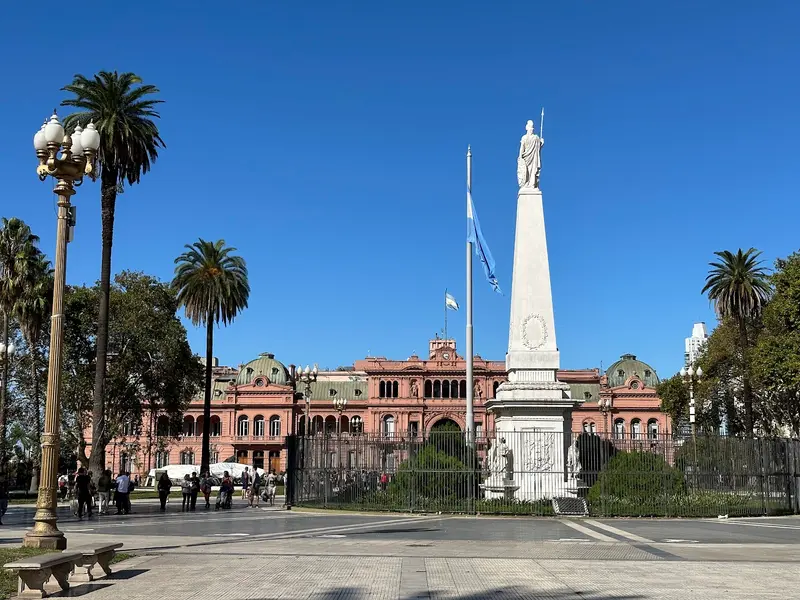
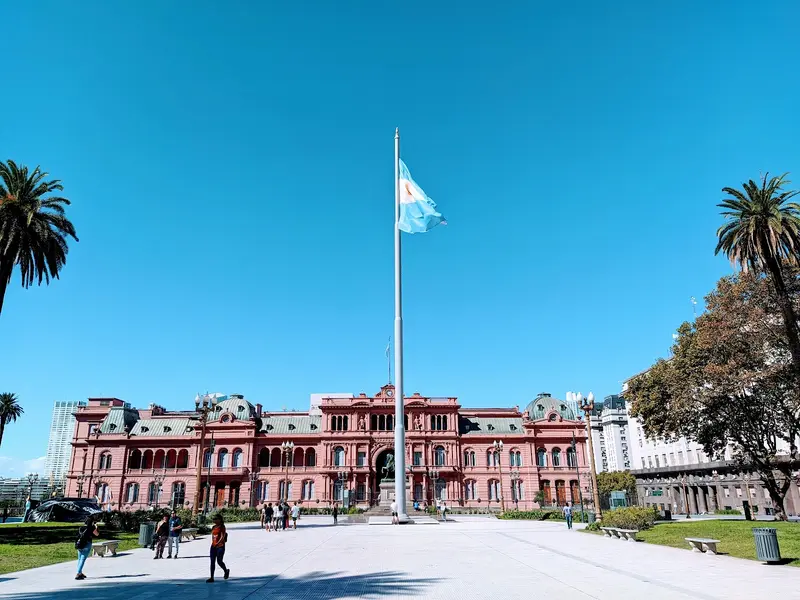
    The pink government palace on the east side of Plaza de Mayo is the official residence of the Argentinian President. On weekends and holidays, there are free guided tours through the halls, including the Salón de la Mujer, named after Eva Perón. The Museo Casa Rosada tells the history of the country from colonial times to the present day.
    Open in Google Maps
    Teatro Colón
    Museum

    2Teatro Colón

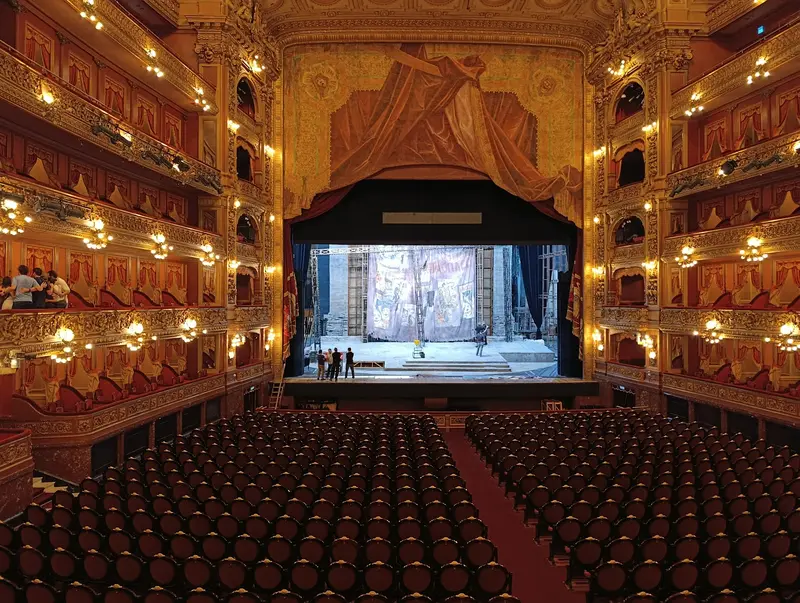
    The opera house on Avenida 9 de Julio opened on May 25, 1908, with Verdi's Aida and is considered one of the most important in the world due to its acoustics. Daily tours in Spanish and English take visitors through the foyer, Golden Hall, and the grand auditorium. Those wishing to experience a performance should book tickets early.
    Open in Google Maps
    Plaza de Mayo
    Historic Landmark

    3Plaza de Mayo

    The country's most important square is named after the May Revolution of 1810. Surrounding it are Casa Rosada, the Cathedral, and the Cabildo; in its center stands the Pirámide de Mayo, the city's oldest monument, dating from 1811. Since 1977, the Mothers of the Plaza de Mayo, whose children disappeared during the military dictatorship, have gathered here.
    Open in Google Maps
    Café Tortoni
    Cafe

    4Café Tortoni

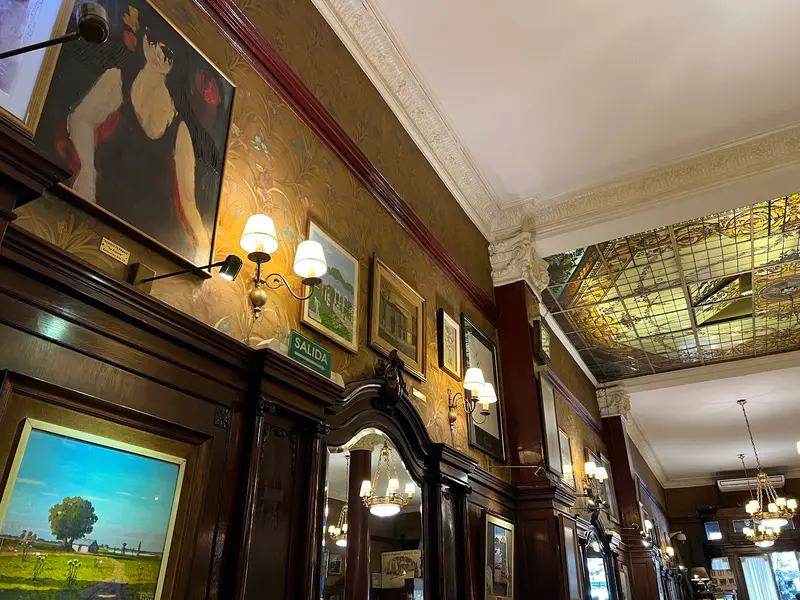
    The café on Avenida de Mayo, founded in 1858 by a French immigrant, is considered the city's oldest and retains the furnishings from its early years to this day. Carlos Gardel, Jorge Luis Borges, and Federico García Lorca were among its guests. In the basement, there are tango and jazz evenings, and right next door are the Academia Nacional del Tango and a Tango Museum.
    Open in Google Maps
    Obelisco

    5Obelisco

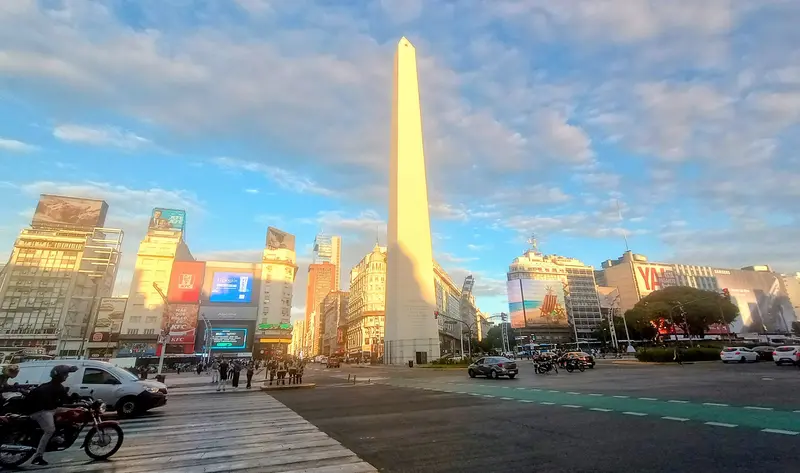
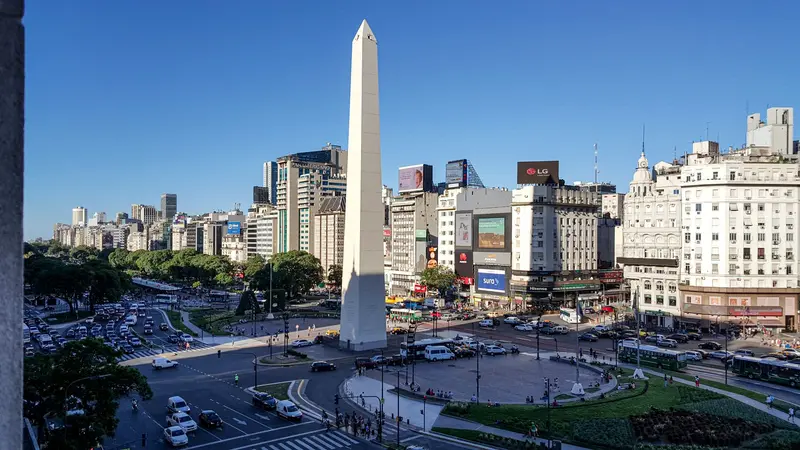
    The 67.5-meter-high Obelisk was erected in 1936 to commemorate the 400th anniversary of the city's first founding and is the most famous landmark of Buenos Aires. It stands on the Plaza de la República, where the wide Avenida 9 de Julio crosses Avenida Corrientes. The square is a central meeting point and often the scene of rallies and events.
    Open in Google Maps
    Cabildo

    6Cabildo

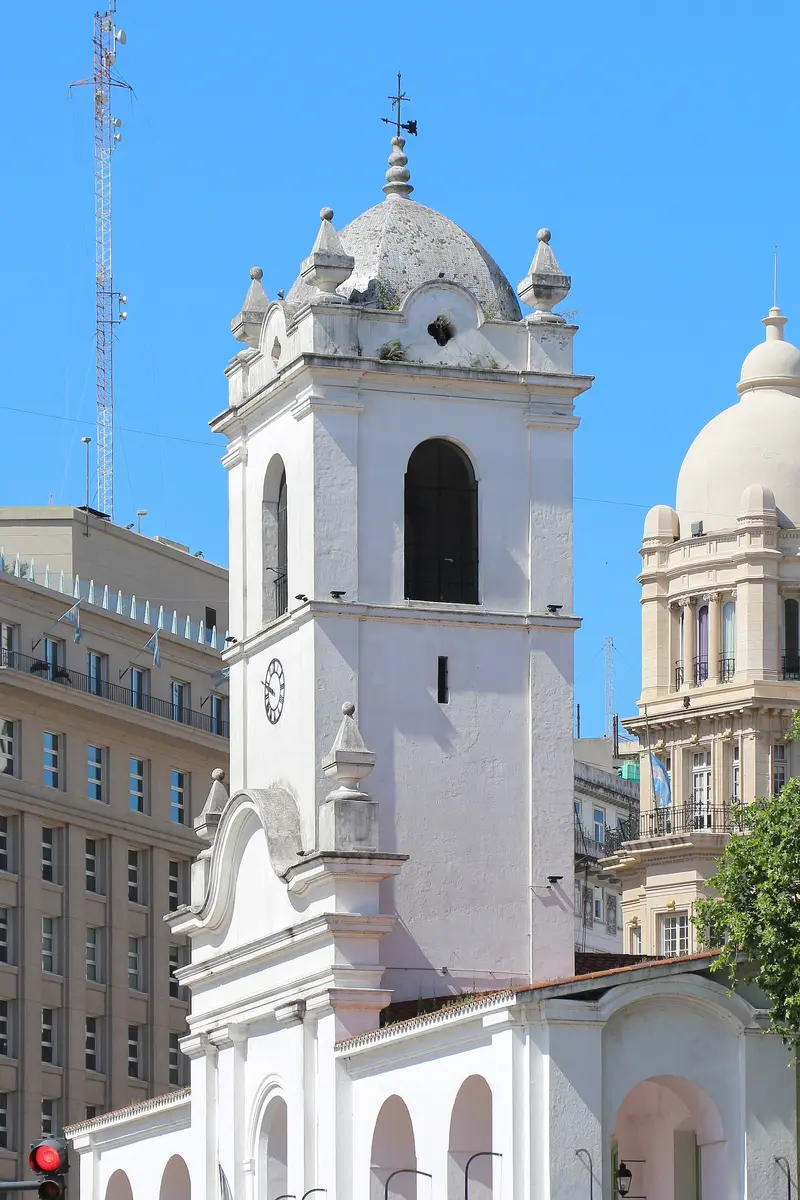
    The former colonial town hall on the west side of the Plaza de Mayo was built in the early 17th century and modified several times. Here, in 1810, the leaders of the May Revolution met. Today, the Museo Nacional del Cabildo y de la Revolución de Mayo displays paintings and objects from that period, with free admission; from the balcony, you have a good view over the square.
    Open in Google Maps

    Restaurants in Buenos Aires

    1

    Güerrín

    Founded in 1932 by two Genoese, the pizzeria on Avenida Corrientes is an institution for thick pizza al molde. With around 70 varieties on the menu, the dough is still kneaded by hand in a large trough today. Expect a queue outside during peak hours.
    Show on Google Maps
    2

    El Cuartito

    Since 1934, the family has baked pizza here, now three generations strong. Its walls are full of old sports posters, photos, and pennants. Try the Fugazzeta with onions and cheese. You can eat at the counter, the small bar by the entrance, or at tables in the dining room.
    Show on Google Maps
    3

    Santos Manjares

    A classic parrilla near Avenida 9 de Julio with generous portions at comparatively low prices. Order a provoleta as a starter, followed by ojo de bife or bife de chorizo; one portion often serves two. No reservations; expect a short wait at peak hours.
    Show on Google Maps

    Tango, Cafes and Football

    Tango originated in the late 19th century in the port districts along the Río de la Plata and has been a UNESCO intangible cultural heritage since 2009. In Buenos Aires, you encounter it in two ways: as a show for visitors and in the Milongas, the dance evenings that the Porteños themselves attend. In San Telmo, couples also dance on the street on weekends.Football is equally influential. In La Boca stands La Bombonera, the stadium of Boca Juniors, where Diego Maradona became famous. And in the evenings, many restaurants only fill up from 9 PM onwards.

    Exploring Buenos Aires

    Subte: The subway was opened in 1913, the first in the Southern Hemisphere. It connects the city center with Recoleta, Palermo, and San Telmo; Line D runs roughly from Palermo to downtown. It does not reach La Boca or the airports.SUBE Card: You can only pay for buses, the Subte, and suburban trains with the rechargeable SUBE Card, available at kiosks and subway stations.Colectivos: The bus network is much denser than the Subte and also serves La Boca.On Foot: From Plaza de Mayo to the Obelisco, it's about 15 to 20 minutes.Airports: International flights typically land at Ezeiza Airport outside the city; domestic flights depart from Aeroparque Jorge Newbery, which is closer to the city.

    Accommodations in Buenos Aires

    Find perfect stay in Buenos Aires

    Booking.com* (Affiliate link)
    Search Hotels
    Agoda* (Affiliate link)
    Search Hotels
    Airbnb
    Vacation Rentals

    * Affiliate link: if you book through it, we earn a small commission. The price stays the same for you.

    Plan your trip to Buenos Aires

    Save places, build a route and plan your city trip, all in one place.

    1. 1
      Sunrise over alpine peaks and a sea of clouds
      1234

      Round trip

      12 days · 4 stops

      Saved

      Pick a route

      Pick a ready-made one or save places and plan your own.

      Open bookmarks
    2. 2

      Trip to Buenos Aires

      Live
      • 1Casa Rosada3 days
      • 2Teatro Colón4 days
      • 3Plaza de Mayo5 days
      Budget

      Plan your trip

      The planner sorts stops, days and budget. Plan together in real time.

      Start trip planning
    3. 3
      9:41 No signal
      Buenos Aires
      Available offline

      Use it on the road

      Download the guide to your phone and use it on site, even offline.

    Nearby

    Buenos Aires and Region

    Buenos Aires and Region

    The capital city on the Río de la Plata is the starting point for most travelers to Argentina: Intercontinental flights land here, and domestic flights to all parts of the country depart from the city airport Aeroparque. Buenos Aires itself, with its barrios, cafés, museums, and tango venues, easily fills several days.

    Puerto Madero

    Puerto Madero is Buenos Aires' newest barrio, located in the former port docks on the Río de la Plata, just a few minutes' walk from Plaza de Mayo. Restored brick warehouses, now housing restaurants and offices, line the basins, behind which rise glass residential and office towers. Many streets in the district are named after important women.Its landmark is Santiago Calatrava's Puente de la Mujer. Two historic ships serve as museums at the quay, and east of the docks lies the Reserva Ecológica Costanera Sur, a large riverside nature reserve that is ideal for exploring on foot or by bike.

    San Telmo

    San Telmo, south of Plaza de Mayo, is one of Buenos Aires' oldest neighborhoods: cobblestone streets, faded facades, antique shops, and a vibrant tango and art scene characterize the area. After the cholera and yellow fever epidemics of the 1870s, wealthy families moved north, and immigrants moved into their houses.Plaza Dorrego is the heart of the district. Every Sunday, Calle Defensa transforms into a long street market with antiques, handicrafts, musicians, and tango dancers. In the evenings, the bars and Parrillas fill up, and on weekends, San Telmo becomes one of the city's liveliest nightlife districts.

    Recoleta

    Recoleta is the elegant district of Buenos Aires. After the epidemics of the 1870s, wealthy families settled here and built city palaces in Parisian style, many of which now house embassies. The district gets its name from a Recollects monastery, whose church Nuestra Señora del Pilar from 1732 still stands.The main attraction is the cemetery with its magnificent mausoleums, including the tomb of Eva Perón. Nearby are the Centro Cultural Recoleta, the Museo Nacional de Bellas Artes, and the steel flower Floralis Genérica. On weekends, a large arts and crafts market takes place on Plaza Francia.

    La Boca

    La Boca, situated by the old port at the mouth of the Riachuelo, is the city's most photographed neighborhood. In the 19th century, mainly Italian immigrants settled here in conventillos, simple corrugated iron tenement houses painted brightly with ship's paint. The painter Benito Quinquela Martín shaped the neighborhood's image and advocated for Caminito to be declared a street museum in 1959.Besides Caminito, the La Bombonera stadium of Boca Juniors and the Fundación Proa art center attract visitors. Two to three hours are sufficient for a tour. Stick to the tourist area between Caminito, Proa, and the stadium, and visit the neighborhood during the day; the city's tourism authority advises against walking through La Boca in the evening.

    Sources & method

    • Photos: Wikimedia Commons, Pexels, Google Maps. Each photo carries its credit.
    • Place data such as addresses and ratings comes from Google Maps.
    • The content is based on web research from public, traceable sources. How the content is made · The role of AI