After three nights in Copenhagen, you drive up the coast to Helsingør with Kronborg Castle, then across Zealand to Roskilde and finally south of the capital to the chalk cliffs of Stevns Klint. No stage lasts longer than about an hour.
7 Days / 6 Nights
May to September
4 stops
Why This Route?
For those looking to combine capital, castles and coast in a week with minimal travel.
Hidden Gems
Højerup Gamle Kirke right on the edge of Stevns Klint
Louisiana Museum of Modern Art in Humlebæk on the way to Helsingør
Hornbæk Beach, approx. 12 km northwest of Helsingør
Itinerary
Stop 1 • 3 Nights
Kopenhagen
Region
Route highlight. Culinary highlights and Rich in culture and history.
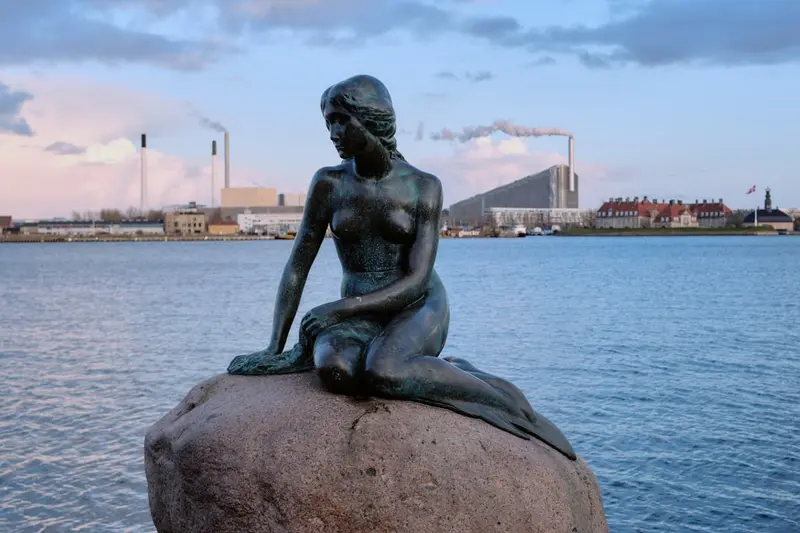
Denmark's capital on the Øresund combines a compact old town with palaces, canals and the Nyhavn harbour with modern architecture and an internationally known restaurant scene. You can reach most sights on foot, by bike, metro or harbour bus, and the airport is about a quarter of an hour from the centre.
7 Sights
7 Restaurants
Copenhagen's Historical Heritage and Cultural Diversity
Copenhagen is a city deeply rooted in its history, while also fostering a vibrant art and culture scene. From its medieval origins as a fishing village to Denmark's modern metropolis, a unique cultural identity has developed. This shapes both the architecture and the daily traditions of its inhabitants, making Copenhagen a hub of Scandinavian lifestyle.
Rich in culture and history. Perfect for an exciting city trip and Dreamy beaches.
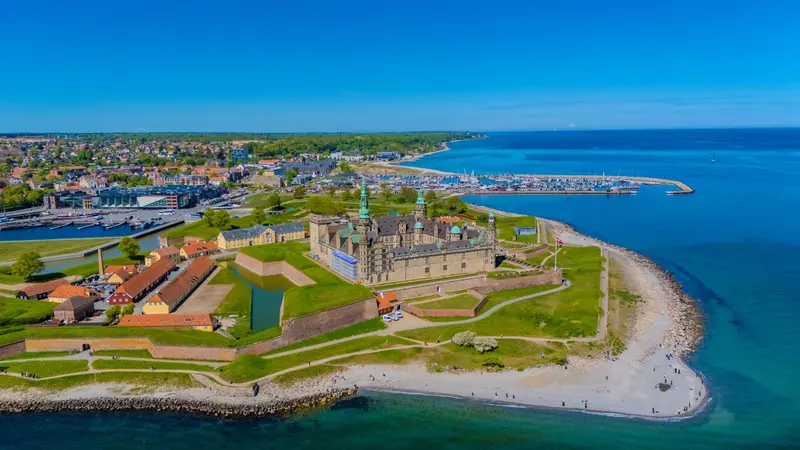
Helsingør lies at the Øresund's narrowest point, just four kilometers from Sweden. For centuries, the Crown collected Sound Dues here from every ship passing through. Kronborg Castle and the Old Town's merchant houses attest to this.Next to Kronborg, on the old shipyard grounds, is Kulturværftet, with its underground Maritime Museum and a market hall. Between the harbor and train station, Stengade and Strandgade lead through the Old Town with its half-timbered houses, the Carmelite Monastery, and the Cathedral.
6 Sights
6 Restaurants
Culture and History
From 1429, Erik of Pomerania levied the Sound Dues, which made Helsingør rich. Frederik II had Kronborg expanded into a Renaissance castle in the 16th century; after a fire in 1629, it was rebuilt under Christian IV. The dues were not abolished until 1857.As Elsinore, Kronborg is the setting for Shakespeare's Hamlet; in summer, the play is regularly performed in the castle courtyard. From the Middle Ages, the Carmelite Monastery and St. Olai Cathedral are preserved. The shipyard, which shaped the harbor district until 1983, lives on in Kulturværftet and the Maritime Museum.
Roskilde is located at the southern end of Roskilde Fjord, about 30 kilometers west of Copenhagen. In the Middle Ages, the city was a royal seat and a bishopric. Today, you primarily come for two things: the Cathedral, where Danish kings are buried, and the Viking Ship Museum at the harbor.The old town is small and easy to explore on foot. From the Cathedral, the path leads downhill through the park to the fjord. In the south of the city, Musicon, a creative district, has emerged on the old industrial site, where the RAGNAROCK rock museum is also located. At the end of June, the Roskilde Festival attracts tens of thousands of visitors.
4 Sights
4 Restaurants
Culture and History
From the 11th century until 1443, Roskilde was a royal seat, and until the Reformation, one of Denmark's most important bishoprics. The city is said to date back to Harald Bluetooth, who had a wooden church built here.The current Cathedral was built from the late 12th century as one of Scandinavia's first large brick churches. Since the 15th century, it has been the burial place of Danish kings and queens; around 40 monarchs lie here. In 1995, it joined the UNESCO World Heritage List.Around the year 1070, residents scuttled five ships in the fjord to block the shipping channel against attackers. The so-called Skuldelev Ships were salvaged in 1962 and are now the centerpiece of the Viking Ship Museum.
The approx. 15-km cliff coast south of Copenhagen is a UNESCO World Heritage site. In the chalk cliff, a visible clay layer attests to the extinction of dinosaurs 66 million years ago.
4 Sights
6 Restaurants
Stevns Klint: Geology and Human History
Stevns Klint is not only an impressive natural phenomenon but also a place of profound cultural and historical significance. Its geological formation around 66 million years ago marks the global Cretaceous-Paleogene event that led to the extinction of the dinosaurs, a fact that gives the Fish Clay in the cliff its status as a UNESCO World Natural Heritage site.The human history along this coastal stretch is closely linked to the power of nature. An example is the Old Church of Højerup, a medieval structure built close to the cliff edge. Over centuries, erosion has worn away the cliff. In 1913, a new church was completed about 300 meters inland, and in 1928, the choir of the old church collapsed onto the beach during a landslide. The nave stands to this day.In more recent history, Stevns Klint played a strategic role in the Cold War. The Stevnsfort, a secret military structure carved deep into the limestone, served as an essential part of the Danish defense and is today a museum that offers insights into this tense era.