Fernweh: Home
    ExploreTravel GuidesPlan a tripMy tripLast visited
    de|en
    All Places & RegionsAll highlightsAbout FernwehFAQPrivacy PolicyImprint
    ExploreTravel GuidesPlan a tripMy tripLast visited
    • Why go
    • Highlights
    • Explore regions
    • Round trips
    • Local food
    • Good to know
    • Best time to visit
    • Travel advice
    Denmark

    Travel Guide Denmark

    Denmark is Scandinavia's southernmost country: flat, surrounded by sea, and shaped by a distinct cycling culture. Historic cities, Viking sites, and modern design are all found close together here.

    by Felix Gillen

    Contents

    • Why go
    • Highlights
    • Explore regions
    • Round trips
    • Local food
    • Good to know
    • Best time to visit
    • Travel advice

    Why Go To Denmark?

    Denmark blends long sandy beaches and dunes on the North Sea with tranquil Baltic Sea bays, historic old towns, and a capital renowned for design and gastronomy. Distances are short, cycle paths are excellent, and from Viking sites to modern architecture, a rich history is packed into a small area.

    Where in Denmark?

    Pick a region. The highlights, road trips and places below follow your choice.
    Copenhagen
    Highlight 1 of 8

    Copenhagen

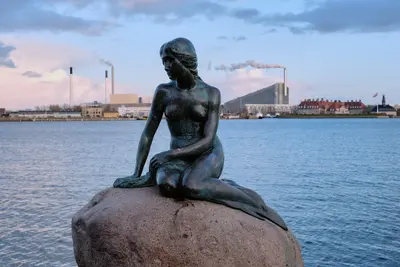
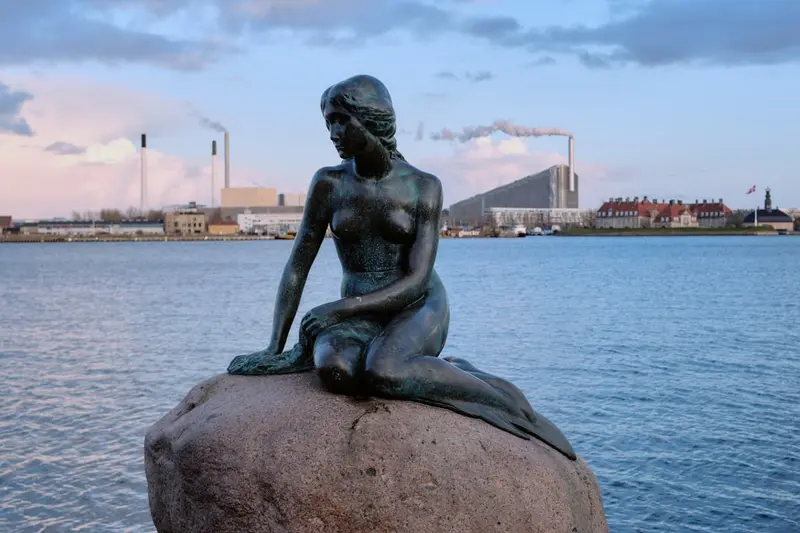
    Denmark's capital on the Øresund combines a compact old town with palaces, canals and the Nyhavn harbour with modern architecture and an internationally known restaurant scene.

    Copenhagen blends royal history with modern design and a maritime atmosphere. Discover castles like Amalienborg and Rosenborg, as well as *Nyhavn*'s colourful canals.

    Discover
    Helsingør
    Highlight 2 of 8

    Helsingør

    Helsingør lies at the Øresund's narrowest point, just four kilometers from Sweden. For centuries, the Crown collected Sound Dues here from every ship passing through.

    Discover
    Roskilde
    Highlight 3 of 8

    Roskilde

    Roskilde is located at the southern end of Roskilde Fjord, about 30 kilometers west of Copenhagen. In the Middle Ages, the city was a royal seat and a bishopric.

    Discover
    Südseeland & Møn
    Highlight 4 of 8

    Südseeland & Møn

    Southern Zealand and the island of Møn are rural and tranquil, with chalk cliffs, beech forests, manor houses and small harbor towns. Two coastlines are under UNESCO protection: Stevns Klint as a World Heritage site, Møn as a Biosphere Reserve.

    The region stretches from the Stevns Klint cliffs in the east to Vordingborg in the south. At Kalvehave, the Dronning Alexandrines Bro bridge crosses over to Møn.

    Discover
    Bornholm
    Highlight 5 of 8

    Bornholm

    The Baltic Sea island of Bornholm is closer to Sweden than to the rest of Denmark. Granite coasts in the north, fine sandy beaches in the south, round churches, smokehouses, and fishing villages make it a unique travel destination.

    Bornholm, Denmark's Baltic Sea island, captivates with its contrasting nature, from granite cliffs to fine sandy beaches. The Helligdomsklipperne in the north and Dueodde beach in the south are prominent highlights.

    Discover
    Odense
    Highlight 6 of 8

    Odense

    Funen's largest city is the birthplace of Hans Christian Andersen. Museums, a medieval cathedral, the Den Fynske Landsby open-air museum, and a lively city centre make it a destination for one to two days.

    Discover
    Aarhus
    Highlight 7 of 8

    Aarhus

    Aarhus is Denmark's second-largest city and, thanks to its large university, has a very young population. The centre holds the cathedral, the cobbled Latin Quarter and the Aarhus Å river lined with cafés on both banks.

    Discover
    Skagen
    Highlight 8 of 8

    Skagen

    Skagen is located at the northern tip of Denmark, where Skagerrak and Kattegat converge at the Grenen spit. The town is known for its yellow houses with red roofs and the painters who worked here in the late 19th century.

    Skagen, a small town of over 7,000, hosts one of Denmark's largest fishing ports. Station, pedestrian zone, harbor, and Skagen Painters' museums are walkable.

    Discover

    More highlights in Denmark

    Unique experiences that make Denmark unforgettable.
    Rubjerg Knude

    Rubjerg Knude

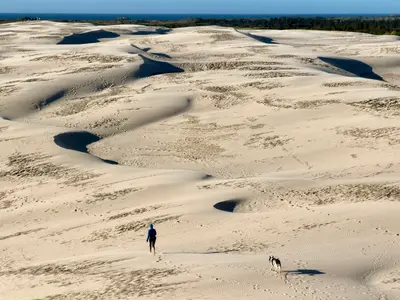
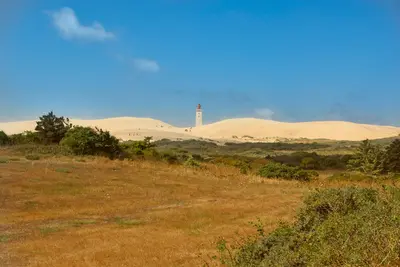
    On North Jutland's North Sea coast, the Rubjerg Knude Lighthouse sits on a 60m cliff amid a migrating dune. Due to sea erosion, the tower was relocated roughly 70 meters inland in 2019. Up top, enjoy wide views of the dune and North Sea.
    Thy National Park

    Thy National Park

    Thy National Park stretches as a narrow strip along the North Sea, from Hanstholm in the north to Agger Tange in the south. Here you'll find dunes, heathland, pine plantations, clear lakes, and wide beaches, interspersed with small fishing villages like Klitmøller and Nørre Vorupør. It was established in 2008 as Denmark's first national park.
    Ribe

    Ribe

    Ribe is considered Denmark's oldest town; a Viking Age trading post emerged here in the 8th century. Its old town, with cobblestones, half-timbered houses and cathedral, lies on the Ribe Å river amid the flat marsh. The Wadden Sea begins a few kilometers west.
    Ærøskøbing

    Ærøskøbing

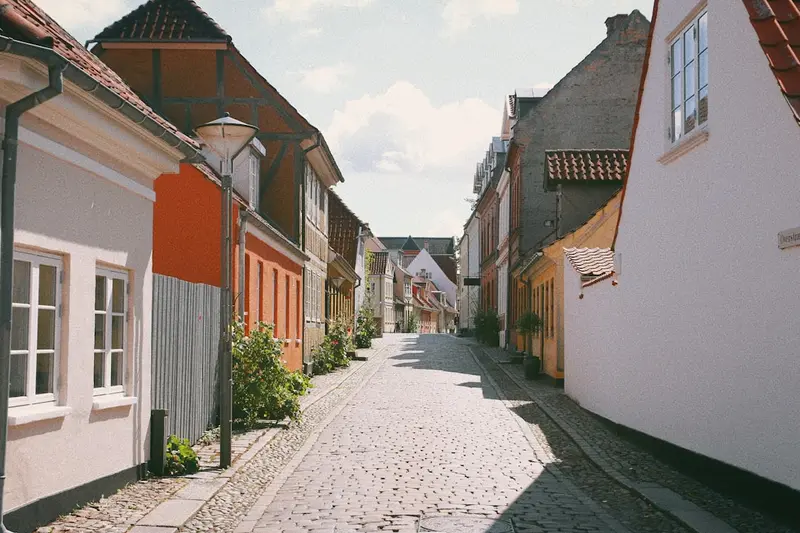
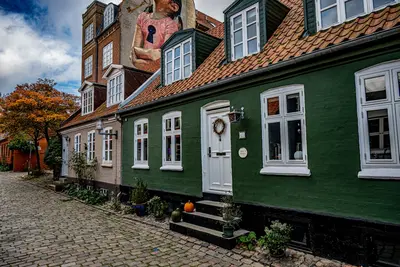
    The harbour town on the north coast of the island of Ærø has one of Denmark's best-preserved old towns, with cobblestone streets, low merchant houses, and hollyhocks in front of the doors.

    How to plan your trip to Denmark

    From the guide to the road: here is what comes next.

    1. 1
      Sunrise over alpine peaks and a sea of clouds
      1234

      Round trip

      12 days · 4 stops

      Saved

      Pick a route

      Pick a ready-made one or save places and plan your own.

      Browse routes
    2. 2

      Trip to Denmark

      Live
      • 1Copenhagen3 days
      • 2Helsingør4 days
      • 3Roskilde5 days
      Budget

      Plan your trip

      The planner sorts stops, days and budget. Plan together in real time.

      Go to My Trips
    3. 3
      9:41 No signal
      Denmark
      Available offline

      Use it on the road

      Download the guide to your phone and use it on site, even offline.

    Regions to Discover

    Explore the diverse regions of Denmark.

    Südseeland & Møn

    Südseeland & Møn

    Southern Zealand and the island of Møn are rural and tranquil, with chalk cliffs, beech forests, manor houses and small harbor towns. Two coastlines are under UNESCO protection: Stevns Klint as a World Heritage site, Møn as a Biosphere Reserve.
    WestJutland

    WestJutland

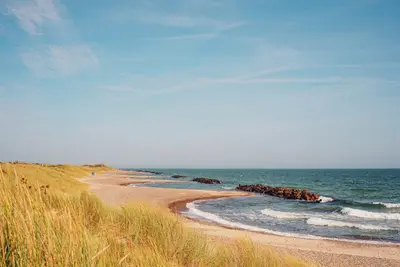
    The Jutland North Sea coast between Blåvand and Bovbjerg is a long strip of sandy beaches, dunes, and fjords. Lighthouses, fishing ports, and holiday home areas define the coast, with heathland and plantations lying behind them.
    Bornholm

    Bornholm

    The Baltic Sea island of Bornholm is closer to Sweden than to the rest of Denmark. Granite coasts in the north, fine sandy beaches in the south, round churches, smokehouses, and fishing villages make it a unique travel destination.
    Fyn (Funen)

    Fyn (Funen)

    Fyn, Denmark's third-largest island, lies between Jutland and Zealand. Gentle hills, orchards, manor houses, and the island sea in the south shape the landscape, where Hans Christian Andersen was born in Odense.
    Copenhagen

    Copenhagen

    Denmark's capital on the Øresund combines a compact old town with palaces, canals and the Nyhavn harbour with modern architecture and an internationally known restaurant scene. You can reach most sights on foot, by bike, metro or harbour bus, and the airport is about a quarter of an hour from the centre.
    North Zealand

    North Zealand

    Northern Zealand between Copenhagen and the Kattegat is the region of royal castles. Kronborg, Frederiksborg and Fredensborg, old hunting forests, the Louisiana Museum, and seaside resorts on the North Coast are all close by.
    Skagen

    Skagen

    Skagen is located at the northern tip of Denmark, where Skagerrak and Kattegat converge at the Grenen spit. The town is known for its yellow houses with red roofs and the painters who worked here in the late 19th century. All around are beaches, dunes, the sand-covered church, and the migrating dune Råbjerg Mile.
    Østjylland (East Jutland)

    Østjylland (East Jutland)

    East Jutland stretches from Aarhus, across the Djursland peninsula, to the Silkeborg Lake District. Aarhus offers museums, harbour districts and student life; Djursland has hills, bays and beaches. West of the city lie forests and lakes, appearing almost mountainous by Danish standards.
    Vadehavet (Wadden Sea)

    Vadehavet (Wadden Sea)

    The Danish Wadden Sea spans Jutland's southwest coast, Esbjerg to the German border. Twice daily, mudflats dry. Seals on sandbanks; millions of migratory birds rest in spring and autumn. This includes the islands Fanø, Mandø, Rømø, and Ribe, Denmark's oldest city.
    North Jutland

    North Jutland

    North Jutland is the land between two seas. On the west coast, the North Sea rolls onto wide beaches and cliffs; in the east lies the calmer Kattegat. At Skagen, both meet at the Grenen headland. In between lie shifting dunes, heath, and plantations; to the west, Thy National Park; and in the center, the city of Aalborg on the Limfjord.

    Recommended Itineraries

    Discover the best routes through Denmark.
    Jutland West Coast

    Jutland West Coast

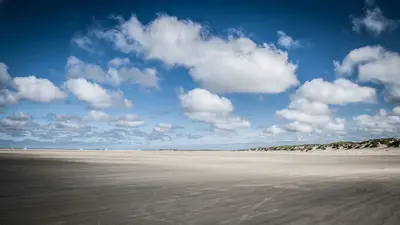
    You drive from the island of Rømø on the North Sea coast north via Hvide Sande and Ringkøbing to Thy National Park and further to Skagen. Most stages take less than two hours; only from Thy to Skagen will you be traveling for about two and a half hours.

    13 Days
    Stops at a glance
    1. 1.Rømø
    2. 2.Hvide Sande
    3. 3.Ringkøbing
    4. 4.Thy National Park
    5. 5.Skagen
    View Route Details →
    North Jutland & Skagen

    North Jutland & Skagen

    From Aalborg, you drive to the west coast to Løkken and from there, take a day trip to the Rubjerg Knude lighthouse in the shifting dunes. Afterwards, continue via Hirtshals to Skagen at Denmark's northern tip; the stages rarely last longer than an hour.
    10 Days
    4 stops
    Funen & Island Idyll

    Funen & Island Idyll

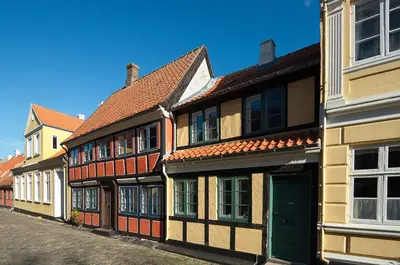
    From Odense, you drive to the east coast to Kerteminde, then south to Svendborg and by ferry to the island of Ærø to Ærøskøbing. Back on Fyn, the ferry from Søby takes you to Faaborg. You must book the ferries to Ærø in advance; journeys on Fyn rarely last longer than an hour.
    12 Days
    5 stops
    Copenhagen & Zealand

    Copenhagen & Zealand

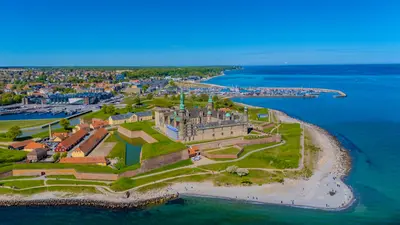
    After three nights in Copenhagen, you drive up the coast to Helsingør with Kronborg Castle, then across Zealand to Roskilde and finally south of the capital to the chalk cliffs of Stevns Klint. No stage lasts longer than about an hour.

    7 Days
    4 stops

    What you eat in Denmark

    Smørrebrød

    Smørrebrød

    Open-faced Sandwich

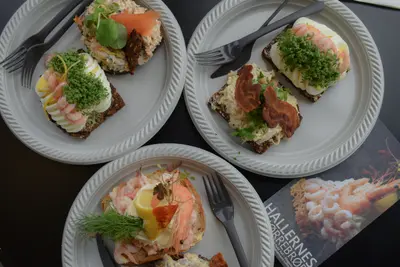
    Smørrebrød is Denmark's most famous dish: a slice of dark rye bread (rugbrød) with butter and generous toppings. Classic options include herring, fish fillet with remoulade, roast beef, liver pâté, shrimp or egg, garnished with herbs, onions, or cress. Traditionally, it's eaten at lunchtime, with a knife and fork, often accompanied by a beer or an ice-cold aquavit.
    Flæskesteg

    Flæskesteg

    Crisp-Roasted Pork Roast

    Flæskesteg is roast pork with particularly crispy crackling, which is scored and salted before cooking. On Christmas Eve, it graces the tables of many Danish families, but you can also find it all year, for instance, as a sandwich at street food stalls. It's typically served with brown gravy, boiled potatoes, caramelized potatoes (brunede kartofler) and sweet-sour red cabbage.
    Wienerbrød

    Wienerbrød

    Dänisches Plundergebäck

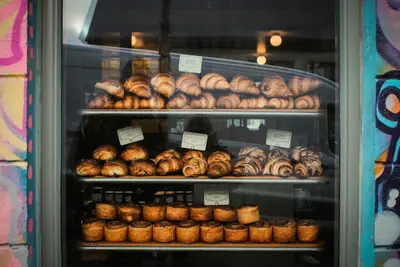
    What is internationally known as "Danish Pastry" is called Wienerbrød in Denmark. The name originates from Viennese bakers who, in 19th-century Copenhagen, introduced the laminated yeast dough technique. The buttery flaky pastry comes with marzipan, vanilla cream, jam, or nuts, often iced. Find it in every bakery for your morning coffee.
    Risalamande

    Risalamande

    Rice pudding with almonds

    Risalamande is the classic Danish Christmas Eve dessert: cold rice pudding with vanilla, whipped cream, and chopped almonds, served with warm cherry sauce. A whole almond is hidden in the bowl; whoever finds it receives a small gift (mandelgave). The name comes from the French "riz à l'amande".
    Fiskefrikadeller

    Fiskefrikadeller

    Fischfrikadellen

    Fish cakes are pan-fried fish patties made from finely chopped white fish, usually cod or pollock, with onion, egg, and a little flour. They are golden brown on the outside and fluffy on the inside. You eat them warm with remoulade and potatoes or cold on rye bread as Smørrebrød, often with a slice of lemon.

    Good to Know

    Essential info for your trip planning.

    Land & People

    Denmark has a population of around six million. Equality, trust, and an understated tone shape daily life.

    History & Society

    The history of Denmark spans from the Viking Age and a long period as a major power in the North to today's welfare…

    Food & Drink

    Danish cuisine combines hearty traditional fare with the New Nordic Cuisine, which focuses on seasonal and regional…

    Practical Info

    Current and binding travel, safety, and health information can be found at the Federal Foreign Office, linked on this…

    Getting Around

    Getting TherePlane: The largest airport is Copenhagen-Kastrup (CPH).

    RV Travel

    With its short distances, flat roads, and numerous seaside campsites, Denmark is well-suited for motorhome travel.

    Traveling with Kids

    Denmark with ChildrenDenmark is a very child-friendly travel destination: short distances, shallow beaches, numerous…

    Best Time to Visit

    When is the best time for your trip?

    June
    July
    August
    16–18°C·60–70 mm(moderate rain)
    Diese Monate bieten die höchsten Temperaturen, die längsten Tage und die wärmsten Wassertemperaturen, ideal für Outdoor-Aktivitäten und das Erleben der Küstenregionen Dänemarks. Der Niederschlag ist zwar vorhanden, beeinträchtigt aber selten ganze Tage.
    Dänemark hat ein gemäßigtes, maritimes Klima, das stark vom Atlantik beeinflusst wird. Dies führt zu milden Wintern und kühlen Sommern. Extreme Temperaturen sind selten.Wind: Das ganze Jahr über ist mit Wind zu rechnen, besonders an den Küstenregionen und in Westjütland, was die gefühlte Temperatur beeinflussen kann.Tageslicht: Die Tageslänge variiert extrem zwischen den Jahreszeiten. Im Sommer gibt es sehr lange Tage mit bis zu 17 Stunden Sonnenlicht (Juni), während im Winter die Tage sehr kurz sind (Dezember nur etwa 7 Stunden).Niederschlag: Dänemark verzeichnet das ganze Jahr über Niederschläge. Die regenreichsten Monate sind typischerweise August bis Oktober, während Frühling und Frühsommer oft die trockensten Perioden sind. Regenschauer sind oft kurz und lokal begrenzt.Regionale Unterschiede: Obwohl Dänemark ein kleines Land ist, gibt es leichte regionale Unterschiede. Die Westküste (Nordsee) ist tendenziell windiger und hat ein raueres Klima, während die östlicheren Inseln (Ostsee) oft etwas geschützter und im Sommer marginal wärmer sind. Bornholm im Osten kann ein einzigartiges Mikroklima aufweisen, das oft sonniger ist.Unbeständigkeit: Das Wetter in Dänemark kann schnell wechseln; ein sonniger Morgen kann sich zu einem bewölkten und regnerischen Nachmittag entwickeln. Schichten von Kleidung sind daher ratsam.

    Seasons

    Jan
    Feb
    Mar
    Apr
    May
    Jun
    Jul
    Aug
    Sep
    Oct
    Nov
    Dec
    Hauptsaison (Sommer)
    Übergangssaison (Frühling & Herbst)
    Nebensaison (Winter)
    Best Time to Visit
    ▶Show detailed monthly data
    MonthTemp (°C)Rain (mm)Sun (h)
    January0.0551.5
    February0.0452.5
    March3.0403.5
    April7.0406.5
    May12.0508.5
    June16.0609.5
    July18.0708.5
    August17.0707.5
    September13.0655.5
    October8.0603.0
    November4.0602.0
    December1.0601.0

    Travel advice

    Safety, entry requirements and health: the official, up-to-date advice for Denmark is published by the UK government on GOV.UK.

    Go to GOV.UK
    Sources & method

    • Photos: Wikimedia Commons, Unsplash, Pexels. Each photo carries its credit.
    • The content is based on web research from public, traceable sources. How the content is made · The role of AI
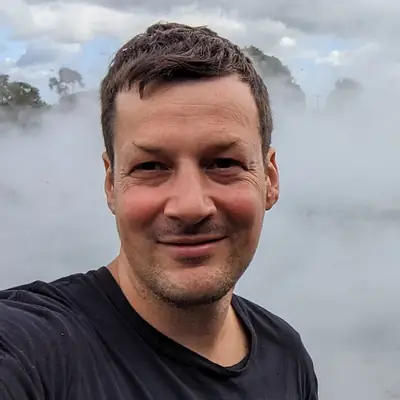
    Felix at Kuirau Park in Rotorua, New Zealand

    Who's behind Fernweh?

    Hi, I'm Felix.

    I love to travel, and I love planning even more. Fernweh.guide is my attempt at building a really good online travel guide.

    About Fernweh

    All places in Denmark

    • Aalborg
    • Aarhus
    • Aarhus Ø (The Harbor District)
    • Ærøskøbing
    • Bornholm
    • Copenhagen
    • Danish Riviera (North Zealand's Coast)
    • Ebeltoft
    • Egeskov Castle
    • Faaborg
    • Freetown Christiania
    • Fyn (Funen)
    • Gilleleje
    • Grenen
    • Gudhjem
    • Hammershus Ruin
    • Helsingør
    • Hillerød
    • Hirtshals
    • Hvide Sande
    • Indre By (Old Town)
    • Islands Brygge
    • Kerteminde
    • Latinerkvarteret (The Latin Quarter)
    • Løkken
    • Marselisborg & Dyrehaven (Deer Park)
    • Mols Bjerge National Park
    • Nørrebro
    • North Jutland
    • North Zealand
    • Odense
    • Østerbro
    • Østjylland (East Jutland)
    • Ribe
    • Ringkøbing
    • Rømø
    • Roskilde
    • Rubjerg Knude
    • Skagen
    • Stevns Klint
    • Südseeland & Møn
    • Svendborg
    • Thy National Park
    • Vadehavet (Wadden Sea)
    • WestJutland

    More about Denmark

    • Best Time to Visit Denmark
    • Denmark with Kids
    • Denmark by RV