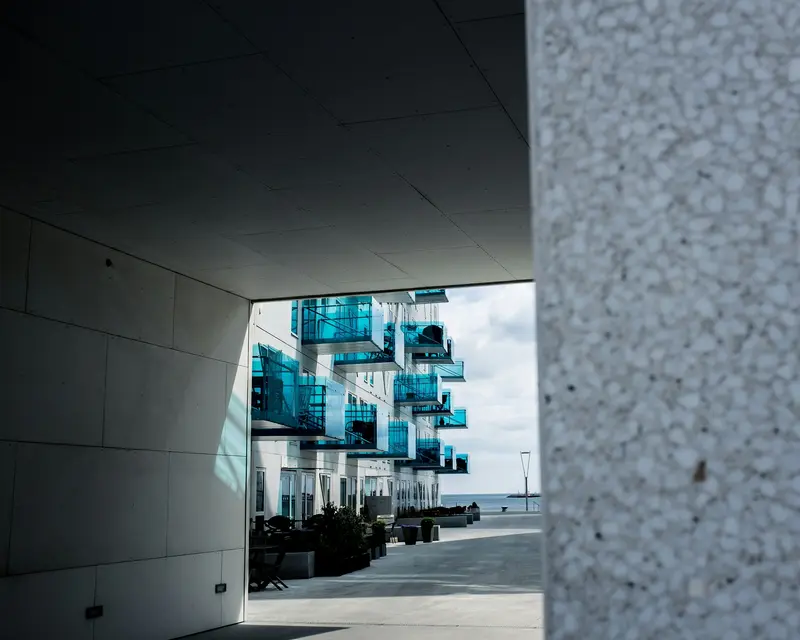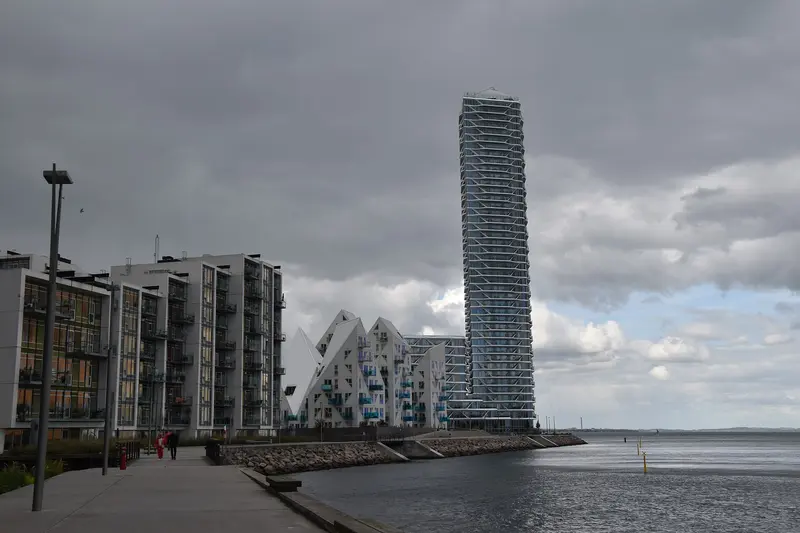
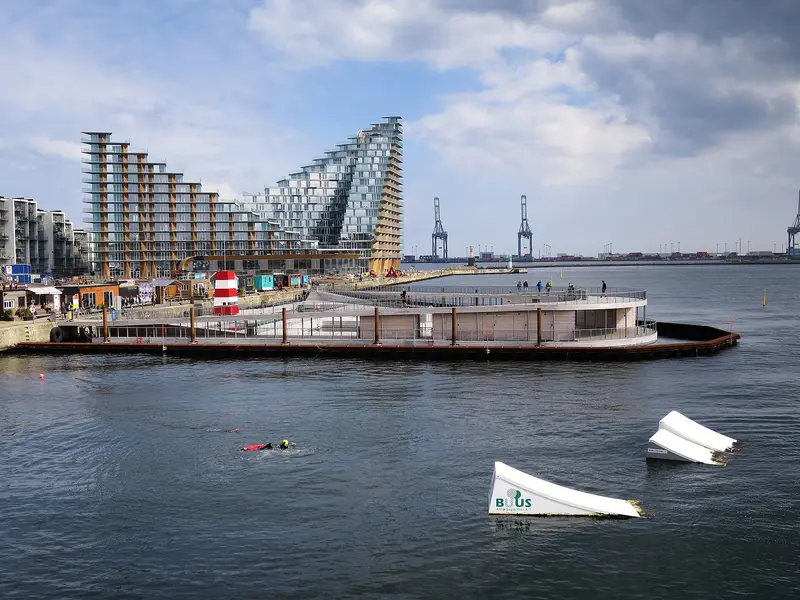
The futuristic harbor district represents modern Aarhus with its bold architecture, the impressive cultural center Dokk1, and a lively waterfront promenade that invites you to take a stroll.
Aarhus Ø, Aarhus' modern harbor district, has transformed from an industrial area into a dynamic urban quarter showcasing innovative architecture. Here you'll find bold structures like The Iceberg with its distinctive peaks, and the award-winning cultural center Dokk1, which combines a public library and diverse cultural offerings. Along the expansive promenade, you'll experience a lively atmosphere with cafés and restaurants inviting you to linger with views of the harbor. The district also offers opportunities for urban recreation, such as swimming in Bassin 7, the harbor bath popular in summer. A stroll through Aarhus Ø in the late afternoon allows you to experience the unique lighting that impressively showcases the modern facades. It reflects the vision of future-oriented urban development and offers insight into the Danish understanding of urban life by the water.
Places in Aarhus Ø (The Harbor District)
Discover the most important sights and attractions
Sights in Aarhus Ø (The Harbor District)
Marselisborg Deer Park
Marselisborg Dyrehave, located near the Aarhus Ø harbor district, is a unique nature experience and a popular recreational oasis. Here you'll find a large herd of fallow deer and sika deer, moving freely in an expansive woodland area. Originally established as part of the royal Marselisborg Estate, the park now serves as a publicly accessible wildlife enclosure, offering you the chance to observe animals in their natural habitat. The animals are often tame and can be fed by hand, especially if you bring apples or carrots – a popular activity for families.The park's significance lies in its role as the city's green lung and a place to encounter local wildlife, just a few kilometers from the city center. It is a place of peace and relaxation, offering you an insight into Danish nature. Our Tip: Visit the park preferably early in the morning or late in the afternoon. During these times, the animals are most active, and you'll avoid the largest crowds. For impressive photos of the herds, the area around the large meadows is recommended. Be sure not to startle the animals and always maintain a respectful distance.
Den Gamle By, the 'Old Town', is a unique open-air museum in Aarhus offering deep insight into Danish urban history. Not an ordinary museum, it's a carefully reconstructed town of over 75 historical buildings, relocated from various Danish towns. You wander through authentic quarters that represent different eras from the Renaissance to the 1970s. The attention to detail is impressive: here you'll find not just homes, but shops, workshops, and public buildings like a school or post office. You'll often encounter performers in historical costumes who bring the daily life of past times to life and demonstrate traditional crafts. The oldest buildings date back to the 17th century, while the 1970s district offers a fascinating journey into the more recent past. Our Tip: Plan at least half a day for your visit to leisurely explore the different eras and exhibitions. To avoid the largest crowds, it's advisable to visit Den Gamle By first thing in the morning or to come during the off-season. The picturesque alleys and half-timbered houses offer numerous motifs for atmospheric photos.
Die Catholic Church of Our Lady in Aarhus Ø markiert einen bedeutenden neuen Meilenstein für die katholische Gemeinde der Stadt. Als Teil des modernen Hafenviertels präsentiert sie sich mit einer zeitgenössischen Architektur, die sich bewusst von traditionellen Sakralbauten abhebt. Du findest hier einen Ort der Ruhe und Besinnung inmitten der dynamischen Entwicklung von Aarhus Ø, der zum Nachdenken einlädt. Ihre klare Formensprache und das Spiel mit Licht und Schatten sind besonders für Architekturinteressierte reizvoll. Unser Tipp: Besuche die Kirche am Vormittag, um die besondere Lichtstimmung im Inneren zu erleben und die moderne Fassade vor der Kulisse des Hafens zu fotografieren. So umgehst du auch die geschäftigere Atmosphäre am Nachmittag im Viertel.
The ARoS Aarhus Art Museum, a prominent landmark in Aarhus Ø, is one of Northern Europe's largest art museums and is known for its modern architecture. Since its opening in 2004, it has presented an extensive collection of contemporary and modern art, spanning ten floors. Here you'll find both temporary exhibitions and an impressive permanent collection featuring works by Danish and international artists from the 18th century to the present day. A highlight is Ron Mueck's monumental sculpture "Boy," which fascinates with its realistic depiction. On the roof awaits the architectural masterpiece "Your Rainbow Panorama" by Ólafur Elíasson, a walk-through, colored ring that offers you a unique view over the city in various color spectra. This walk is not only an art experience but also an excellent photo spot. Our tip: Plan your visit for the late afternoon to enjoy the special light in the panorama during sunset. For a quieter exploration, a visit during the week right after opening is recommended.
Schloss Marselisborg (Sommerhaus der Königsfamilie)
Marselisborg Palace in Aarhus has served as the summer residence for the Danish Royal Family since 1902 and represents a significant piece of Danish history. You'll find it nestled in an expansive park, which is publicly accessible when the Royal Family is absent. Originally, the palace was a wedding gift from the Danish people to the then Crown Prince Couple Christian X and Alexandrine. The palace's architecture is characterized by its Neo-Baroque style, blending harmoniously with the surrounding nature.When the Royal Family is present, you can observe the Changing of the Guard daily at 12 noon, a ceremonial spectacle that draws many visitors. The palace park itself is a masterpiece of landscape architecture, featuring a rose garden, herb garden, and various artworks. It offers you a tranquil oasis and excellent photo opportunities. Look out for the hoisted flag: If it's up, the Royal Family is present, and access to the palace is restricted.Practical Tip: It's best to visit the park early in the morning to enjoy the tranquility and experience the gardens in their full splendor before most visitors arrive. For a good perspective on the palace when the Royal Family is present, position yourself along the access avenue. The exact presence of the Royal Family is often announced on the official website of the Royal House.
Curated walking tours through the city's highlights — handpicked by experienced travel journalists.
Aarhus Ø: Moderne Architektur & Hafenflair
Tauchen Sie ein in die futuristische Welt von Aarhus Ø, dem lebendigen Hafenviertel Dänemarks. Dieser 2-stündige Spaziergang führt Sie vorbei an preisgekrönter Architektur, innovativen Stadtlandschaften und bietet faszinierende Einblicke in urbanes Leben am Wasser. Entdecken Sie Ikonen wie das 'Isbjerget' und genießen Sie die maritime Atmosphäre.
Aarhus Ø, Aarhus' modern harbor district, represents a fascinating transformation from industrial wasteland to a vibrant urban space. Its history as an important trading and fishing port for the city dates back a long way, but the redevelopment of the area only began in the early 21st century. Today, the district is a testament to bold contemporary architecture that significantly shapes the identity of the place.Architecturally, Aarhus Ø captivates with its innovative buildings like the apartment complex „Isbjerget“ (The Iceberg) and the „Lighthouse“ residential tower, whose design language reflects the maritime environment and have become striking landmarks. This development has not only created new living and working spaces but also established a platform for art and culture. Numerous public artworks and design installations are an integral part of the urban fabric and promote a modern urban lifestyle.The connection to the historic harbor manifests itself in the use of old quays for new purposes and the integration of water elements, which bridge the gap between past and future. Here, new local traditions are emerging, characterized by life by the water, and an open-minded, design-oriented atmosphere.
Unterwegs vor Ort
Aarhus Ø, das pulsierende Hafenviertel von Aarhus, lässt sich wunderbar zu Fuß erkunden, da viele Attraktionen und Gastronomiebetriebe eng beieinander liegen. Für weitere Wege ins Stadtzentrum oder andere Stadtteile ist das öffentliche Verkehrsnetz hervorragend ausgebaut.Die Letbane, eine moderne Stadtbahn, verbindet Aarhus Ø effizient mit dem Hauptbahnhof und wichtigen Knotenpunkten. Ergänzend dazu bieten zahlreiche Buslinien eine umfassende Abdeckung. Für Tickets empfiehlt sich die Nutzung der Midttrafik App, mit der Sie Einzelfahrkarten bequem per Smartphone kaufen können, oder die landesweite Rejsekort für wiederkehrende Fahrten.Fahrräder sind in Aarhus allgegenwärtig und die perfekte Wahl, um die Stadt und das Hafenviertel auf eigene Faust zu entdecken; Leihfahrräder und E-Scooter sind weit verbreitet. Taxis stehen bereit und können einfach über die Dantaxi App oder an Taxiständen bestellt werden. Aarhus Ø ist darauf ausgelegt, Ihnen eine nahtlose und angenehme Mobilitätserfahrung zu bieten.
Accommodations in Aarhus Ø (The Harbor District)
Find perfect stay in Aarhus Ø (The Harbor District)
These places are nearby — perfect for additional days or a day trip.
Latinerkvarteret (The Latin Quarter)
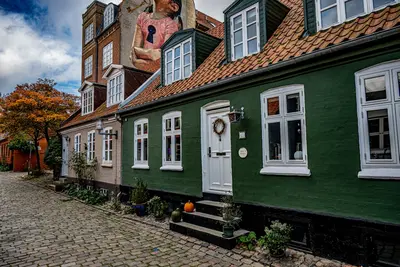
The oldest quarter of Aarhus enchants with its cobblestone streets, colorful half-timbered houses, small boutiques, and cozy cafés, which invite you to stroll and linger.
Aarhus
Aarhus, Denmark's second-largest city, presents itself as a dynamic cultural hub, blending historical charm with modern architecture. Here you'll find the renowned ARoS Aarhus Kunstmuseum with its iconic "Your rainbow panorama" and the open-air museum Den Gamle By, bringing Danish urban history to life. Stroll through Latinerkvarteret, the city's oldest quarter, surrounded by cobblestone streets, unique boutiques, and cozy cafes. The ultra-modern cultural center Dokk1 by the harbor and the architecturally stunning Moesgaard Museum offer further cultural insights into prehistoric times. The city thrives on its university atmosphere, reflected in a vibrant culinary scene. Ideally, plan your visit in spring or autumn to enjoy the sights without the biggest tourist crowds. A stroll along the river Å through the Åboulevarden district reveals many nice restaurants and bars for the evening.
Østjylland (East Jutland)
East Jutland in Denmark captivates with a fascinating mix of urban flair, rich history, and picturesque nature. From the vibrant cultural metropolis of Aarhus to the rolling hills and idyllic coastal landscapes of the Djursland peninsula, the region offers unforgettable experiences for every taste and is considered the cultural heart of Jutland.
Marselisborg & Dyrehaven (Deer Park)
This vast green belt south of the city center offers the royal Marselisborg Castle, extensive forests, and the popular deer park with fallow deer and mouflons, an ideal backdrop for relaxation and nature.
Mols Bjerge National Park
This unique National Park on Djursland offers a dramatic Ice Age landscape with rolling hills, vast heathlands, and spectacular views over Aarhus Bay and the Kattegat.