Fernweh: Home
    ExploreTravel GuidesPlan a tripMy tripLast visited
    de|en
    All Places & RegionsAll highlightsAbout FernwehFAQPrivacy PolicyImprint
    ExploreTravel GuidesPlan a tripMy tripLast visited
    • Overview
    • Places in the region
    • Food culture
    • Culture
    • Getting around
    • Nearby
    Østjylland (East Jutland)

    Denmark

    Østjylland (East Jutland)

    Region

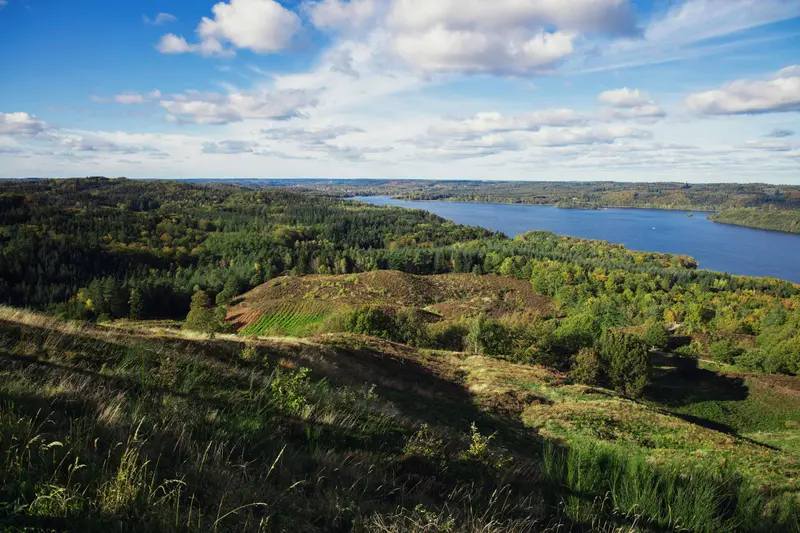
    East Jutland stretches from Aarhus, across the Djursland peninsula, to the Silkeborg Lake District. Aarhus offers museums, harbour districts and student life; Djursland has hills, bays and beaches.

    by Felix Gillen

    1. Home
    2. Destinations
    3. Denmark
    4. Østjylland (East Jutland)
    East Jutland stretches from Aarhus, across the Djursland peninsula, to the Silkeborg Lake District. Aarhus offers museums, harbour districts and student life; Djursland has hills, bays and beaches. West of the city lie forests and lakes, appearing almost mountainous by Danish standards.
    The starting point is usually Aarhus, Denmark's second-largest city. From there, the Letbane takes you to Djursland up to Grenaa. On the peninsula are Mols Bjerge National Park and Ebeltoft's old town. South of the city is the Moesgaard Museum; to the northwest are Rosenholm Castles and the ruin of Kalø. The Lake District with Himmelbjerget is located just under an hour west. For the rural corners, a car is practical.
    Aarhus

    Place 1 of 3

    Aarhus

    Aarhus is Denmark's second-largest city and, thanks to its large university, has a very young population. The centre holds the cathedral, the cobbled Latin Quarter and the Aarhus Å river lined with cafés on both banks.

    Discover
    Ebeltoft

    Place 2 of 3

    Ebeltoft

    Ebeltoft is located on Ebeltoft Vig on the Djursland peninsula, in the heart of Mols Bjerge National Park. The small old town features cobblestone streets, low half-timbered houses, and a tiny town hall on the market square.

    Discover
    Mols Bjerge National Park

    Place 3 of 3

    Mols Bjerge National Park

    Mols Bjerge National Park is located in southern Djursland between Aarhus and Ebeltoft. The Ice Age left behind hills, hollows, and heath-covered slopes here, which appear almost mountainous by Danish standards.

    Discover

    Sights in Østjylland (East Jutland)

    Discover the most important sights and attractions

    Moesgaard Museum
    Museum

    Moesgaard Museum

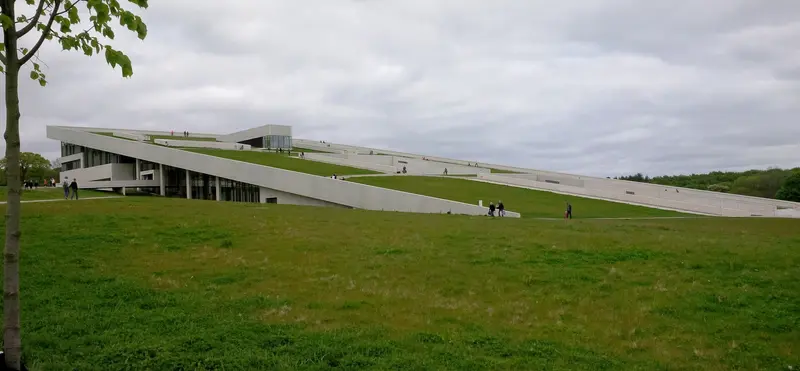
    The Museum of Archaeology and Ethnography, south of Aarhus, is situated beneath a walkable grass roof. Its exhibitions span from the Stone Age to the Vikings, with its most famous piece being the Grauballe Man, a bog body over 2,000 years old. From the museum, paths lead through the landscape park to the beach.
    Open in Google Maps
    Kalø Castle Ruins
    Castle

    Kalø Castle Ruins

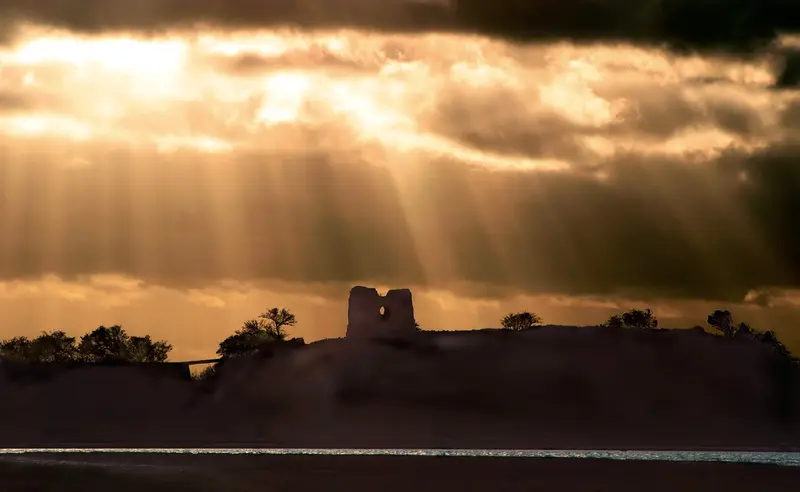
    Erik Menved built the castle in 1313 on a small island in Kalø Vig to control Jutland after a peasant uprising. A roughly 500-meter causeway leads to the ruin. Later, the future Swedish king Gustav Vasa was imprisoned here. The ruin is freely accessible; buses from Aarhus stop at the parking lot.
    Open in Google Maps
    Himmelbjerget
    Attraction

    Himmelbjerget

    The 147-meter-high hill above Julsø is one of Denmark's most famous viewpoints, even though it is not among the highest elevations. At the top stands an observation tower from 1875 with views over the lakes of the Silkeborg Lake District. From the car park, it's a short walk uphill. In summer, you can arrive from Silkeborg by paddle steamer Hjejlen.
    Open in Google Maps
    Rosenholm Slot
    Castle

    Rosenholm Slot

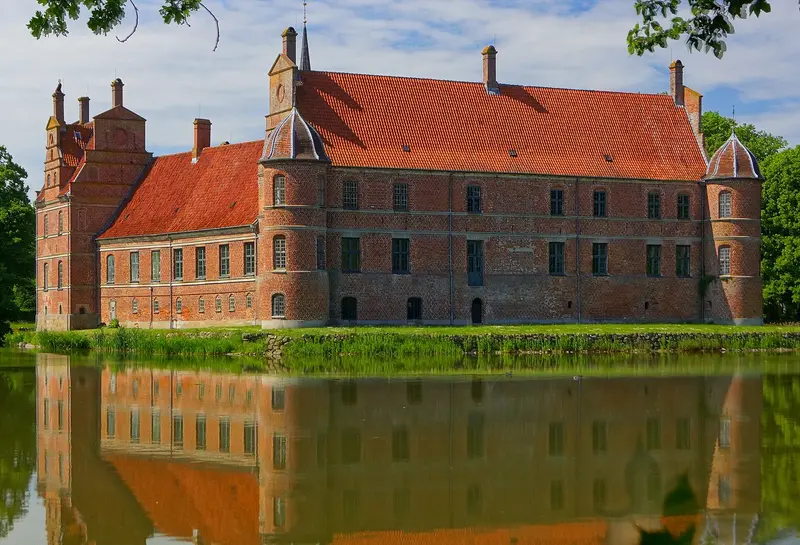
    Jørgen Rosenkrantz began Hornslet's Renaissance castle in 1559; it's still family-owned. Interior only by tour; moated park freely accessible.
    Open in Google Maps

    Food and Drink

    Aarhus Street Food

    In a hall near Aarhus bus station, numerous stalls serve cuisines from all over the world. The most straightforward warm meal in the city.

    Smoked fish on the coast

    In the harbors on Djursland and in Ebeltoft, fish shops sell smoked herring and mackerel. Rye bread accompanies this.

    Stegt flæsk

    The menus of country inns feature hearty dishes like Stegt flæsk, fried pork belly with parsley sauce and potatoes, the Danish national dish.

    From the Viking settlement Aros to the cultural capital

    East Jutland is the most densely populated corner of the peninsula. Aarhus originated in the 8th century as the Viking settlement of Aros, making it one of Scandinavia's oldest cities. Excavations beneath the modern city centre have uncovered ramparts and workshops from that period.Jutland's bogs have preserved many finds. At the Moesgaard Museum south of Aarhus lies the Grauballe Man, a bog body approximately 2,300 years old, whose skin, hair, and facial features are still discernible today. The new building, opened in 2014 with its walkable grass roof, is an attraction in itself. In Ebeltoft, the Frigate Jylland from 1860, one of the world's longest wooden ships, rests in dry dock.Today, Aarhus primarily shapes the cultural landscape. The ARoS Art Museum features Olafur Eliasson's walkable colour ring Your Rainbow Panorama on its roof, while the open-air museum Den Gamle By showcases entire streetscapes from several centuries. In 2017, the city was a European Capital of Culture, and its large university keeps the scene vibrant.

    Traveling in East Jutland

    The E45 motorway runs north to south through the region; Aarhus is Jutland's most important railway hub. You can reach it from Copenhagen by train in approximately three hours. Alternatively, the express ferry takes you from Sjællands Odde to Aarhus.The Letbane connects Aarhus with Odder to the south and Grenaa on Djursland. You can explore the centre of Aarhus on foot. For Mols Bjerge, the castles, and the Lake District, a car is more practical; Silkeborg can also be reached by train. Aarhus Airport is located near Tirstrup on Djursland.

    Nearby

    Aarhus

    Aarhus

    Aarhus is Denmark's second-largest city and, thanks to its large university, has a very young population. The centre holds the cathedral, the cobbled Latin Quarter and the Aarhus Å river lined with cafés on both banks. The ARoS art museum with the rainbow on its roof and the open-air museum Den Gamle By are the best-known sights.At the harbour, Aarhus Ø is a new district with striking architecture; south of the city lie forests, beaches and the Moesgaard Museum.
    Latinerkvarteret (The Latin Quarter)

    Latinerkvarteret (The Latin Quarter)

    Latinerkvarteret north of the Cathedral is the oldest part of Aarhus. Low, colorful houses line the alleys around Badstuegade, Klostergade, and Mejlgade, dotted with small squares like Pustervig Torv and Klostertorv. Today, the quarter is full of cafés, bars, restaurants, and independent shops.
    Aarhus Ø (The Harbor District)

    Aarhus Ø (The Harbor District)

    Aarhus Ø is the new district on the former container port north of the centre. Residential buildings like the Isbjerget and the Lighthouse high-rise shape the skyline, with canals, promenades, and the harbour bath in Bassin 7 in between.
    Marselisborg & Dyrehaven (Deer Park)

    Marselisborg & Dyrehaven (Deer Park)

    South of the city center, green Aarhus begins: Marselisborg Castle with its park, the Marselisborg Forest, city beaches, and the deer park with fallow and sika deer. Among them are Den Uendelige Bro by the water and old woodland eateries.
    Mols Bjerge National Park

    Mols Bjerge National Park

    Mols Bjerge National Park is located in southern Djursland between Aarhus and Ebeltoft. The Ice Age left behind hills, hollows, and heath-covered slopes here, which appear almost mountainous by Danish standards. Amidst these lie beech forests, fields, small villages, and Bronze Age burial mounds. From the heights, you can look out over Aarhus Bay and Ebeltoft Vig.

    Sources & method

    • Photos: Wikimedia Commons, Unsplash. Each photo carries its credit.
    • Place data such as addresses and ratings comes from Google Maps.
    • The content is based on web research from public, traceable sources. How the content is made · The role of AI