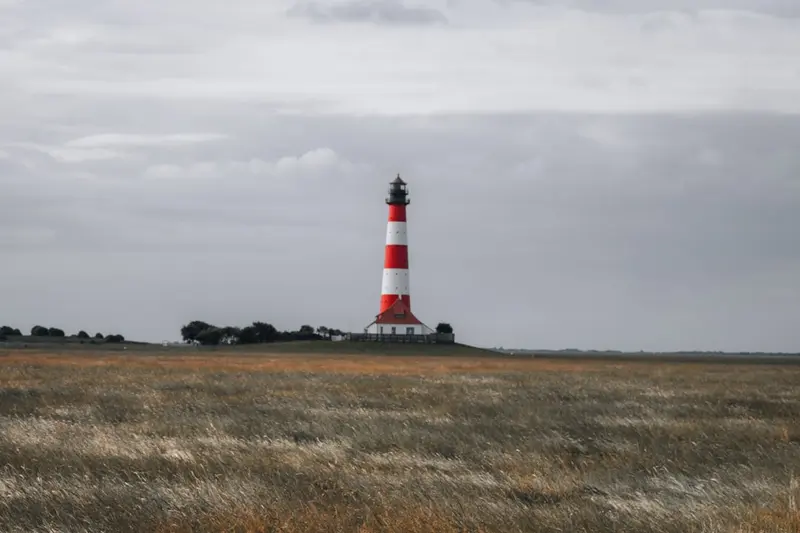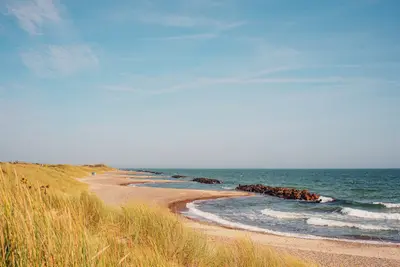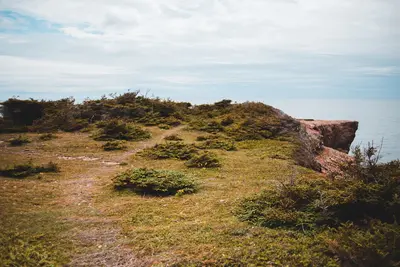
The northernmost point of Denmark, where the waves of Skagerrak and Kattegat meet in a fascinating natural spectacle – an iconic experience that can be reached on foot or with the Sandormen.
At Denmark's northernmost tip, you'll find Grenen, a unique place where the seas Skagerrak and Kattegat meet. Here, you can witness the impressive natural spectacle as the waves of both waters collide, forming a visible line in the sea. Access to the outermost point is possible either on foot or comfortably by the "Sandormen" tractor bus, which operates regularly. To best experience the phenomenon of the converging waves, a visit at low tide is recommended, as the sandbank is then most accessible. The area around Grenen is also shaped by Skagen's maritime history and the special light that attracted many artists. Be mindful of the strong currents and enjoy the expansive views over the North Sea and the Baltic Sea.
Places in Grenen
Discover the most important sights and attractions
Sights in Grenen
ملتقى بحر البلطيق مع بحر الشمال
An Grenen, dem nördlichsten Punkt Dänemarks, erlebst du ein einzigartiges Naturphänomen: Hier treffen die Wellen der Ostsee (Kattegat) und der Nordsee (Skagerrak) aufeinander. Du kannst tatsächlich mit einem Bein in jedem Meer stehen, wobei die unterschiedlichen Strömungen eine sichtbare Trennlinie erzeugen. Geografisch markiert dieser Ort die Grenze zwischen zwei großen Meeresgebieten, was ihn zu einem wichtigen Orientierungspunkt in der Seefahrtgeschichte Skandinaviens machte. Die leicht unterschiedliche Dichte und Salinität der Meere verstärken dieses faszinierende Zusammentreffen. Unser Tipp: Besuche Grenen am besten früh morgens oder spät am Nachmittag, um Menschenmassen zu umgehen und das besondere Licht für Fotos zu nutzen. Der etwa 20-minütige Spaziergang zum äußersten Punkt bietet zudem Gelegenheiten, die raue Küstenlandschaft zu genießen.
An der nördlichsten Spitze Dänemarks findest du Grenen, eine einzigartige Landzunge, wo die Wellen des Skagerrak und des Kattegat aufeinandertreffen. Dieses beeindruckende Naturschauspiel ist das Ergebnis zweier unterschiedlicher Strömungssysteme, die hier sichtbar aufeinanderprallen. Du kannst direkt an die Spitze gehen und mit einem Fuß in jedem Meer stehen, ein markantes Erlebnis. Die ständige Erosion und Ablagerung von Sand formt Grenen fortwährend neu und macht jeden Besuch einzigartig. Unser Tipp: Besuche Grenen bei Ebbe, um weiter auf die Sandbank hinauslaufen zu können. Für ein ruhigeres Erlebnis und die besten Lichtverhältnisse für Fotos empfiehlt sich der frühe Morgen oder der späte Nachmittag, um den Hauptbesucherstrom zu vermeiden.
Das Skagen Infanteristøttepunkt bei Grenen ist ein eindringliches Relikt des Zweiten Weltkriegs und Teil des ehemaligen Atlantikwalls. Diese massiven Betonbunker wurden von der deutschen Besatzungsmacht errichtet, um die dänische Küste vor einer Invasion zu schützen. Heute ragen sie, oft halb vom Sand verschluckt, aus den Dünen und am Strand hervor und bieten einen greifbaren Einblick in die militärische Geschichte der Region. Du kannst die äußeren Strukturen erkunden und dir die damalige Verteidigungsstrategie vergegenwärtigen. Unser Tipp: Besuche die Bunker bei Ebbe, um sie besser zugänglich zu finden und die volle Dimension der Anlagen zu erfassen. Für ein ungestörtes Erlebnis und stimmungsvolle Fotos empfehlen wir die frühen Morgenstunden.
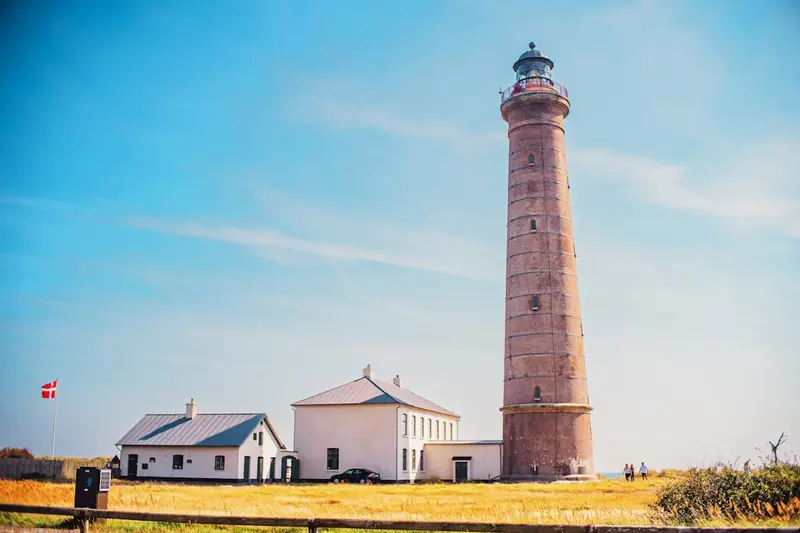
Der Leuchtturm Skagen, auch bekannt als Det Grå Fyr, ragt majestätisch über Grenen auf und ist ein entscheidendes Seezeichen an Dänemarks nördlichster Spitze. 1858 erbaut, ersetzte er ältere Leuchtfeuer und diente der sicheren Navigation in den tückischen Gewässern, wo Nordsee und Ostsee zusammentreffen. Von der Spitze des 46 Meter hohen Turms genießt du einen weiten Panoramablick über die Landzunge und das beeindruckende Zusammentreffen der Meere. Heute beherbergt er zudem ein Vogelobservatorium, das die reiche Vogelwelt der Region dokumentiert. Unser Tipp: Besuche den Leuchtturm und Grenen früh am Morgen, um die besondere Atmosphäre in Ruhe zu erleben und die besten Fotos der Naturkulisse ohne Menschenmassen zu machen.
Das Skagen Grå Fyr, Dänemarks zweithöchstes Leuchtfeuer, ist ein markantes Wahrzeichen nahe Grenen, wo sich Skagerrak und Kattegat treffen. Dieser 1858 von N.S. Nebelong erbaute Turm ersetzte einen älteren und dient seither als wichtiges Navigationszeichen.Nach 210 Stufen Aufstieg genießt du eine 360-Grad-Aussicht über Skagens einzigartige Natur und die aufeinandertreffenden Meere. Unser Tipp: Besuche das Fyr am frühen Morgen für besondere Lichtstimmung und weniger Menschen. Für ein stimmungsvolles Foto, das den Turm in die Landschaft einbettet, wähle einen Standpunkt auf dem Weg nach Grenen.
Grenen, Denmark's northernmost point, is far more than just a geographical phenomenon; it is a place of **profound cultural and historical significance**. For centuries, the unique landscape has shaped the people who live and work here.Historically, the region around Grenen was of great importance for seafaring and fishing. The extreme coastal conditions and the confluence of the Skagerrak and Kattegat demanded special adaptation and courage from sailors and fishermen. In the late 19th and early 20th centuries, Grenen, along with neighboring Skagen, became a magnet for the famous **Skagensmalerne**. This artists' colony, including P.S. Krøyer and Anna Ancher, found an unparalleled source of inspiration in the unique light and rugged natural landscapes, making the region a **center of Danish art history**.The local architecture in Skagen, often characterized by the typical yellow houses with white roof edges, reflects tradition and a connection to nature. Even today, the breathtaking landscapes and rich history continue to attract art lovers, historians, and tourists alike, who come here to feel the echo of past times.
Getting around
Access to Grenen, Denmark's northernmost point, is typically via the nearby port town of Skagen. There is no metro or tram in this region; instead, regional bus lines provide connections from Skagen train station to the Grenen car park.For the final stretch to the actual sand spit, the iconic Sandormen, a tractor bus, is a popular and convenient option, especially if you prefer not to take the scenic walk. The area is extremely pedestrian-friendly and invites extensive coastal walks to experience the unique natural spectacle.Bicycles are an excellent way to explore the flat landscape around Skagen and Grenen and can be rented in many places; e-scooters are less common here. For more flexible journeys, taxis are available in Skagen, while ride-sharing services play a minimal role in this rather rural region.For using public transport, the nationwide app Rejseplanen is recommended for route planning, and the Rejsekort serves as a convenient multi-trip card for Denmark.
These places are nearby — perfect for additional days or a day trip.
Skagen
Skagen, located at the northernmost tip of Denmark, is a magical place, famous for its unique light that once inspired the Danish Skagen Painters. Here, the rough waves of Skagerrak and Kattegat meet in a spectacular natural spectacle, surrounded by vast sandy beaches and a distinctive dune landscape. Immerse yourself in a rich cultural history, maritime traditions, and the unspoiled beauty of the North Sea.
Hirtshals
Welcome to Hirtshals, Northern Denmark's vibrant gateway to the world and especially to Norway! This charming harbour town on the Skagerrak fascinates with a unique blend of rugged nature, maritime atmosphere, and exciting history. Here you'll experience the authenticity of a bustling fishing port while simultaneously enjoying the spectacular beauty of the North Jutland coast.
Marstrand
Marstrand is an idyllic island town on Sweden's west coast, its character shaped by its maritime history and the imposing Carlsten Fortress. You reach the car-free island by a short ferry ride from the mainland, which highlights its unique island character even upon arrival. The Carlsten Fortress, once a prison and defensive structure, dominates the townscape and offers far-reaching views over the archipelago. Stroll through the narrow lanes of the Old Town with its well-preserved wooden houses and observe the lively activity in the harbour, known as a significant sailing centre. Historically, Marstrand was an important trading hub and a popular bathing resort for the Swedish royal family. For a more relaxed experience, a visit outside the peak season in July is recommended to quietly enjoy the island's atmosphere. A walk on the Kärleksstigen trail leads you around the island, offering picturesque coastal paths and swimming opportunities.
Rubjerg Knude
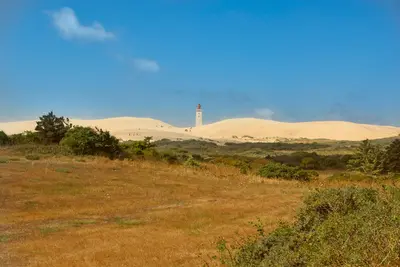
On Jutland's wild west coast, a globally unique natural spectacle awaits you at Rubjerg Knude Fyr. Experience how the majestic lighthouse is relentlessly engulfed by shifting sand dunes, offering breathtaking views over the North Sea – a fascinating testament to nature's untamed power.
Løkken
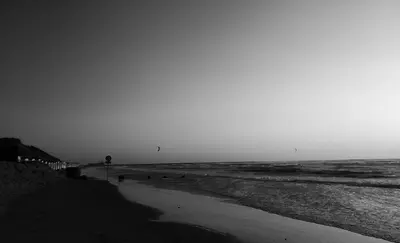
Løkken is a charming, lively coastal town on the Danish West Coast, known for its wide sandy beach with its iconic white bathhouses and the rugged beauty of the North Sea. Here, a unique blend of traditional fishing village charm, relaxed beach life, and a vibrant atmosphere awaits you, inviting you to linger and enjoy.