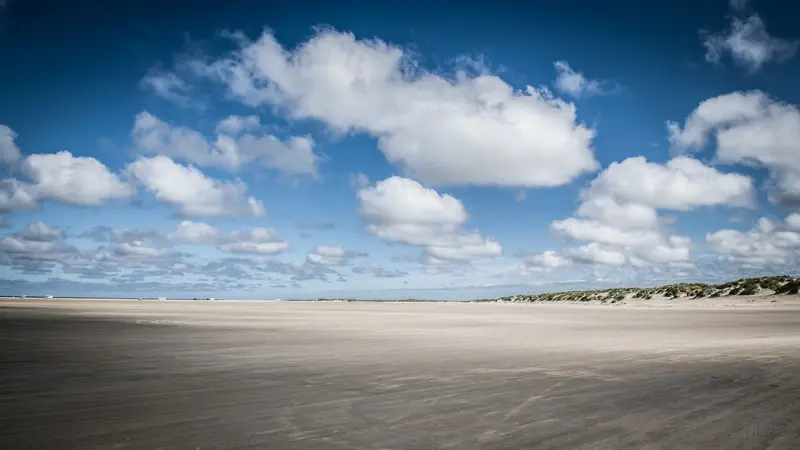
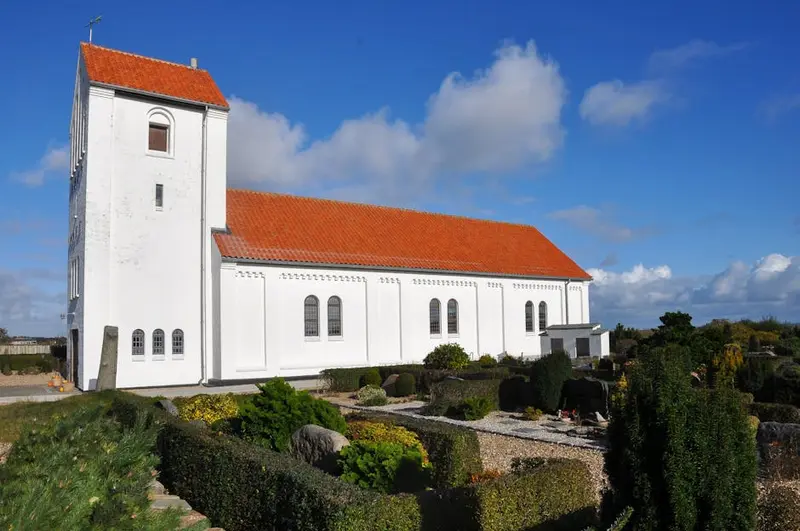
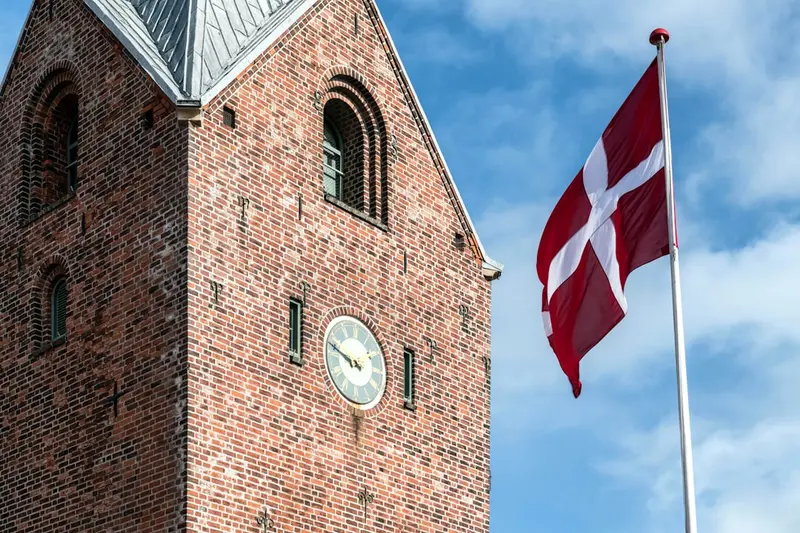
You drive from the island of Rømø on the North Sea coast north via Hvide Sande and Ringkøbing to Thy National Park and further to Skagen. Most stages take less than two hours; only from Thy to Skagen will you be traveling for about two and a half hours.
13 Days / 12 Nights
May to September
RV Friendly
5 stops
Why This Route?
For families and campers looking for lots of beach, short drives, and beachfront campsites.
Hidden Gems
Lyngvig Fyr north of Hvide Sande with views over the North Sea and Ringkøbing Fjord
Cold Hawaii surf beach in Klitmøller at the edge of Thy National Park
Råbjerg Mile, a moving dune southwest of Skagen
Itinerary
Stop 1 • 2 Nights
Rømø
City
Rømø is the southernmost Danish island in the Wadden Sea, directly north of Sylt. To the west lies Lakolk's kilometre-wide beach, where cars are permitted, and to the east, the mudflats. In between are dune heath, pine forest, and small villages with thatched captain's houses from the whaling era.
5 Sights
4 Restaurants
Whaling, Commanders and Bone Fences
Rømø was wealthier in the 18th century than its barren landscape would suggest. The island's men signed on with Dutch and Hamburg whaling fleets, many of them as captains. Money from the Greenland hunt flowed back into home construction, and this brief period of wealth still shapes the local landscape today.The most visible testament is the Kommandørgården in Toftum, a thatched captain's farm from 1748, now furnished as a museum. Dutch wall tiles, painted ceiling beams, and imported furniture show where the prosperity came from. Opposite stands the Toftum Skole from 1784, one of Denmark's oldest preserved schoolhouses, with a single classroom.Near Juvre, a fence made of whale jawbones stands by the roadside, erected in the 18th century from the jaws of hunted Greenland whales. Such fences were common on the Wadden Sea islands, but hardly any others remain. The Church of Sankt Clemens in Kirkeby, named after the patron saint of seafarers, preserves gravestones of the commanders.
The fishing village sits on the narrow Holmsland Klit spit, where a lock joins Ringkøbing Fjord to the North Sea. Harbour, smokehouses and wide beaches set the scene.
4 Sights
4 Restaurants
Culture & Character
A Place Shaped by the HarbourBefore the lock opened in 1931, there were hardly any settlements at this point on the spit. With direct access to the North Sea, Hvide Sande quickly grew into a fishing town. To this day, cutters, auction halls, and net storage facilities shape the harbour. The Fiskeriets Hus museum tells this story.In summer, holidaymakers and watersports enthusiasts dominate life in the town; outside the season, it becomes quiet and the fishing industry comes back into focus.
The small market town on the eastern shore of Ringkøbing Fjord has a well-preserved old town with a market square, cobblestone streets, and old merchant houses. The North Sea is about ten kilometers away.
4 Sights
3 Restaurants
Culture & History
Market Town on the FjordRingkøbing has been a trading post since the Middle Ages; goods were shipped via the fjord and its then open connection to the North Sea. When the fjord mouth shifted south due to silting, the port lost its significance. A coherent old townscape with merchant courtyards and the old town hall on the market square has been preserved.The Regional Museum tells the story of the town and the West Coast, including the Second World War along the coast.
Thy National Park stretches as a narrow strip along the North Sea, from Hanstholm in the north to Agger Tange in the south. Here you'll find dunes, heathland, pine plantations, clear lakes, and wide beaches, interspersed with small fishing villages like Klitmøller and Nørre Vorupør. It was established in 2008 as Denmark's first national park.
4 Sights
4 Restaurants
Culture and History
For centuries, the people in Thy fought against the shifting sands that buried fields and farms. From the 19th century onwards, dunes were fortified with marram grass and pine plantations were established, which now shape the inland landscape. Many farmers became fishermen, pulling their boats into the sea from the beach, as is still done today in Vorupør.During World War II, the occupying power built one of the largest batteries of the Atlantic Wall near Hanstholm, today a museum. More recently, Klitmøller's surf scene has made the name Cold Hawaii famous.
Stunning nature and outdoors. Dreamy beaches and Rich in culture and history.
Skagen is located at the northern tip of Denmark, where Skagerrak and Kattegat converge at the Grenen spit. The town is known for its yellow houses with red roofs and the painters who worked here in the late 19th century. All around are beaches, dunes, the sand-covered church, and the migrating dune Råbjerg Mile.
6 Sights
6 Restaurants
The Artist Colony and the Light of the Cape
Skagen was a remote, poor fishing village until the 19th century. From the 1870s, painters arrived, drawn by its light and the fishermen's lives. Anna and Michael Ancher lived permanently there; P. S. Krøyer spent many summers here. Their paintings of fishermen on the beach and social gatherings hang today in Skagens Museum; the Anchers' home is now a museum.Ochre-yellow houses, red tiled roofs, and white eaves still define Skagen's townscape. Southwest of town, the sand-covered church shows what drifting sand could do. Of the medieval church, only its tower protrudes from the dune; it was abandoned in 1795.