North Jutland is the land between two seas. On the west coast, the North Sea rolls onto wide beaches and cliffs; in the east lies the calmer Kattegat. At Skagen, both meet at the Grenen headland. In between lie shifting dunes, heath, and plantations; to the west, Thy National Park; and in the center, the city of Aalborg on the Limfjord.
Aalborg is the largest city and the most important transport hub in the region. Along the North Sea are bathing resorts like Løkken and Blokhus, and the steep coast of Rubjerg Knude. In the far north are Skagen with its artists' colony and Grenen. South of Skagen, the Råbjerg Mile dune wanders, and to the west lies Thy National Park. Hirtshals and Frederikshavn are ferry ports to Norway and Sweden. For the coastal towns, a car is most practical.
Place 1 of 4
Hirtshals
Hirtshals is a port town on Jutland's north coast, primarily known as a ferry port to Norway. Besides the ferries, fishing trawlers fill the harbour; the town still thrives on fishing.
Aalborg is located on the Limfjord and is the largest city in North Jutland. This industrial city, once shaped by shipyards, cement, and schnapps, has transformed its fjord waterfront, which now hosts the Utzon Center and Musikkens Hus.
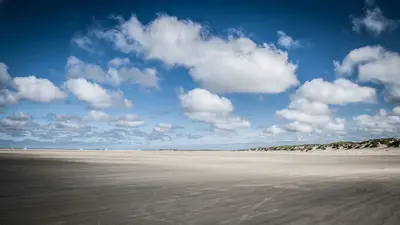
Løkken is one of the best-known seaside resorts on Jutland's North Sea coast. Its wide sandy beach with white bathing houses stretches for miles, and cars are allowed on the sand.
Skagen is located at the northern tip of Denmark, where Skagerrak and Kattegat converge at the Grenen spit. The town is known for its yellow houses with red roofs and the painters who worked here in the late 19th century. All around are beaches, dunes, the sand-covered church, and the migrating dune Råbjerg Mile.
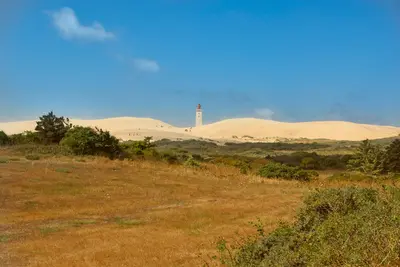
On North Jutland's North Sea coast, the Rubjerg Knude Lighthouse sits on a 60m cliff amid a migrating dune. Due to sea erosion, the tower was relocated roughly 70 meters inland in 2019. Up top, enjoy wide views of the dune and North Sea.
Sights in North Jutland
Discover the most important sights and attractions
Rebild Bakker
Hills and heathland south of Aalborg, surrounded on three sides by Rold Skov forest. Danish-Americans gifted the site to the Danish state in 1912; it's been called Rebild National Park ever since. The landscape is unusually hilly for Denmark, with marked hiking trails leading over hilltops and through forests. Some stamina is required, bring water.

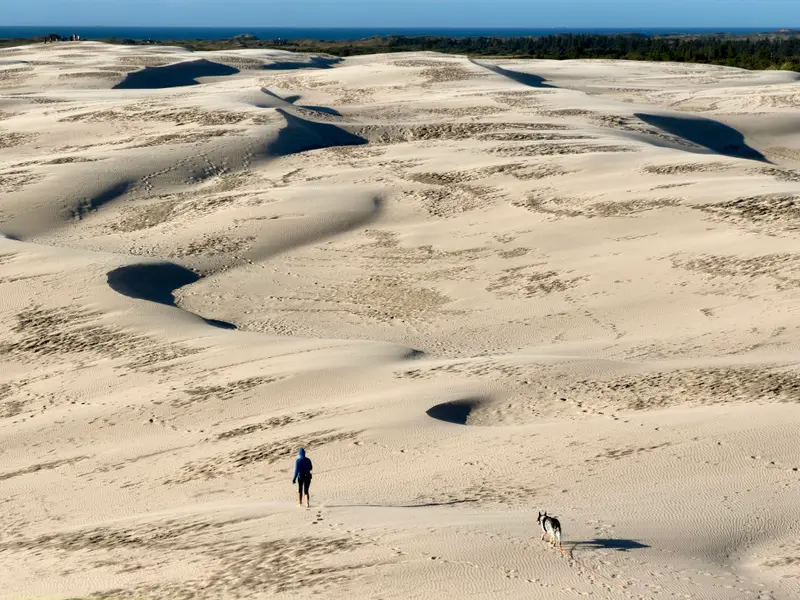
Denmark's largest shifting dune lies south of Skagen and moves up to 18 meters northeast annually. From the car park, you step directly onto the sand, and from the top, you'll see heath and sea. Freely accessible, most stunning at sunset.
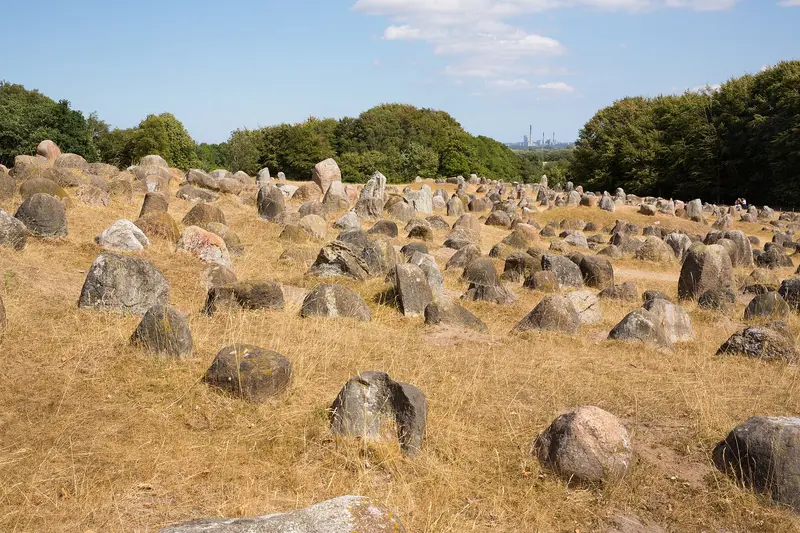
Large burial ground from the Iron and Viking Age on a hill above Aalborg, with stone settings in circle and ship shapes, among which sheep graze. The site is freely accessible; the museum next door charges admission and explains the excavations.
Large fish restaurant by Skagen harbour, with sand on the floor inside. The menu offers seafood platters, fish soup, and fish and chips. Crowded in summer, frequent waiting times.
Skagen, Hirtshals, and the small coastal towns offer freshly caught fish, smoked fish, and crabs. The fish restaurants at Skagen harbour are full in summer.
Jomfru Ane Gade in Aalborg
The pub and restaurant street in Aalborg's Old Town is in the evenings the center of the region's nightlife.
Aalborg Akvavit
Aalborg is known for its caraway schnapps Akvavit, which is traditionally enjoyed with herring and festive meals.
Dunes, Painter's Light, Viking Graves
The landscape of North Jutland is in motion. Wandering dunes like Råbjerg Mile shift every year, and wind-blown sand has buried farms and churches over centuries, such as the sand-buried church near Skagen, of which only the tower remains.At the close of the 19th century, the Skagen Painters like Anna and Michael Ancher and P. S. Krøyer were drawn to the northern tip for its light. Their paintings are now in the Skagens Museum. Near Aalborg lies the Lindholm Høje burial site with hundreds of stone settings from the Iron and Viking Ages. Aalborg itself grew rich in the 16th and 17th centuries through herring trade.
Exploring locally
The E45 motorway runs from the south to Frederikshavn, with trains also connecting Aarhus via Aalborg to the coast. From Frederikshavn, the Skagensbanen takes you to the northern tip, and from Struer, you can reach Thisted and thus the North Sea coast.Hirtshals and Frederikshavn are important ferry ports for Norway and Sweden. If you're planning a Scandinavian tour, this is a transfer point. Aalborg Airport is near the city and is served from several European cities.Off the main routes, bus frequency is sparse; a car is a clear advantage for dunes, lighthouses, and small coastal towns. At the beaches of Løkken and Blokhus, you can drive directly onto the sand. To the tip of Grenen, the tractor bus Sandormen runs in summer; on foot, it's a good 30 minutes through the sand.