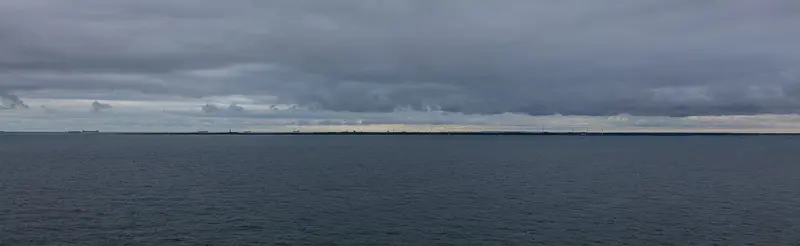
From Aalborg, you drive to the west coast to Løkken and from there, take a day trip to the Rubjerg Knude lighthouse in the shifting dunes. Afterwards, continue via Hirtshals to Skagen at Denmark's northern tip; the stages rarely last longer than an hour.
10 Days / 9 Nights
June to August
RV Friendly
4 stops
Why This Route?
For travelers wanting to experience Denmark's rugged coast with short drives and no difficult roads.
Hidden Gems
Lønstrup, an artists' village right next to Rubjerg Knude
Den Tilsandede Kirke, the sand-buried church south of Skagen
Hirtshals Fyr overlooking the harbour and Skagerrak
Itinerary
Stop 1 • 2 Nights
Aalborg
City
Aalborg is located on the Limfjord and is the largest city in North Jutland. This industrial city, once shaped by shipyards, cement, and schnapps, has transformed its fjord waterfront, which now hosts the Utzon Center and Musikkens Hus. In the Old Town, you'll find Renaissance merchant houses, the Budolfi Domkirke, and the pub street Jomfru Ane Gade.
5 Sights
4 Restaurants
Culture and History
Aalborg was granted city rights in the 14th century, becoming prosperous in the 16th and 17th centuries through the herring trade. Merchant houses like Jens Bangs Stenhus and the half-timbered Aalborghus Castle date from this period. Budolfi Kirke has served as the cathedral since 1554.In the 20th century, shipyards, cement factories, and a schnapps distillery characterized the city. Today, the Utzon Center, by Aalborg-raised Jørn Utzon, and the concert hall Musikkens Hus stand by the fjord. Every May, the city celebrates a large carnival.
Løkken is one of the best-known seaside resorts on Jutland's North Sea coast. Its wide sandy beach with white bathing houses stretches for miles, and cars are allowed on the sand. In summer, the town is crowded and lively; outside the season, it is quiet. Fishing cutters are still pulled directly onto the beach today.
4 Sights
5 Restaurants
Culture and History
Løkken never had a harbour. Goods and catches were landed directly on the beach; fishermen still pull their boats onto the sand today. From the late 19th century, the town became a seaside resort; the bathing hotel on the market square dates from that time.The white beach huts have been part of the town's image for generations; their history is told in the small museum. During the Second World War, German occupiers built bunkers along the coast; some are now in the water.
Hirtshals is a port town on Jutland's north coast, primarily known as a ferry port to Norway. Besides the ferries, fishing trawlers fill the harbour; the town still thrives on fishing. For those who don't just pass through, there's the North Sea Aquarium, a lighthouse with a view, and a large bunker complex nestled in the dunes.
4 Sights
2 Restaurants
Culture and History
Until the 20th century, Hirtshals was a small fishing village. With the construction of the harbour starting in 1919, the town developed into one of Denmark's most important fishing and ferry ports.During World War II, the German occupiers expanded the coast as part of the Atlantic Wall. The bunkers around the lighthouse are now accessible as an open-air museum.
Stunning nature and outdoors. Dreamy beaches and Rich in culture and history.
Skagen is located at the northern tip of Denmark, where Skagerrak and Kattegat converge at the Grenen spit. The town is known for its yellow houses with red roofs and the painters who worked here in the late 19th century. All around are beaches, dunes, the sand-covered church, and the migrating dune Råbjerg Mile.
6 Sights
6 Restaurants
The Artist Colony and the Light of the Cape
Skagen was a remote, poor fishing village until the 19th century. From the 1870s, painters arrived, drawn by its light and the fishermen's lives. Anna and Michael Ancher lived permanently there; P. S. Krøyer spent many summers here. Their paintings of fishermen on the beach and social gatherings hang today in Skagens Museum; the Anchers' home is now a museum.Ochre-yellow houses, red tiled roofs, and white eaves still define Skagen's townscape. Southwest of town, the sand-covered church shows what drifting sand could do. Of the medieval church, only its tower protrudes from the dune; it was abandoned in 1795.