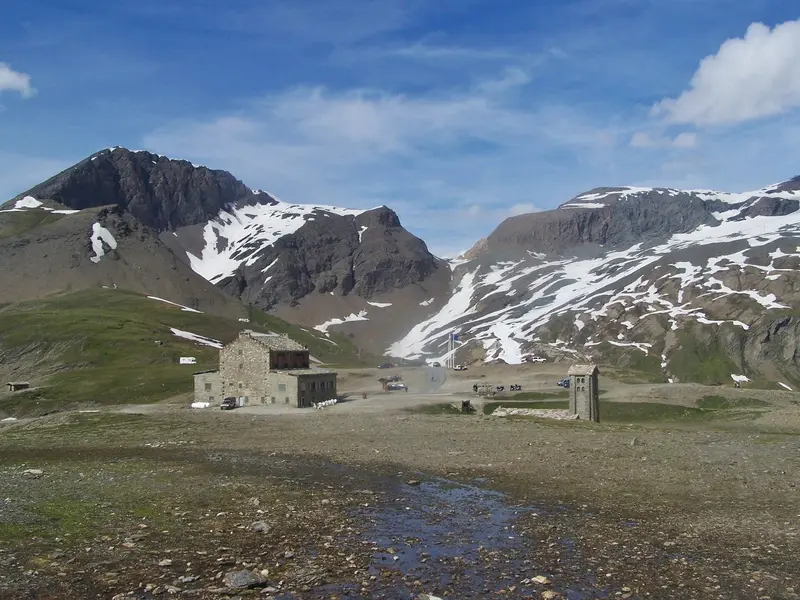
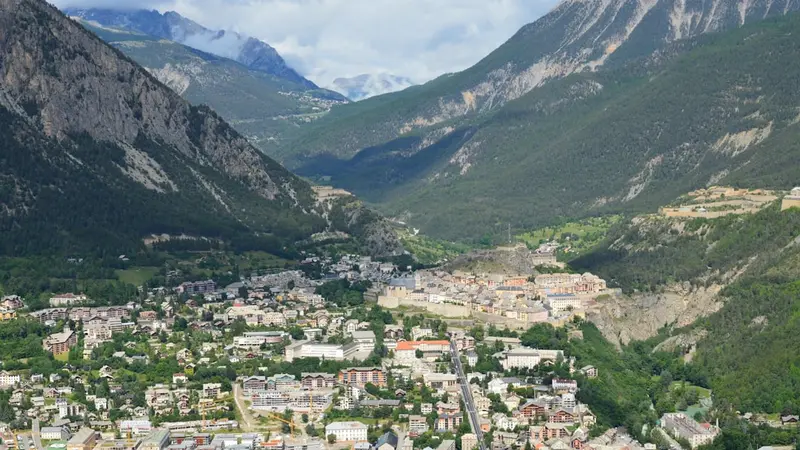
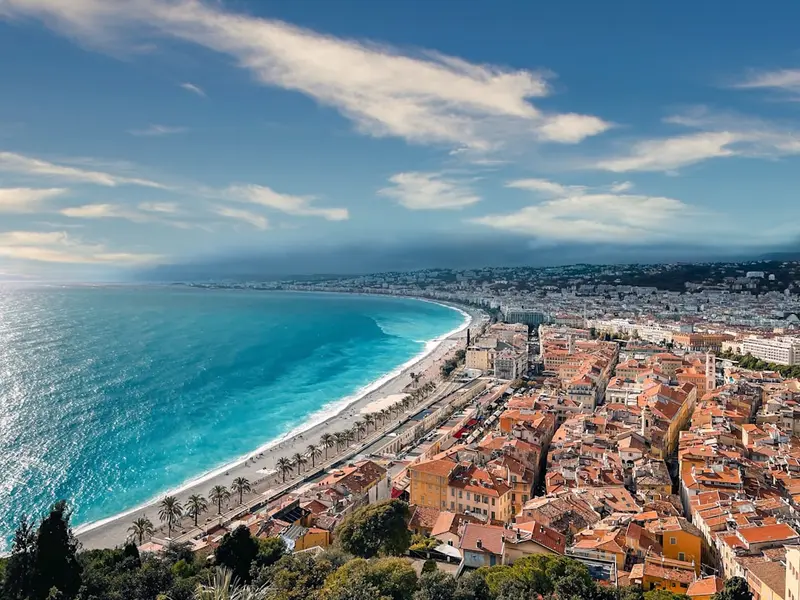
From Annecy, you drive to Albertville and the next day over the Col de l'Iseran at 2,764 meters to Briançon. The last stage leads over the Col de la Bonette down to Nice and takes a full day with breaks. The high passes are usually only open from June or July until October.
9 Days / 8 Nights
July–September
RV Friendly
4 stops
Why This Route?
For road trip fans and motorcyclists wanting to cross the French Alps via mountain passes in summer.
Hidden Gems
Lac du Chevril near Tignes on the ascent to the Col de l'Iseran
Pont d'Asfeld over the Durance gorge in Briançon
Cime de la Bonette, a short walk from the pass to the summit at 2,860 meters
Itinerary
Stop 1 • 2 Nights
Geneva
City
Perfect for unwinding and relaxation. Perfect for an exciting city trip and Rich in culture and history.
Annecy, often called the 'Venice of the Alps', captivates with its medieval Old Town and the clear Lac d'Annecy. The Vieille Ville is characterized by winding alleys, pastel-colored houses, and the canals of the Thiou River. The striking Palais de l'Isle, a former prison, is picturesquely situated in the middle of a canal and bears witness to the city's rich history. Perched above the rooftops is the Château d'Annecy, once a residence of Savoyard princes, which today houses a museum. Lac d'Annecy offers numerous leisure activities such as boat trips or swimming. To experience the atmosphere without large crowds, a visit in spring or autumn is recommended. Explore the local markets to sample regional cheeses and other specialties.
4 Sights
5 Restaurants
Annecy's History and Architectural Heritage
Annecy, often called the "Venice of the Alps," boasts a rich and complex history dating back to Roman times. Strategically located at the crossroads of important trade routes, the city developed into the significant seat of the Counts of Geneva during the Middle Ages.Subsequently, Annecy became the center of the Savoy Dukes, who established it after the Reformation as an important Catholic counterweight to Protestant Geneva. These eras significantly shaped the architectural and cultural face of the city.The Old Town, known as Vieille Ville, is a living testament to this era with its narrow streets, picturesque arcades, and the canals flowing through it. Prominent structures such as the imposing Château d'Annecy, once the residence of counts and dukes, as well as the iconic Palais de l'Isle, which dates from the 12th century and once served as a prison and courthouse, define the cityscape and tell tales of past power dynamics and daily life.It was only in 1860, with the annexation of Savoy to France, that Annecy definitively became part of the French nation, yet it preserves its unique Savoyard heritage in customs and regional identity to this day.
For adventure seekers. Perfect for relaxed travel without rush and Ideal for families with children.
Albertville is located at the confluence of the Arly and Isère rivers in Savoy and hosted the 1992 Winter Olympics. Above the town, perched on a rocky spur, is the medieval Cité de Conflans with its cobbled streets and valley views. For the ski resorts of Tarentaise and Beaufortain, the town serves as a gateway and starting point.
4 Sights
3 Restaurants
Albertville: Culture, Art & History
Albertville, located at the confluence of the Arly and Isère rivers, is a place with a rich history deeply rooted in the Savoyard Alpine region. The city was formed in 1836 through the unification of the medieval town of Conflans with L'Hôpital and named after King Charles Albert of Sardinia-Piedmont. This fusion marked a significant step in its development as a commercial hub.Albertville's architectural heritage is twofold: The upper part, Conflans, presents itself as a charming medieval town with narrow streets, stone houses, and arcades, reflecting the typical Savoyard architecture. Here, traces of centuries of history as a trading post and border town can be discovered. The lower, newer part, originally L'Hôpital, rather showcases a 19th-century townscape and was significantly modernized and expanded due to the hosting of the 1992 Winter Olympics.Culturally, Albertville is strongly shaped by its alpine location and Savoyard identity. Traditions manifest themselves in regional festivals and an awareness of local heritage, which is nurtured in museums and through the preservation of historic buildings. Art and craftsmanship are often connected to the mountain world, although there is no specific art movement that Albertville prominently produces. The Winter Games, however, have also left a lasting cultural impact, evident in modern sports facilities and an international flair.
Breathtaking mountain views. Rich in culture and history and Stunning nature and outdoors.
Briançon, at around 1,300 metres in the Hautes-Alpes, is considered France's highest city. Its Vauban-designed fortifications (old town and surrounding forts) became a UNESCO World Heritage site in 2008. You stroll through the steep streets of the Cité Vauban, enjoying views of the surrounding peaks from the bastions. In summer, Briançon is a base for hiking and cycling, and in winter, for the Serre Chevalier ski resort.
10 Sights
5 Restaurants
Culture, Art & History of Briançon
Briançon, once known as Brigantio, boasts a long history stretching back to Roman times. Its strategically important location on an Alpine pass shaped its development over centuries. The most significant era, however, began in the late 17th century under Louis XIV, when the military engineer Sébastien Le Prestre de Vauban was commissioned to extensively fortify the city.These fortifications, which encompass the old town and surrounding heights, are today an outstanding example of military architecture and have been a UNESCO World Heritage site since 2008. The Cité Vauban within the city walls is characterized by its narrow streets, steep ascents, and well-preserved Baroque buildings. Also characteristic are the numerous sundials on the facades, symbolizing the connection to the sun and the mountains.Culturally, Briançon reflects life in the High Alps, shaped by the challenges and beauties of the mountain world. This manifests in a robust regional identity and an appreciation for craftsmanship and traditions, adapted to the way of life in this unique environment.
Perfect for an exciting city trip. Rich in culture and history and Perfect for unwinding and relaxation.
Nice is the largest city on the Côte d'Azur, situated on the Baie des Anges, about 30 kilometers from the Italian border. Stroll along the Promenade des Anglais by the sea; in the Old Town, Vieux Nice, you'll find baroque alleys and the flower market at Cours Saleya. From Colline du Château, you overlook the Old Town, port, and bay. The city has only been French since 1860 and has retained an Italian influence in its cuisine and culture; try Socca and visit the Musée Matisse or the Musée Marc Chagall. For mild weather and fewer crowds, April to June, as well as September and October, are ideal.
6 Sights
10 Restaurants
Culture, Art, and History
Nice was founded as the Greek settlement Nikaia; the Roman city Cemenelum was located on the Cimiez hill. From 1388, Nice belonged to the House of Savoy, later to the Kingdom of Sardinia-Piedmont, before it was annexed to France in 1860.This history continues to shape the city's character and traditions today. The Old Town, Vieux Nice, with its baroque churches and narrow streets, clearly shows Italian influences. The Belle Époque left behind grand hotels and villas along the Promenade des Anglais and in Cimiez, reflecting the boom in tourism in the late 19th and early 20th centuries. Nice has preserved its own identity, audible in Niçois (Nissart) and visible in festivals like the February Carnival. For a long time, the city has attracted artists, and museums commemorate Henri Matisse and Marc Chagall, who lived and worked here.