From Bastia, drive to the mountain town Corte, then to Calvi on the northwest coast. Via the coastal road, reach Porto and Ajaccio, finally to Bonifacio in the south, from where Figari airport is half an hour away. Allow more time for the winding roads than the kilometers suggest.
13 Days / 12 Nights
May–October
RV Friendly
6 stops
Why This Route?
For active travelers wanting to explore Corsica's coast, mountains, and port cities in under two weeks.
Hidden Gems
Calanche de Piana, red rocks on the coastal road between Porto and Piana
Gorges de la Restonica near Corte with swimming holes in the river
Escalier du Roi d'Aragon, rock staircase on the cliffs of Bonifacio
Itinerary
Stop 1 • 2 Nights
Bastia
City
Rich in culture and history. Perfect for an exciting city trip and Culinary highlights.
Bastia, Corsica's second-largest city, captivates with maritime charm and rich Genoese history. You'll discover architecture, strongly shaped by the past, especially in the quarter around the **Citadel**. The Vieux Port with its colorful fishing boats and the imposing Église Saint-Jean-Baptiste forms the city's lively heart. The Citadel houses the former Governor's Palace and offers expansive views over Bastia. Stroll across the Place Saint-Nicolas and explore the alleys of Terra Vecchia for authentic Corsica. The ideal travel time is spring or autumn.
4 Sights
5 Restaurants
Bastia: Cultural Heritage and History
Bastia, the historic heart of Corsica, is deeply rooted in its Genoese past, a heritage reflected in its architecture and urban planning. Founded in the 14th century as a Genoese fortress, the city evolved into a central commercial and administrative hub on the island.The Citadel, also known as Terra Nova, stands as an impressive testament to this era, with its massive fortifications and the former Governor's Palace. Within the city, numerous Baroque churches, such as the Church of Saint-Jean-Baptiste by the Old Port, and the chapels of the brotherhoods, attest to a rich religious and artistic tradition. These brotherhoods continue to preserve ancient chants and processions to this day, shaping the city's cultural life.The juxtaposition of Genoese heritage, strong Corsican identity, and maritime influence shapes a unique cultural atmosphere. Local traditions also manifest in the preservation of the Corsican language and the safeguarding of oral traditions, which remain vibrant in the narrow streets of the old town, Terra Vecchia.
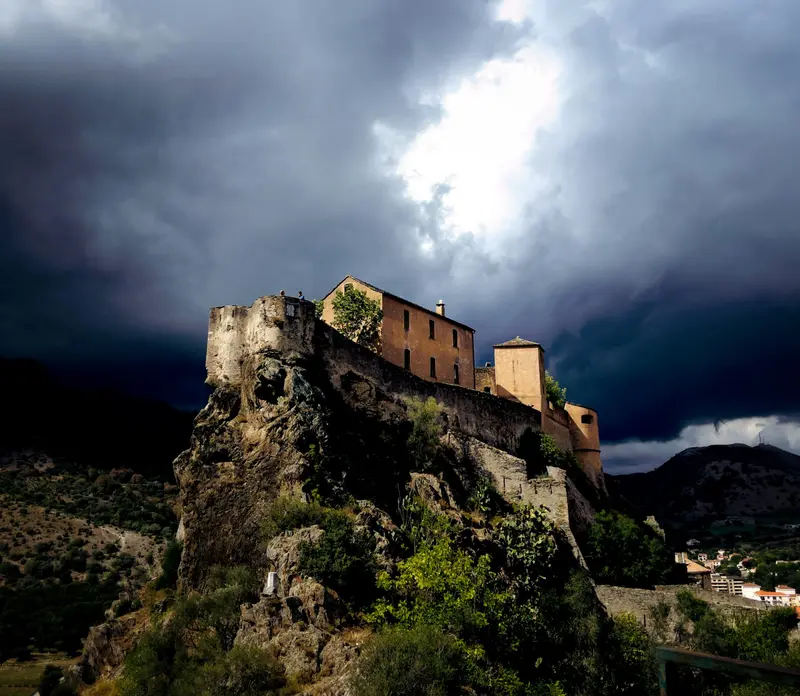
Corte lies in the mountainous heart of Corsica, at the confluence of Tavignano and Restonica. Above the town, the citadel rises on a steep rock. From 1755 to 1769, under Pasquale Paoli, Corte was the capital of the independent Corsican Republic and is still considered the island's historical center.The Università di Corsica, the island's only university, gives the small town a youthful feel. In the citadel, the Museu di a Corsica showcases the island's folk culture. Corte is also a starting point for hikes into the gorges of Restonica and Tavignano and lies on the railway line between Bastia and Ajaccio.
3 Sights
3 Restaurants
Culture
Capital of the Corsican RepublicPasquale Paoli governed the independent Corsican Republic from Corte starting in 1755. It adopted a constitution advanced for its time. It ended in 1769 with the French conquest.The UniversityIn 1765, Paoli founded a university that closed after the Republic's collapse. It was only reopened in 1981 and now bears his name.Polyphonic SingingThis multi-part singing, the Paghjella, is part of UNESCO's Intangible Cultural Heritage. It is kept alive in churches and at festivals in Corte and the surrounding villages.
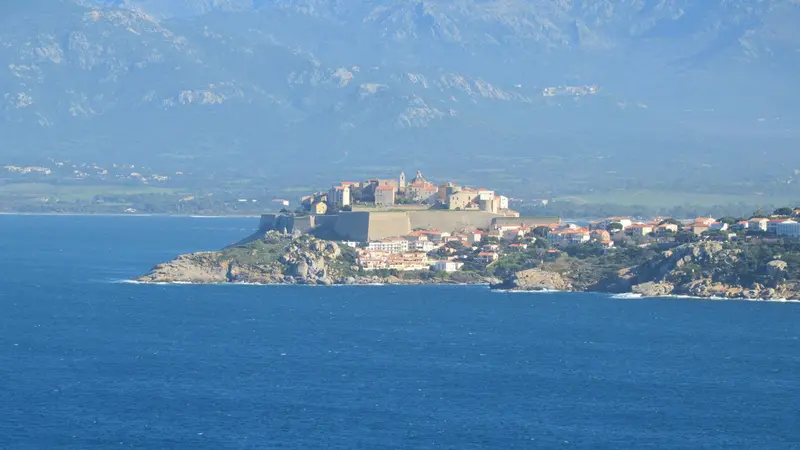
Calvi is located on the northwest coast of Corsica in the Balagne region. The Genoese citadel on a headland above the bay dominates the townscape, and local tradition declares Calvi to be the birthplace of Christopher Columbus. During the British siege of 1794, Horatio Nelson lost the sight in one eye here.Below the fortress lie the harbour and lower town with quayside cafés, and to the east stretches a kilometre-long sandy beach backed by a pine forest. With its own airport and seasonal ferry connections, Calvi is a good starting point for the villages of Balagne and the coastal railway to L'Île-Rousse.
3 Sights
3 Restaurants
Culture
Genoa and ColumbusAbove the citadel gate stands the motto “Civitas Calvi semper fidelis”, recalling the city's loyalty to the Republic of Genoa. In the upper town, a house is presented as the birthplace of Christopher Columbus, though this is not historically proven.Siege of 1794British units besieged Calvi in their fight against French troops. It was then that the future Admiral Horatio Nelson lost the sight of one eye.MusicIn September, singers from the Mediterranean region gather for the Rencontres de Chants Polyphoniques, while in summer, the Calvi on the Rocks festival attracts a young audience.
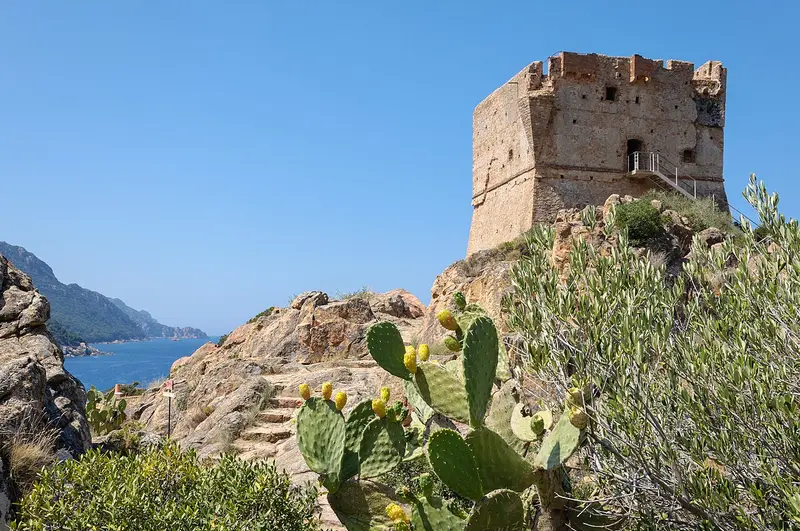
Porto is a small coastal village on Corsica's west coast, part of the Ota municipality. It lies at the end of the Gulf of Porto, which a Genoese watchtower on a rock above the river mouth overlooks. The Gulf, with the Calanques de Piana, the Bay of Girolata, and the Scandola Nature Reserve, has been a UNESCO World Heritage site since 1983.Boat trips depart from the harbor along red porphyry cliffs to Scandola and Girolata, accessible only by water or on foot. Inland, hiking trails lead through the Spelunca Gorge; the Piana coastal road is deemed one of the island's most striking.
3 Sights
3 Restaurants
Culture
Genoese TowersThe Tower of Porto is one of many watchtowers the Republic of Genoa built around Corsica in the 16th century against pirate raids. Dozens remain today.UNESCO World Heritage SiteThe Gulf of Porto, with the Calanques de Piana, the Gulf of Girolata, and the Scandola Nature Reserve, was designated a World Heritage site in 1983. The reserve is strictly protected; landing is prohibited there.
Perfect for an exciting city trip. Rich in culture and history and Culinary highlights.
Ajaccio, Napoleon's birthplace, offers historical and cultural highlights. Visit the Maison Bonaparte and the Cathedral of Notre-Dame-de-l'Assomption. The Vieille Ville, with its market at Place Foch, invites you to stroll. The Musée Fesch presents a significant collection of Italian painting, bequeathed by Napoleon's uncle. The harbor promenade, with views of the Îles Sanguinaires, is particularly charming at sunset; avoid the summer high season.
4 Sights
4 Restaurants
Ajaccio Cultural Heritage
Ajaccio's history is deeply connected to its location on the Gulf of Ajaccio. Traces of settlement date back to antiquity, yet the Genoese founded today's city in 1492 as a fortified site, forming the Old Town's foundation and making Ajaccio a vital trading post.Its architecture reflects this Genoese past: narrow streets, colorful facades, and the citadel characterize the historic center. French influences appear mainly in 19th-century larger squares and boulevards. Napoleon Bonaparte, born here in 1769, is a central figure in the city's history. His birthplace, the Maison Bonaparte, is now a national museum.Like all of Corsica, Ajaccio maintains a strong, distinct identity. This is evident in the Corsican language (Corsu), traditional music—especially polyphonic singing—and religious festivals and processions, such as the Good Friday procession.
Rich in culture and history. Perfect for unwinding and relaxation.
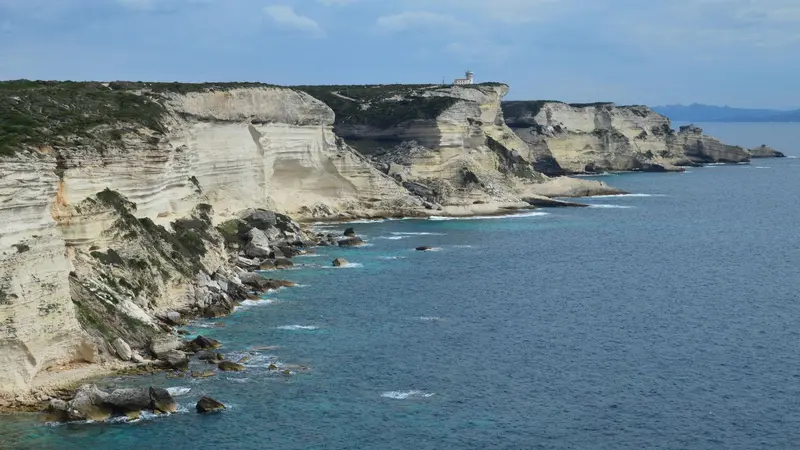
The city of Bonifacio in Corsica captivates with its spectacular location on white limestone cliffs that rise steeply from the Mediterranean Sea. The medieval citadel majestically overlooks the sea, inviting exploration with its narrow streets and historic buildings. Particularly impressive is the rock-hewn Stairs of the King of Aragon, a testament to the town's eventful history. From the upper part of the town, you'll enjoy expansive views over the Strait of Bonifacio to Sardinia, while the sheltered natural harbor forms a lively center. For the best perspective on the steep cliffs and sea caves, a boat trip is highly recommended. Plan your visit in spring or autumn to experience Bonifacio's unique atmosphere without the summer crowds.
5 Sights
5 Restaurants
Bonifacio: History, Architecture and Culture
Bonifacio, located on the southern tip of Corsica, owes its origins to a fortress founded by Count Boniface II of Tuscany in 828, and to whom the city owes its name. At the end of the 12th century, Bonifacio came under Genoese rule and became one of the most important strongholds of the Republic of Genoa on the island.The Haute Ville, or Upper Town, stands on high limestone cliffs. Narrow streets, tall stone houses, and extensive fortifications define its appearance. The Genoese citadel and the Church of Saint-Dominique, one of Corsica's few Gothic churches, bear witness to the city's military and religious significance. Also well-known is the rock-carved King of Aragon's Staircase, whose 187 steps, according to legend, were carved in a single night in 1420 during a siege by Aragonese troops.Culturally, Bonifacio showcases Corsican identity through its language and maritime traditions. The processions of the brotherhoods, particularly during Holy Week, are among the city's vibrant customs.