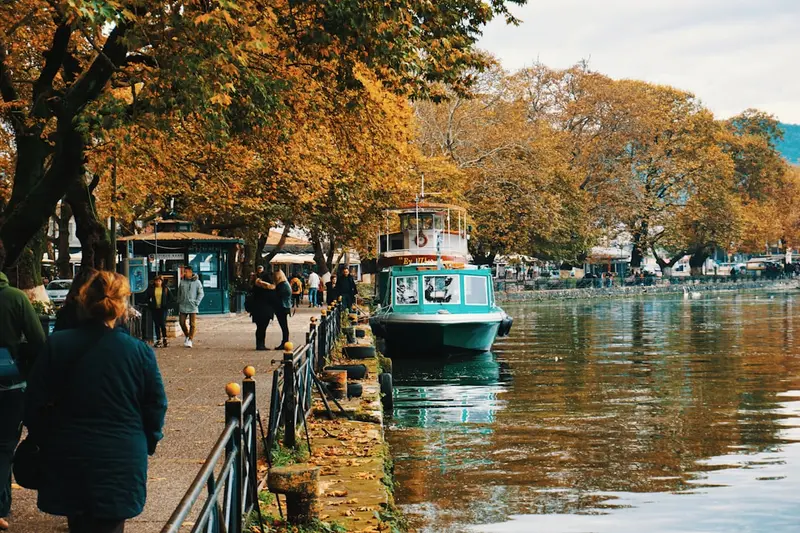
From Thessaloniki, you drive to the Royal Tombs of Vergina and on to the rock monasteries of Meteora. Via the Pindos Mountains, you finally reach Ioannina on Lake Pamvotida, the gateway to the Zagori villages.
8 Days / 7 Nights
May–June & September
RV Friendly
4 stops
Why This Route?
For those wanting to experience Greece beyond the islands: mountains, monasteries, and history.
Hidden Gems
Kokkoris Bridge near Koukouli in Zagori, roughly 40 minutes from Ioannina
Island in Lake Pamvotida with the Ali Pasha Museum, accessible by boat from Ioannina
Agios Stefanos Monastery in Meteora at sunset
Itinerary
Stop 1 • 2 Nights
Thessaloniki
City
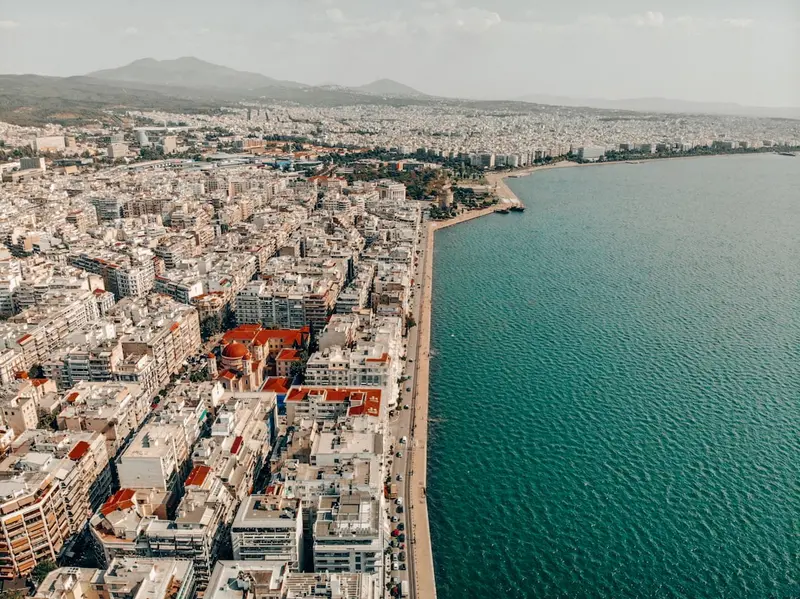
Thessaloniki is Greece's second-largest city, located on the Thermaic Gulf in the north of the country. Among modern apartment buildings stand Roman structures like the Arch of Galerius and the Rotunda, as well as early Christian and Byzantine churches, which are UNESCO World Heritage Sites. The city is renowned for its cuisine, its markets, and a young nightlife crowd drawn by its large university. The waterfront promenade, featuring the White Tower, is the city's evening meeting point.
8 Sights
7 Restaurants
History of the City
King Kassander founded the city around 315 BC and named it after his wife Thessalonike, a half-sister of Alexander the Great. Under the Romans, it lay on the Via Egnatia, and around 300 AD, Emperor Galerius built his palace district with an arch and rotunda here.Byzantium and OttomansIn the Byzantine Empire, Thessaloniki was the most important city after Constantinople. Churches from this period include Agios Dimitrios, Hagia Sophia, and Osios David, which have been UNESCO World Heritage Sites since 1988. In 1430, the Ottomans conquered the city. From 1492, many Jews expelled from Spain settled here, forming a large part of the population for centuries. Mustafa Kemal Atatürk was born here in 1881.20th CenturyIn 1912, Thessaloniki became part of Greece. The 1917 fire destroyed large parts of the city center, which was then redeveloped according to a plan by the French architect Ernest Hébrard. After 1922, many refugees from Asia Minor moved to the city. In 1943, the German occupiers deported approximately 50,000 Jews from the city; most were murdered in Auschwitz. A Holocaust memorial and the Jewish Museum commemorate this.
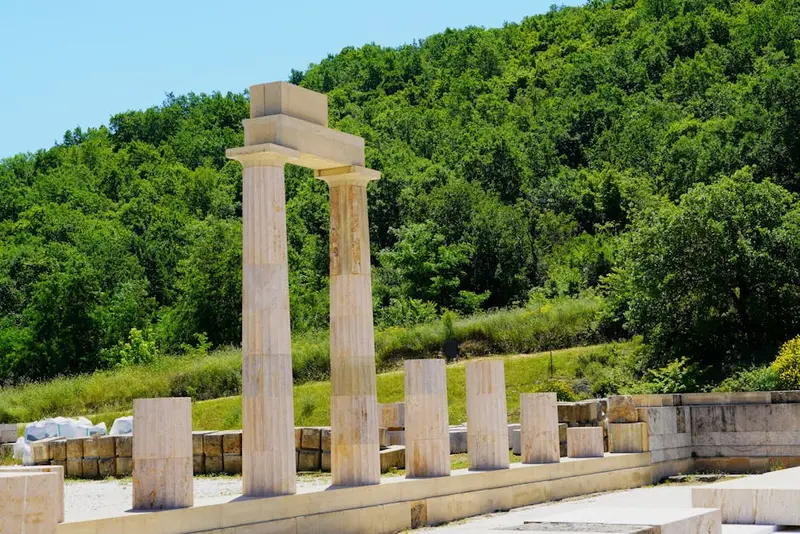
Vergina is a village on the edge of the Macedonian plain, approx. 75 kilometers west of Thessaloniki. Here was ancient Aigai, Macedon's first capital. In 1977, archaeologist Manolis Andronikos discovered royal tombs under a large tumulus; one, usually attributed to Philip II, Alexander the Great's father. The museum is within the tumulus; the palace and theater are above the village. The site has been a UNESCO World Heritage Site since 1996.
3 Sights
2 Restaurants
The History of Aigai
Aigai was the seat of the Argead Macedonian kings from the 7th century BC. Even after Pella became the capital, Aigai remained the kings' burial place. In 336 BC, Philip II was murdered in the theatre; his son Alexander was proclaimed king here.The Discovery of the TombsIn 1977, Manolis Andronikos unearthed several chamber tombs under the Great Tumulus. Tomb II was untouched and held a golden larnax with the Star of Vergina and a golden oak wreath. Andronikos attributed it to Philip II; a minority of scholars deem it his son Philip III Arrhidaeus' tomb. Tomb III is mostly assigned to Alexander IV, son of Alexander the Great.Palace and CityThe royal palace from the 4th century BC was one of the largest buildings of classical Greece. After around 16 years of restoration, it reopened in 2024. The site is a UNESCO World Heritage site since 1996.
Rich in culture and history. For adventure seekers and Route highlight.
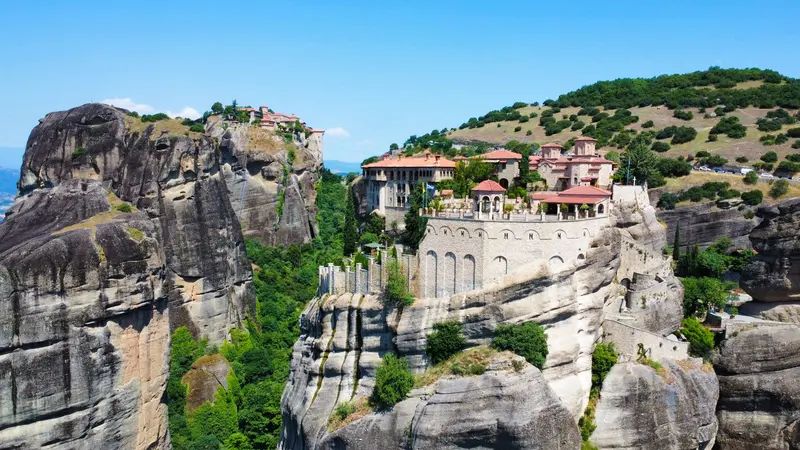
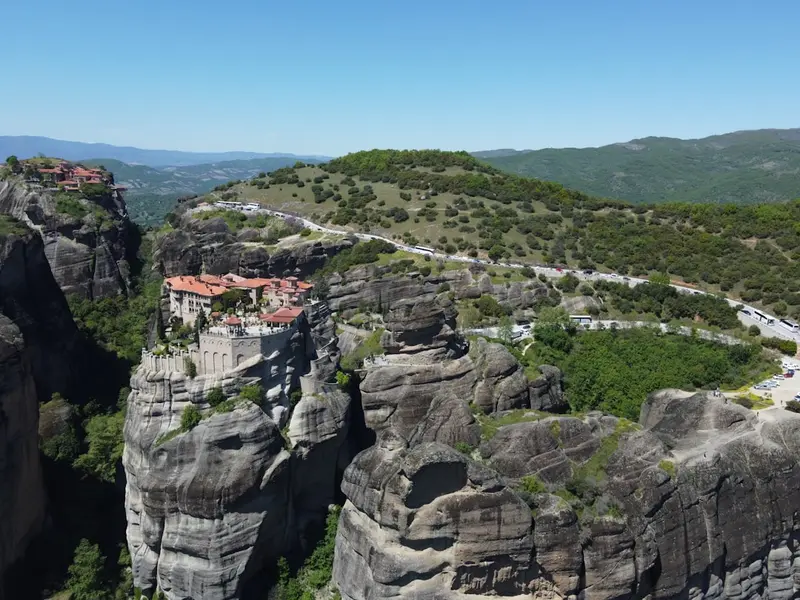
Meteora lies on the edge of the Thessalian plain above the small town of Kalambaka. Orthodox monasteries stand on tall conglomerate rock towers, the first of them built in the 14th century. Six are inhabited and open to visitors, including the Great Meteoron and Varlaam. The site has been a UNESCO World Heritage Site since 1988. Come early in the morning or late in the afternoon and wear clothing that covers shoulders and knees.
9 Sights
5 Restaurants
Monasteries on the rock
Hermits lived in the caves of the rock towers from the 11th century. Around 1340 the monk Athanasios Meteoritis founded the Great Meteoron on the highest rock. By the 16th century, 24 monasteries and hermitages had been built, many of which are now in ruins.Building on the rockBuilding materials, supplies and visitors were hauled up with nets, winches and rope ladders. Steps were only cut into the rock in the 1920s. The churches preserve frescoes from the 14th to 16th centuries, including works by Theophanes the Cretan.The monasteries todaySix monasteries are inhabited and open to visitors, four by monks and two by nuns. Meteora has been a UNESCO World Heritage Site since 1988, one of the few listed for both cultural and natural value. Each monastery has a fixed closing day. To enter you need clothing covering shoulders and knees, and women a skirt, which can often be borrowed at the entrance.
Ioannina is the capital of Epirus and lies at an altitude of around 480 metres on the western shore of Lake Pamvotida. The walled old town, the Kastro, was the seat of Ali Pascha, who ruled the region from here around 1800. Mosques, an old synagogue, and Byzantine churches recall the Muslims, Jews, and Christians who lived here. The large university ensures bustling cafés, and the city is a good starting point for the Zagorochoria and the Vikos Gorge.
7 Sights
4 Restaurants
Culture, Art & History of Ioannina
Ioannina, the capital of the Epirus region, looks back on a rich and multifaceted history that significantly shaped its culture, art, and architecture. The city likely emerged in the 6th century AD and experienced a heyday during the Byzantine era, which is reflected in the preserved fortifications and churches within the Kastro.Also influential was the over 480-year-long Ottoman rule, especially the era of Ali Pasha at the beginning of the 19th century. This period left behind numerous mosques, such as the Aslan Pasha Mosque, hammams, and traditional mansions that still characterize the cityscape today. Within the castle walls, there are also testimonies of Jewish life, such as the old synagogue, which underscores the city's former multi-ethnic and multi-religious identity.Local art is closely linked to **silversmithing**, a centuries-old tradition that made Ioannina a center for intricate jewelry and utilitarian objects. Modern art galleries and museums complement this historical heritage, with the Archaeological Museum and the Byzantine Museum offering important insights into the past. Ioannina is thus a living testament to the coexistence of different cultures and eras.