HenSti / Wikimedia Commons / CC BY-SA 4.0, mod.
Cruise · MSC Cruises · MSC Euribia
MSC Euribia – Western Mediterranean from Genoa
by Felix Gillen
- 8 Days / 7 Nights
- Genoa → Genoa
- Sails Jan 4, 2027
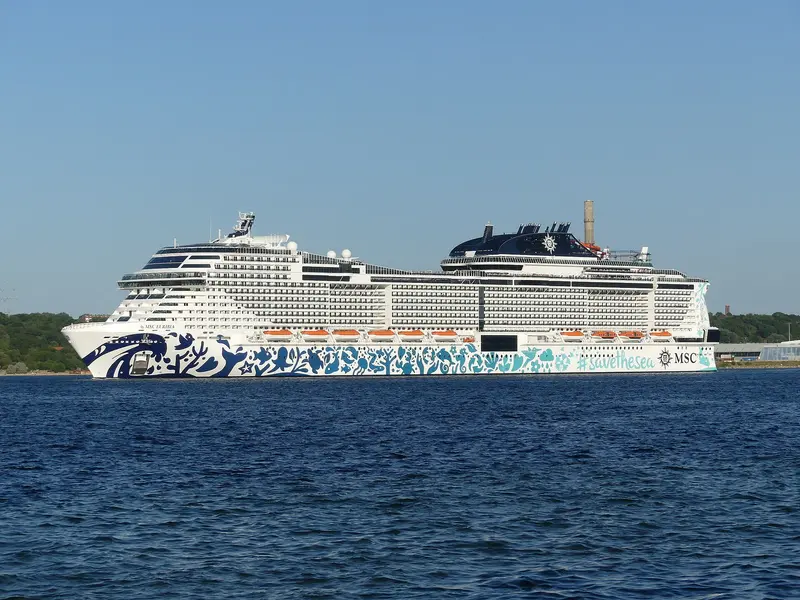
A week in winter with the MSC Euribia from Genoa: Naples, Palermo, Tunis with the port of La Goulette, after a sea day Barcelona and Marseille. Ashore you have seven to ten hours. In Genoa, Naples, and Palermo, the ship docks right in the city, in Tunis you take the suburban train to Carthage and Sidi Bou Saïd, in Barcelona and Marseille a shuttle takes you from the terminal to the city. Since the route starts in Genoa, you travel by train.
A cruise by MSC Cruises
- You book the trip with MSC Cruises. Fernweh does not sell trips.
- “Plan Trip” adds the ports, times in port and sea days to your trip planner, with the way there and back.
- For every port you find tips for going ashore on your own.
At a glance
- Duration
- 8 Days / 7 Nights
- Stops
- 7 · Genoa → Genoa
- Countries on the route
- Italy, Tunisia, Spain, France
- Arrival
- Train · Genova Piazza Principe
- Ship
- MSC Euribia (MSC Cruises)
- Sailings
- Jan 4, 2027, Jan 11, 2027, Feb 1, 2027, Feb 8, 2027
- Best Time to Go
- January to March
More on when to go
Expect 12 to 17 degrees, much sun in Palermo and Tunis, Mistral and rain in Marseille and Genoa
7 stops
Why This Route?
The route leads to the major port cities of the Western Mediterranean, all vibrant with the cuisine of their markets: Focaccia in Genoa, Pizza in Naples, street food in Palermo, Couscous and Brik in Tunis, Tapas in Barcelona, fish soup in Marseille. In winter, the cities are quieter than in summer and onboard prices are lower. Arriving and departing by train, you save yourself the flight.
Hidden Gems
- Mercato di Ballarò in Palermo: the old street market in the Old Town, where you eat arancine and panelle
- Sidi Bou Saïd near Tunis: the white-blue cliffside village, reachable by TGM from La Goulette
- Le Panier in Marseille: the city's oldest district above the Old Port
- Caruggi in Genoa: the narrow Old Town alleys just behind the port
Getting there and back
Round trip, returning to where you started
- Arrival
- Train · Genova Piazza PrincipeFrom Germany, Austria, and Switzerland, you travel by train via Milan to Genoa. From Genova Piazza Principe station, it's only about 400 to 500 meters or a 5 to 10-minute walk to the cruise terminal at Ponte dei Mille, depending on the exit. The ship departs at 5 PM and returns at 9 AM on the last day; the train journey home on the same day is easily manageable.
- Departure
- Train · Genova Piazza Principe
Itinerary
Genoa
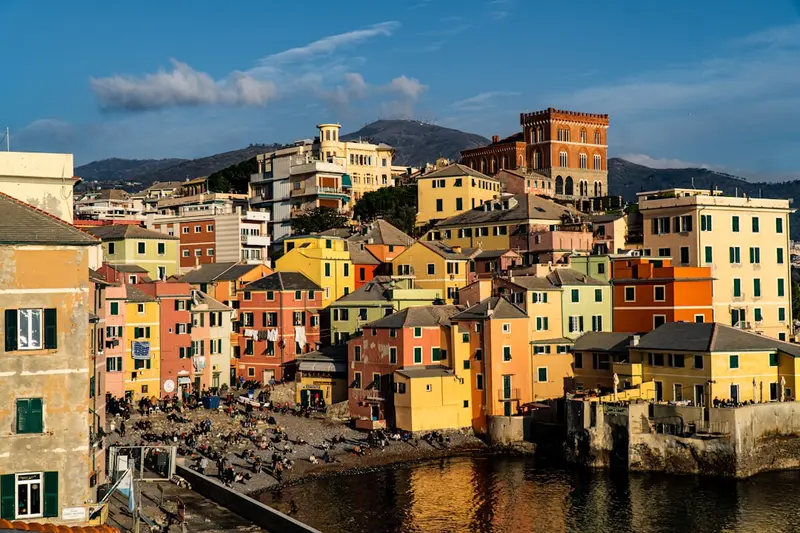
Genoa is the capital of Liguria and one of the largest ports in the Mediterranean. The city stretches for about 35 kilometers along the coast. Its Old Town with its narrow alleys, the Caruggi, is one of Europe's largest old towns; the Strade Nuove and part of the Palazzi dei Rolli have been a UNESCO World Heritage site since 2006.
The cruise terminal at Ponte dei Mille is just a few minutes' walk from Piazza Principe station. If you arrive in the morning, wander through the narrow alleys of the old town, the Caruggi, to Via Garibaldi with its palaces and enjoy Focaccia at a bakery. Departure at 5 PM.
9 Sights
5 Restaurants
History and Culture
In the Middle Ages, Genoa rose to become one of the great maritime republics and competed with Venice, against which it suffered a heavy defeat in the Chioggia War in 1380. In the 16th and 17th centuries, Genoese bankers financed the Spanish Crown. During this period, the palaces of the Strade Nuove were built. From 1576, the Republic kept lists of selected palaces, the Rolli, whose owners had to host state guests; the host was determined by lot.In 1797, the old republic became the Ligurian Republic, in 1805 it was annexed by the French Empire, and after the Congress of Vienna, Genoa joined the Kingdom of Sardinia. For the Columbus Celebrations in 1992, architect Renzo Piano redesigned the old port.
Departs 17:00
Naples
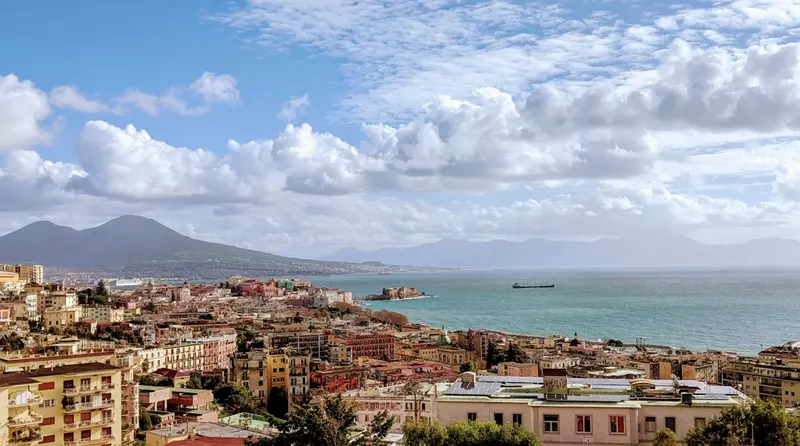
Naples is the capital of Campania and, with over 900,000 inhabitants, the third-largest city in Italy. It is located on the Bay of Naples between Mount Vesuvius to the east and the Phlegraean Fields to the west.Its historic centre has been a UNESCO World Heritage site since 1995. Its street network remains almost unchanged from its Greek foundation, with churches, monasteries, and palaces from almost all eras built upon it. Naples is considered the birthplace of pizza.
The ship docks at Stazione Marittima next to Castel Nuovo, and you walk into the city. In seven hours, you can visit Piazza del Plebiscito, stroll through the old town alley Spaccanapoli, and get a pizza in one of the old town's pizzerias. Keep your valuables close to your body in the crowded streets.
13 Sights
8 Restaurants
History and Culture
Greek settlers first founded the settlement of Parthenope in the 8th century BC, and in the 6th century BC, further inland, Neapolis, the 'new city'. After a period as a Byzantine Duchy, Naples came under Norman rule in the 12th century. From 1282, it was the capital of the Kingdom of Naples, later of the Kingdom of the Two Sicilies, until the unification of Italy in 1861.Opened in 1737, the Teatro San Carlo is considered the oldest continuously operating opera house in the world.Among its vibrant traditions are the art of nativity scenes, with workshops lining Via San Gregorio Armeno, the veneration of the city's patron saint San Gennaro, and the art of the Neapolitan pizza maker, which UNESCO recognized as intangible cultural heritage in 2017.
In port 13:00–20:00
Palermo
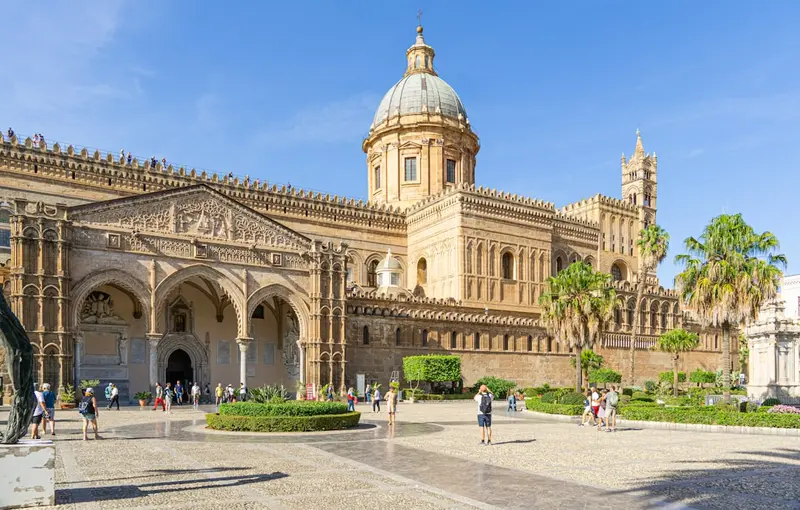
Palermo, the capital of Sicily, is located on the north coast in the plain of the Conca d'Oro beneath Monte Pellegrino. Phoenicians, Arabs, Normans, Hohenstaufen, and Spaniards have shaped the city, a legacy still visible in its urban landscape today: churches with red domes, Byzantine gold mosaics, Baroque churches, and fountains. Since 2015, nine sites in Palermo, Cefalù, and Monreale have been part of the UNESCO World Heritage Site "Arab-Norman Palermo", seven of which are in Palermo itself. Equally renowned are its markets and street food. With the Cathedral, Norman Palace, and Quattro Canti, most sights are within walking distance.
The port is right by the old town. Head to Quattro Canti and the Cathedral; at noon, explore Mercato di Ballarò, where stalls sell Arancine, Panelle, and Pane con la milza. In the afternoon, La Martorana church with its Byzantine mosaics is a must-see.
10 Sights
6 Restaurants
History and Culture
From Phoenician Founding to Norman CapitalPhoenicians founded the city between the 7th and 6th centuries BC. In 831, Muslims from North Africa conquered Palermo, and in 1071/72, the Normans under Roger I captured the city. Under Roger II, it became the capital of the new Kingdom of Sicily; the Normans blended Arab, Byzantine, and Latin traditions, resulting in structures like the Cappella Palatina, the Martorana, and San Giovanni degli Eremiti.Hohenstaufens and SpaniardsUnder Henry VI and Frederick II, Palermo was the capital of the Holy Roman Empire; Frederick II is buried in the Cathedral. During Spanish rule, the Quattro Canti were built between 1609 and 1620. In World War II, bombing raids in 1943 devastated large parts of the city.Santa RosaliaSaint Rosalia is the city's patron saint. From July 10th to 15th, Palermo celebrates the Festino with a parade of a large float and fireworks. On September 4th, her feast day is at the sanctuary on Monte Pellegrino. In 2018, Palermo was the Italian Capital of Culture.
In port 09:00–18:00
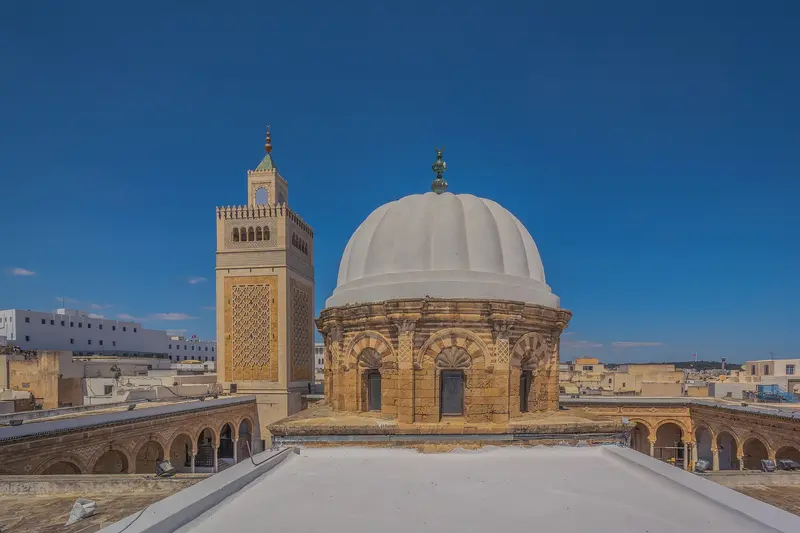
La Goulette (Tunis)
Tunis, Tunisia's capital, lies on the Gulf of Tunis on the country's north coast. Its 698-founded Medina, with souks, mosques, and palaces, became a UNESCO World Heritage site in 1979. East of it, the colonial New Town with Avenue Habib Bourguiba adjoins; 4 km northwest is the Bardo National Museum with Roman mosaics. Tunis-Carthage International Airport is 8 km northeast; the TGM suburban train reaches Carthage and Sidi Bou Saïd in just over half an hour.
The ship docks in La Goulette, the port of Tunis. You'll walk about 15 minutes to the TGM local train station, with no shade. The TGM runs to Carthage, with its ancient city ruins, and further to Sidi Bou Saïd, the white-blue village on the cliff; in the other direction, it goes to Tunis for the Medina. Taxis are at the port; negotiate the price beforehand. A sea day towards Barcelona follows.
13 Sights
4 Restaurants
Culture
The Medina
The old city grew from 698 around the Zitouna Mosque and covers approximately 270 hectares. Its alleys do not follow a grid, and the residential buildings are constructed around courtyards. The Medina boasts around 700 historical monuments, including palaces, mosques, mausoleums, madrasas, and fountains.
Guilds and Souks
Souk El Attarine: Perfumers, established around 1240 under the Hafsids on the north side of the Zitouna Mosque
Souk Ech-Chaouachine: Makers of the red Chechia hats, a guild of Andalusian origin
Souk El Berka: Jewelers, established in 1612 as a slave market
Souk El Leffa: Fabrics, woolens, and clothing
Visiting Mosques
Mosques in Tunis are generally not accessible to non-Muslims, including the prayer hall of the Zitouna Mosque. However, structures such as the Tourbet el Bey Mausoleum are open to visitors.
In port 09:00–18:00 · 1 day at sea after
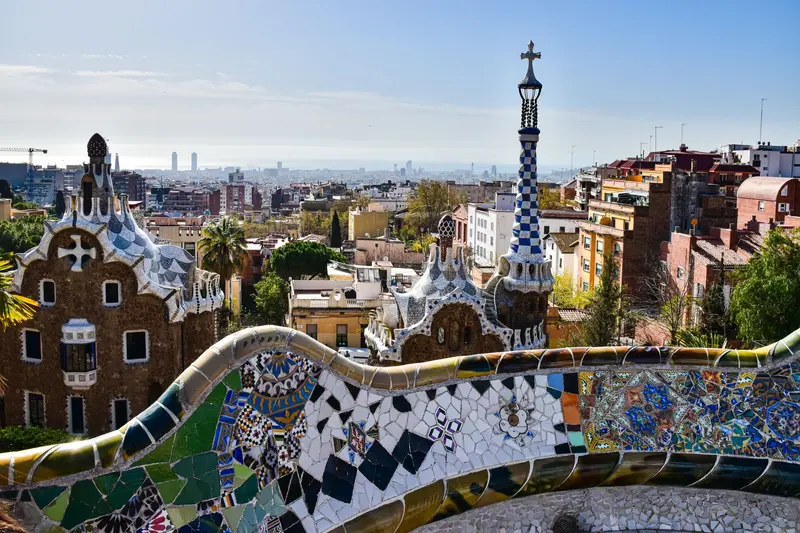
Barcelona
Barcelona, the capital of Catalonia and Spain's second-largest city, sits right on the Mediterranean and combines a Gothic old town, a city beach and the buildings of Catalan Modernisme. You come above all for Antoni Gaudí's works such as the Sagrada Família, Park Güell and Casa Batlló, for the tapas bars and market halls, and for Barceloneta beach in the middle of the city.The Barri Gòtic holds the cathedral and medieval lanes; next door in El Born you find Santa Maria del Mar, the Picasso Museum and small shops. La Rambla is the best-known promenade but also the most crowded. Gràcia, with its many small squares, is quieter.Good to knowTickets: Book timed slots for the Sagrada Família, Park Güell and Casa Batlló online; on-site tickets often sell out.Tourist tax: Since April 2026 the per-person, per-night tax is much higher than before: 8.40 euros in a four-star hotel, 12 euros in a five-star hotel. The city plans further increases up to 2029.Pickpocketing: For general safety advice, see the FCDO travel advice linked on the country page.When to go: Spring and autumn are pleasant; July and August are hot and very crowded.
Large ships dock at the terminals on Moll Adossat, three to four and a half kilometers from the city center. The port bus T3 takes you in about ten minutes to the Columbus Monument at the end of Las Ramblas. From there, walk through the Barri Gòtic to El Born, have lunch at a tapas bar away from Las Ramblas, and visit the Mercat de Santa Caterina.
15 Sights
2 Restaurants
History, Modernism, and Traditions
From Barcino to the Catalan CapitalThe Romans founded the city as Barcino; remnants of the city walls can be seen in the Barri Gòtic. In the Middle Ages, Barcelona was a Mediterranean trading power; the Cathedral and Santa Maria del Mar date from this period. Catalan language and identity continue to shape the city today, with street signs and menus usually appearing first in Catalan.ModernismeAround 1900, with the urban expansion of Eixample, Catalan Art Nouveau emerged. Besides Gaudí, Lluís Domènech i Montaner built the Palau de la Música Catalana and the Hospital de Sant Pau, and Josep Puig i Cadafalch built the Casa Amatller directly next to Casa Batlló. Several constructions by Gaudí and Domènech are UNESCO World Heritage sites.TraditionsCastells: At city festivals like La Mercè in September, clubs build multi-story human towers.Sardana: The Catalan circle dance is performed on some weekends in front of the Cathedral.Sant Jordi: On April 23rd, roses and books are given as gifts; La Rambla and Passeig de Gràcia are full of stalls.Picasso spent his youth in Barcelona; the Museu Picasso primarily exhibits these early works. The Fundació Joan Miró on Montjuïc is dedicated to the painter born in Barcelona.
In port 08:00–18:00
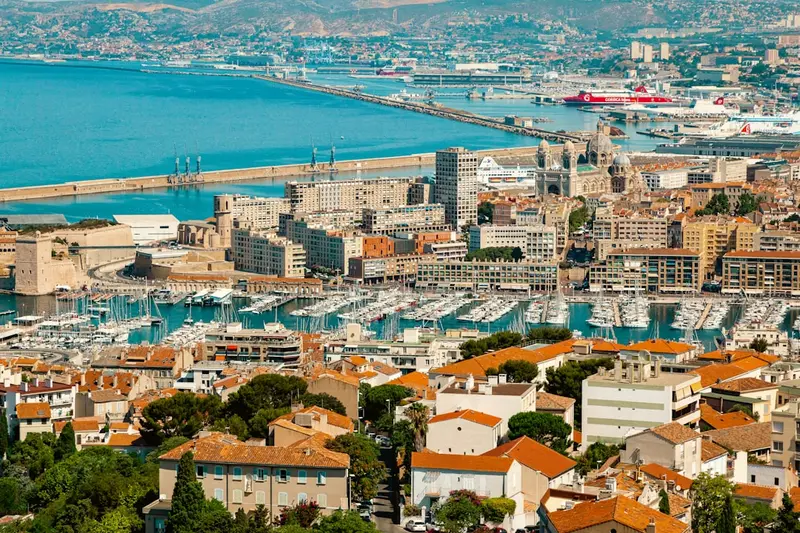
Marseille
Marseille is considered France's oldest city and is now a vibrant port metropolis. Its heart is the Vieux Port with its fish market and restaurants. Perched above the city is the Basilica Notre-Dame de la Garde, offering panoramic views over the city and sea. In the Le Panier district, the oldest part of the city, you'll find narrow streets, artisan studios, and small shops. The Mucem, located at the harbor entrance, showcases exhibitions on Mediterranean cultures. To the south of the city, the Calanques National Park features rocky inlets with clear water. Spring and autumn are the most pleasant times to visit. Bouillabaisse, the city's most famous dish, often needs to be ordered a day in advance at reputable restaurants.
MSC docks at the cruise terminal in Nordhafen, approximately 7.5 kilometers from the Old Port. A shuttle operates on cruise days to Place de la Joliette, taking around 25 minutes, longer in traffic. From there, you can walk to the Vieux-Port in about 25 minutes or take the bus. Walk through Le Panier to the Mucem by the harbor and, if time permits, up to the Basilica Notre-Dame de la Garde.
10 Sights
4 Restaurants
Marseille's rich history and culture
Marseille, France's oldest city, was founded around 600 BC by Phocaean Greeks as Massalia and boasts a history spanning over 2,600 years. This history continues to shape the cityscape and cultural identity today.Under Roman rule, the city developed into an important trading port and maintained its maritime significance over the centuries. Architecturally, this is reflected in districts like Le Panier, the oldest part of the city with its winding alleys. A prominent landmark is the Basilica of Notre-Dame de la Garde, a 19th-century Neo-Byzantine edifice that majestically overlooks the city.Marseille's culture is inextricably linked to its role as a melting pot. This influence is evident in its gastronomy, the city's many languages, and local traditions such as the boules game Pétanque. The Provençal identity is strongly pronounced and manifests in a unique way of life and a proud awareness of its own history and Mediterranean origins.
In port 09:00–18:00
Genoa
Genoa is the capital of Liguria and one of the largest ports in the Mediterranean. The city stretches for about 35 kilometers along the coast. Its Old Town with its narrow alleys, the Caruggi, is one of Europe's largest old towns; the Strade Nuove and part of the Palazzi dei Rolli have been a UNESCO World Heritage site since 2006.
Arrival at 9 AM, disembarkation in the morning. It's a short walk to Piazza Principe station. If you have time before your train, Porto Antico is worth a stroll.
9 Sights
5 Restaurants
History and Culture
In the Middle Ages, Genoa rose to become one of the great maritime republics and competed with Venice, against which it suffered a heavy defeat in the Chioggia War in 1380. In the 16th and 17th centuries, Genoese bankers financed the Spanish Crown. During this period, the palaces of the Strade Nuove were built. From 1576, the Republic kept lists of selected palaces, the Rolli, whose owners had to host state guests; the host was determined by lot.In 1797, the old republic became the Ligurian Republic, in 1805 it was annexed by the French Empire, and after the Congress of Vienna, Genoa joined the Kingdom of Sardinia. For the Columbus Celebrations in 1992, architect Renzo Piano redesigned the old port.
Arrives 09:00
Plan this route as your trip
All stops, trains and nights go into your trip planner. You adjust dates and places to stay afterwards.
This route is a suggestion from our research. Please check timetables, times in port, opening hours and prices before you book – what your tour operator or carrier says is what counts.
Fernweh is a free travel guide and trip planner: routes researched by people, taken over in one click, used day by day on the road. More about Fernweh
7 stops
Route Summary
Duration8 Days
Stops7 Places
TypeCulture