Fernweh: Home
    ExploreTravel GuidesPlan a tripMy tripLast visited
    de|en
    All Places & RegionsAll highlightsAbout FernwehFAQPrivacy PolicyImprint
    ExploreTravel GuidesPlan a tripMy tripLast visited
    • Neighborhoods & highlights
    • Recommendations
    • Walking tours
    • Eat & drink
    • Food culture
    • Culture
    • Nightlife
    • Getting around
    • Accommodation
    • Plan trip
    • Nearby
    Palermo

    Italy

    Palermo

    CityCulture

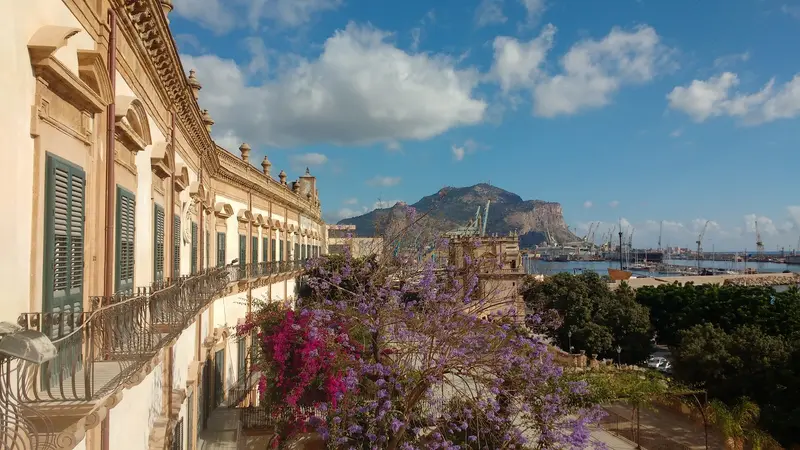
    Palermo, the capital of Sicily, is located on the north coast in the plain of the Conca d'Oro beneath Monte Pellegrino.

    by Felix Gillen

    1. Home
    2. Destinations
    3. Italy
    4. Sicily
    5. Palermo
    Palermo, the capital of Sicily, is located on the north coast in the plain of the Conca d'Oro beneath Monte Pellegrino. Phoenicians, Arabs, Normans, Hohenstaufen, and Spaniards have shaped the city, a legacy still visible in its urban landscape today: churches with red domes, Byzantine gold mosaics, Baroque churches, and fountains. Since 2015, nine sites in Palermo, Cefalù, and Monreale have been part of the UNESCO World Heritage Site "Arab-Norman Palermo", seven of which are in Palermo itself. Equally renowned are its markets and street food. With the Cathedral, Norman Palace, and Quattro Canti, most sights are within walking distance.

    Sights in Palermo

    Discover the most important sights and attractions

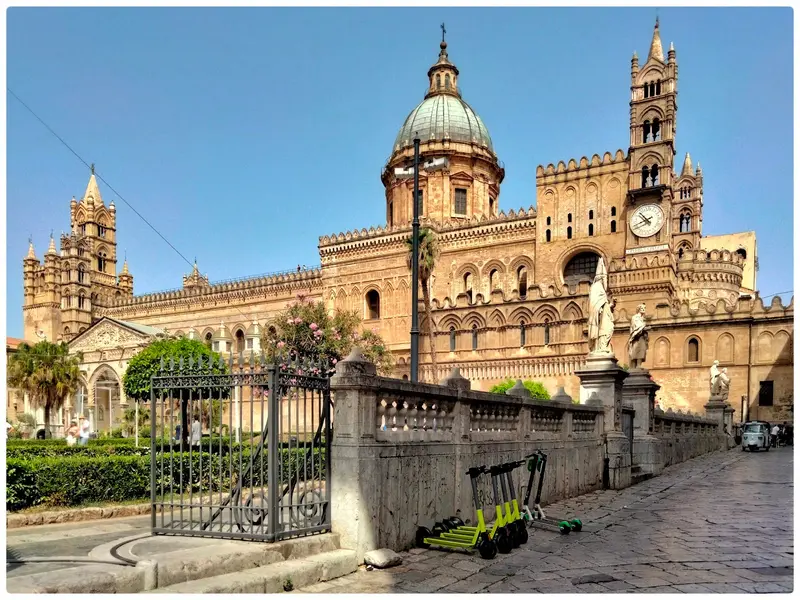
    Cathedral of Palermo
    Church

    1Cathedral of Palermo

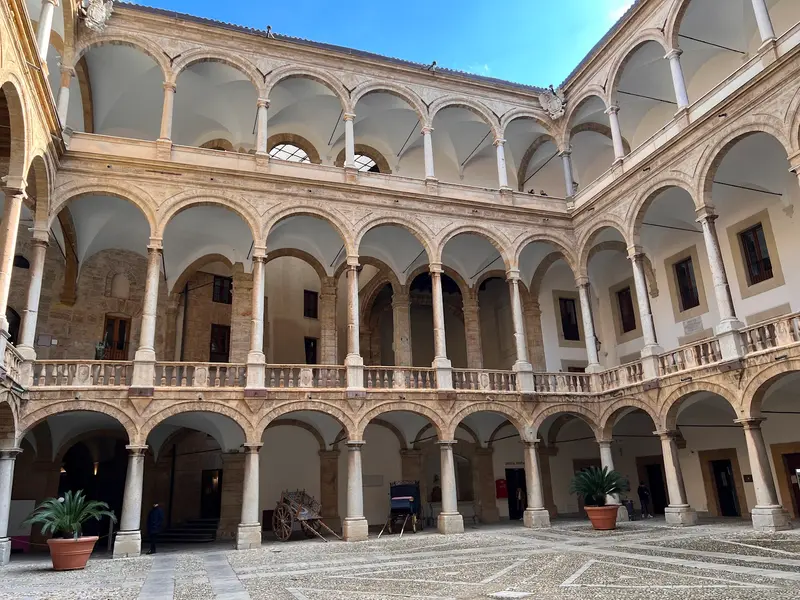
    The cathedral was built by Archbishop Walter (Gualtiero Offamilio) and consecrated in 1185; in the following centuries it was rebuilt several times, with the dome and the current interior created during the renovation according to plans by Ferdinando Fuga between 1781 and 1801. The royal tombs contain porphyry sarcophagi of Norman and Hohenstaufen rulers, including Roger II and Emperor Frederick II. It is part of the UNESCO World Heritage Site of Arab-Norman Palermo.
    Open in Google Maps
    La Martorana
    Church

    2La Martorana

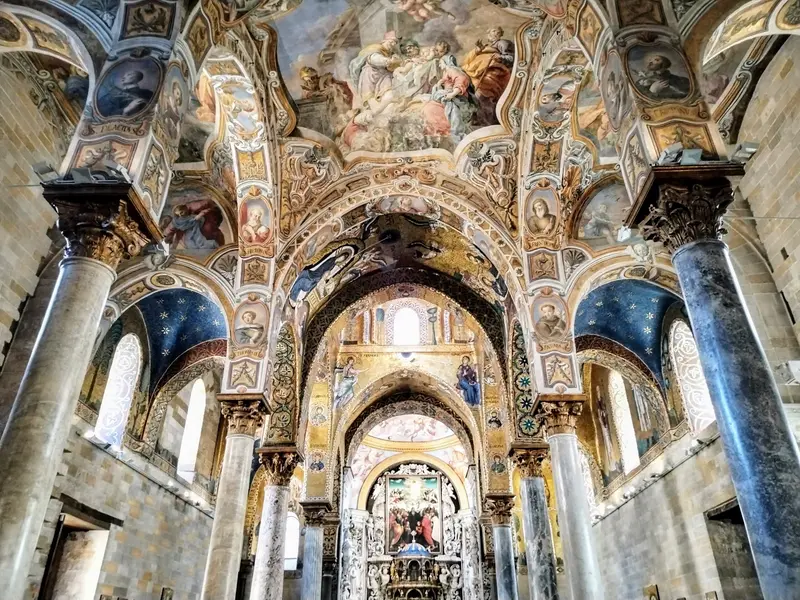
    The Church of Santa Maria dell'Ammiraglio was founded in 1143 by George of Antioch, Admiral of King Roger II. A mosaic depicts Roger's coronation by Christ. It stands on Piazza Bellini next to the Church of San Cataldo and today belongs to the Italo-Albanian Church of Byzantine Rite.
    Open in Google Maps
    Palazzo Butera
    Museum

    3Palazzo Butera

    The Branciforte Family Palace in the Kalsa district, located by the old city wall towards the sea, was remodeled in the 18th century. Since 2016, it has belonged to the collector couple Massimo and Francesca Valsecchi, who display their collections here. From the terrace, the Passeggiata delle Cattive, you can gaze upon the Foro Italico and the Gulf of Palermo.
    Open in Google Maps
    Palazzo dei Normanni and Cappella Palatina
    Museum

    4Palazzo dei Normanni and Cappella Palatina

    The Norman Royal Palace is today the seat of the Sicilian Regional Parliament. On the first floor is the Cappella Palatina, Roger II's palace chapel, consecrated in 1140 and completed in 1143, with Byzantine gold mosaics. Check opening times in advance, as parts of the complex may be temporarily closed.
    Open in Google Maps
    Quattro Canti
    Historic Landmark

    5Quattro Canti

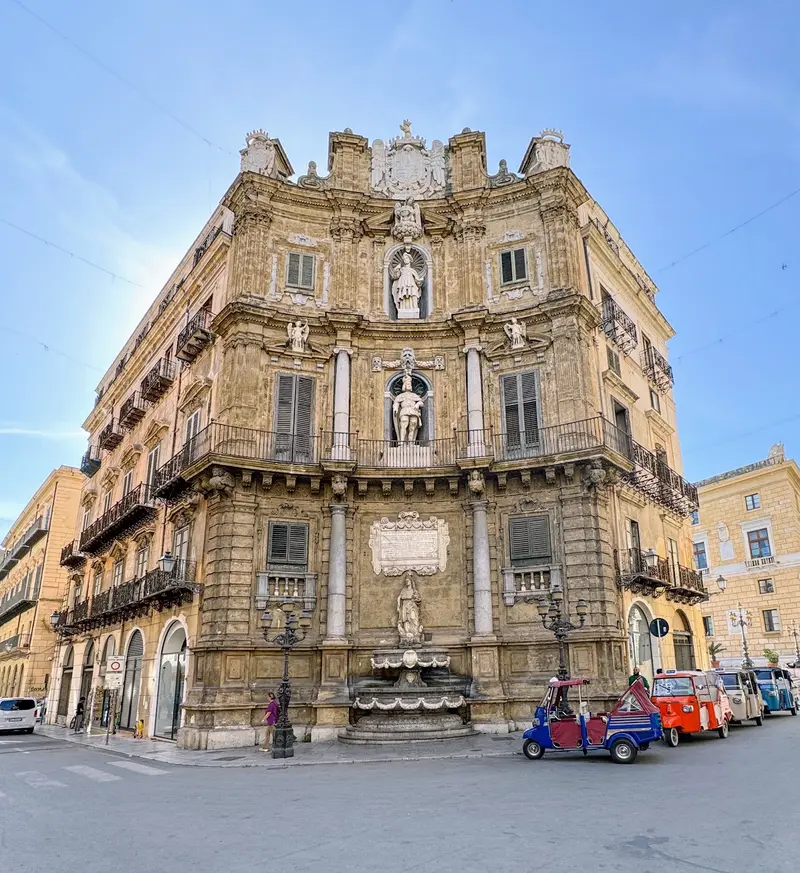
    Octagonal square in the center of the Old Town, where Via Maqueda and Corso Vittorio Emanuele intersect, built between 1609 and 1620. The four facades are decorated, tier upon tier, with fountains depicting the city's ancient rivers, allegories of the seasons, statues of Spanish kings, and the four former patron saints of the city.
    Open in Google Maps
    Fontana Pretoria
    Attraction

    6Fontana Pretoria

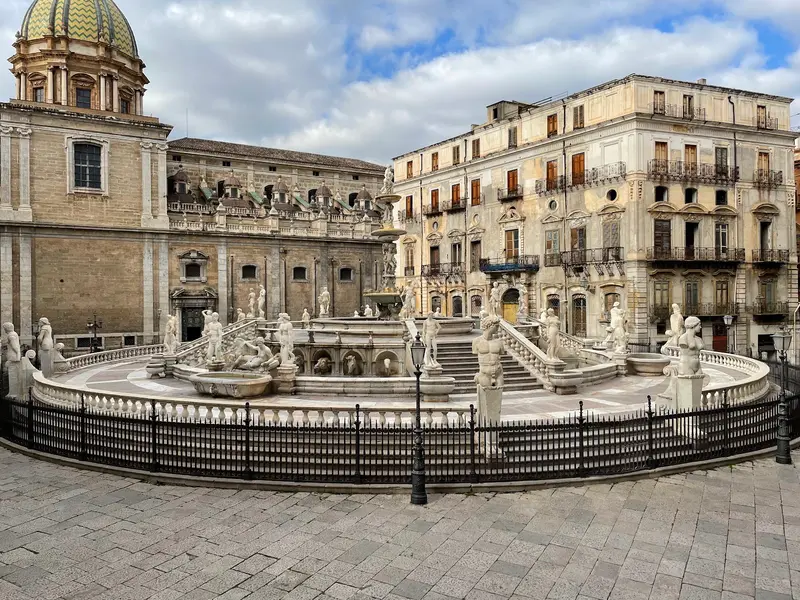
    Large Renaissance fountain in Piazza Pretoria, created in 1554 by Francesco Camilliani in Florence for the garden of a palace and sold in 1581 to the Senate of Palermo. Due to the costs perceived as 'scandalous', the people of Palermo also call it the Fountain of Shame.
    Open in Google Maps

    City walks in Palermo

    Curated walking tours through the city's highlights, handpicked by experienced travel journalists.

    Palermo's Heartbeat: A Walk Through History and Markets

    On this two-hour walk, discover the soul of Palermo. From magnificent opera houses and Baroque squares to lively markets and majestic cathedrals, dive deep into the rich history and unique culture of the Sicilian capital. A feast for the senses!

    ~2 Std. 20 Min.
    Open in Google Maps
    Stops (7)

    Food and Drinks

    1

    Bartolo & Söhne

    Italian restaurant on Via Pannieri, in the alleys of the Vucciria district.
    Show on Google Maps
    2

    Ai Normanni

    Restaurant with a terrace near the Norman Palace, featuring Sicilian pasta, fish, and meat dishes.
    Show on Google Maps
    3

    Osteria Ballarò

    Restaurant in the former stables of an old Palazzo on Corso Vittorio Emanuele, with Sicilian dishes.
    Show on Google Maps
    4

    Antica Focacceria San Francesco

    Traditional establishment on Piazza San Francesco opposite the church of the same name, known for Palermo's street food like Panelle, Arancine, and Pane con la milza.
    Show on Google Maps
    5

    Ai Cascinari

    Trattoria with Sicilian cuisine and fish in the quarter west of Capo Market, off the main tourist routes.
    Show on Google Maps

    Food and Beverages

    Palermo is considered one of the capitals of Italian street food. The best way to try it is at the Ballarò, Capo and Vucciria markets and at the stalls in the Old Town.

    Arancine

    Fried rice balls, in Palermo round and with a feminine ending, filled for example with Ragù, peas and Caciocavallo or with ham and Mozzarella.

    Panelle

    Fried slices of chickpea flour, often eaten in a bun.

    Bread with spleen

    Soft sesame bun with cooked veal spleen and lung, optionally with Caciocavallo or Ricotta.

    Sfincione

    Thick, soft pizza with tomatoes, onions, anchovies, oregano, and Caciocavallo.

    Cannoli and Cassata

    The most famous Sicilian desserts with ricotta, available in many pastry shops in Palermo.

    History and Culture

    From Phoenician Founding to Norman CapitalPhoenicians founded the city between the 7th and 6th centuries BC. In 831, Muslims from North Africa conquered Palermo, and in 1071/72, the Normans under Roger I captured the city. Under Roger II, it became the capital of the new Kingdom of Sicily; the Normans blended Arab, Byzantine, and Latin traditions, resulting in structures like the Cappella Palatina, the Martorana, and San Giovanni degli Eremiti.Hohenstaufens and SpaniardsUnder Henry VI and Frederick II, Palermo was the capital of the Holy Roman Empire; Frederick II is buried in the Cathedral. During Spanish rule, the Quattro Canti were built between 1609 and 1620. In World War II, bombing raids in 1943 devastated large parts of the city.Santa RosaliaSaint Rosalia is the city's patron saint. From July 10th to 15th, Palermo celebrates the Festino with a parade of a large float and fireworks. On September 4th, her feast day is at the sanctuary on Monte Pellegrino. In 2018, Palermo was the Italian Capital of Culture.

    Nightlife

    1

    La Casbak

    Bar on Discesa dei Candelai, an alley north of Via Maqueda, where many young people gather in the evenings.
    Show on Google Maps
    2

    Bee Club

    Bar on Piazzetta Pietro Speciale in the Old Town, between Corso Vittorio Emanuele and Ballarò.
    Show on Google Maps
    3

    Ai Giudici

    Bar on Discesa dei Giudici, near Piazza Pretoria.
    Show on Google Maps
    4

    Drunk's

    Bar on Piazza Sant'Anna in Kalsa, where many places put tables out on the square at weekends.
    Show on Google Maps
    5

    Malox Cult

    Bar offering cocktails and small dishes, plus a tree-shaded terrace, west of Quattro Canti.
    Show on Google Maps

    Locally Exploring

    On FootThe Old Town is best explored on foot. For longer distances, city buses are available.Airport and RailFalcone-Borsellino Airport is located near Punta Raisi, about 35 kilometers west of the city. The Trinacria Express train goes directly to the center in approximately one hour; buses are also available.NearbyTo Monreale, travel by bus or taxi; to Mondello, use the city bus. Driving into the Old Town by car is not recommended due to traffic restrictions and a lack of parking spaces.

    Accommodations in Palermo

    Find perfect stay in Palermo

    Booking.com* (Affiliate link)
    Search Hotels
    Agoda* (Affiliate link)
    Search Hotels
    Airbnb
    Vacation Rentals

    * Affiliate link: if you book through it, we earn a small commission. The price stays the same for you.

    Campgrounds in Palermo

    Find perfect campground in Palermo

    Search via Google Maps
    Campgrounds nearby (15km)
    Camping.info
    Find Campgrounds
    Park4Night
    RV Parks & Camping

    Plan your trip to Palermo

    Save places, build a route and plan your city trip, all in one place.

    1. 1
      Sunrise over alpine peaks and a sea of clouds
      1234

      Round trip

      12 days · 4 stops

      Saved

      Pick a route

      Pick a ready-made one or save places and plan your own.

      Open bookmarks
    2. 2

      Trip to Palermo

      Live
      • 1Cathedral of Palermo3 days
      • 2La Martorana4 days
      • 3Palazzo Butera5 days
      Budget

      Plan your trip

      The planner sorts stops, days and budget. Plan together in real time.

      Start trip planning
    3. 3
      9:41 No signal
      Palermo
      Available offline

      Use it on the road

      Download the guide to your phone and use it on site, even offline.

    Nearby

    Cefalù

    Cefalù

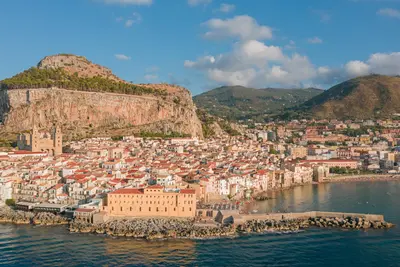
    Cefalù is located on Sicily's north coast, about 70 kilometers east of Palermo, nestled between a sandy beach and the steep Rocca cliff. The small old town is dominated by the Norman Cathedral, commissioned by King Roger II in 1131 and a UNESCO World Heritage site since 2015. Its narrow streets house the medieval washhouse and the Mandralisca Museum, featuring a portrait by Antonello da Messina. The climb up the Rocca leads to the remains of a castle and offers sweeping views over the town and coast. In summer, Cefalù is crowded and parking is scarce; it's quieter in spring and autumn.
    Trapani

    Trapani

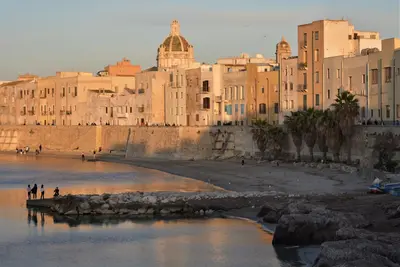
    Trapani is located in the far west of Sicily on a narrow, sickle-shaped peninsula that juts out into the sea. Its old town, with its churches and palaces, stretches to the Torre di Ligny at its very tip. To the south of the city lie the salt pans with their windmills; above the city, on a mountain, is medieval Erice, which you reach by cable car. From the port, hydrofoils and ferries depart for the Egadi Islands. Trapani is also known for its Good Friday procession of the Misteri and for couscous with fish.
    Sicily

    Sicily

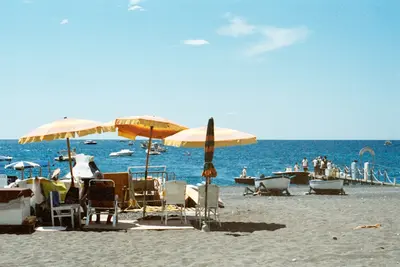
    Sicily is the largest island in the Mediterranean and separated from the Italian mainland by the Strait of Messina. Greeks, Romans, Arabs, Normans, and Spaniards have left behind temples, mosaics, cathedrals, and Baroque cities here. In the east rises Mount Etna, the highest mountain on a Mediterranean island and one of the world's most active volcanoes.
    Agrigento

    Agrigento

    Agrigento lies on a hill on Sicily's south coast, about four kilometers from the sea. Beneath the city lies the Valley of the Temples, the ruins of the Greek city Akragas, a UNESCO World Heritage site since 1997. The Doric temples from the 5th century BC, especially the Temple of Concordia, are among the best preserved in the Greek world. The Archaeological Museum and the Garden of Kolymbethra complement the visit. The Old Town up on the slope is medieval: its main street is Via Atenea; at the hill's highest point stands San Gerlando Cathedral; the Church of Santa Maria dei Greci is also in the Old Town. The Temple Valley has little shade; in summer, you should avoid the hottest hours.
    Etna

    Etna

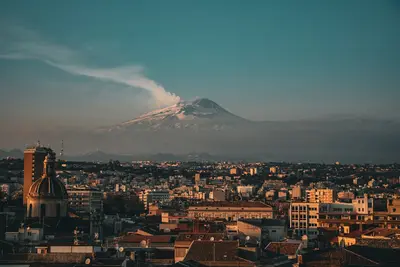
    Mount Etna, on the eastern coast of Sicily, is Europe's highest active volcano, standing over 3,300 meters tall; its exact height changes by several dozen meters with each eruption. Since 2013, it has been a UNESCO World Heritage site. On the south side, a road leads up to nearly 2,000 meters and a cable car to around 2,500 meters. You hike over cooled lava flows, past secondary craters, and gaze out from the upper slopes over the Ionian Coast. On the lower slopes, wine, pistachios, and fruit grow in fertile volcanic soil.

    Sources & method

    • Photos: Unsplash, Google Maps. Each photo carries its credit.
    • Place data such as addresses and ratings comes from Google Maps.
    • The content is based on web research from public, traceable sources. How the content is made · The role of AI