Ready for an unforgettable adventure? Then Mount Etna, Europe's most active and highest volcano, is your next destination. As a UNESCO World Heritage Site, it offers a dramatic landscape of solidified lava, steaming craters, and breathtaking views that you won't experience anywhere else.
Mount Etna, Europe's most active volcano and a UNESCO World Heritage site, shapes the landscape of Eastern Sicily with its constant activity. Here you experience a dramatic environment of solidified lava flows, ash fields, and steaming craters, particularly impressive in the expansive Valle del Bove. The summit regions are often only accessible when accompanied by certified mountain guides, who offer you a safe insight into the dynamic volcanic landscape. From the higher elevations, you enjoy sweeping panoramic views over the Ionian coast and the fertile surrounding area, where wine and citrus fruits thrive. For a visit, sturdy hiking boots and warm clothing are essential, as weather conditions on the mountain change rapidly. Morning hours also often offer the clearest views.
Places in Etna
Discover the most important sights and attractions
Sights in Etna
1Gipfelregion und Hauptkrater
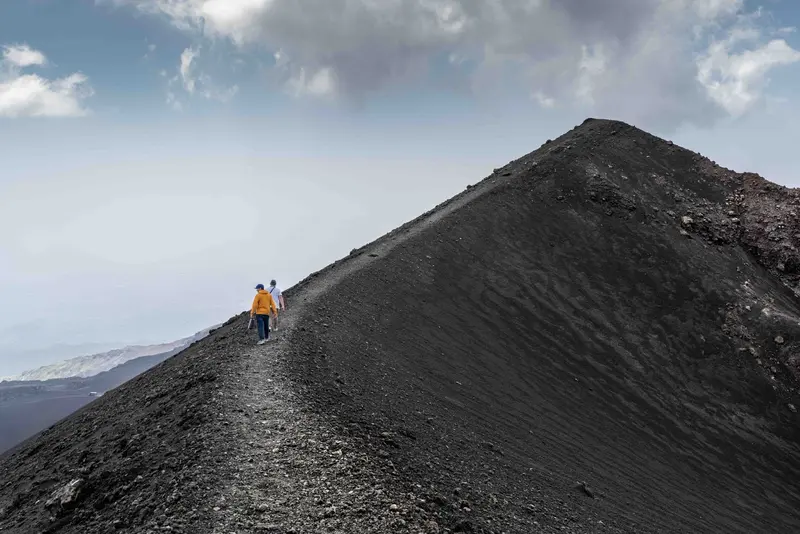
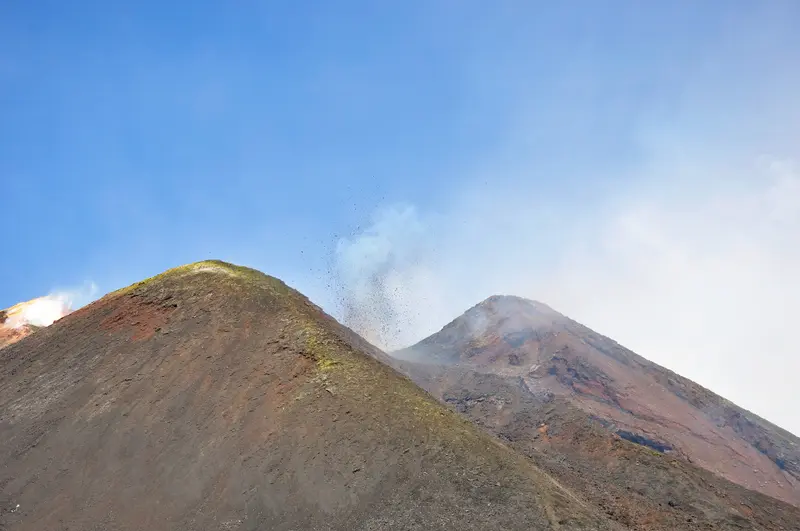
The summit region of Etna, a UNESCO World Heritage site, offers a unique natural experience on one of the world's most active volcanoes. Here, experience a fascinating moonscape, shaped by countless eruptions over millennia. Stand before the imposing main craters, whose activity constantly changes, significantly shaping Sicily's geology. The barren, rugged environment testifies to nature's untamed power, offering spectacular views across the island to the sea. Ensure entry to the summit region is only with a licensed mountain guide; follow current safety rules. Visit early morning for clear views, avoiding major tourist crowds. Wear warm clothing and sturdy footwear; temperatures can be quite cool even in summer.
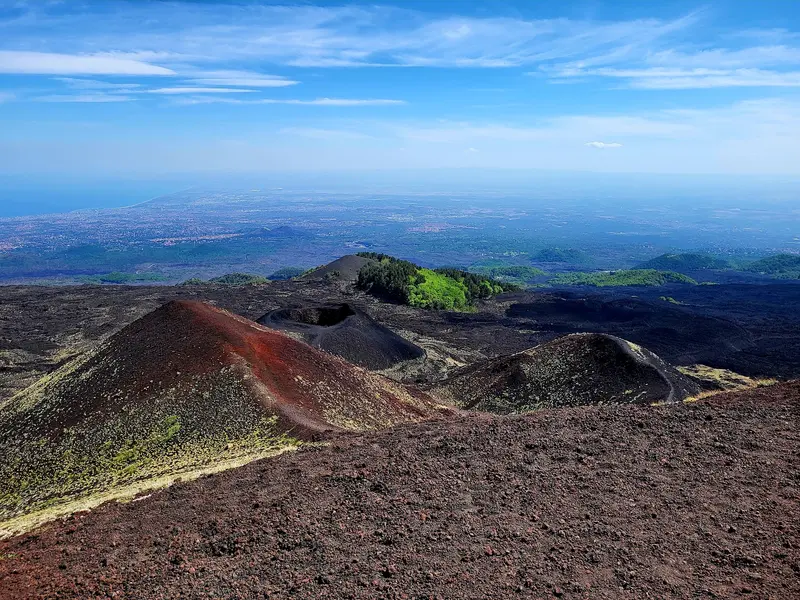
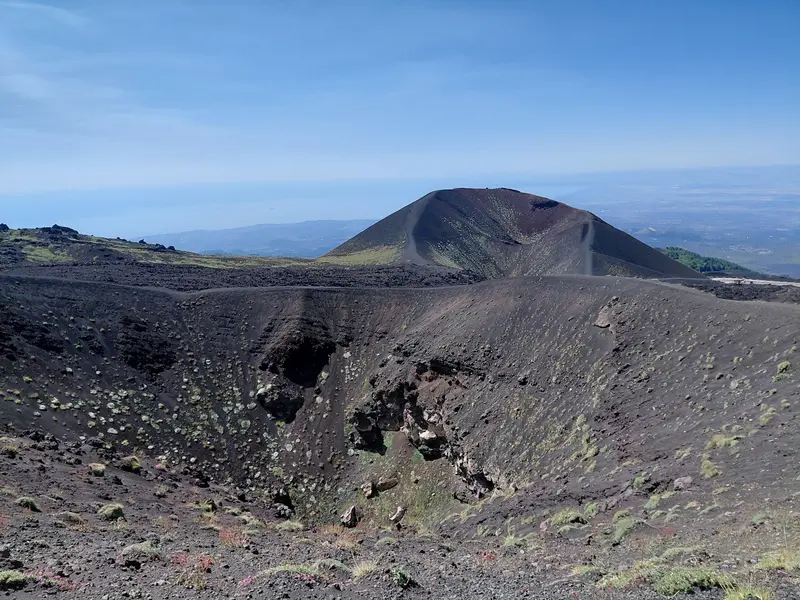
The Crateri Silvestri on Etna are an impressive testament to Sicily's volcanic activity. They formed during the 1892 eruption and are divided into two main craters: the Crateri Silvestri Superiori and Inferiori. You can easily explore these craters on foot, as they are easily accessible and located directly on the road to Rifugio Sapienza. The landscape here resembles a lunar surface, shaped by solidified lava and volcanic ash, forming a unique backdrop. From the craters, you often enjoy panoramic views of the surrounding coast and Etna's summit region. Our tip: Wear sturdy footwear, as the ground can be uneven. For the best photos and to avoid the largest crowds, a visit in the early morning or late afternoon is recommended.
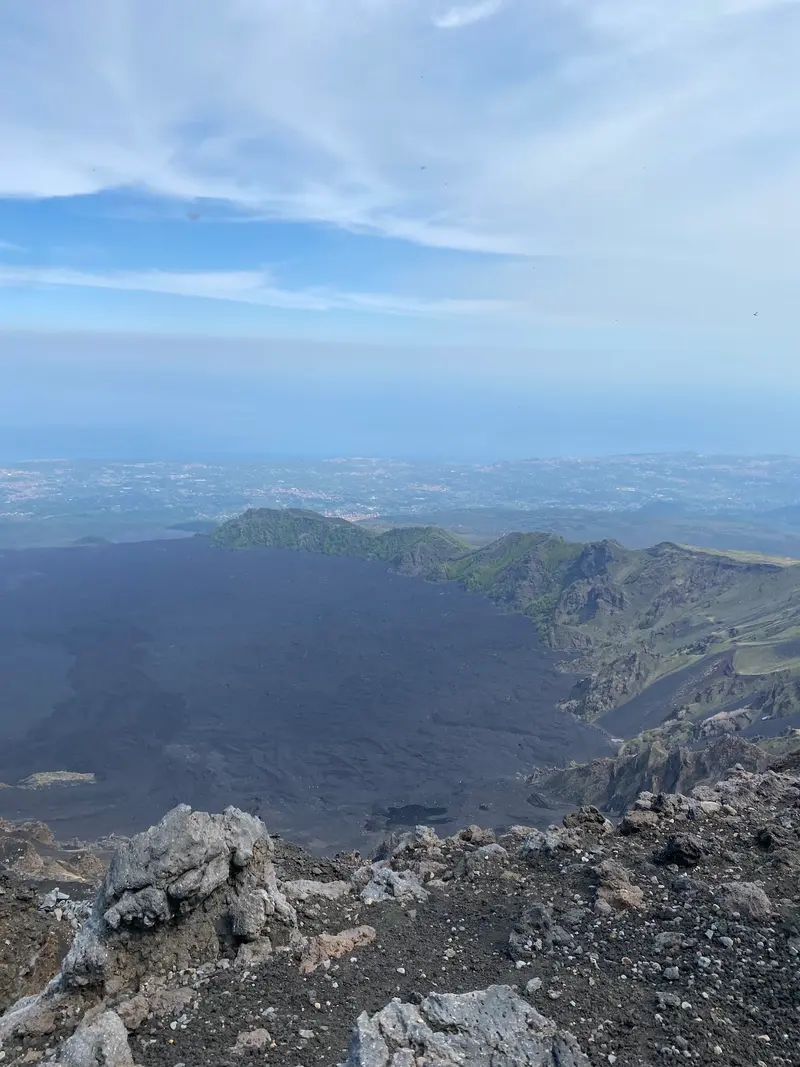
The Valle del Bove, a monumental, horseshoe-shaped depression on Mount Etna's eastern flank, is key to understanding Sicily's volcanic history. This gigantic basin was formed by the repeated collapse of ancient volcanic structures and now serves as a natural stage for Etna's impressive lava flows. Here you'll encounter a barren landscape, often scarred by recent eruptions, making the untamed power of nature directly palpable. From viewpoints on the crater rim or hiking trails like the ascent to Monte Zoccolaro, you'll enjoy sweeping panoramas over the valley and the often-smoking summit craters. Practical Tip: The best time for clear visibility is early morning. For photographers, the view from the valley's edge, especially at sunrise, offers dramatic photo opportunities. Check beforehand about Etna's current activity and the accessibility of hiking trails.
The Parco dell'Etna, established in 1987, protects the unique volcanic landscape surrounding Mount Etna, Europe's most active volcano. As a UNESCO World Heritage Site, it attests to global geological significance. Here, a fascinating diversity awaits you: from barren lava fields and solidified lava flows to dense forests and ancient craters. You can explore the various altitudes and vegetation zones, shaped by constant eruptions, on numerous hiking trails. This dynamic environment offers insights into Earth's history and nature's adaptability.Our Tip: For a safe and informative exploration of the accessible craters and geological features, a guided tour is recommended. This offers you not only safety but also deeper insights into the volcanic processes. The best time to visit is spring or autumn, when temperatures are more pleasant and nature is in full splendor. In summer, you should avoid the midday heat on the open lava fields and carry sufficient water.
The Belvedere Valle del Bove on Mount Etna offers you a breathtaking insight into the geological history of this active volcano. You look out onto a huge, horseshoe-shaped depression on Mount Etna's eastern flank, formed by the repeated collapse of ancient volcanic cones over millennia. This impressive depression, often traversed by fresh lava flows, serves as a natural catchment basin for Etna's eruptions, thus protecting the lower-lying settlements. Here you experience the raw power of nature and the constant transformation of the landscape firsthand. Our tip: Visit the Belvedere on a clear morning to get the best view of the valley's entire expanse and to photograph the often stark, yet fascinating lunar landscape. Ensure you wear sturdy footwear and warm clothing, as temperatures at this altitude can be cool even in summer.
The cultural history surrounding Etna is inextricably linked to its geological presence. Since antiquity, the volcano shaped myths and legends; the Greeks saw here the forge of Hephaestus, the Romans that of Vulcan. This reverent relationship with the “Mungibeddu,” as Etna is called by the locals, spans all epochs.The architecture of the surrounding villages and towns attests to this history: Many buildings, including numerous churches and residential houses, are constructed from dark lava rock, which was used for reconstruction after devastating eruptions and earthquakes, such as that of 1693. Especially in the Baroque towns of Val di Noto, which includes Catania, also influenced by Etna’s eruptions, this style, often with unique lava stone embellishments, is visible and testifies to the resilience of the populace.Local traditions reflect the fertility of the volcanic soil. Viticulture, particularly the production of Etna DOC wines, has a long history here. Olive groves and fruit orchards also shape the landscape and regional cuisine, which is heavily influenced by these local products. Festivals and customs are often associated with harvest festivals and patron saints, with the constant presence of the volcano always playing a role in the collective consciousness.
Exploring Locally
Getting around Mount Etna is fundamentally different from urban destinations. While the nearby city of Catania has a small metro and bus network, these primarily serve for reaching the region around the volcano. For journeys to starting points like Rifugio Sapienza or Piano Provenzana, special bus services operating from Catania or Taormina are recommended. Within the Etna National Park, organised tours with buses, cable cars, and special 4x4 vehicles are the most common method to explore the higher regions. Hiking is the most authentic way to experience Mount Etna. Many trails are well-marked, but sturdy footwear and weatherproof clothing are essential. Bicycle and e-scooter use is very limited due to the terrain and gradients, and only advisable for experienced adventurers. Taxis and private transfer services offer flexibility, but are comparatively expensive. Ride-sharing services are less common in the region. Tickets for buses and tours should often be purchased in advance online or at the respective stations; there is no specific app for all modes of transport. The region is not pedestrian-friendly in the urban sense, but offers extensive hiking trails. A rental car offers maximum independence to explore the different sides of the volcano and the surrounding villages.
These places are nearby — perfect for additional days or a day trip.
Taormina
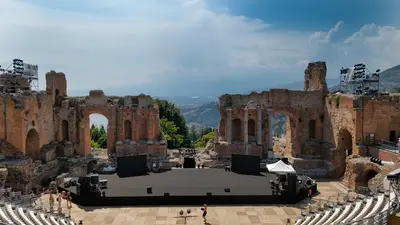
Taormina, located on Sicily's east coast, is picturesquely perched on a rocky plateau overlooking the Ionian Sea and Mount Etna. The Teatro Antico di Taormina, an ancient Greco-Roman theatre, is its most famous landmark, offering a spectacular backdrop for concerts and performances. Along the bustling Corso Umberto, you'll discover historic palazzi, boutiques, and traditional cafés, inviting you to linger. A visit to Isola Bella, a small island and nature reserve, is highly recommended and easily accessible by cable car. Historically shaped by Greeks, Romans, and Arabs, this diversity is reflected in the city's architecture and culture. For a quieter atmosphere away from the hustle and bustle, the Giardini della Villa Comunale, with its exotic flora, are an ideal spot. To avoid the crowds, it's advisable to visit in the early morning hours or during the shoulder season from April to May or September to October.
Catania
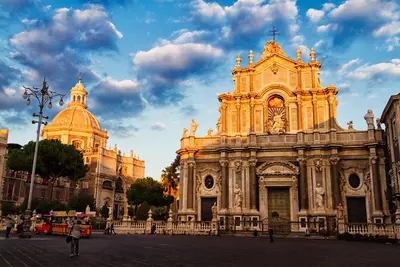
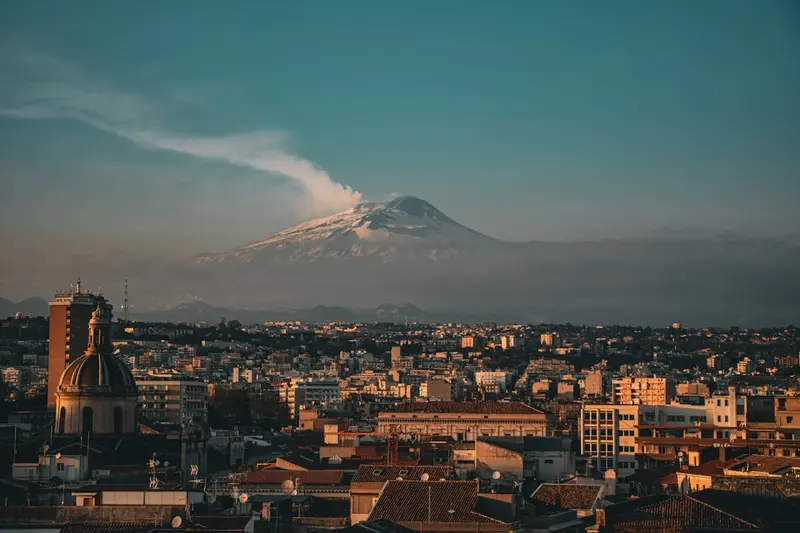
Catania, located at the foot of Mount Etna, fascinates as a baroque city notably shaped by black lava rock. Its heart is the Piazza Duomo with its landmark, the Fontana dell'Elefante, and the imposing Cathedral of Sant'Agata. The lively fish market La Pescheria offers an authentic experience before you stroll along the elegant shopping street Via Etnea. Historical insights are provided by the Roman Theatre and the expansive Benedictine Monastery of San Nicolò l'Arena. The city was rebuilt in the unique Sicilian Baroque style after earthquakes and volcanic eruptions. For optimal exploration and pleasant temperatures, a visit in spring or autumn is recommended. A climb to the dome of the Collegiata Church also offers a breathtaking panoramic view.
Syracuse
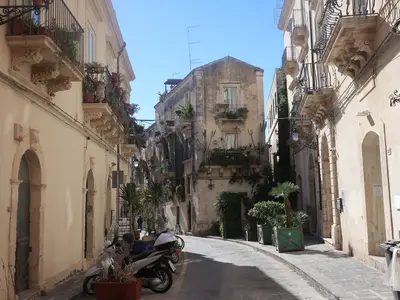
Immerse yourself in the ancient heritage of Sicily, where the Greek Theatre and the charming island of Ortigia tell tales of a glorious past. Syracuse, a city full of myths and Mediterranean flair, will enchant you with its unique blend of culture, history, and breathtaking coastal landscape.
Sicily
Sicily, the largest island in the Mediterranean, captivates with its rich history, reflected in ancient temples, baroque cities, and Norman cathedrals. Discover the dramatic volcanic landscape of Mount Etna, enjoy picturesque coastal towns, and indulge in the unique Sicilian cuisine.
Cefalù
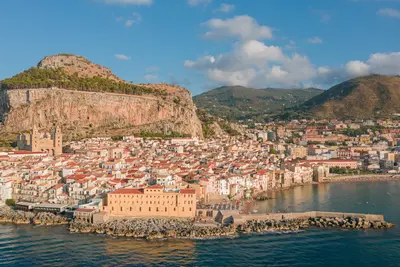
Cefalù on Sicily's north coast fascinates with its unique blend of medieval townscape and Mediterranean coastal location. The Norman Cathedral, a UNESCO World Heritage site, dominates the town center with its impressive Byzantine mosaics. The winding alleys of the old town lead through a vibrant tapestry of historic stone houses and authentic shops. Above the town rises La Rocca, a distinctive rock that, after an ascent, reveals breathtaking panoramic views and the ruins of the Temple of Diana. At the Museo Mandralisca, you will also find Antonello da Messina's famous "Portrait of an Unknown Man". Ideally, visit Cefalù in the early morning hours to explore the old town and the Cathedral in peace. At the old fishing harbor, numerous restaurants offer fresh local fish dishes that perfectly complement the maritime atmosphere.