Fernweh: Home
    ExploreTravel GuidesPlan a tripMy tripLast visited
    de|en
    All Places & RegionsAll highlightsAbout FernwehFAQPrivacy PolicyImprint
    ExploreTravel GuidesPlan a tripMy tripLast visited
    • Neighborhoods & highlights
    • Walking tours
    • Eat & drink
    • Food culture
    • Culture
    • Nightlife
    • Getting around
    • Accommodation
    • Plan trip
    • Nearby
    Syracuse

    Italy

    Syracuse

    CityCultureNatureBeachCulinary

    Syracuse on the southeast coast of Sicily was in antiquity one of the most powerful cities in the Greek world.

    by Felix Gillen

    1. Home
    2. Destinations
    3. Italy
    4. Sicily
    5. Syracuse
    Syracuse on the southeast coast of Sicily was in antiquity one of the most powerful cities in the Greek world. The old town is located on the small island of Ortigia: alleys, Baroque palaces and the Cathedral, which was built into a Greek temple of Athena. On the mainland are the Neapolis archaeological park with its large Greek Theatre and the Paolo Orsi Archaeological Museum. Together with the Rock Necropolis of Pantalica, Syracuse has been a UNESCO World Heritage site since 2005. Ortigia is well-suited for accommodation.

    Sights in Syracuse

    Discover the most important sights and attractions

    Attraction

    1Ortigia

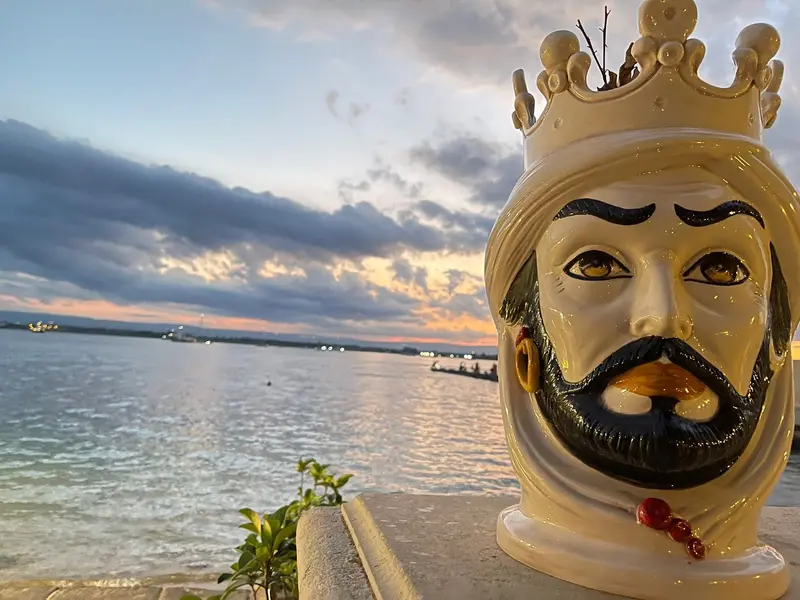
    The small island, connected to the mainland by two bridges, is the old town of Syracuse and the site of the first Greek settlement. Amidst Baroque palaces, churches, and narrow streets lie Cathedral Square, the Temple of Apollo, and the Arethusa Spring. Along the shore runs the Lungomare Alfeo promenade; Ortigia also features a permanent food market.
    Open in Google Maps
    Park

    2Archaeological Park Neapolis

    Archaeological park on the mainland with the large Greek Theatre, the Roman Amphitheatre, and the Altar of Hieron II. In the ancient quarries of Latomia del Paradiso lies the “Ear of Dionysius”, a roughly 23-meter-high artificial grotto with a strong echo. In the theatre, the Istituto Nazionale del Dramma Antico stages ancient dramas.
    Open in Google Maps
    Dom of Syracuse
    Church

    3Dom of Syracuse

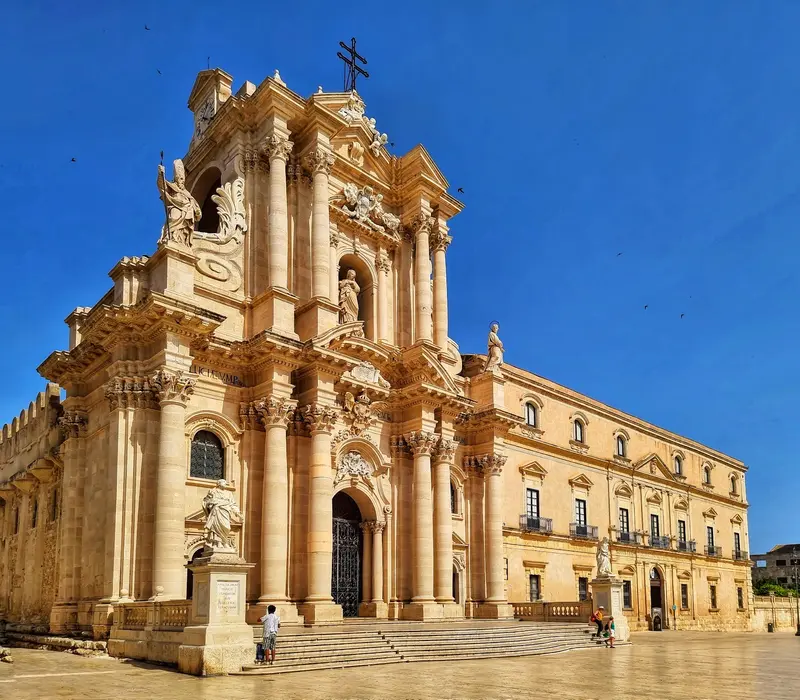
    The Cathedral was built into the Doric Temple of Athena, which the tyrant Gelon had erected in the 5th century BC; its columns are still clearly visible in the outer walls and inside. The Baroque facade was created after the earthquake of 1693, between approximately 1728 and 1754. It stands on the Piazza Duomo on Ortigia's highest point.
    Open in Google Maps
    Fonte Aretusa
    Attraction

    4Fonte Aretusa

    Spring-fed pool on the coast of Ortigia, right by the sea, where papyrus grows. According to legend, the nymph Arethusa transformed into a spring here while fleeing from the river god Alpheios; it is linked to the city's foundation myth.
    Open in Google Maps
    Apollo Temple
    Historic Landmark

    5Apollo Temple

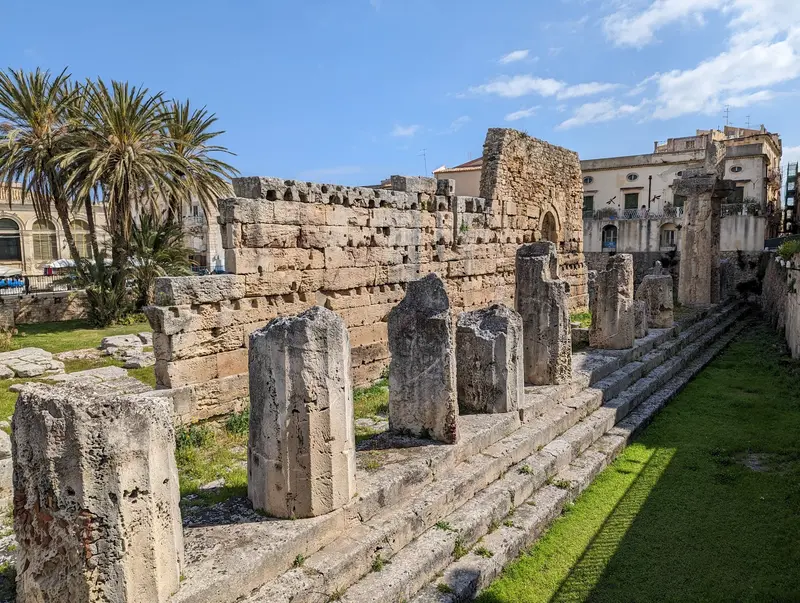
    Remains of a Doric temple from the early 6th century BC on Ortigia, considered the oldest Doric temple in Sicily. Preserved are column stumps and parts of the cella; the grounds are visible from the street.
    Open in Google Maps
    Paolo Orsi Archaeological Museum
    Museum

    6Paolo Orsi Archaeological Museum

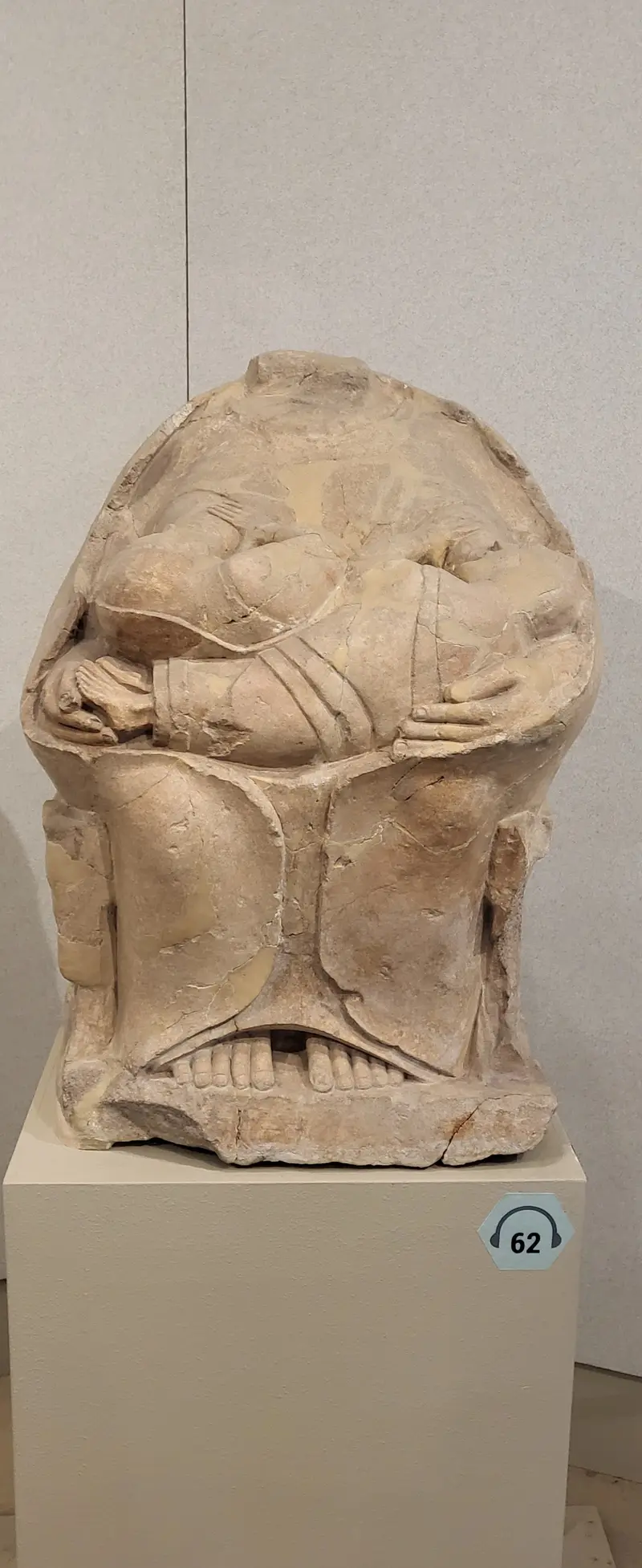
    Large Archaeological Museum in the Park of Villa Landolina with finds from the Neolithic to the Roman period from Southeast Sicily. Among its most famous pieces are the Venus Landolina and a coin collection from the Greek to the Bourbonic era.
    Open in Google Maps

    City walks in Syracuse

    Curated walking tours through the city's highlights, handpicked by experienced travel journalists.

    Ortigia: A Walk Through Syracuse's Timeless Beauty

    Immerse yourself in the magical atmosphere of Ortigia, the historic island town of Syracuse. This two-hour circular walk leads you through winding lanes, past ancient ruins and Baroque showpieces, to mythological springs and along picturesque coastal paths. Experience the soul of Sicily in one of the most beautiful places on the island.

    ~2 Std.
    Open in Google Maps
    Stops (7)

    Restaurants & Cafes

    1

    Apollonion – Osteria da Carlo

    Fish restaurant on Via Carmelo Campisi in Ortigia, just a few steps from the Temple of Apollo.
    Show on Google Maps
    2

    A Putia D'Vico

    Small trattoria with Sicilian cuisine in the south of Ortigia, near Piazza Duomo.
    Show on Google Maps
    3

    Cortile Spirito Santo

    Upscale restaurant on Via Salomone in the south of Ortigia.
    Show on Google Maps
    4

    Caseificio Borderi

    Cheese shop and deli at Ortigia market, famous for generous sandwiches with local cheeses and cured meats. Typically open only at lunchtime; expect queues.
    Show on Google Maps
    5

    Le 7 spezie

    Restaurant with pizza and fish on Piazzale Marconi on the mainland, near the bus station.
    Show on Google Maps

    Food and Drink

    Most restaurants and bars are on Ortigia. In the mornings, the market at the island's entrance, with its fish, vegetable, and deli stalls, is worth visiting.

    Fish Dishes and Seafood

    Swordfish, squid, and raw shrimp are on the menu in many establishments on Ortigia.

    Market of Ortigia

    At Ortigia Market, you'll find fish, vegetables, olives, dried tomatoes, and almond paste.

    Lemons from Syracuse

    The Femminello variety lemons bear a Protected Geographical Indication (PGI) and ripen in three harvests throughout the year.

    Siracusa Moscato

    Muscat wine, which belongs to DOC Siracusa, also as Passito.

    Heritage and Culture

    Ancient Greek PowerhouseSettlers from Corinth led by Archias founded Syracuse on Ortigia in the 8th century BC. Under tyrants such as Gelon, Hieron I, Dionysius I, and Hieron II, the city became Sicily's leading power and rivaled Athens, whose attempt to conquer Syracuse failed. The mathematician Archimedes hailed from Syracuse and, in 212 BC, led its defense against the besieging Romans.After AntiquityByzantines, Arabs, and Normans followed. After the earthquake of 1693, Ortigia and many churches were rebuilt in Baroque style, including the Cathedral's facade.Saint Lucia and the Ancient TheaterThe city's patron saint is Saint Lucia, who died here as a martyr in 304 AD. On December 13th, her statue is carried in a procession from Cathedral Square to the Church of Santa Lucia al Sepolcro, returning on December 20th. Since 1914, the Istituto Nazionale del Dramma Antico has staged classical tragedies and comedies in the Greek Theater.

    Nightlife

    Syracuse's nightlife is concentrated on the island of Ortigia and is more relaxed than thrilling. Here, discover wine bars like Enoteca Solaria for a good wine, or bars like Stone, specializing in mixology and an upscale atmosphere.
    1

    Stone

    Café and cocktail bar with a focus on music at Largo Empedocle on the mainland, north of Ortigia.
    Show on Google Maps
    2

    Aromi di Sicilia

    Bar on Via Salvatore Chindemi on the north side of Ortigia.
    Show on Google Maps
    3

    Crudo

    Restaurant with lounge bar on Via Duca degli Abruzzi on the east side of Ortigia.
    Show on Google Maps
    4

    Enoteca Solaria

    A wine bar situated on Via Roma in Ortigia, close to Piazza Duomo.
    Show on Google Maps
    5

    Sailing Club Lakkios

    Bar by the water on Riva Nazario Sauro, opposite Ortigia, at the port.
    Show on Google Maps
    6

    Fratelli Burgio

    Delicatessen with bar on Piazza Cesare Battisti by Ortigia Market; for aperitivo, wine and cheese & charcuterie platters.
    Show on Google Maps
    7

    FiCo

    Restaurant with rooftop terrace and lounge bar in a courtyard near Piazza Duomo on Ortigia.
    Show on Google Maps
    8

    Da Gianni Wine Bar

    Wine bar on Via Reno on the mainland, west of the station district.
    Show on Google Maps
    9

    ReCar Lounge Bar

    Lounge bar on Via Savoia on the east side of Ortigia.
    Show on Google Maps
    10

    Taverna Il Covo

    Tavern and bar on Via Bengasi on the mainland, north of Ortigia.
    Show on Google Maps

    Exploring on site

    On FootOrtigia is best explored on foot. Two bridges connect the island to the mainland.Bus & TrainCity buses and a shuttle bus connect Ortigia to the mainland. From the station, regional trains run via Catania towards Messina, as well as to Noto, Modica, and Ragusa.The AreaA car is useful for Pantalica, Vendicari, and the Baroque towns in the hinterland.

    Accommodations in Syracuse

    Find perfect stay in Syracuse

    Booking.com* (Affiliate link)
    Search Hotels
    Agoda* (Affiliate link)
    Search Hotels
    Airbnb
    Vacation Rentals

    * Affiliate link: if you book through it, we earn a small commission. The price stays the same for you.

    Campgrounds in Syracuse

    Find perfect campground in Syracuse

    Search via Google Maps
    Campgrounds nearby (15km)
    Camping.info
    Find Campgrounds
    Park4Night
    RV Parks & Camping

    Plan your trip to Syracuse

    Save places, build a route and plan your city trip, all in one place.

    1. 1
      Sunrise over alpine peaks and a sea of clouds
      1234

      Round trip

      12 days · 4 stops

      Saved

      Pick a route

      Pick a ready-made one or save places and plan your own.

      Open bookmarks
    2. 2

      Trip to Syracuse

      Live
      • 1Ortigia3 days
      • 2Archaeological Park Neapolis4 days
      • 3Dom of Syracuse5 days
      Budget

      Plan your trip

      The planner sorts stops, days and budget. Plan together in real time.

      Start trip planning
    3. 3
      9:41 No signal
      Syracuse
      Available offline

      Use it on the road

      Download the guide to your phone and use it on site, even offline.

    Nearby

    Noto

    Noto

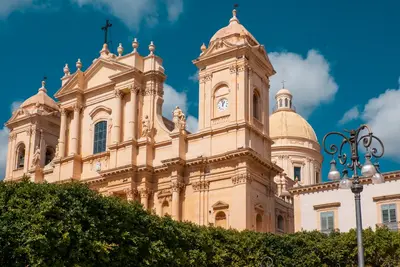
    Noto, in southeastern Sicily, 30 km from Syracuse, is considered a prime example of Sicilian Baroque. After the 1693 earthquake, the city was rebuilt 8 km from its old site, with squares, staircases, and light stone palaces. Since 2002, it and other Val di Noto Baroque towns are UNESCO World Heritage sites. Along Corso Vittorio Emanuele are the Cathedral, palaces, and churches. Nearby are the Vendicari Nature Reserve and the ruins of Noto Antica.
    Catania

    Catania

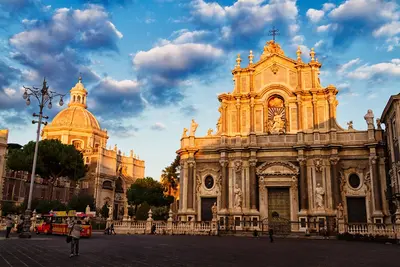
    Catania is Sicily's second-largest city, located on the east coast at the foot of Mount Etna. Following the major eruption of 1669 and the earthquake of 1693, the old town was rebuilt in Baroque style, often using dark lava rock. Since 2002, it has been part of the UNESCO World Heritage site of the Baroque Towns of Val di Noto. Its focal point is the Piazza del Duomo, featuring the Elephant Fountain and the Cathedral; just next to it is the fish market. In the evenings, many gather in the old town around Via Crociferi. The city's airport serves as a starting point for many travelers exploring Eastern Sicily and Mount Etna.
    Ragusa Ibla

    Ragusa Ibla

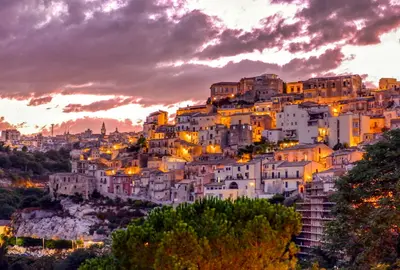
    Ragusa Ibla is one of the two parts of Ragusa's old town in southeastern Sicily. It lies on a hill east of the city and was rebuilt on its ancient site after the 1693 earthquake, while a new upper town arose on the higher ground above. Narrow streets, staircases, and alleys still follow its medieval layout. Together with the upper town, Ibla is one of the late Baroque towns of the Val di Noto, which have been a UNESCO World Heritage site since 2002.
    Etna

    Etna

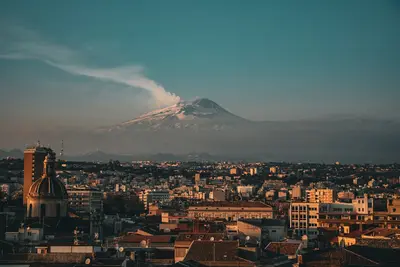
    Mount Etna, on the eastern coast of Sicily, is Europe's highest active volcano, standing over 3,300 meters tall; its exact height changes by several dozen meters with each eruption. Since 2013, it has been a UNESCO World Heritage site. On the south side, a road leads up to nearly 2,000 meters and a cable car to around 2,500 meters. You hike over cooled lava flows, past secondary craters, and gaze out from the upper slopes over the Ionian Coast. On the lower slopes, wine, pistachios, and fruit grow in fertile volcanic soil.
    Taormina

    Taormina

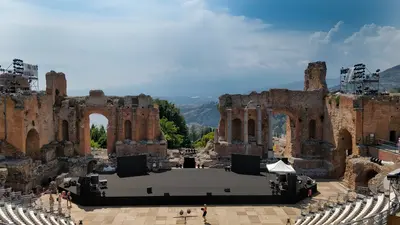
    Taormina is located on the east coast of Sicily, about 200 meters above the Ionian Sea, between Messina and Catania. From here, views stretch along the coast to Mount Etna. Its main attraction is the ancient theatre, originally built by the Greeks and later modified by the Romans. The Corso Umberto runs through the old town, passing palaces, churches, and Piazza IX Aprile. Below the town are Mazzarò and the bay of Isola Bella. Since the 19th century, Taormina has been an international resort; it is accordingly crowded in summer.

    Sources & method

    • Photos: Unsplash, Google Maps. Each photo carries its credit.
    • Place data such as addresses and ratings comes from Google Maps.
    • The content is based on web research from public, traceable sources. How the content is made · The role of AI