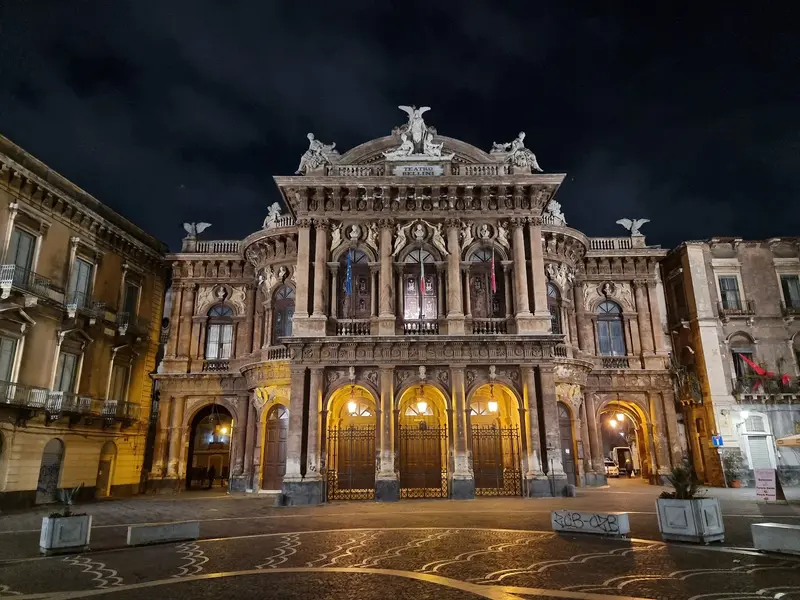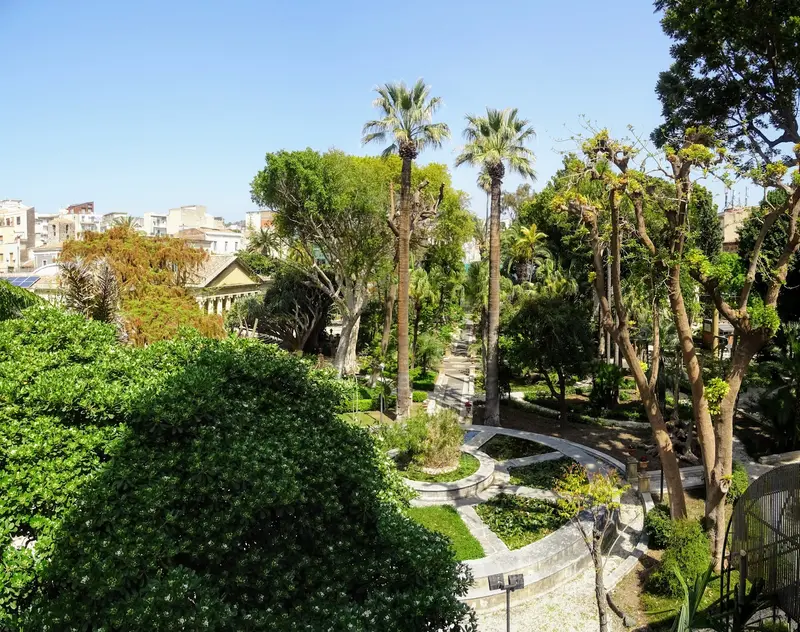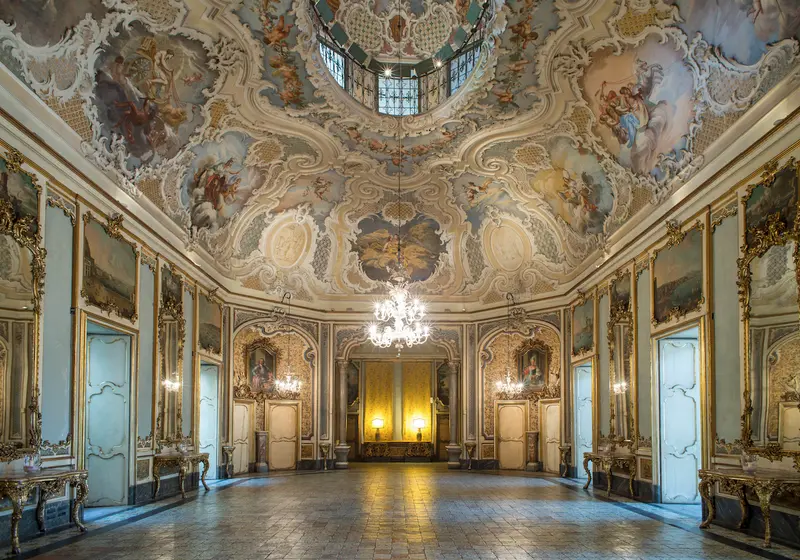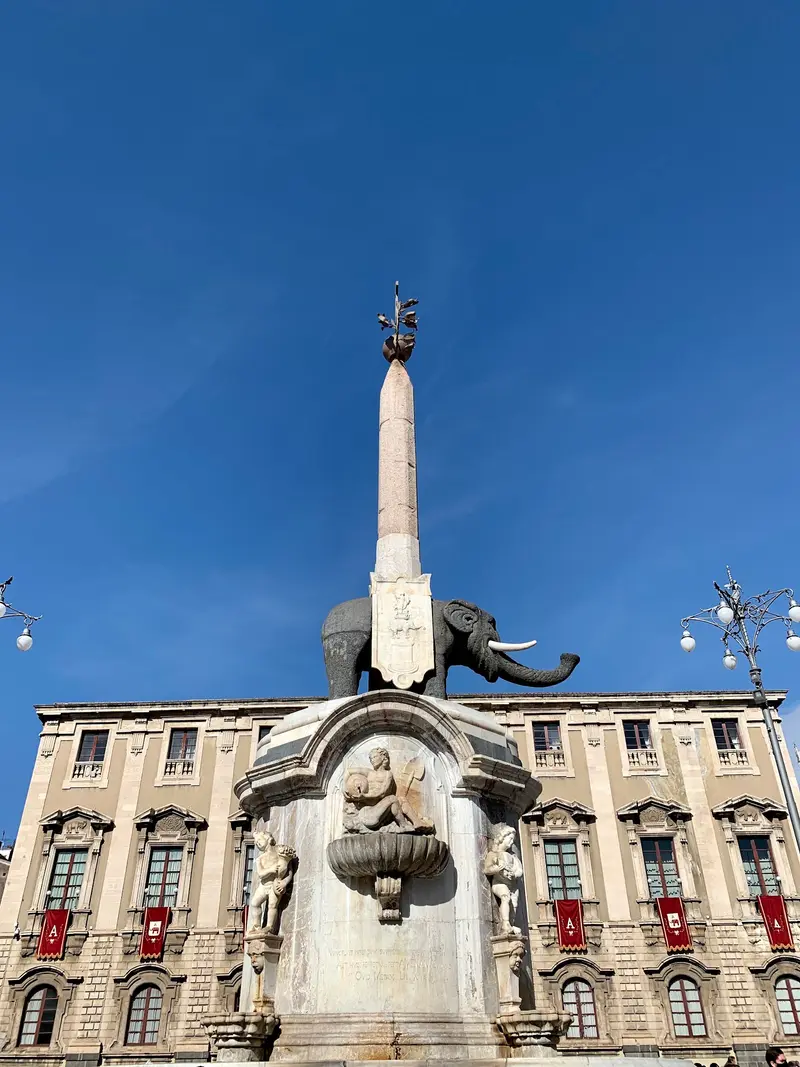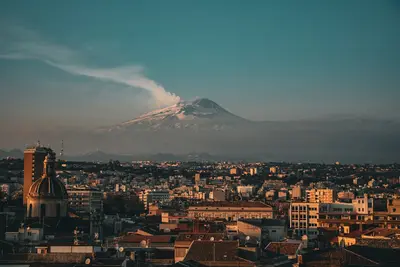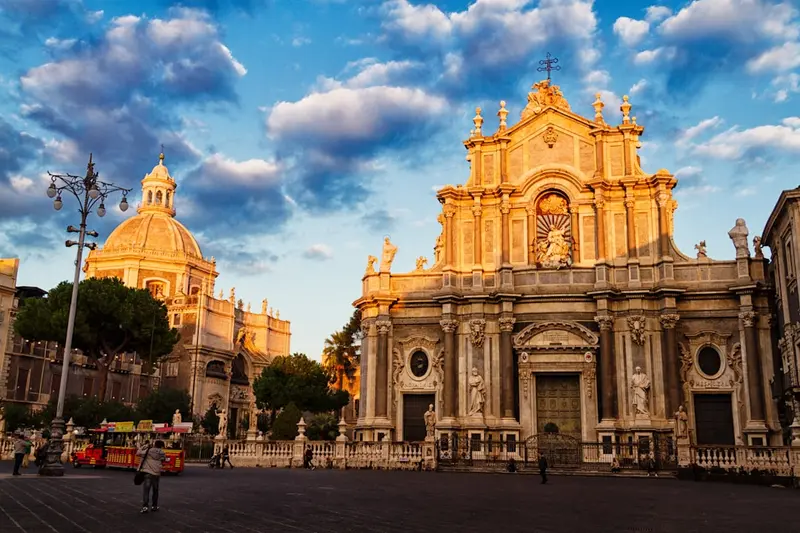
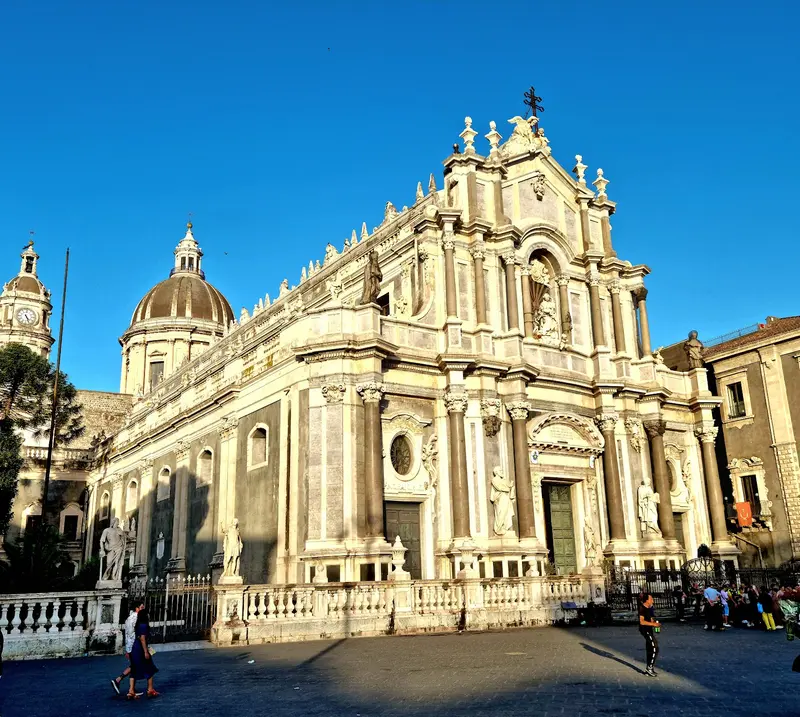
Catania, located at the foot of Mount Etna, fascinates as a baroque city notably shaped by black lava rock. Its heart is the Piazza Duomo with its landmark, the Fontana dell'Elefante, and the imposing Cathedral of Sant'Agata. The lively fish market La Pescheria offers an authentic experience before you stroll along the elegant shopping street Via Etnea. Historical insights are provided by the Roman Theatre and the expansive Benedictine Monastery of San Nicolò l'Arena. The city was rebuilt in the unique Sicilian Baroque style after earthquakes and volcanic eruptions. For optimal exploration and pleasant temperatures, a visit in spring or autumn is recommended. A climb to the dome of the Collegiata Church also offers a breathtaking panoramic view.
Catania, nestled at the foot of the imposing Etna, is a city whose Baroque architecture is largely shaped by black lava rock. The vibrant Piazza Duomo forms the city centre, where you'll find its emblem, the Fontana dell'Elefante, and the impressive Sant'Agata Cathedral. Not far away, experience the vibrant life at the authentic fish market La Pescheria, before strolling along the elegant shopping street Via Etnea with its magnificent palazzi. Historic insights are offered by the well-preserved Roman Theatre and the sprawling Benedictine Monastery of San Nicolò l'Arena, a UNESCO World Heritage site. The city was rebuilt in the unique Sicilian Baroque style after devastating 17th-century earthquakes and volcanic eruptions, lending it a distinctive appearance. For pleasant exploration and optimal temperatures, a visit in spring or autumn is recommended; from the Collegiata Church dome, enjoy a sweeping panoramic view over Catania.
Places in Catania
Discover the most important sights and attractions
Curated walking tours through the city's highlights — handpicked by experienced travel journalists.
Catania Kompakt: Barock, Fischmarkt und Vulkanblick
Entdecken Sie auf diesem ca. zweistündigen Spaziergang das pulsierende Herz Catanias. Von prächtiger Barockarchitektur über den lebendigen Fischmarkt bis zu antiken Ruinen – tauchen Sie ein in die reiche Geschichte und einzigartige Atmosphäre dieser sizilianischen Stadt. Ein Muss für jeden Besucher!
Catania, located at the foot of Mount Etna, boasts a history spanning over 2,700 years, dating from its Greek foundations in the 8th century BC to Roman rule. The city was repeatedly devastated by volcanic eruptions and earthquakes, most recently catastrophically in 1669 by Etna and in 1693 by a severe earthquake.Its subsequent reconstruction largely shaped the city's current appearance in the Sicilian Baroque style. Characteristic is the use of dark lava stone, which contrasts with light limestone, visible in structures like the Duomo di Sant'Agata or the Via Crociferi. This architectural unity has been part of the UNESCO World Heritage site 'Late Baroque Towns of the Val di Noto' since 2002.Culturally, Catania is closely linked to the veneration of its patron saint, Saint Agatha. Every February, the Festa di Sant'Agata takes place, one of Italy's largest and most spectacular religious festivals, reflecting deep local traditions. The constant presence of Mount Etna also shapes not only the landscape and architecture, but also the daily lives and cultural identity of its inhabitants.
Nightlife
Evenings in Catania often start with an aperitivo in the alleys around Piazza Teatro Massimo, where most bars are concentrated. Here you'll find a blend of traditional wine bars and modern cocktail bars like Biscò or Sixty, which stay open late into the night.
Getting Around
Catania lässt sich gut erkunden, wenngleich der Verkehr chaotisch wirken kann. Die Metropolitana di Catania bietet eine effiziente, wenn auch noch überschaubare Nord-Süd-Verbindung, ideal für Fahrten vom Hafen bis in einige nördliche Stadtteile. Ergänzend dazu sorgt ein dichtes Busnetz der AMT für die Erschließung der gesamten Stadt; Einzeltickets oder Tageskarten sind an Kiosken, Tabakläden oder über die offizielle AMT App erhältlich. Vergessen Sie nicht, Ihr Ticket beim Einstieg zu entwerten.Für kürzere Strecken sind Leihfahrräder und E-Scooter zunehmend verfügbar, ideal um die lebendigen Gassen zu erkunden. Taxis sind an zentralen Plätzen und am Flughafen leicht zu finden, während Ride-Sharing-Dienste weniger verbreitet sein könnten. Die historische Altstadt ist fussgängerfreundlich, mit vielen engen Gassen und Plätzen, die zum Flanieren einladen, doch sollten Besucher auf unebenes Pflaster und den teils regen Verkehr achten. Ein praktischer Tipp: Achten Sie auf die ZTL-Zonen (Zone a Traffico Limitato) in der Innenstadt, die für private Fahrzeuge gesperrt sein können.
These places are nearby — perfect for additional days or a day trip.
Etna
Ready for an unforgettable adventure? Then Mount Etna, Europe's most active and highest volcano, is your next destination. As a UNESCO World Heritage Site, it offers a dramatic landscape of solidified lava, steaming craters, and breathtaking views that you won't experience anywhere else.
Taormina
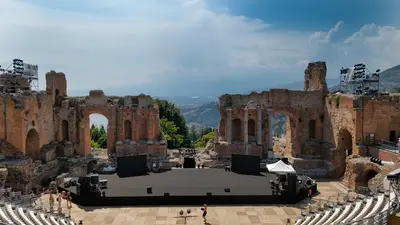
Taormina, located on Sicily's east coast, is picturesquely perched on a rocky plateau overlooking the Ionian Sea and Mount Etna. The Teatro Antico di Taormina, an ancient Greco-Roman theatre, is its most famous landmark, offering a spectacular backdrop for concerts and performances. Along the bustling Corso Umberto, you'll discover historic palazzi, boutiques, and traditional cafés, inviting you to linger. A visit to Isola Bella, a small island and nature reserve, is highly recommended and easily accessible by cable car. Historically shaped by Greeks, Romans, and Arabs, this diversity is reflected in the city's architecture and culture. For a quieter atmosphere away from the hustle and bustle, the Giardini della Villa Comunale, with its exotic flora, are an ideal spot. To avoid the crowds, it's advisable to visit in the early morning hours or during the shoulder season from April to May or September to October.
Syracuse
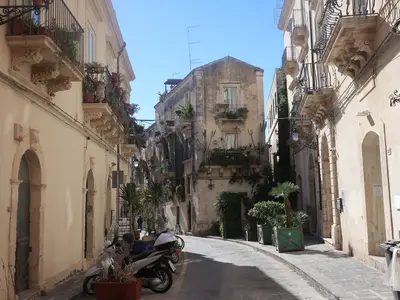
Immerse yourself in the ancient heritage of Sicily, where the Greek Theatre and the charming island of Ortigia tell tales of a glorious past. Syracuse, a city full of myths and Mediterranean flair, will enchant you with its unique blend of culture, history, and breathtaking coastal landscape.
Noto
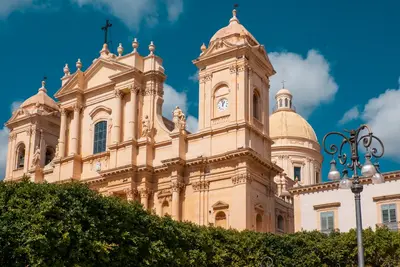
Noto, a pearl of Sicilian Baroque, is located in southeast Sicily and is a UNESCO World Heritage site. The city was completely rebuilt in the opulent Baroque style after the devastating earthquake of 1693, which gives it a unique, homogeneous appearance. Along the Corso Vittorio Emanuele, you'll discover magnificent buildings such as the imposing Cathedral of Noto and the elegant Palazzo Ducezio. Characteristic are the honey-colored tufa buildings, which shimmer golden in the sunlight and create a special atmosphere. A stroll through the narrow streets reveals artistic details and hidden courtyards. For a special experience, a visit in May for the Infiorata is recommended, a famous flower festival on Via Nicolaci. To explore Noto's beauty at leisure and avoid the summer heat, you ideally plan your trip in spring or autumn.
Ragusa Ibla
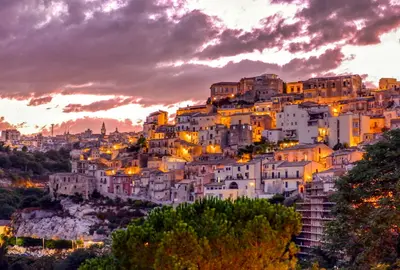
Ragusa Ibla, a UNESCO World Heritage site, is the charming Baroque core of Ragusa, famous for its winding streets and splendid churches.