From Florence, via Siena and Montepulciano on the edge of Val d'Orcia, to Umbria and the old towns of Perugia and Assisi. Stages rarely exceed an hour's drive. In the old towns, ZTLs apply; park outside.
11 Days / 10 Nights
April–June & September–October
RV Friendly
5 stops
Why This Route?
For couples and pleasure-seekers who want to combine Renaissance art, wine, and medieval hill towns with short drives.
Hidden Gems
Cappella della Madonna di Vitaleta near San Quirico d'Orcia, a chapel among cypress trees about 20 minutes from Montepulciano
Tempio di San Biagio below Montepulciano at the end of a cypress-lined avenue
Eremo delle Carceri on Monte Subasio above Assisi
Itinerary
Stop 1 • 2 Nights
Florenz
City
Rich in culture and history. Perfect for an exciting city trip and Culinary highlights.
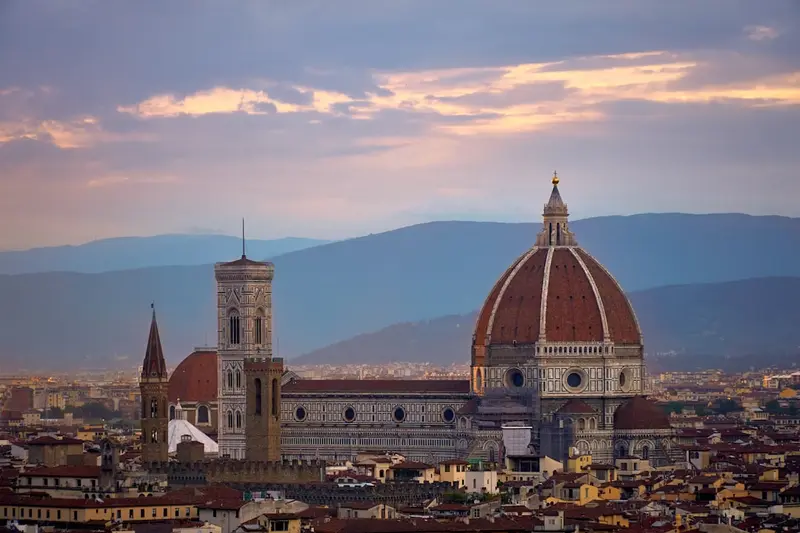
Florence, Tuscany's capital, birthplace of the Renaissance. The Duomo (Brunelleschi's Dome), Palazzo Vecchio, Uffizi, and Ponte Vecchio over the Arno are tightly grouped. Michelangelo's David is in the Galleria dell'Accademia. Across the river, Oltrarno features Palazzo Pitti, the Boboli Gardens, and artisan workshops. A UNESCO World Heritage site since 1982, the Old Town is easily explored on foot. Florence is roughly 1.5 hours from Rome by high-speed train. You should reserve tickets for Uffizi, Accademia, and Duomo Dome in advance.
13 Sights
6 Restaurants
Culture and History
From Roman Colony to Medici CityFlorence was founded in 59 BC as the Roman settlement Florentia, laid out like a military camp. In the Middle Ages, the city grew wealthy through trade and banking. From the 15th century, the Medici determined its politics, becoming Grand Dukes of Tuscany from 1569. From 1865 to 1871, Florence served as the capital of the Kingdom of Italy.RenaissanceBrunelleschi, Donatello, Masaccio, Botticelli, Leonardo, and Michelangelo worked here. You can see their works in the Uffizi, the Accademia, the Bargello, and many churches. Dante also hailed from Florence.Crafts and FestivalsIn Oltrarno, especially around Santo Spirito and San Frediano, goldsmiths, bookbinders, gilders, intarsia carvers, and leather artisans still work today. Leather goods are primarily sold at the San Lorenzo market. On Easter Sunday, a cart with fireworks is set off in front of the Duomo during the Scoppio del Carro. In late June and early July, the Calcio Storico games take place on Piazza Santa Croce, and on June 24th, the city's patron saint, John the Baptist, is celebrated.ExcursionsYou can reach Fiesole, on the hill north of the city, with bus line 7. Pisa, Lucca, Siena, and the Chianti region are feasible as day trips.
Rich in culture and history. Perfect for an exciting city trip and Culinary highlights.
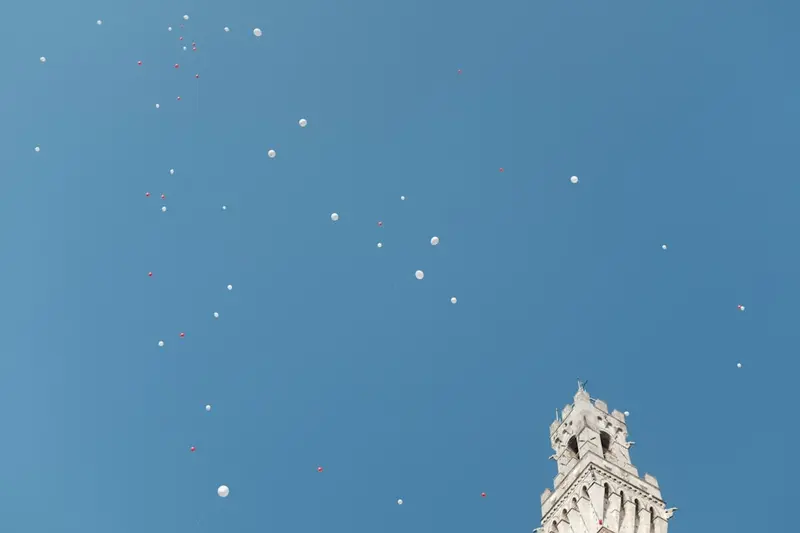
Siena grew on three hills, its main streets converging in a depression where the Piazza del Campo now lies. A UNESCO World Heritage site since 1995, its Old Town largely retains its 12th to 15th-century Gothic character. On the Campo stand the Palazzo Pubblico and Torre del Mangia; the Cathedral, with its marble floor, is nearby. Twice yearly, on July 2nd and August 16th, the Palio takes place on the Campo.
6 Sights
5 Restaurants
Culture and History
City-Republic and GothicIn the 13th and early 14th centuries, Siena was a wealthy trading and banking city. The Monte dei Paschi di Siena, active since 1472, is considered the world's oldest continuously operating bank. The Plague of 1348 killed about half the population and halted construction of the New Duomo. In 1555, Siena capitulated to Spain; an exile republic held out in Montalcino until 1559.Sienese PaintingDuccio, Simone Martini, and the brothers Pietro and Ambrogio Lorenzetti shaped a distinct school of painting. You can see their works primarily in the Palazzo Pubblico and the Duomo Museum.Contrade and PalioAt the Palio on July 2nd and August 16th, ten of the 17 Contrade compete against each other: seven are set, three are drawn by lot. The racetrack on the edge of the Campo is covered with a mix of tuff, clay, and sand for the event. Six trial races take place beforehand; the city is very crowded on these days.ExcursionsFrom Siena, you can reach Chianti, the Val d'Orcia with Pienza and Montalcino, San Gimignano, and the Abbey San Galgano.
Culinary highlights. Rich in culture and history and Stunning nature and outdoors.
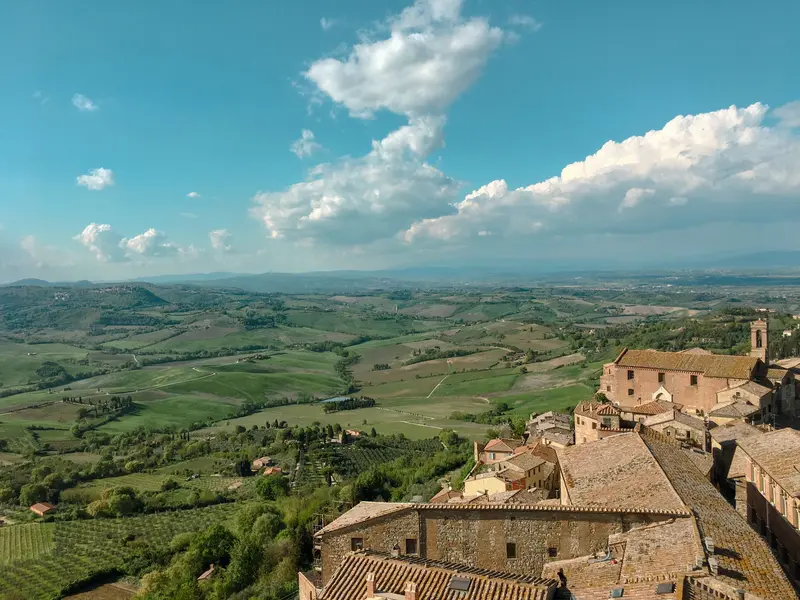
Montepulciano sits in the south of Siena province on a roughly 605-meter limestone ridge. Its medieval and Renaissance old town culminates in Piazza Grande, home to the Town Hall and Cathedral. The city is famed for its Vino Nobile di Montepulciano red wine, with many cellars nestled directly beneath the old town's palaces.
4 Sights
4 Restaurants
The Culture and History
Between Siena and FlorenceMontepulciano was repeatedly attacked by Siena in the Middle Ages and allied itself with Florence in 1390; peace with Florence became final in 1511. In the 15th and 16th centuries, master builders like Michelozzo, Antonio da Sangallo the Elder, Baldassarre Peruzzi, and Vignola shaped the city's palaces and churches. The humanist poet Angelo Poliziano was born here in 1454.Vino NobileVino Nobile di Montepulciano consists of at least 70 percent Sangiovese, which is called Prugnolo gentile here. It has held DOCG status since 1980.Bravio delle BottiOn the last Sunday in August, teams from the eight Contrade roll heavy wine barrels through the city during the Bravio delle Botti. The race dates back to the 14th century.
Rich in culture and history. Perfect for an exciting city trip and Culinary highlights.
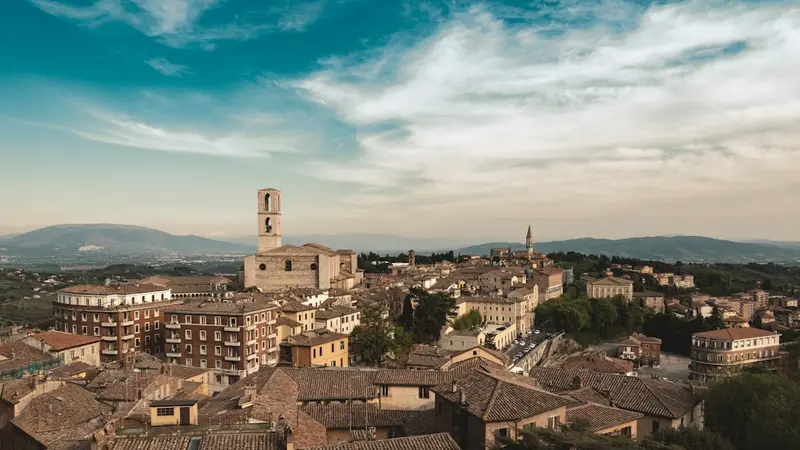
Perugia is the capital of Umbria and stretches across several hills. The city dates back to the Etruscan Phersna; a city gate and fountain from that era are preserved. At its center are the Piazza IV Novembre with the Fontana Maggiore, the Cathedral, and the Palazzo dei Priori with the Galleria Nazionale dell'Umbria. Perugia is home to the University of Perugia.
8 Sights
3 Restaurants
Culture and History
Etruscan CityFrom the 7th and 6th centuries BC, Perugia developed into one of the most important Etruscan cities. In the Perusine War of 41 BC, a fire destroyed large parts of the city, after which Augustus had buildings such as the Arco Etrusco restored with the inscription “Augusta Perusia”.Free Commune and Papal StatesFrom the 11th century, Perugia was a free commune. A salt tax imposed by Pope Paul III triggered the Salt War; after its defeat in 1540, the city came under papal rule again, and Paul III had the Rocca Paolina built. In 1860, Perugia became part of the Kingdom of Italy. A fresco cycle by Perugino is preserved in the Collegio del Cambio.Festivals and ChocolateEvery year in July, the Umbria Jazz Festival, founded in 1973, takes place for about ten days, and in October, the Eurochocolate fair. The Perugina chocolate factory has its roots in Perugia, and its Baci were invented in 1922 by Luisa Spagnoli.
Rich in culture and history. Perfect for an exciting city trip.
Assisi is on Monte Subasio's west slope, above the Umbrian Plain. It's the birthplace of St. Francis and St. Clare, and a major Italian pilgrimage site. The Basilica of San Francesco and other Franciscan sites have been UNESCO World Heritage since 2000. The Old Town runs along the slope between the western Basilica and Santa Chiara in the east.
7 Sights
3 Restaurants
The Culture and History
Roman RootsAssisi was the Roman city of Asisium, strategically laid out on terraces on Monte Subasio. The Temple of Minerva in Piazza del Comune prominently attests to this. Artifacts from this era are showcased at the Museo civico e Foro romano.Francis and ClareFrancis was born in 1181 or 1182 to Pietro di Bernardone and Madonna Pica. He died on October 3, 1226, and was canonized in 1228. From 1211, Clare notably founded a community of sisters in San Damiano. Francis, along with Catherine of Siena, is a patron saint of Italy.1997 EarthquakeOn September 26, 1997, an earthquake caused the vault of the Upper Basilica to collapse in two places, resulting in the deaths of two friars and two heritage authority employees. Approximately 130 square meters of medieval frescoes were destroyed. The Basilica remained closed for about two years for full restoration.FestivalsIn early May, the city celebrates Calendimaggio, a contest between the Parte de Sopra and Parte de Sotto, featuring vibrant scenes from the Middle Ages and Renaissance. On October 3 and 4, the Feast of Saint Francis is celebrated with much reverence.