The route begins at Himeji Castle, leads via Osaka to Kyoto, continues to the temples and deer of Nara, and ends on the monastery mountain Koyasan. You travel all stages by train; from Himeji to Osaka, the Shinkansen takes about 30 minutes. To Koyasan from Nara, it's about two and a half hours with transfers and a cable car.
10 Days / 9 Nights
März–Mai und Oktober–November
5 stops
Why This Route?
For culture seekers wanting to experience Western Japan's temples, gardens, and castle architecture, all via short train journeys.
Hidden Gems
Kurama-dera, the mountain temple north of Kyoto, with a small funicular
Kokoen, an ensemble of nine gardens right next to Himeji Castle
Hozenji Yokocho in Osaka, an alley with a moss-covered Fudo-Myoo statue near Dotonbori
Itinerary
Stop 1 • 1 Night
Himeji
City
Rich in culture and history. Route highlight.
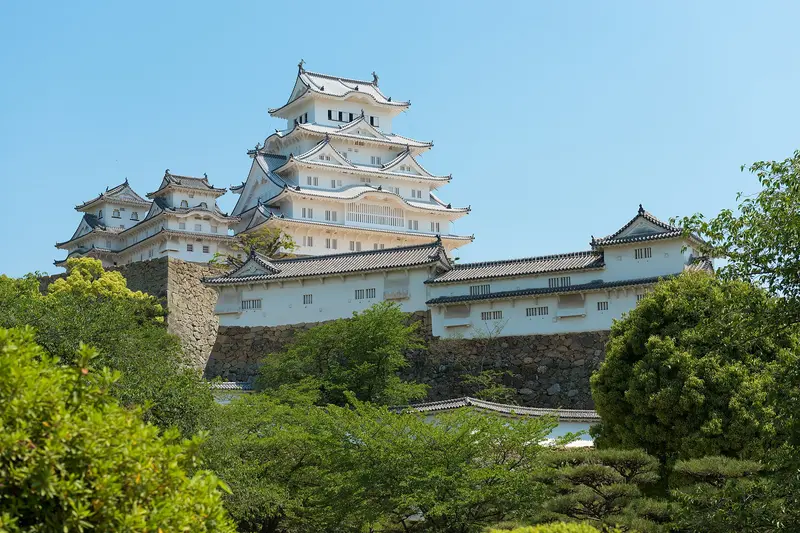
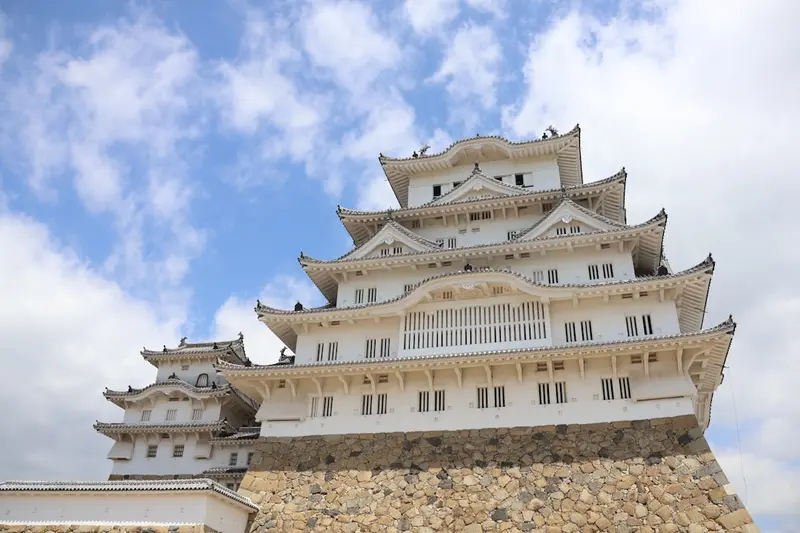
Himeji is home to the magnificent Himeji-jō, one of Japan's best-preserved and most impressive Samurai castles, which is a UNESCO World Heritage site.
5 Sights
8 Restaurants
Himeji's Cultural Heritage and Architecture
Himeji is deeply rooted in Japanese history, primarily through its iconic castle. Himeji Castle, also known as the 'White Heron', dates back to the late 14th century, its current form largely established in the early 17th century under Ikeda Terumasa. It is one of the country's best-preserved castles and a testament to feudal Japanese military architecture and engineering.As a UNESCO World Heritage site, the castle captivates with its elegant, white plaster facade and a complex defense system spanning multiple levels. Its architecture, a masterful combination of aesthetics and functionality, reflects the strategic and artistic ideals of the Momoyama period. Beyond the castle, local traditions also shape Himeji's cultural landscape, including festivals like the Himeji Yukata Matsuri, which drapes the city in colorful summer kimonos, and the robust Nada no Kenka Matsuri, which celebrates the region's strength and community spirit. Together, these elements tell the story of a city that cherishes its rich heritage.
Culinary highlights. Perfect for an exciting city trip and Route highlight.
Osaka presents itself as a vibrant metropolis with a distinct food culture that clearly sets it apart from other Japanese cities. Your visit takes you to the pulsating Dotonbori, where neon signs like the Glico Man line the canals and countless restaurants embody the "Kuidaore" philosophy. The majestic Osaka Castle also offers deep insights into Japan's feudal era. Discover the retro-futuristic Shinsekai district with its iconic Tsutenkaku Tower or explore modern architecture in Umeda. To fully savor the culinary diversity, you should plan an evening stroll through Dotonbori and try local specialties like Takoyaki and Okonomiyaki. The spring and autumn months are ideal for pleasant exploration without the largest tourist crowds.
5 Sights
5 Restaurants
Osaka's rich history and vibrant culture
Osaka, historically known as Naniwa, developed early into an important seaport; in the 7th and 8th centuries, the Naniwa-no-miya Palace temporarily served as the seat of the Imperial Court. This early era shaped the city as a center of trade and cultural exchange.
In the 16th century, Toyotomi Hideyoshi erected the imposing Osaka Castle, a military stronghold and a symbol of his power, which significantly influenced the architecture of the era. During the Edo period, Osaka earned the moniker "Tenka no Daidokoro" (the nation's kitchen) due to its status as the most important trade hub for rice and other goods, fostering a rich merchant culture.
The city is a stronghold of traditional Japanese theater, especially Bunraku, the puppet theater, which originated in Osaka and is recognized by UNESCO as an intangible cultural heritage. Equally important is Kamigata Rakugo, a distinct form of comedic storytelling that reflects the pronounced humor of Osakans.
Architecturally, Osaka offers a blend of historical sites like the Shitennoji Temple, one of Japan's oldest Buddhist temples, and modern urban development. This fusion of ancient history, vibrant merchant culture, and deeply rooted art forms defines Osaka's cultural character.
Rich in culture and history. Perfect for an exciting city trip and Culinary highlights.
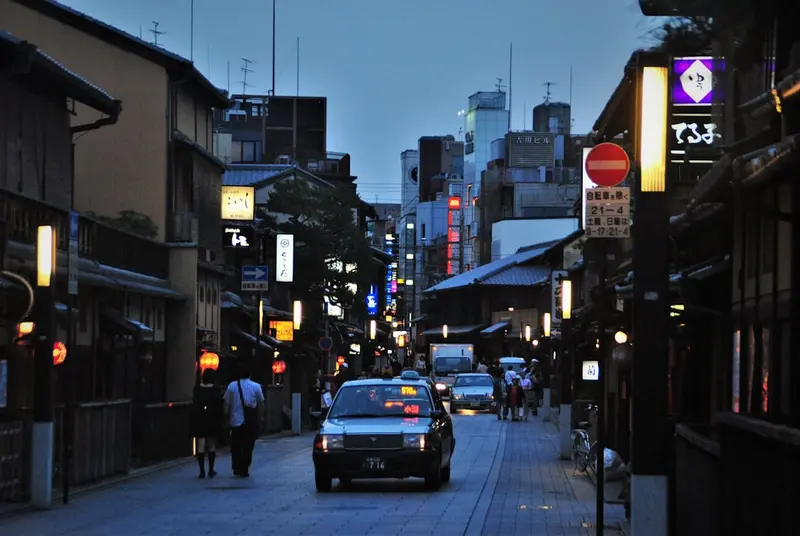
Kyoto, once Japan's imperial capital for over a thousand years, still preserves its rich cultural and historical identity today. The city boasts over 2,000 Buddhist temples and Shinto shrines, traditional gardens, and the vibrant Geisha district of Gion. Among its most famous attractions are the golden pavilion Kinkaku-ji, the impressive Fushimi Inari-Taisha with its thousands of red gates, and the serene Arashiyama Bamboo Grove. In the historic Gion district, you might, with a bit of luck, encounter Geishas and Maikos on their way to teahouses. For an authentic experience, you should visit the gardens of Ryoan-ji with their famous rock garden. To avoid the largest crowds, it is recommended to explore popular sites right after opening in the morning. The months of April and November offer spectacular views with cherry blossoms and autumn foliage respectively, but these are also the busiest times.
From Osaka, the train takes about 30 minutes to Kyoto. Three nights leave time for temples, gardens and a trip to Kurama-dera.
6 Sights
5 Restaurants
Kyoto: Center of Japanese Culture and History
Kyoto, Japan's former imperial capital from 794 to 1868 under the name Heian-kyō, is a living museum of its own history and art. This thousand-year era profoundly shaped the city, creating a unique cultural heritage that testifies to the intertwining of court traditions with Buddhism and Shintoism.Kyoto's architecture is a mirror of this development. It ranges from the magnificent wooden structures of countless temples and shrines, such as the UNESCO World Heritage site Kinkaku-ji and Kiyomizu-dera, to the elegant, traditional Machiya townhouses that define the streetscape of many districts.Local traditions and art forms are particularly nurtured in Kyoto. The tea ceremony, the arts of the geishas in the historic Gion district, as well as the creation of traditional crafts like kimono textiles, exquisite ceramics, and lacquerware are still vibrant and accessible here today. Kyoto thus serves as the spiritual and artistic heart of Japan, where the appreciation for aesthetics and historical continuity is deeply rooted.
Rich in culture and history. Perfect for unwinding and relaxation and Route highlight.
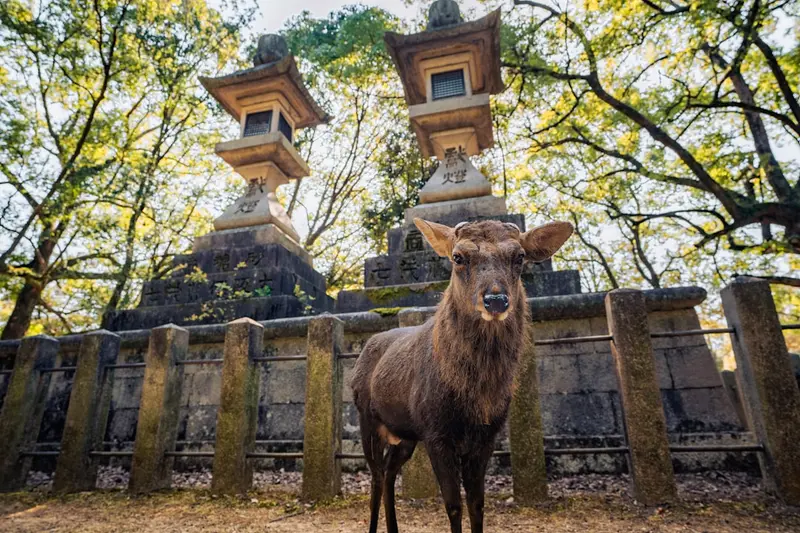
Nara, Japan's first permanent capital, combines rich history with a unique nature experience. In Nara Park, you'll encounter over a thousand free-roaming Sika deer, revered as messengers of the gods. The main highlight is the Todai-ji Temple, housing its Great Buddha Hall and one of the world's largest bronze statues. Also visit the colorful Kasuga Taisha Shrine, known for its lanterns and integration into the forest landscape. An early morning visit to the temples ensures a calmer experience. Also explore the Naramachi area for traditional crafts and local specialties.
5 Sights
4 Restaurants
Nara's Deeply Rooted Culture and History
Nara, in the 8th century (710-784 AD) as Heijō-kyō, Japan's first permanent capital, played a pivotal role in the country's cultural and political development. This era, known as the Nara period, witnessed the significant establishment of Buddhism and profoundly shaped Japan's art, architecture, and spiritual life.The city is a treasure trove of architectural masterpieces. The Tōdai-ji Temple, with its imposing Daibutsu-den (Great Buddha Hall) which houses a monumental bronze statue of the Daibutsu, is an outstanding example of the period's wooden architecture. The Kōfuku-ji Temple, with its distinctive five-story pagoda, also bears witness to the artistic and craftsmanship heyday.A unique cultural feature of Nara are the free-roaming Sika deer, which are revered as messengers of the gods and are an integral part of urban life. Traditional rituals and festivals, such as the annually held Omizutori at Tōdai-ji, where monks offer water and fire, preserve centuries-old customs and reflect the region's deep spiritual connection.
Rich in culture and history. Perfect for unwinding and relaxation and For adventure seekers.
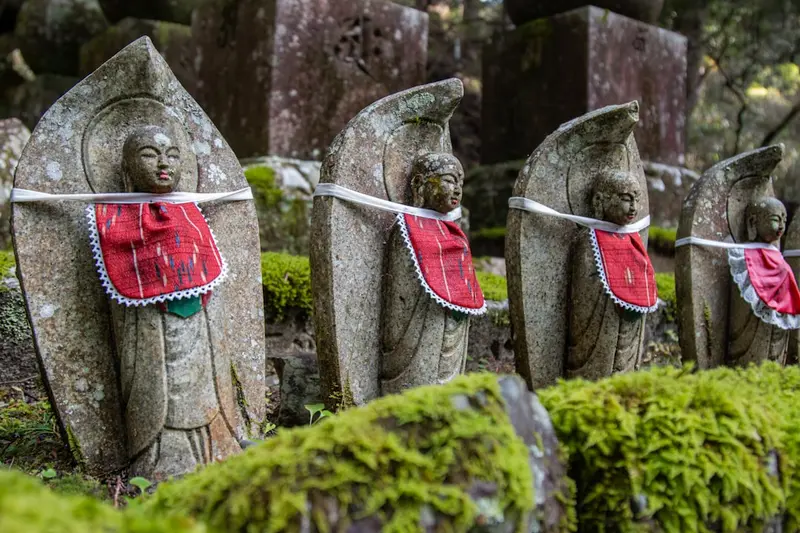
Koyasan (Mount Koya) is the spiritual center of Shingon Buddhism in Japan and a UNESCO World Heritage site. Here you will find over a hundred temples, grouped around the main temple Kongobuji, each possessing deep historical significance. An unforgettable highlight is the Okunoin Cemetery, an atmospheric cedar forest with countless graves and the mausoleum of Kobo Daishi, the founder of the Shingon school. Explore Kongobuji's intricate gardens and experience an overnight stay in a Shukubo (temple lodging) to participate in morning prayers. This unique experience offers deep insights into monastic life and the traditional Japanese cuisine, Shojin Ryori. For a particularly peaceful atmosphere, a visit in late autumn is recommended, when the foliage is spectacular and there are fewer tourists. Plan at least one overnight stay to fully absorb the mountain's peaceful stillness and spiritual energy.
From Nara, the journey takes about two and a half hours with transfers up to the cable car. A night in a temple lodging with morning prayers is at the heart of this route.
3 Sights
4 Restaurants
Koyasan: A Heritage of Spirituality
Founded in 816 by Kūkai (Kōbō Daishi) as the center of Shingon Buddhism, Koyasan has been a significant site of Japanese spirituality for over 1200 years. Over the centuries, the complex grew into a unique monastic city that continues to shape daily life today.Koyasan's architecture is an outstanding example of Japanese Buddhist temple construction. From the imposing Konpon Daito in Danjo Garan to the shrines and mausoleums along the path to Okunoin, the buildings reflect the aesthetics and spirituality of their respective eras. Traditions like Shukubo (temple lodging) and the practice of vegetarian Shojin Ryori are integral parts of its cultural heritage.Okunoin, with over 200,000 gravestones and the eternal light in the Torodo Hall, symbolizes the continuity of faith and the deep reverence for Kūkai, who is said to remain here in eternal meditation. This blend of history, living religion, and unique architecture makes Koyasan a place of profound cultural significance.