From Nairobi southwards: Elephants before Kilimanjaro in Amboseli, volcanic landscapes and springs in Tsavo West, the red earth of Tsavo East, and finally relaxation on Diani Beach.
13 Days / 12 Nights
June to October, January to March
5 stops
Why This Route?
The route combines three distinct safari parks plus a week on the Indian Ocean. Starting in Nairobi and ending in Mombasa, you avoid backtracking.
Hidden Gems
At Mzima Springs in Tsavo West, you look from an underwater viewing chamber into the clear spring pool, with some luck at hippos or crocodiles
From Tsavo East, you can also reach the coast with the Madaraka Express from Voi
Of the sacred Kaya forests of the Mijikenda near Diani, only Kaya Kinondo is open to visitors, and only with a local guide
Getting there and back
Open jaw: start and end are in different places
Arrival
Flight · Nairobi (NBO)Nairobi flights from German-speaking areas usually involve a stopover. Check schedule.
Departure
Flight · Mombasa (MBA)From Diani, via the Dongo Kundu bypass, about an hour to Mombasa Airport, avoiding the Likoni Ferry. Condor flies to Mombasa at times from Frankfurt, partly via Zanzibar. Check current flight schedule.
Itinerary
Stop 1 • 1 Night
Nairobi
City
routes.tagDescriptions.stadt. routes.tagDescriptions.museen and Rich in culture and history.
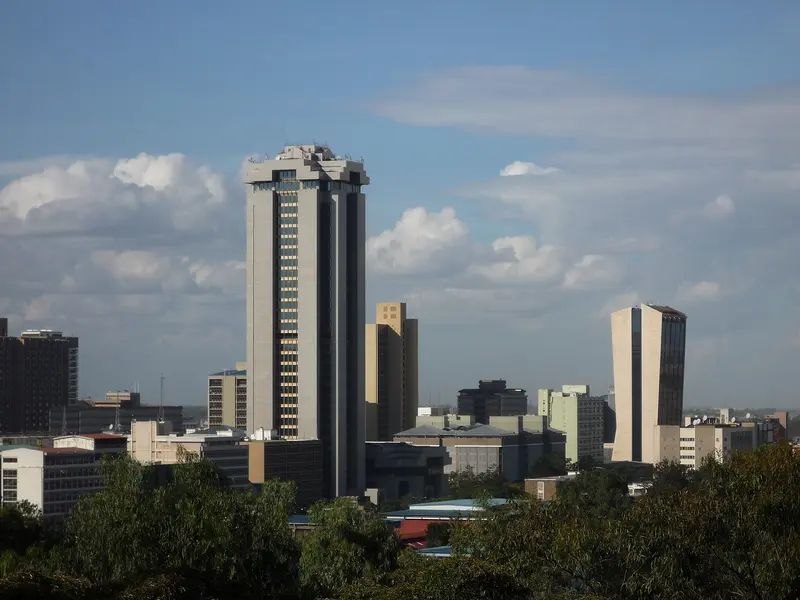
Kenya's capital lies in the highlands and is the start and end point for almost every safari. Nairobi is a loud, rapidly growing metropolis with skyscrapers in the centre, green villa districts, and a national park directly on the southern city limits.Besides the National Museum on Museum Hill and the KICC's observation deck, Karura Forest and the cultural performances at Bomas of Kenya are worth visiting. In the evenings, life shifts to the bars and clubs of Westlands.
Arrival and first night in the capital.
3 Sights
3 Restaurants
Culture & History
Museums and MemoryThe Nairobi National Museum traces its origins to the East African Natural History Society and, in 1930, moved into its building on Museum Hill as the Coryndon Museum. Its permanent exhibitions cover human prehistory up to Kenya's recent history; a snake park is located next door.Green CityKarura Forest in the north was preserved from development thanks to public protest by Wangari Maathai, founder of the Green Belt Movement and later Nobel Peace Prize laureate. Today, it is one of the city's most popular recreational spots.Diversity of Ethnic GroupsAt the Bomas of Kenya, recreated homesteads demonstrate the building styles of the country's diverse ethnic groups, accompanied by daily dance performances.
routes.tagDescriptions.nationalpark. routes.tagDescriptions.safari and routes.tagDescriptions.elefanten.
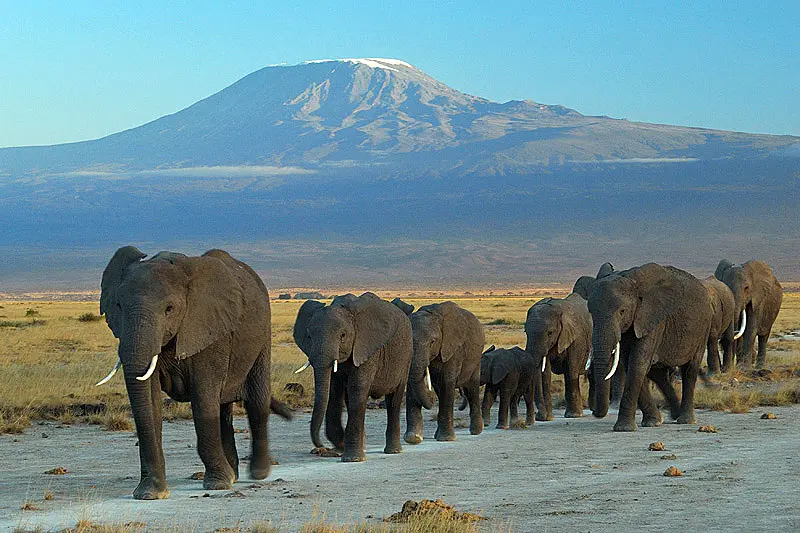
Amboseli National Park, in southern Kenya bordering Tanzania, approx. 240 km southeast of Nairobi, overlooks Kilimanjaro across the border. Elephant herds against the peak, towering over the plains on clear days, define its iconic scene.Across 392 square kilometers, dry plains, the mostly dry Lake Amboseli, and green swamps alternate. From Observation Hill, you overlook swamps and plains.
Early Game Drives: Kilimanjaro is most often cloud-free early morning; second chance: late afternoon. Observation Hill above the swamps.
2 Sights
Nature & History
From Reserve to National ParkAmboseli was designated a reserve in 1906 and declared a National Park in 1974. Since 1991, it has been a UNESCO Biosphere Reserve. In October 2025, administration transferred from the Kenya Wildlife Service to Kajiado County, with KWS remaining the owner. The park is the core of an approximately 8,000 square-kilometer ecosystem that extends across the border into Tanzania. The people in the surrounding area are predominantly Maasai.The Elephants of AmboseliSince 1972, Cynthia Moss's team has been researching the park's elephants. The elephant cow Echo, who lived here, is considered the most extensively studied elephant in the world. The Amboseli Elephant Research Project is based in the park.Swamps as LifelinesThe Enkongo Narok, Longinye, Ol Okenya, and Ol Tukai swamps are the only permanent water sources. Many animals gather here, especially during the dry season. In total, around 400 bird species have been counted, including 47 raptor species.
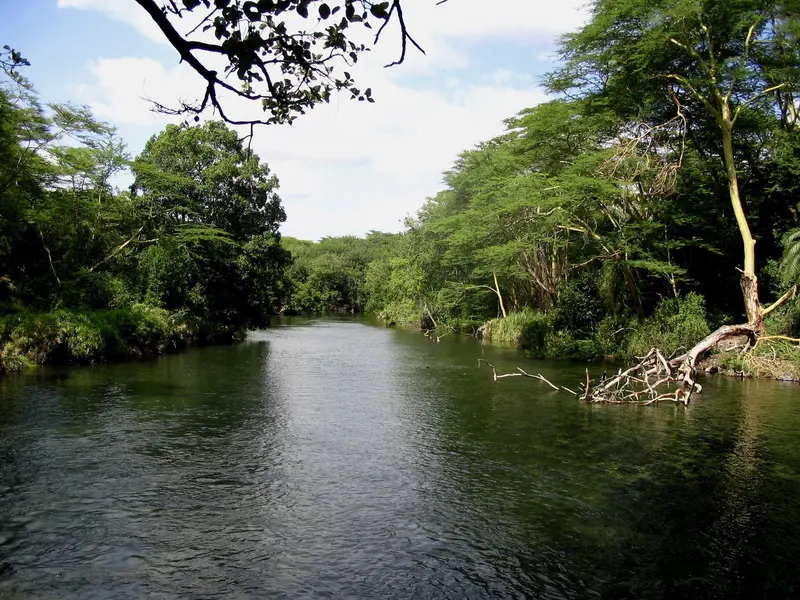
Tsavo West National Park extends west of the Nairobi–Mombasa road over 9,065 square kilometers. Volcanic cones, black lava fields, and the clear Mzima Springs characterize the park.At Mzima Springs, you can observe hippos and crocodiles from an underwater viewing chamber. The Ngulia Rhino Sanctuary is home to rhinos, and from viewpoints like Roaring Rocks, the view extends to Kilimanjaro on clear days.
Mzima Springs with hippos and underwater viewing chamber, Shetani lava flow.
3 Sights
Nature and History
Volcanic LandscapeThe Shetani lava flow and Chaimu Crater date back to Chyulu Hills eruptions, mostly 1856, though some sources cite 1886. The black rock remains largely unweathered. “Shetani” means ‘devil’ in Swahili. Small lava caves near the flow can be explored with a flashlight.Water from the Chyulu HillsThe Chyulu Hills have no permanent rivers: the rain that falls there feeds the Mzima Springs and the surrounding rivers. The springs form pools of crystal-clear water where hippos and crocodiles live.A Park Since 1948Tsavo West was founded in 1948 and is managed by the Kenya Wildlife Service. The A109 highway and railway line separate it from Tsavo Ost. The Ngulia Rhino Sanctuary was established in 1986 as a fenced reserve for black rhinos and significantly expanded in December 2025.
routes.tagDescriptions.nationalpark. routes.tagDescriptions.safari and routes.tagDescriptions.elefanten.
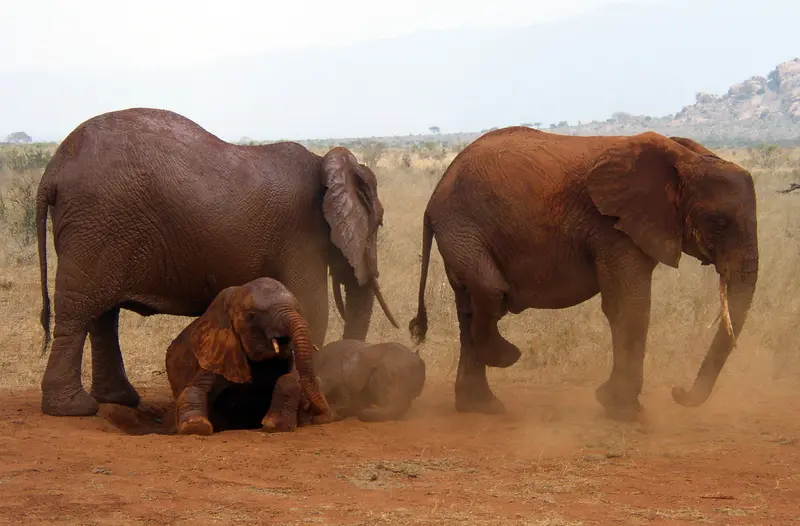
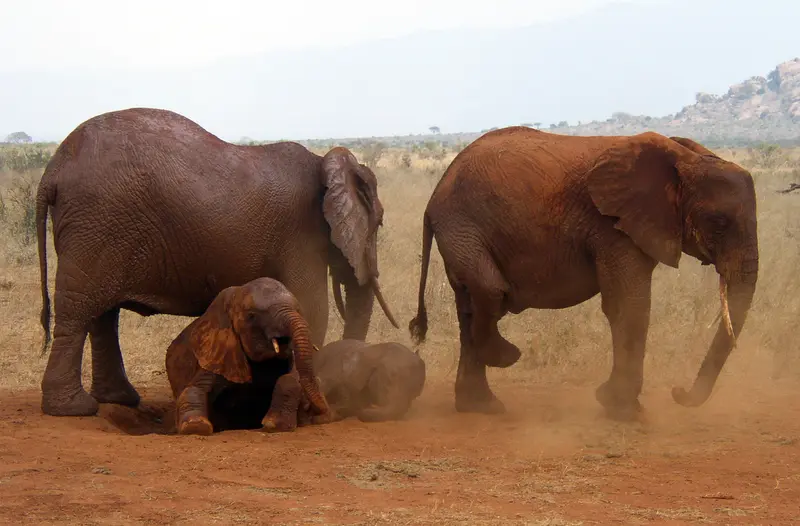
Tsavo East National Park, located east of the Nairobi–Mombasa road, covers 13,747 square kilometers. It is known for its elephants, which wallow in the red dust, giving them a reddish shimmer.Vast, dry bush savanna, the Galana River with Lugard Falls, and watering holes like Aruba Dam and Mudanda Rock define the game drives.
Lugard Falls at Galana, Mudanda Rock, red elephants.
4 Sights
1 Restaurant
Nature and History
Red ElephantsThe elephants of Tsavo take dust baths in the iron-rich red earth and therefore often bear a reddish coating. The best photos are captured in the early morning and late afternoon.The Man-Eaters of TsavoDuring the construction of the Uganda Railway in 1898, two lions killed numerous workers, until John Henry Patterson hunted them down. The park itself was founded in April 1948, on an area previously known as the Taru Desert.The Yatta PlateauAlong the western border stretches the approximately 290-kilometer-long Yatta Plateau, one of the world's longest lava flows. Its lava originates from Ol Donyo Sabuk.
Dreamy beaches. Stunning nature and outdoors and routes.tagDescriptions.wassersport.
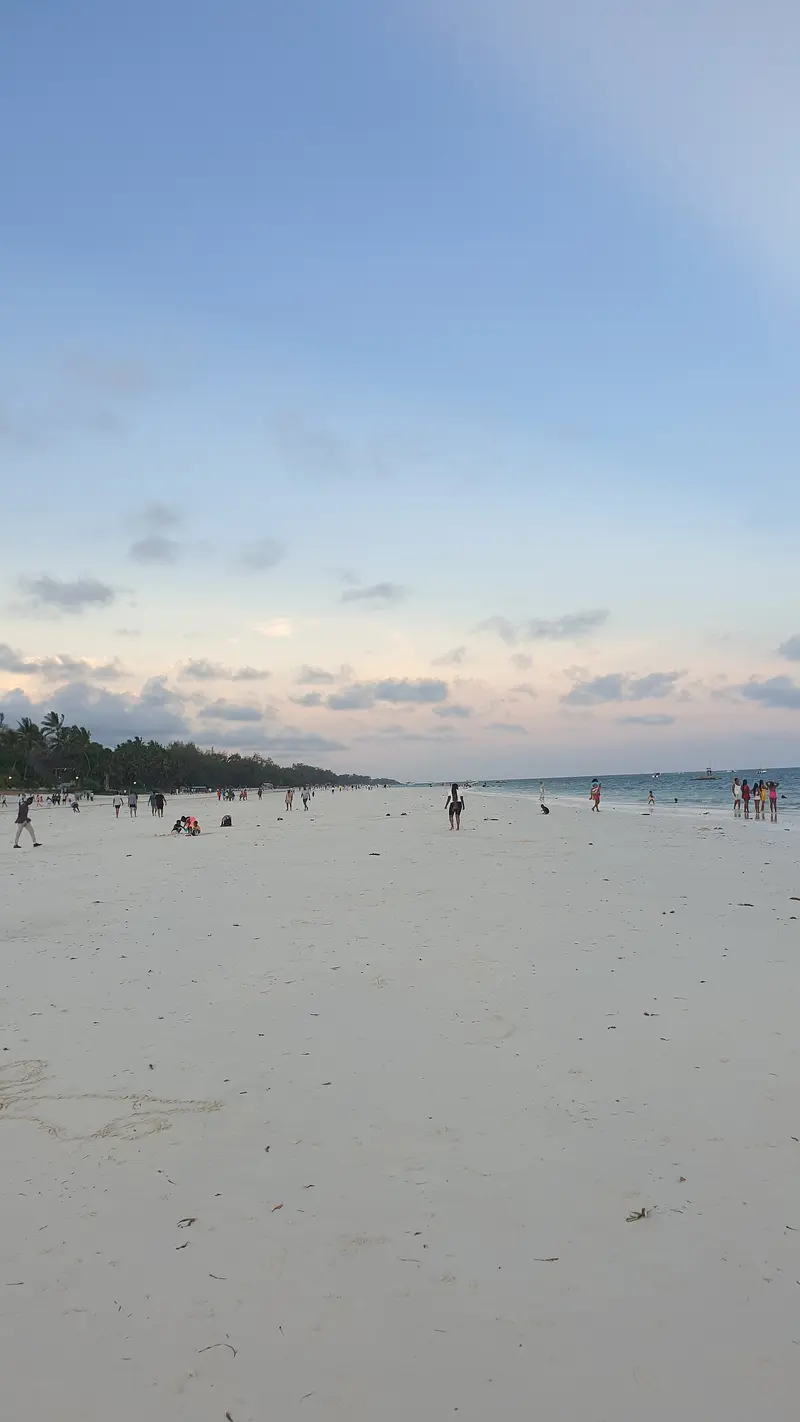
Diani Beach is the most famous resort town on Kenya's South Coast, south of Mombasa, about an hour's drive from the city center depending on the route and traffic. A long white sandy beach, restaurants, and hotels are situated right next to coastal forest, where the organization Colobus Conservation protects endangered colobus monkeys.At the southern end of Diani, you can visit the sacred Kaya Kinondo forest of the Digo on guided walks.
Beach, snorkeling in the Kisite-Mpunguti Marine Reserve from Shimoni, Colobus monkeys in the coastal forest.
3 Sights
3 Restaurants
Culture and Nature
Kaya KinondoKayas are the sacred forests of the Mijikenda, where fortified settlements once stood and which still serve as places of prayer today. In 2008, UNESCO designated several Kaya forests as World Heritage Sites, but the World Heritage Committee explicitly excluded Kaya Kinondo in its decision. This approximately 30-hectare forest of the Digo is accessible through an ecotourism project with a guide. Rules apply: appropriate clothing, speak softly, do not touch plants, and no photography.Colobus ConservationThe organization on Diani Beach Road cares for injured and rescued monkeys, including the endangered Angola colobus monkeys. It responds to emergency calls concerning electrocutions and road accidents, plants trees, and conducts environmental education. Visits are possible Monday to Saturday from 8:30 AM; it's best to book tours in advance.