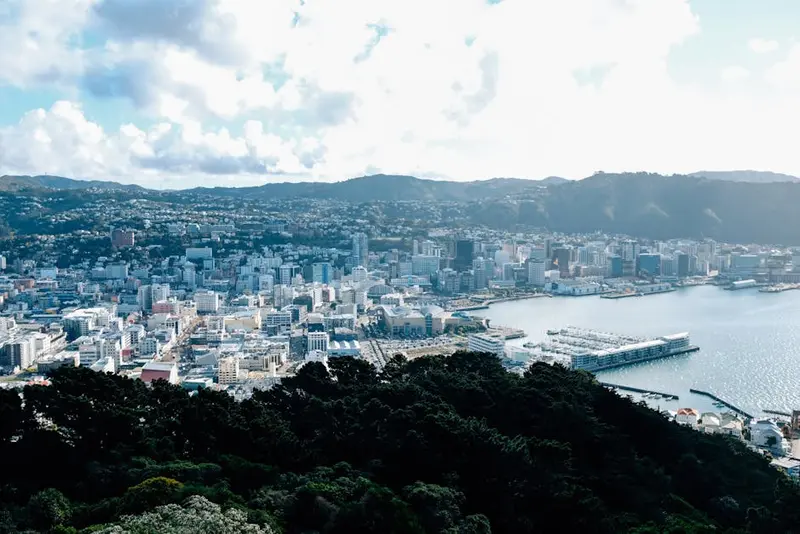
From Auckland, the camper travels via Rotorua and Taupō to Wellington, with multiple nights at each place. The longest drive, from Taupō to Wellington, takes around five hours, passing Tongariro National Park.
11 Days / 10 Nights
November–March
4 stops
Why This Route?
For beginner campers exploring the North Island with short stages and well-equipped sites.
Hidden Gems
Lake Tikitapu (Blue Lake) near Rotorua
Otumuheke Stream in Taupō, a warm stream on the Waikato River
Red Rocks Coastal Walk on Wellington's South Coast
Itinerary
Stop 1 • 2 Nights
Auckland
Region
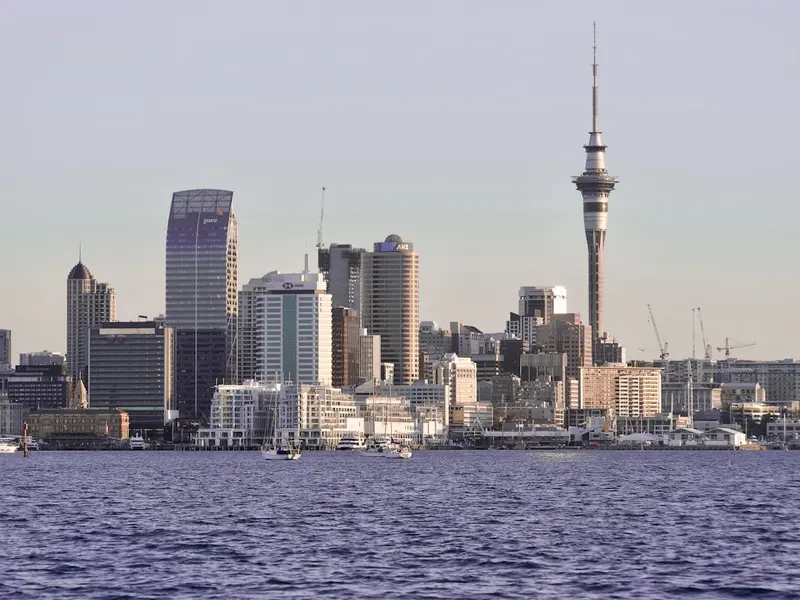
The Auckland region includes the country's largest city, the islands of the Hauraki Gulf, the west coast with black sand beaches, and the Waitakere Ranges. Most travellers land here and start their tour in Auckland.
Culture
The isthmus was densely populated long before the arrival of Europeans, with the volcanic cones serving as fortified Pā. After the Treaty of Waitangi, Auckland became the capital in 1841; in 1865, this status passed to Wellington.Today, Māori, Pacific, and Asian communities shape the region more strongly than any other in the country. The Auckland War Memorial Museum houses the largest collections on Māori and Pacific culture.
Rich in culture and history. For adventure seekers and Perfect for unwinding and relaxation.
Rotorua smells of sulfur, and that's part of the experience: The city on the southern shore of Lake Rotorua lies in the middle of a geothermal area. Between pavements and front gardens, steam rises from the ground; in Te Puia, the Pōhutu Geyser erupts; and in Kuirau Park, mud pools bubble without an entrance fee.Rotorua is also the center of the Te Arawa and one of the best places in New Zealand to experience Māori culture, whether in the living village of Whakarewarewa, in lakeside Ohinemutu, or at a cultural evening with Hāngī.
9 Sights
4 Restaurants
Te Arawa and the Spa Town
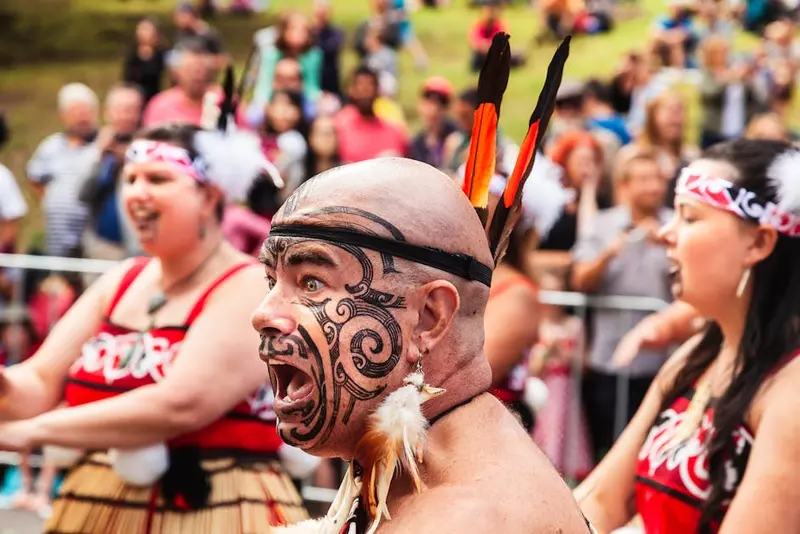
The Iwi of Te Arawa have lived for centuries by the lakes around Rotorua and use geothermal energy for cooking, bathing, and heating. In Ohinemutu and Whakarewarewa, families still live today amidst steaming springs, and their carved meeting houses (Wharenui) display the ancestors of the Iwi.At the end of the 19th century, the government transformed Rotorua into a spa town; the Bath House in the Government Gardens is a reminder of this era. Today, you can experience Māori culture at cultural evenings featuring Haka, Waiata, and Hāngī or in the carving and weaving workshops at Te Puia.
For adventure seekers. Perfect for unwinding and relaxation and Culinary highlights.
Taupō is located on the northeastern shore of Lake Taupō, New Zealand's largest lake. The lake fills a caldera formed by massive volcanic eruptions; the last major eruption occurred around 232 AD.The town is a base for water sports, trout fishing, skydiving, and excursions to Huka Falls, Craters of the Moon, and Tongariro National Park, whose volcanoes you can see from the shore on clear days.
6 Sights
4 Restaurants
Land of the Ngāti Tūwharetoa
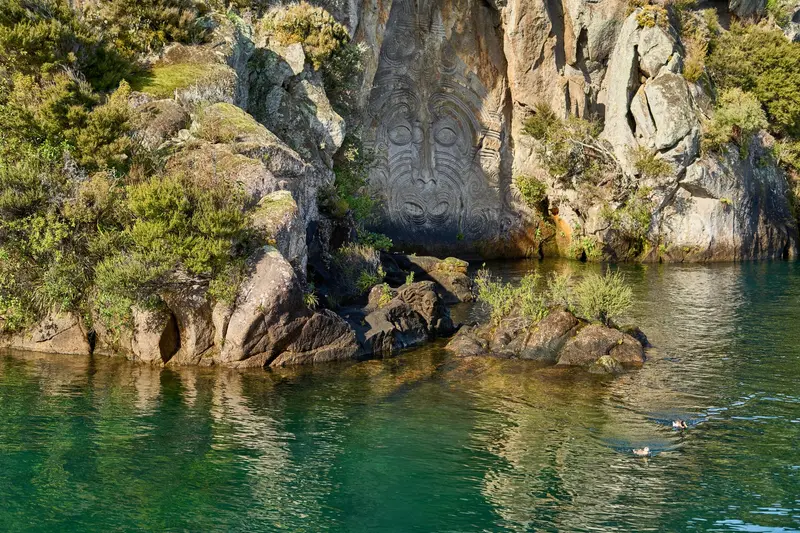
Lake Taupō and its surroundings are the ancestral lands of the Ngāti Tūwharetoa. The full Māori name for the lake, Taupō-nui-a-Tia, honours the explorer Tia. A visible sign of their culture is the rock carvings in Mine Bay, depicting the navigator Ngātoroirangi.The town itself originated in the 19th century as an army post and grew with tourism focused on fishing and thermal springs. The Taupō Museum showcases the region's history and art.
The region at the southern tip of the North Island stretches from the capital through the Hutt Valley and the Kāpiti Coast to the Wairarapa with its wineries. For most travellers, Wellington is the hub between the North and South Islands.
Culture
The region is politically and culturally marked by the capital, with Parliament, National Museum and film industry. Outside the city, it quickly becomes rural: The Wairarapa thrives on sheep farming and wine, while the Kāpiti Coast is home to many commuters.