The route begins in Lisbon and leads to the coast to Cascais, then to the palaces of Sintra and further north to walled Óbidos and the fishing village of Nazaré. No stage takes longer than a good hour; Cascais and Sintra are also reachable from Lisbon by suburban train. With ten overnight stays, it's easily doable in about one and a half weeks.
11 Days / 10 Nights
March to June & September to October
5 stops
Why This Route?
For first-time visitors to combine the city, palaces, and Atlantic coast without long drives.
Hidden Gems
Miradouro da Senhora do Monte in Graça, Lisbon, higher and quieter than Santa Luzia
Monserrate Park in Sintra, significantly less visited than Pena Palace
Forte de São Miguel Arcanjo in Nazaré, overlooking the waves of Praia do Norte.
Itinerary
Stop 1 • 3 Nights
Lissabon
City
Route highlight
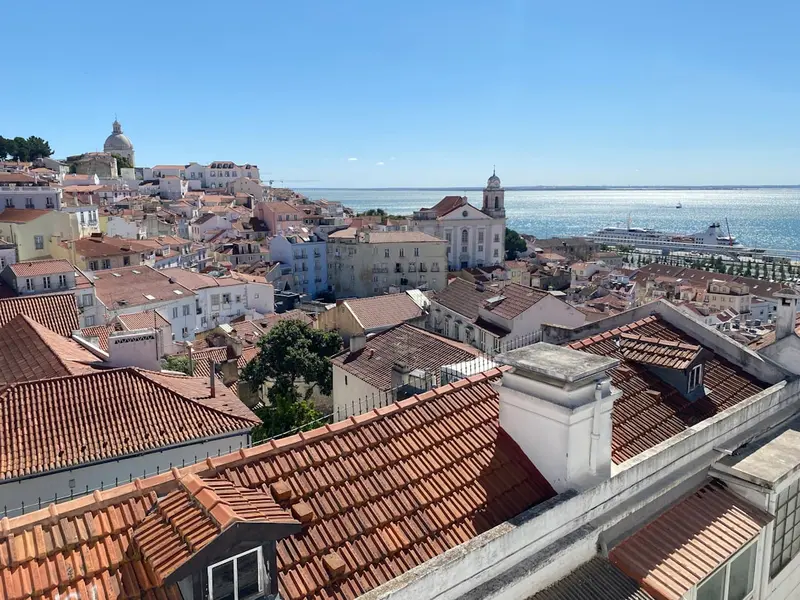
Lisbon is situated on several hills on the north bank of the Tagus Estuary, a good 15 kilometers from the Atlantic. The capital links the winding alleys of Alfama, the Baixa, rebuilt to plan after the 1755 earthquake, and the monuments of the Age of Discoveries in Belém. Viewpoints, yellow trams, and Fado venues are part of the city's everyday life.
7 Sights
5 Restaurants
Culture & History
From Olisipo to the EarthquakePhoenicians, Romans, and Moors shaped the city before Afonso Henriques conquered it in 1147. In the 15th and 16th centuries, Lisbon became the centre of a maritime empire; the Manueline style with its ropes, shells, and armillary spheres in stone is visible at the Jerónimos Monastery and Belém Tower. The earthquake of 1 November 1755 destroyed large parts of the city. The Marquês de Pombal subsequently had the Baixa rebuilt in a grid pattern.Fado, Azulejos, and Santos PopularesFado, a UNESCO Intangible Cultural Heritage since 2011, originated in Alfama and Mouraria and is still sung today in small Casas de Fado. Painted tiles adorn churches, train stations, and residential buildings. In June, the city celebrates the Santos Populares, culminating in the night of 13 June in honour of Saint Anthony with grilled sardines in the alleys.
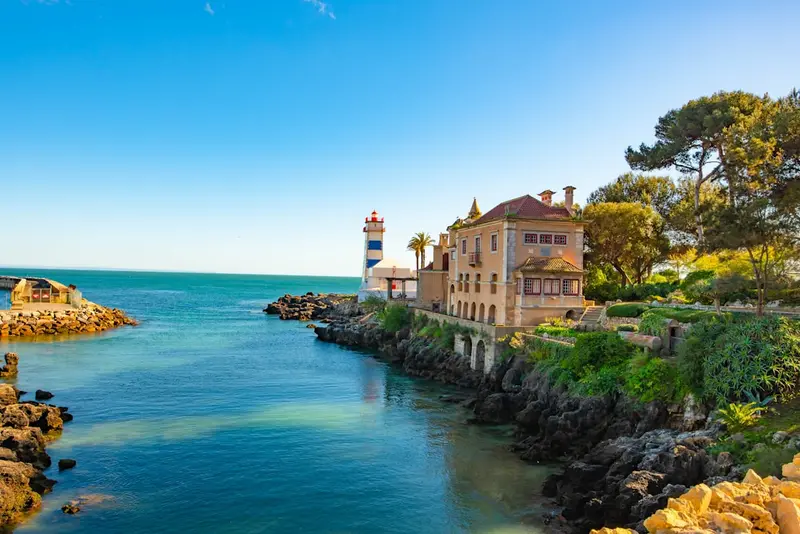
Cascais is located about 30 kilometers west of Lisbon on the Atlantic coast. The former fishing village became a summer residence for the royal family in the 19th century and is now a popular beach resort and residential town with an old town, a marina, small city beaches, and a rocky coast that stretches west to Cabo da Roca.
6 Sights
4 Restaurants
History & Character
From Fishing Village to Seaside ResortFor centuries, Cascais was a fishing village, fortified at the Tejo estuary entrance. From 1870, King Luís I summered in the Citadel, drawing nobility and wealthy citizens who built coastal villas. With the 1889 Lisbon railway opening, the town evolved into a seaside resort. In the 20th century, Cascais and Estoril hosted many exiled monarchs and refugees.Art and MuseumsAround Marechal Carmona Park lie several museums, including the Casa das Histórias Paula Rego, dedicated to the Portuguese-born painter, and the Museu Condes de Castro Guimarães, in a seaside villa. Today, the Citadel houses a hotel, studios, and galleries.
Sintra is located approximately 25 kilometers northwest of Lisbon on the slopes of the forested Sintra Mountains. For centuries a summer residence for kings and nobility, the small town is today known for its palaces, castles, and parks, which are part of the UNESCO World Heritage as a cultural landscape since 1995.
5 Sights
4 Restaurants
History & Character
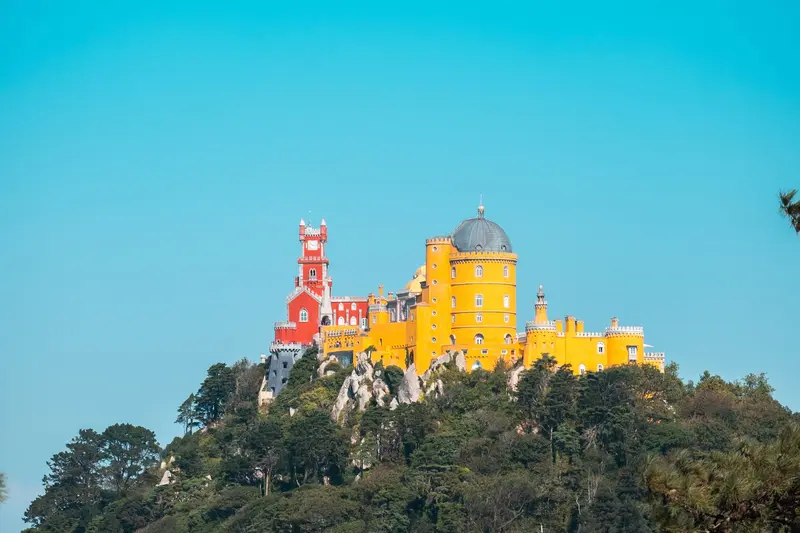
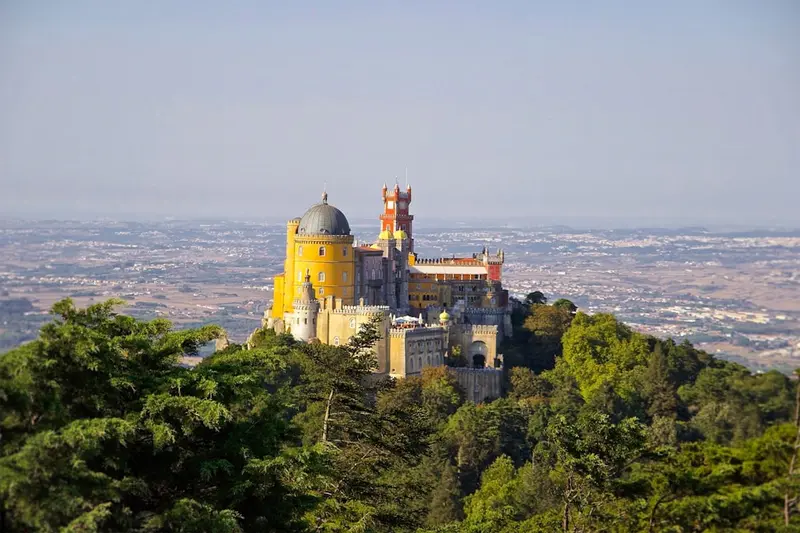
From Moorish Castle to Royal Summer ResidenceA Moorish castle was built on the ridge in the 9th-10th centuries. After its Christian conquest in the 12th century, Sintra became the Portuguese kings' favoured country seat. The town's National Palace largely dates from the 15th-16th centuries, featuring period Azulejos.19th-Century RomanticismKing Ferdinand II began building the Pena Palace in 1842 on monastery ruins. It became a major work of European Romanticism, blending Gothic, Manueline, and Moorish styles. Wealthy Britons and Portuguese followed with their own estates like Monserrate, and in the early 20th century, Quinta da Regaleira. This mix of architecture and landscaped nature led to its 1995 inscription as a World Heritage cultural landscape.
Rich in culture and history. Perfect for an exciting city trip.
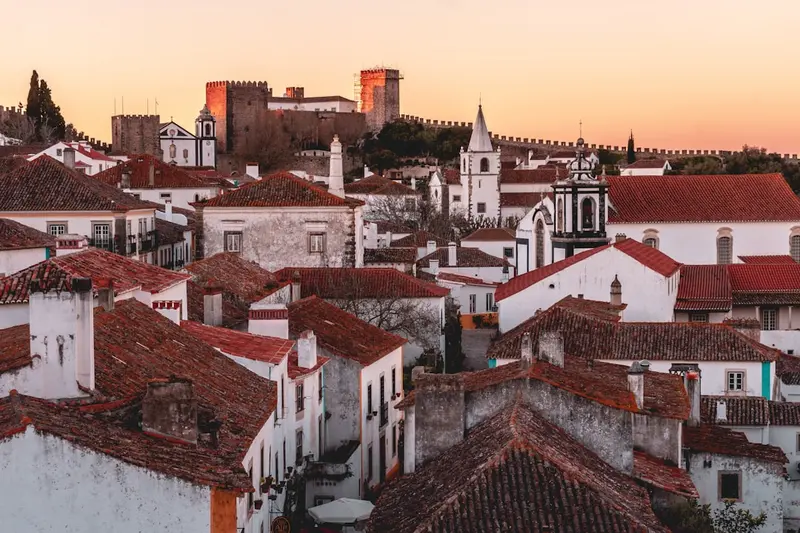
Óbidos is a small town, completely surrounded by a medieval wall, about 80 kilometers north of Lisbon. Inside the walls are white houses with blue and yellow trim, cobblestone streets, and churches; the castle crowns the top. Since 2015, Óbidos has been part of the UNESCO Cities of Literature network, and several bookshops are housed in unusual spaces. During the day it is very busy, but significantly quieter in the mornings and evenings.
7 Sights
13 Restaurants
Culture and History
Afonso Henriques conquered Óbidos from the Moors in 1148. In 1282, King Dinis gifted the town to his wife Isabel for their wedding, after which Óbidos remained property of the Portuguese queens for centuries. In Santa Maria Church, the young King Afonso V married his cousin Isabel in 1441. The painter Josefa de Óbidos lived here in the 17th century.Typical is the cherry liqueur Ginja, often served in small chocolate cups. Each year, a Chocolate Festival and a Medieval Market in summer take place.
For adventure seekers. Rich in culture and history and Perfect for unwinding and relaxation.
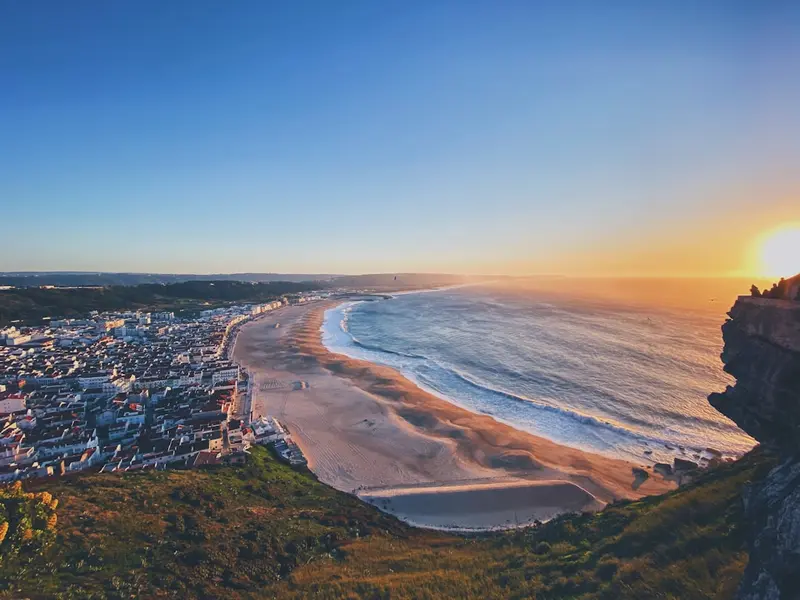
Nazaré is a fishing and beach town on the Costa de Prata, around 120 km north of Lisbon. The lower town is on the long sandy beach; atop the cliff sits Sítio, with a pilgrimage church and viewpoint. Nazaré is world-famous for its huge waves, breaking at Praia do Norte in winter and attracting big-wave surfers worldwide.
6 Sights
17 Restaurants
Culture and History
According to legend, in 1182, the Virgin Mary saved the knight Dom Fuas Roupinho, whose horse stopped in the fog at the Sítio cliff. From this, the pilgrimage site with the Church of Nossa Senhora da Nazaré emerged.Nazaré was long a fishing village where boats were pulled directly from the beach into the sea. Some elderly women still wear traditional skirts with multiple layers, and fish is dried on racks in the sun on the beach. The waves of Praia do Norte gained international fame starting in 2011 when surfer Garrett McNamara rode a record-breaking wave there.