Fernweh: Home
    ExploreTravel GuidesPlan a tripMy tripLast visited
    de|en
    All Places & RegionsAll highlightsAbout FernwehFAQPrivacy PolicyImprint
    ExploreTravel GuidesPlan a tripMy tripLast visited
    • Neighborhoods & highlights
    • Recommendations
    • Walking tours
    • Eat & drink
    • Food culture
    • Culture
    • Nightlife
    • Getting around
    • Accommodation
    • Plan trip
    • Nearby
    Lisbon

    Portugal

    Lisbon

    City

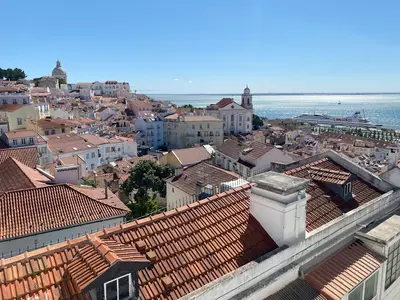
    Lisbon is situated on several hills on the north bank of the Tagus Estuary, a good 15 kilometers from the Atlantic.

    by Felix Gillen

    1. Home
    2. Destinations
    3. Portugal
    4. Lisbon Metropolitan Area
    5. Lisbon
    Lisbon is situated on several hills on the north bank of the Tagus Estuary, a good 15 kilometers from the Atlantic. The capital links the winding alleys of Alfama, the Baixa, rebuilt to plan after the 1755 earthquake, and the monuments of the Age of Discoveries in Belém. Viewpoints, yellow trams, and Fado venues are part of the city's everyday life.
    Alfama

    District 1 of 4

    Alfama

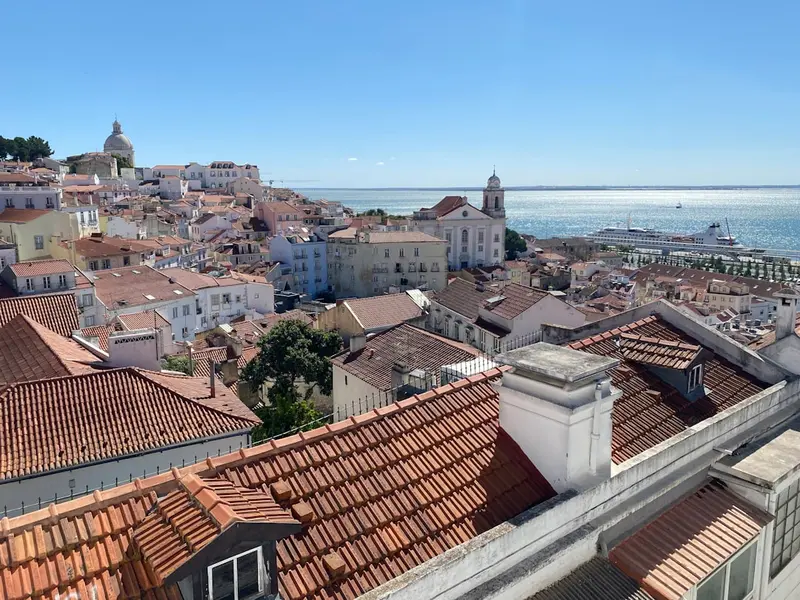
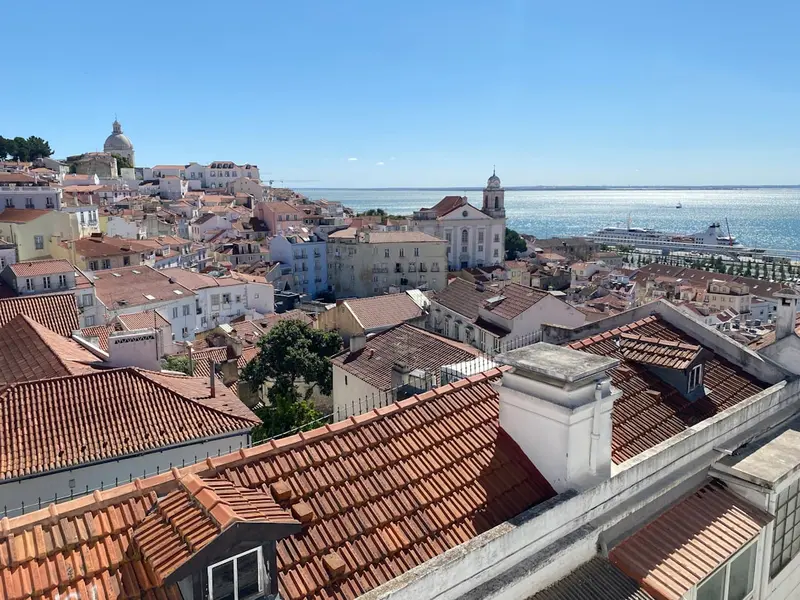
    The Alfama is Lisbon's oldest district and stretches steeply down from the castle hill to the Tejo. Its labyrinth of streets dates from Moorish times and withstood the 1755 earthquake because the district stands on solid rock.

    Discover
    Bairro Alto

    District 2 of 4

    Bairro Alto

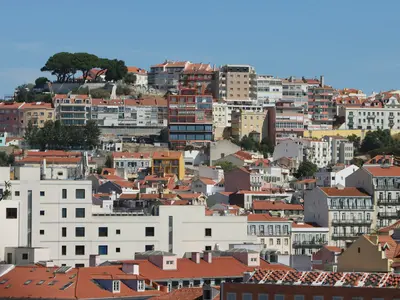
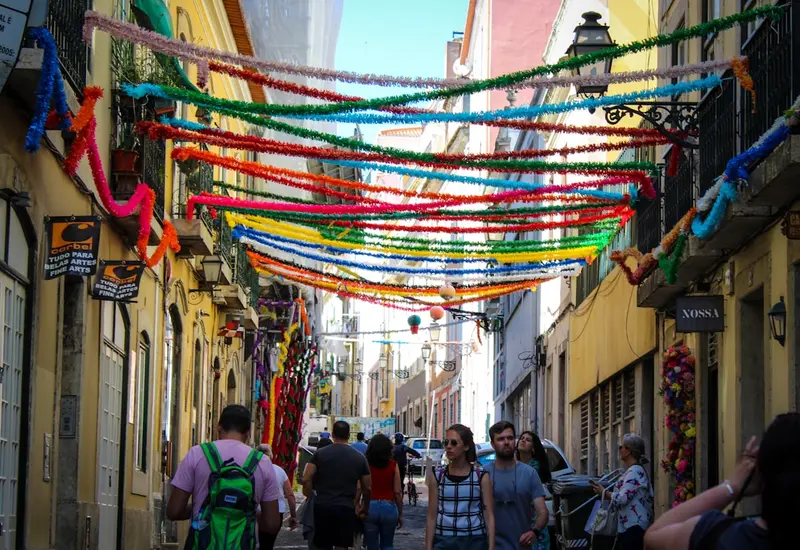
    The Bairro Alto is located on a hill west of Baixa and was laid out in a grid in the 16th century. By day, a quiet residential area with small shops and studios, the narrow streets fill up from late evening with people standing outside tiny bars.

    Discover
    Baixa Pombalina

    District 3 of 4

    Baixa Pombalina

    The Baixa Pombalina is the lower town located between Rossio and Tejo. After the 1755 earthquake, Marquês de Pombal had it rebuilt in a grid pattern, featuring uniform facades and one of Europe's earliest earthquake-proof constructions.

    Discover
    Belém

    District 4 of 4

    Belém

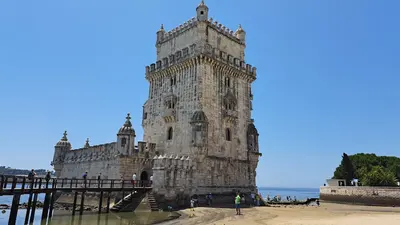
    Belém lies six kilometres west of the Old Town on the Tagus, the departure point for discovery voyages in the 15th and 16th centuries.

    Discover

    Sights in Lisbon

    Discover the most important sights and attractions

    Torre de Belém

    1Torre de Belém

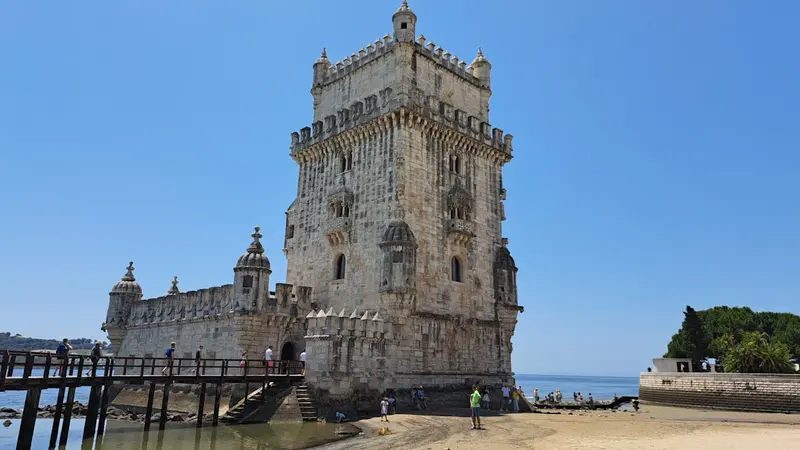
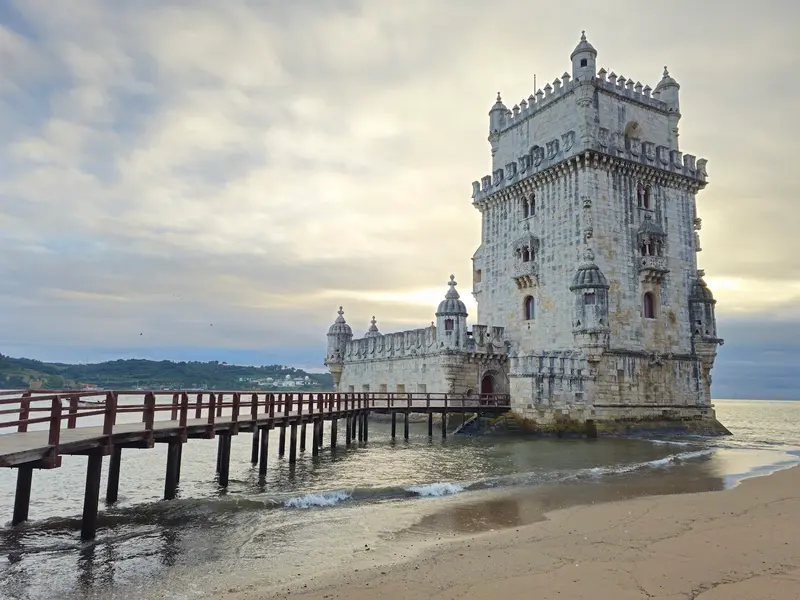
    The tower was built between 1514 and 1519 as a fortification at the entrance to Lisbon's harbor. With its balconies, watchtowers, and stonework, it is considered a masterpiece of the Manueline style and has been on the UNESCO World Heritage List since 1983. Inside, a narrow spiral staircase leads up to the rooftop terrace; expect waiting times.
    Open in Google Maps
    Mosteiro dos Jerónimos

    2Mosteiro dos Jerónimos

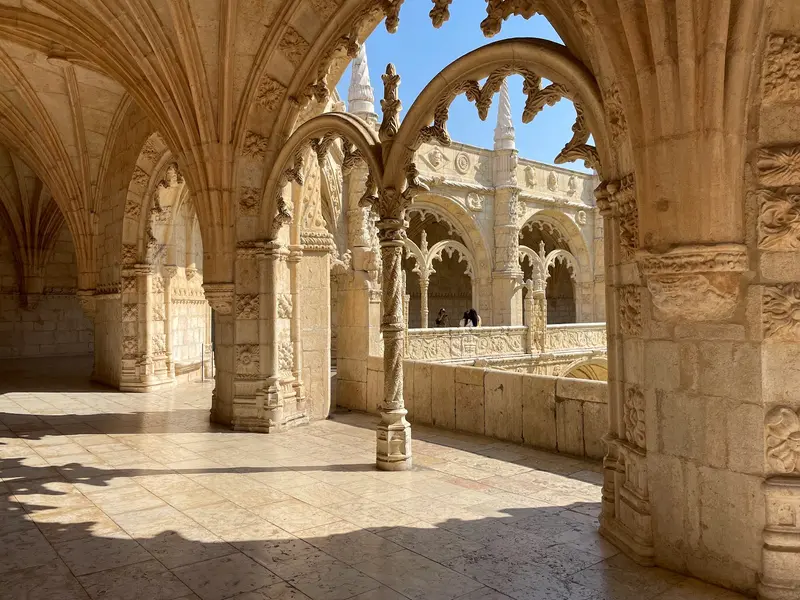
    King Manuel I commissioned the monastery in 1501, funded by revenues from the spice trade. The two-story cloister with its stone ornamentation is the most famous part; in Santa Maria church lie the tombs of Vasco da Gama and Luís de Camões. A UNESCO World Heritage site since 1983; entry to the church is free, the cloister requires an admission fee.
    Open in Google Maps
    Alfama Viertel

    3Alfama Viertel

    The city's oldest district stretches from the castle hill to the Tejo. Standing on solid rock, it withstood the 1755 earthquake better than the lower city, its Moorish-era street labyrinth intact. Stairs, small squares and viewpoints like the Miradouro de Santa Luzia are best explored on foot.
    Open in Google Maps
    Castelo de São Jorge

    4Castelo de São Jorge

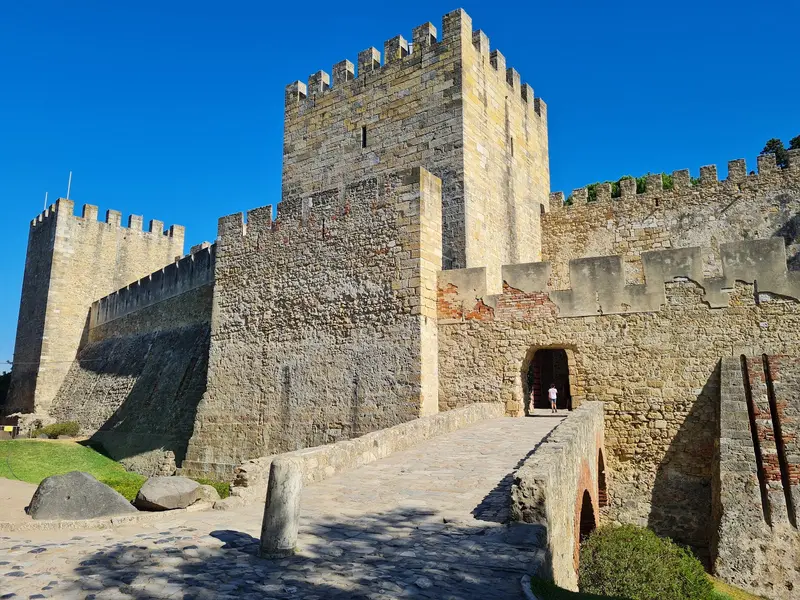
    The castle on the highest hill of the Old Town dates back to a Moorish fortress and was a royal seat until the 16th century. From the walls and towers, the view stretches over Baixa, the Tagus, and the 25 de Abril Bridge. Peacocks roam freely on the grounds; an archaeological area displays settlement remains from Moorish times.
    Open in Google Maps
    Elevador de Santa Justa

    5Elevador de Santa Justa

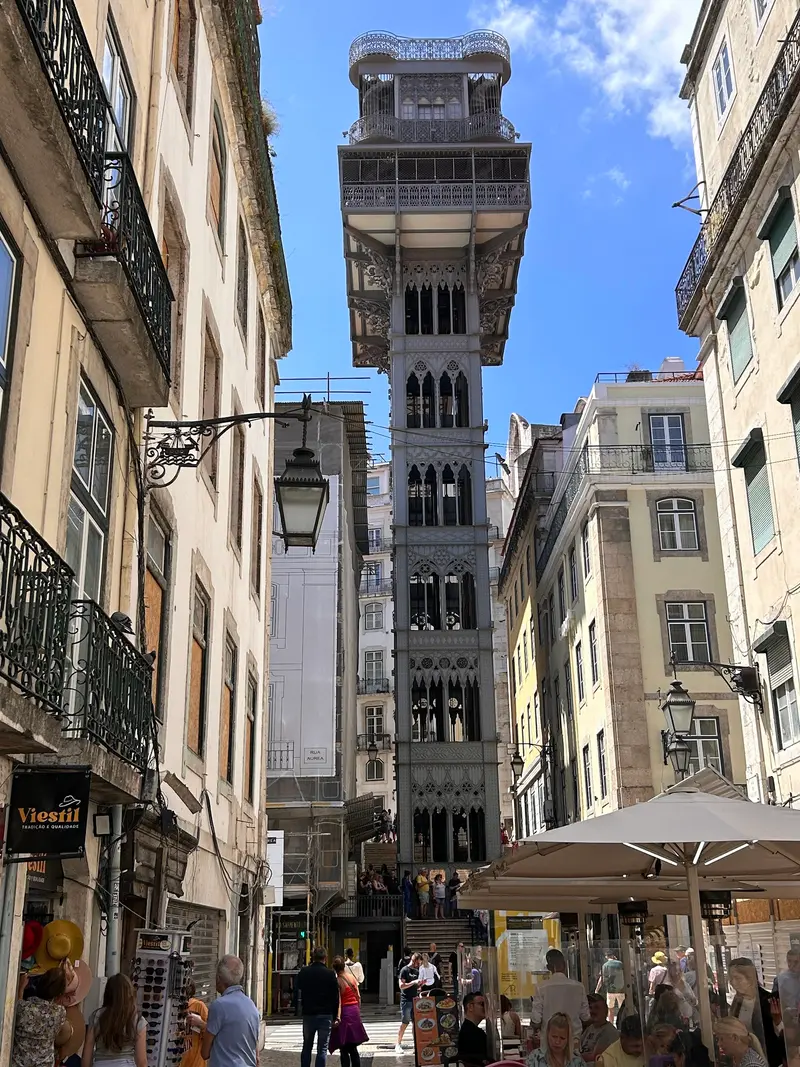
    The 1902 Neo-Gothic cast-iron lift connects Baixa with Largo do Carmo in Chiado. It was designed by engineer Raoul Mesnier du Ponsard. The top viewing platform offers panoramic views over Rossio, the castle hill, and the Tejo; queues at the lower station are often long, but you can also reach the platform on foot via Chiado.
    Open in Google Maps
    Oceanário de Lisboa
    Aquarium

    6Oceanário de Lisboa

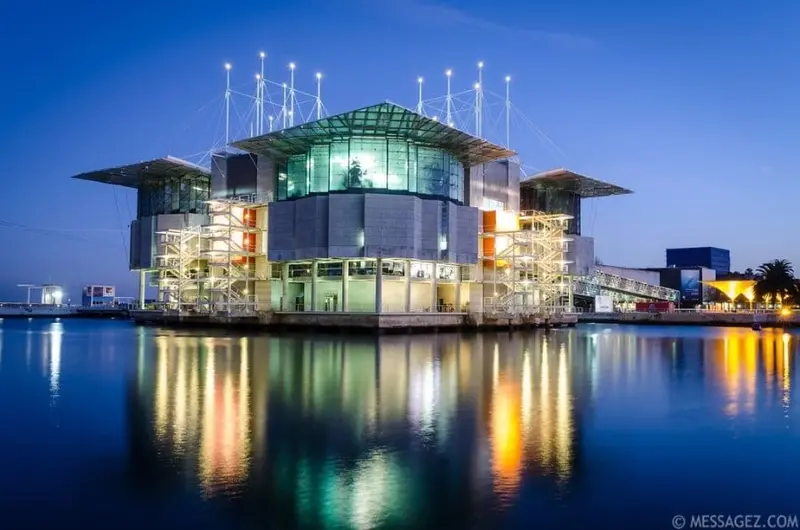
    The Aquarium in Parque das Nações was built for the Expo 98 World Exhibition. Around a central tank featuring sharks, rays, and an ocean sunfish, four ocean habitats are grouped, including rocky coastlines with sea otters and penguins. Reach it from the city center in about 20 minutes by metro (red line, Oriente).
    Open in Google Maps

    City walks in Lisbon

    Curated walking tours through the city's highlights, handpicked by experienced travel journalists.

    Lisbon's Bohemia & Panoramas: Chiado, Bairro Alto & Príncipe Real

    Experience the pulsating cultural heart of Lisbon on this walk through the elegant Chiado district, the lively Bairro Alto and the charming Príncipe Real. Discover historic ruins, literary cafés, street art and breathtaking views that reveal another side of the city.

    ~2 Std. 40 Min.
    Open in Google Maps
    Stops (8)

    Restaurants & Cafes

    1

    Cervejaria Ramiro

    The Bierhalle on Avenida Almirante Reis has been serving seafood by weight since the 1950s: prawns, crabs, mussels, and percebes. Traditionally, the meal ends with a Prego, a steak sandwich. No reservations, so expect to wait half an hour or more in the evenings.
    Show on Google Maps
    2

    Solar dos Presuntos

    Traditional restaurant near Avenida da Liberdade, offering cuisine from Minho in northern Portugal. Besides fish and seafood, the menu features ham, game dishes, and Arroz de Marisco; service is classic, prices are upscale.
    Show on Google Maps
    3

    Time Out Market Lisboa (Mercado da Ribeira)

    Since 2014, the 1882 market hall at Cais do Sodré has housed a Food Hall with stands by renowned Lisbon chefs and restaurants. You sit at long tables and order from the stands. It's very crowded for lunch and dinner; the traditional fresh market in the other part of the hall opens in the morning.
    Show on Google Maps
    4

    Fábrica da Nata

    Pastry chain with an open bakery where you can watch Pastéis de Nata being made. The tarts come warm from the oven; they pair perfectly with a Bica, the Lisbon espresso.
    Show on Google Maps
    5

    A Cevicheria

    Small spot in Príncipe Real, recognized by the large octopus on the ceiling. Chef Kiko Martins serves Peruvian-inspired ceviches with Portuguese fish and Pisco Sour. Limited seating, no reservations; expect waiting times.
    Show on Google Maps

    Food and Drink

    The gastronomy of Lisbon offers a rich culinary selection, from traditional fish and seafood dishes to the famous Pastéis de Nata. Explore authentic Tascas in districts like Alfama, visit the renowned Cervejaria Ramiro, or sample the culinary diversity at the modern Time Out Market Lisboa.

    Pastel de Nata

    Puff pastry tartlets with egg custard, warm with cinnamon. They bake the Pasteis de Belém using their own recipe since 1837.

    Roasted sardines

    Grilled sardines, especially during the Santos Populares in June, traditionally served on a slice of bread.

    Bifana

    A bun with garlic and wine-marinated pork, a typical standing bar snack.

    Ginjinha

    Sour cherry liqueur, served in small bars around Rossio, often in a chocolate cup.

    Bacalhau à Brás

    Flaked dried cod with straw potatoes, onions and egg, garnished with black olives and parsley.

    Culture & History

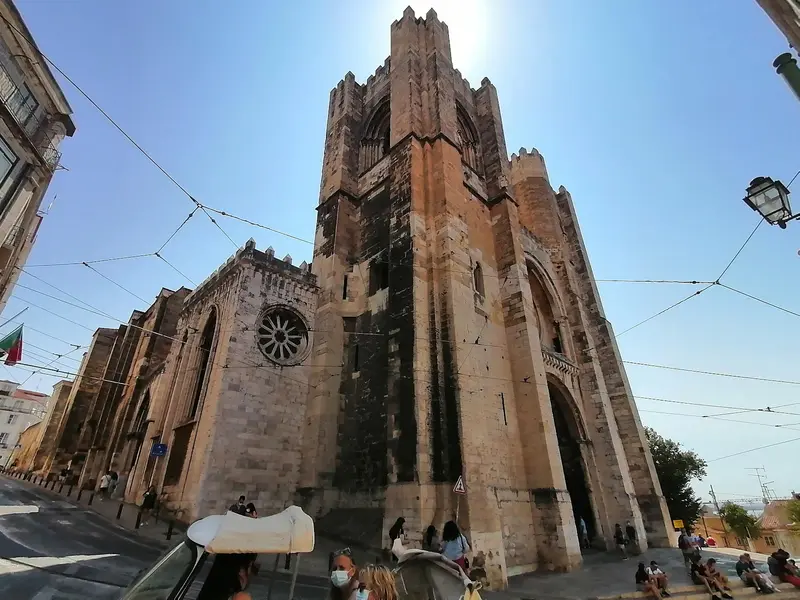
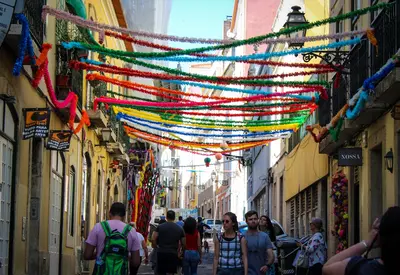
    From Olisipo to the EarthquakePhoenicians, Romans, and Moors shaped the city before Afonso Henriques conquered it in 1147. In the 15th and 16th centuries, Lisbon became the centre of a maritime empire; the Manueline style with its ropes, shells, and armillary spheres in stone is visible at the Jerónimos Monastery and Belém Tower. The earthquake of 1 November 1755 destroyed large parts of the city. The Marquês de Pombal subsequently had the Baixa rebuilt in a grid pattern.Fado, Azulejos, and Santos PopularesFado, a UNESCO Intangible Cultural Heritage since 2011, originated in Alfama and Mouraria and is still sung today in small Casas de Fado. Painted tiles adorn churches, train stations, and residential buildings. In June, the city celebrates the Santos Populares, culminating in the night of 13 June in honour of Saint Anthony with grilled sardines in the alleys.

    Nightlife

    Lisbon's nightlife offers you a diverse selection, ranging from traditional Fado houses to modern clubs. Especially in Bairro Alto, numerous small bars are concentrated, while in Cais do Sodré you'll find larger dance venues and discos like Trumps.
    1

    CINCO lounge

    Small cocktail bar in Príncipe Real with an extensive menu of signature drinks. Bartenders mix to your taste on request, and the bar also offers mixology courses.
    Show on Google Maps
    2

    Trumps

    Gay club with neon lights, disco balls, and a dance floor, as well as DJs spinning House and Pop music.
    Show on Google Maps
    3

    Park Rooftop

    Bar on the top deck of a car park between Bairro Alto and Santa Catarina. Access is via the car park lift; upstairs, there are cocktails, evening DJs, and views over the Tagus to the 25 de Abril Bridge.
    Show on Google Maps
    4

    Lux Frágil

    The city's best-known club is in a former warehouse on the Tejo, opposite Santa Apolónia station. House and Techno play on two floors; the rooftop terrace overlooks the river. Before 2 AM it's not busy; door selection applies.
    Show on Google Maps
    5

    Pensão Amor

    Cocktail bar in a former guesthouse for sailors on the pink-paved Rua Nova do Carvalho in Cais do Sodré. Plush sofas, wallpaper, and burlesque evenings recall the district's former red-light past.
    Show on Google Maps

    Exploring locally

    Metro, Tram and on FootThe Metro has four lines, connecting the airport (red line) to the city center. For the Old Town, trams are practical: Tram 28 runs from Martim Moniz through Graça, Alfama, Baixa, and Estrela; Tram 15 from Praça da Figueira to Belém. Tram 28 is usually crowded during the day; early mornings offer better chances for a seat.Load your Navegante card with credit (Zapping) or a day pass; it is valid on metro, bus, tram, and suburban trains.Contactless payment by bank card is possible on the Metro and buses.The limestone cobblestones become slippery when wet; sturdy shoes with good grip help.Taxis, Uber, and Bolt are common and relatively inexpensive.

    Accommodations in Lisbon

    Find perfect stay in Lisbon

    Booking.com* (Affiliate link)
    Search Hotels
    Agoda* (Affiliate link)
    Search Hotels
    Airbnb
    Vacation Rentals

    * Affiliate link: if you book through it, we earn a small commission. The price stays the same for you.

    Campgrounds in Lisbon

    Find perfect campground in Lisbon

    Search via Google Maps
    Campgrounds nearby (15km)
    Camping.info
    Find Campgrounds
    Park4Night
    RV Parks & Camping

    Plan your trip to Lisbon

    Save places, build a route and plan your city trip, all in one place.

    1. 1
      Sunrise over alpine peaks and a sea of clouds
      1234

      Round trip

      12 days · 4 stops

      Saved

      Pick a route

      Pick a ready-made one or save places and plan your own.

      Open bookmarks
    2. 2

      Trip to Lisbon

      Live
      • 1Torre de Belém3 days
      • 2Mosteiro dos Jerónimos4 days
      • 3Alfama Viertel5 days
      Budget

      Plan your trip

      The planner sorts stops, days and budget. Plan together in real time.

      Start trip planning
    3. 3
      9:41 No signal
      Lisbon
      Available offline

      Use it on the road

      Download the guide to your phone and use it on site, even offline.

    Nearby

    Baixa Pombalina

    Baixa Pombalina

    The Baixa Pombalina is the lower town located between Rossio and Tejo. After the 1755 earthquake, Marquês de Pombal had it rebuilt in a grid pattern, featuring uniform facades and one of Europe's earliest earthquake-proof constructions. Today, it serves as the old town's business center, offering pedestrian zones, squares, and traditional shops.
    Alfama

    Alfama

    The Alfama is Lisbon's oldest district and stretches steeply down from the castle hill to the Tejo. Its labyrinth of streets dates from Moorish times and withstood the 1755 earthquake because the district stands on solid rock. Stairs, small squares, viewing terraces, and Fado venues define its character.
    Bairro Alto

    Bairro Alto

    The Bairro Alto is located on a hill west of Baixa and was laid out in a grid in the 16th century. By day, a quiet residential area with small shops and studios, the narrow streets fill up from late evening with people standing outside tiny bars. On its edge lie Chiado and two of the city's most famous viewpoints.
    Lisbon Metropolitan Area

    Lisbon Metropolitan Area

    The **Lisbon Metropolitan Area** comprises the capital and 17 surrounding municipalities on both sides of the Tagus estuary. Besides Lisbon's Old Town, it includes the Sintra Palace Landscape, the coastal towns along the Linha de Cascais, and the Serra da Arrábida on the south bank, all accessible by suburban train or ferry.
    Belém

    Belém

    Belém lies six kilometres west of the Old Town on the Tagus, the departure point for discovery voyages in the 15th and 16th centuries. The Jerónimos Monastery and Belém Tower are UNESCO World Heritage sites, alongside museums, parks, and the pastry shop where Pastéis de Belém have been baked since 1837.

    Sources & method

    • Photos: Unsplash, Google Maps. Each photo carries its credit.
    • Place data such as addresses and ratings comes from Google Maps.
    • The content is based on web research from public, traceable sources. How the content is made · The role of AI