Fernweh
    ExploreTravel GuidesMy Trips
    de|en
    About FernwehImprintFAQPrivacy Policy
    ExploreTravel GuidesMy Trips
    Alfama

    Alfama

    CityCultureFor Families
    1. Home
    2. Destinations
    3. Portugal
    4. Lisbon Metropolitan Region (Área Metropolitana de Lisboa)
    5. Alfama
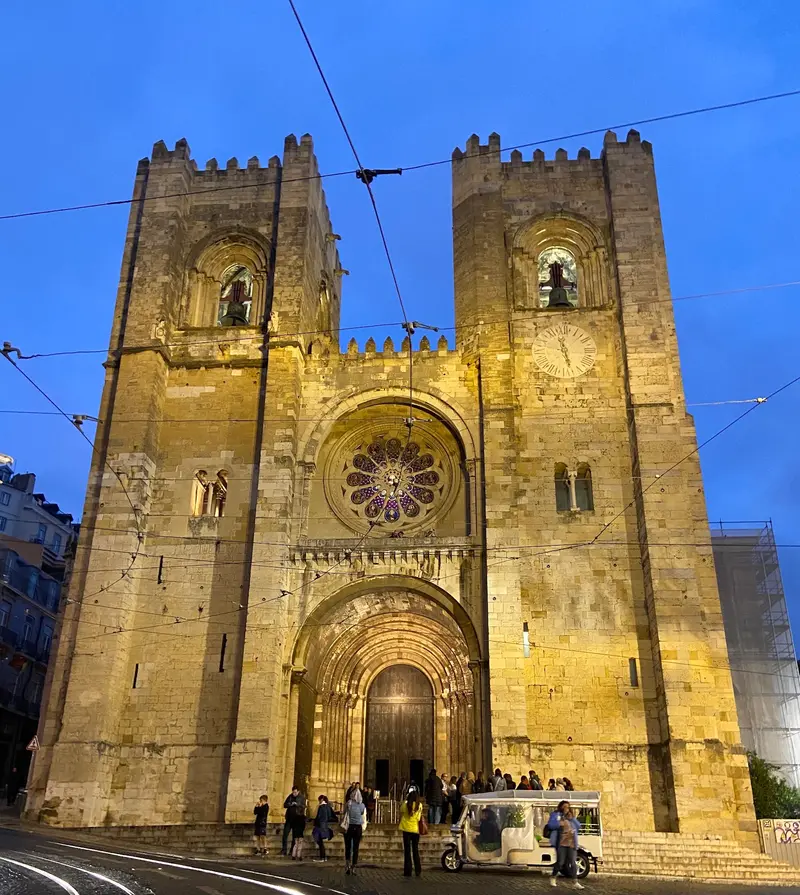
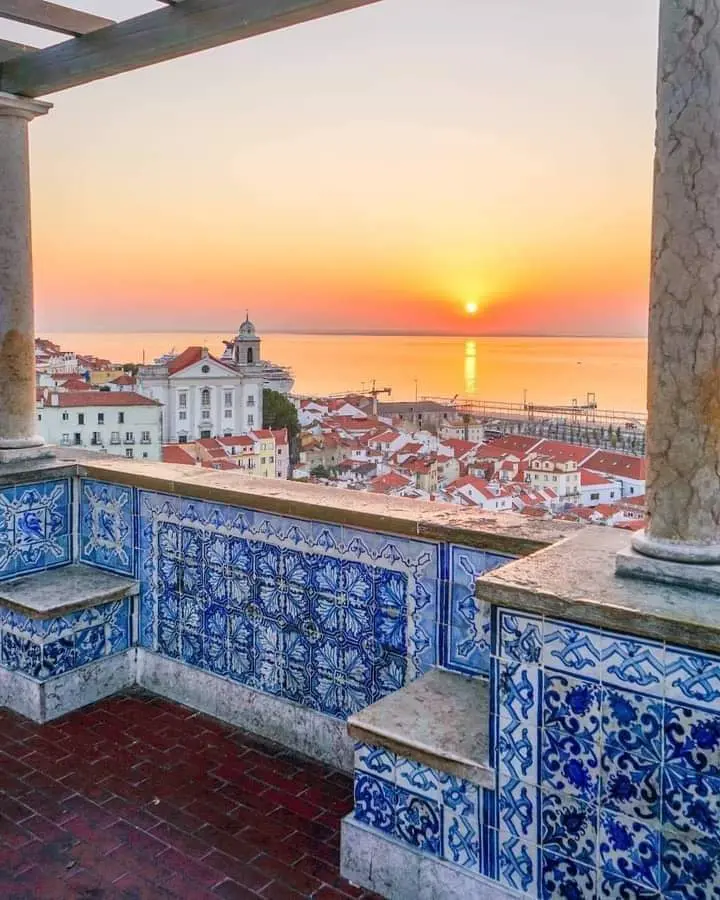
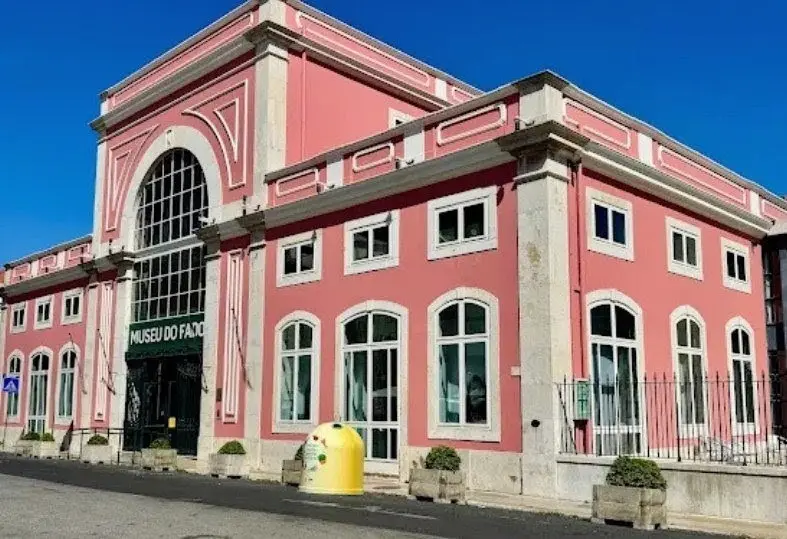
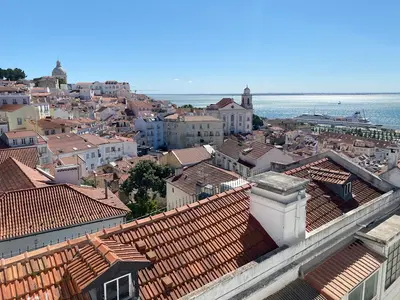
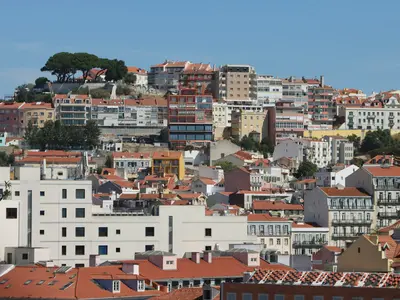
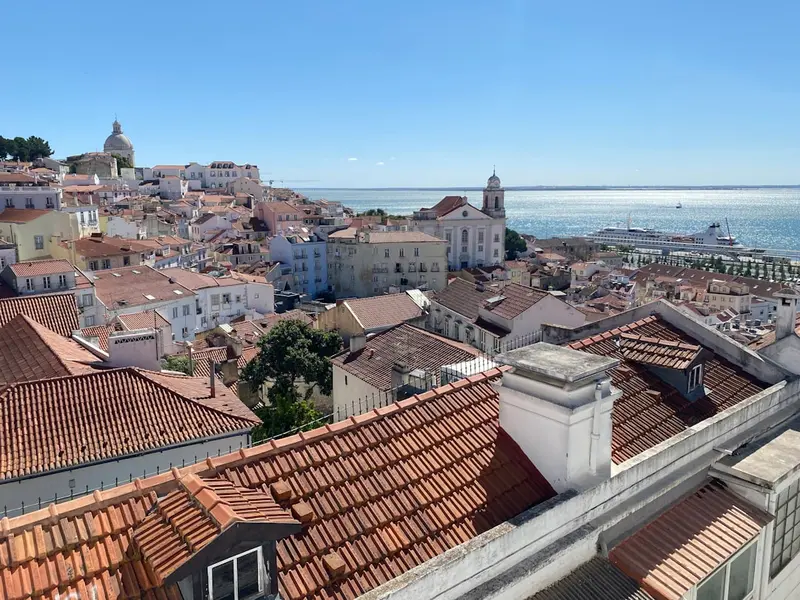
    Alfama, Lisbon's oldest district, captivates with its labyrinthine maze of alleys, dating back to Moorish times. Here you can explore the Sé de Lisboa Cathedral and enjoy expansive views over the city and the Tagus River from São Jorge Castle. The narrow streets reveal traditional craft shops and authentic Fado taverns, where melancholic melodies resonate in the evenings. Particularly noteworthy are viewpoints like the Miradouro das Portas do Sol and the Miradouro de Santa Luzia, offering picturesque panoramas. This district largely survived the 1755 earthquake unscathed and retains its original character. Wear comfortable shoes for the steep, cobblestone paths. Mornings or late afternoons are ideal for experiencing the unique atmosphere without the largest crowds.
    • Neighborhoods & highlights
    • Walking tours
    • Eat & drink
    • Culture
    • Getting around
    • Accommodation
    • Plan trip
    • Nearby
    • Neighborhoods & highlights
    • Walking tours
    • Eat & drink
    • Culture
    • Getting around
    • Accommodation
    • Plan trip
    • Nearby

    Overview

    Alfama, Lisbon's oldest district, is characterized by its labyrinthine maze of streets, whose origins date back to the Moorish era. Here you'll find the impressive Sé de Lisboa Cathedral and from the Castelo de São Jorge, you can enjoy far-reaching views over the city and the Tejo. The narrow, cobblestone streets are home to traditional craft shops and authentic Fado taverns, where in the evenings, melancholic melodies resonate and shape the district's culture. Particularly recommended are viewpoints such as the Miradouro das Portas do Sol and the Miradouro de Santa Luzia, which offer unparalleled panoramas. This district largely survived the 1755 earthquake unscathed, thus preserving its original, historic character. Comfortable shoes are essential for exploring the steep paths; the early morning or late afternoon are ideal for experiencing the atmosphere leisurely.

    Places in Alfama

    Discover the most important sights and attractions

    Sights in Alfama

    Arco da Rua Augusta

    The Arco da Rua Augusta, an imposing neoclassical structure, was built after the devastating 1755 earthquake to symbolize Lisbon's reconstruction. It forms the majestic gateway from Praça do Comércio to the bustling Rua Augusta, marking the entrance to Baixa Pombalina. You'll note detailed sculptures of key Portuguese historical figures: Viriat, Vasco da Gama, Marquês de Pombal, and Nuno Álvares Pereira. Above them, allegorical depictions of Glory crown Genius and Valor.Visit the arch's viewing platform for a spectacular 360-degree view of Praça do Comércio, the Tejo, the entire Baixa district, and São Jorge Castle. It's a superb vantage point to grasp the rebuilt city's geometric layout.Our tip: To avoid the crowds and catch the best lighting for photos, visit the viewing platform early in the morning shortly after opening or in the late afternoon before sunset. For an impressive photo of the arch itself, position yourself on Praça do Comércio facing the Tejo.
    Open in Google Maps

    Igreja de São Roque

    The Igreja de São Roque in Lisbon is a historic Jesuit church with a magnificent interior. The highlight is the Capela de São João Baptista. It was crafted in Rome from marble, lapis lazuli, and gilded bronze, then reassembled in Lisbon. Notice the fine mosaics, which from a distance resemble painted pictures, as well as the magnificent gilded altars, ornate wooden ceilings, and Azulejos. The adjacent Museu de São Roque offers deeper insights into sacred art. Our Tip: Visit the church in the morning to admire the details at your leisure and avoid crowds.
    Open in Google Maps

    Castelo de São Jorge

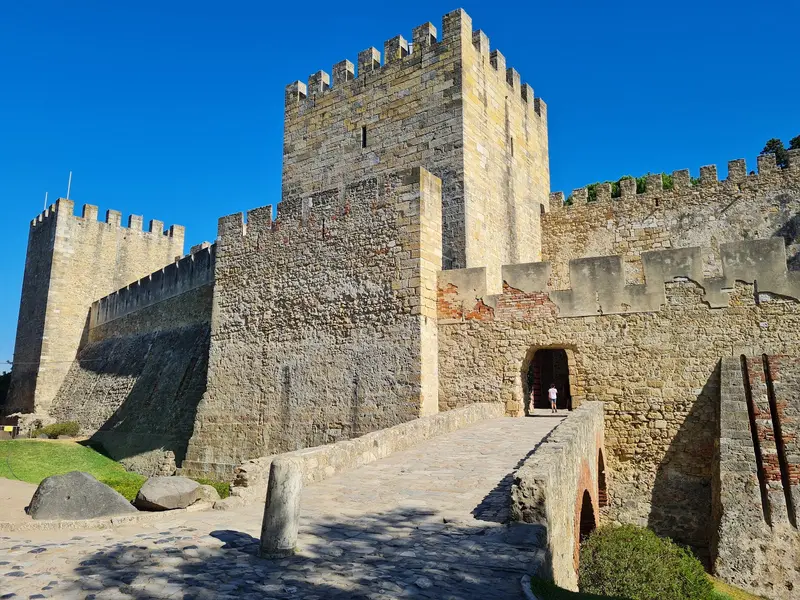
    The **Castelo de São Jorge** majestically presides over Lisbon and is a testament to the city's eventful history. Its origins date back to Roman times, but its current form is primarily owed to the Moors, who fortified it into a mighty fortress in the 10th century. After the Christian reconquest by Afonso Henriques in 1147, it served as a royal residence and military stronghold. Today, you can explore the well-preserved walls, eleven towers, and the ruins of the former royal palace, offering insights into past eras. Particularly impressive is the Camera Obscura in Ulysses Tower, which projects a real-time 360-degree view of the city. From the battlements, you can enjoy an unrivaled panoramic view over Alfama, the Tejo, and the entire city, often accompanied by the calls of freely roaming peacocks. Our Tip: Visit the Castelo early in the morning or late afternoon to avoid the biggest crowds and make optimal use of the soft light for photos. For the best shots of the castle itself, it's best to head to Miradouro de Santa Luzia or Miradouro das Portas do Sol.
    Open in Google Maps

    Igreja de Santa Engrácia

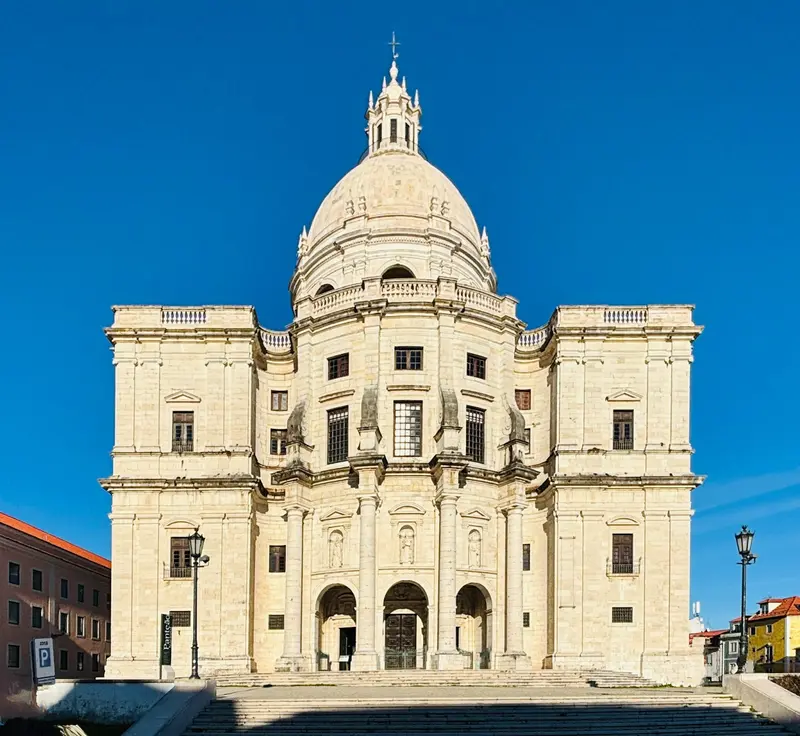
    The Igreja de Santa Engrácia, today known as the Panteão Nacional, is an impressive example of Baroque architecture in Lisbon. Its construction history is remarkable: begun in the 17th century, it was only completed in the 20th century, which earned it the nickname "Obras de Santa Engrácia" (Works of Saint Engrácia), a term for unfinished projects. Inside, you will find the tombs of important Portuguese personalities, including presidents, writers like Almeida Garrett, and Amália Rodrigues, the Queen of Fado. The monumental dome is an architectural masterpiece and, after an ascent, offers you a 360-degree panoramic view over the rooftops of Alfama and the Tejo. This place connects national history with impressive architecture. Our Tip: Visit the Pantheon in the morning to enjoy the tranquility and see the details of the marble work in the best light. For breathtaking photos of the city, you should definitely climb the dome; the view is particularly spectacular in clear weather.
    Open in Google Maps

    Casa Fernando Pessoa

    The Casa Fernando Pessoa in Lisbon, located in the Campo de Ourique district, was the last residence of one of the most significant Portuguese poets of the 20th century. Fernando Pessoa lived here from 1920 until his death in 1935. Today, the house serves as a museum and cultural center dedicated to Pessoa's life and work. You gain deep insight into his world by viewing his personal library with over 1300 books, his furniture, and numerous everyday objects. The exhibitions illuminate not only his biography, but also the complex facets of his literary creation, especially his famous heteronyms. Our Tip: It's best to visit the museum on a weekday morning to fully soak in the quiet and contemplative atmosphere. For a special experience, it's worth reading some of his poems beforehand to experience the exhibits even more intensely.
    Open in Google Maps

    City walks in Alfama

    Curated walking tours through the city's highlights — handpicked by experienced travel journalists.

    Alfama-Spaziergang: Gassen, Fado & Panoramablicke

    Entdecken Sie das authentische Alfama, Lissabons ältestes Viertel. Dieser Spaziergang führt Sie durch verwinkelte Gassen, vorbei an historischen Sehenswürdigkeiten und zu atemberaubenden Aussichtspunkten. Tauchen Sie ein in die Seele Lissabons, wo Geschichte, Fado und malerische Ausblicke auf den Tejo lebendig werden.

    ~2 Std. 30 Min.
    In Google Maps öffnen
    Stopps (6)

    Food & Drink

    Alfama: History, Architecture, and Fado

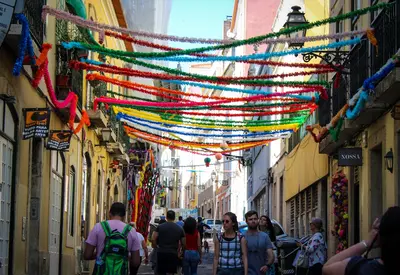
    Alfama is Lisbon's oldest district, with origins tracing back to Roman and Visigothic settlements. Its current structure was significantly shaped by the Moorish occupation from the 8th to the 12th century, leaving behind a labyrinth of narrow streets and winding squares. The devastating earthquake of 1755 largely spared Alfama, which is why it was able to preserve its authentic medieval character.The district's architecture is characterized by steep, cobblestone streets, narrow staircases, and small, hidden squares. Rows of tight houses with colorful facades and wrought-iron balconies define its appearance. Significant historical structures like the Romanesque Se Cathedral and the Castelo de São Jorge, a Moorish fortress, preside over the district, bearing witness to its long history.Culturally, Alfama is the heart of Fado, Lisbon's traditional, melancholic music genre. In numerous small Fado houses, this singing is kept alive night after night by local artists. The district is also known for its strong community ties and the annual Santos Populares celebrations, especially the Feast of Saint Anthony in June, which fills the streets with music, dance, and traditional dishes.

    Exploring locally

    Alfama, with its narrow, winding alleys and steep climbs, is best explored on foot, provided you wear comfortable shoes. However, for longer distances or to conquer the hills, the public transport network offers excellent alternatives. The historic Tram 28E is not only a charming experience but also a practical means of transport that traverses many of Alfama's sights.Buses complement this network and are especially useful for the steeper sections that the tram doesn't reach. The Metro, though not directly present in the heart of Alfama, efficiently connects the district to the rest of Lisbon via nearby stations like Santa Apolónia or Terreiro do Paço. For all public transport, the rechargeable Viva Viagem card is recommended, which can be loaded with credit ("Zapping") or day tickets; mobile apps like Moovit assist with route planning.Bicycles or e-scooters are generally only recommended for experienced riders due to the cobblestones and significant inclines. Taxis and ride-sharing services like Bolt or Uber offer a convenient option, especially after dark or when you're tired, but provide less of the authentic Alfama experience.

    Accommodations in Alfama

    Accommodations in Alfama

    Find perfect stay in Alfama

    Booking.com
    Search Hotels
    Agoda
    Search Hotels
    Airbnb
    Vacation Rentals
    Hotels.com
    Hotels Worldwide
    Hostelworld
    Hostels

    Campgrounds in Alfama

    Find perfect campground in Alfama

    Search via Google Maps
    Campgrounds nearby (15km)
    Camping.info
    Find Campgrounds
    Park4Night
    RV Parks & Camping

    Plan your trip to Alfama

    Save places, build a route and plan your city trip — all in one place.

    Save places

    Bookmark sights, restaurants and neighborhoods you're interested in.

    Build your route

    Turn your bookmarks into a route — define order, days and budget.

    Refine with AI

    Let Mein Fernweh suggest experiences and put together a tailored daily plan.

    Start trip planningOpen bookmarks

    Locations nearby

    These places are nearby — perfect for additional days or a day trip.

    Lisbon

    Lisbon

    Welcome to Lisbon, the enchanting capital of Portugal! Allow yourself to be captivated by the melancholic beauty of its seven hills, the dazzling light over the Tagus, and the nostalgic sound of Fado. This city is a vibrant mosaic of centuries-old history, lively culture, and an unbridled zest for life that will instantly cast its spell on you.
    Baixa Pombalina

    Baixa Pombalina

    Lisbon's Baixa Pombalina forms the city's historic heart, shaped by its reconstruction after the 1755 earthquake. Its grid-like street plan was designed under Marquês de Pombal and is considered an early example of anti-seismic urban planning. Key points are the expansive Praça do Comércio on the Tagus riverfront and the lively Rossio Square, lined with traditional shops and cafés. Notable landmarks like the Arco da Rua Augusta and the Elevador de Santa Justa offer impressive city views. For authentic shopping experiences, it's best to explore the smaller side streets away from the main thoroughfares. A visit in the morning or late afternoon avoids the largest crowds and offers more pleasant light for the architecture.
    Bairro Alto

    Bairro Alto

    In the heart of Lisbon, Bairro Alto presents itself as a district with two faces. By day, you'll find a quieter, almost sleepy atmosphere here, with traditional shops and artisan crafts. By evening, however, the narrow streets transform into a vibrant hub of nightlife, lined with countless bars, restaurants, and Fado venues. Particularly recommended is a visit to the Miradouro de São Pedro de Alcântara, which offers panoramic views over the city, stretching to the Castelo de São Jorge. For an authentic cultural experience, seek out one of the traditional Fado houses, where melancholic melodies tell Portugal's story. Plan your visit ideally in the late afternoon to witness the transition from tranquil daytime activity to the vibrant evening. Exploring on foot is ideal, but be prepared for steep ascents and cobblestone streets.
    Lisbon Metropolitan Region (Área Metropolitana de Lisboa)

    Lisbon Metropolitan Region (Área Metropolitana de Lisboa)

    The **Lisbon Metropolitan Area** welcomes visitors with a fascinating mix of historical charm and modern flair, nestled in a breathtaking coastal landscape. From the labyrinthine alleys of the old town to the magnificent UNESCO World Heritage sites and golden beaches, this region offers unforgettable experiences for every traveler.
    Belém

    Belém

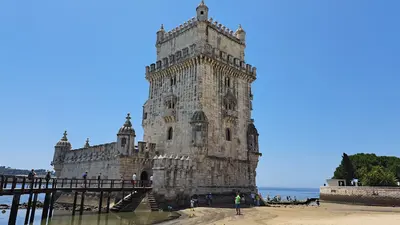
    Belém, a historic district of Lisbon, is inextricably linked with Portugal's Age of Discoveries. Here you'll find architectural masterpieces that commemorate the great seafarers. The Torre de Belém and the imposing Mosteiro dos Jerónimos, both UNESCO World Heritage Sites, bear witness to the country's maritime power. Directly on the banks of the Tejo stands the Padrão dos Descobrimentos, a monument to explorers like Vasco da Gama. A visit to the historic bakery for the original Pastéis de Belém is a must. To avoid the biggest crowds, an early morning visit to the main attractions is recommended.