Fernweh: Home
    ExploreTravel GuidesPlan a tripMy tripLast visited
    de|en
    All Places & RegionsAll highlightsAbout FernwehFAQPrivacy PolicyImprint
    ExploreTravel GuidesPlan a tripMy tripLast visited
    • Neighborhoods & highlights
    • Recommendations
    • Walking tours
    • Eat & drink
    • Food culture
    • Culture
    • Getting around
    • Accommodation
    • Plan trip
    • Nearby
    Sintra

    Portugal

    Sintra

    City

    Sintra is located approximately 25 kilometers northwest of Lisbon on the slopes of the forested Sintra Mountains.

    by Felix Gillen

    1. Home
    2. Destinations
    3. Portugal
    4. Lisbon Metropolitan Area
    5. Sintra
    Sintra is located approximately 25 kilometers northwest of Lisbon on the slopes of the forested Sintra Mountains. For centuries a summer residence for kings and nobility, the small town is today known for its palaces, castles, and parks, which are part of the UNESCO World Heritage as a cultural landscape since 1995.

    Sights in Sintra

    Discover the most important sights and attractions

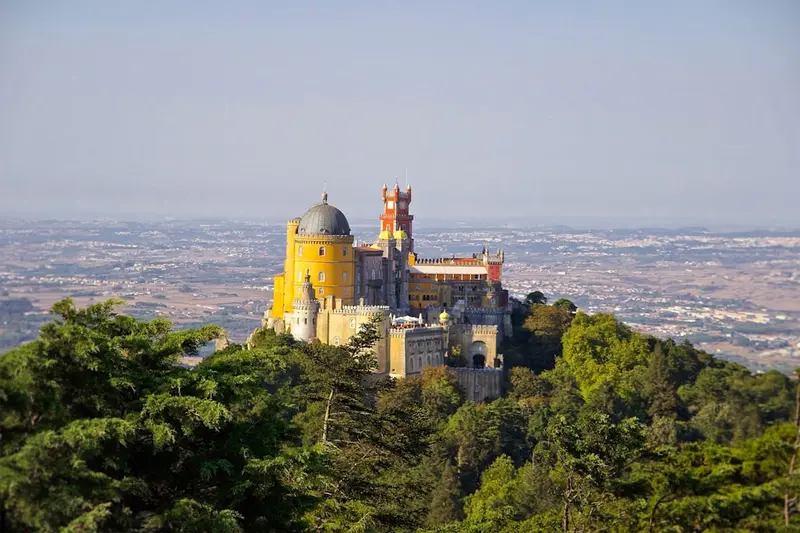
    National Palace of Pena
    Museum

    1National Palace of Pena

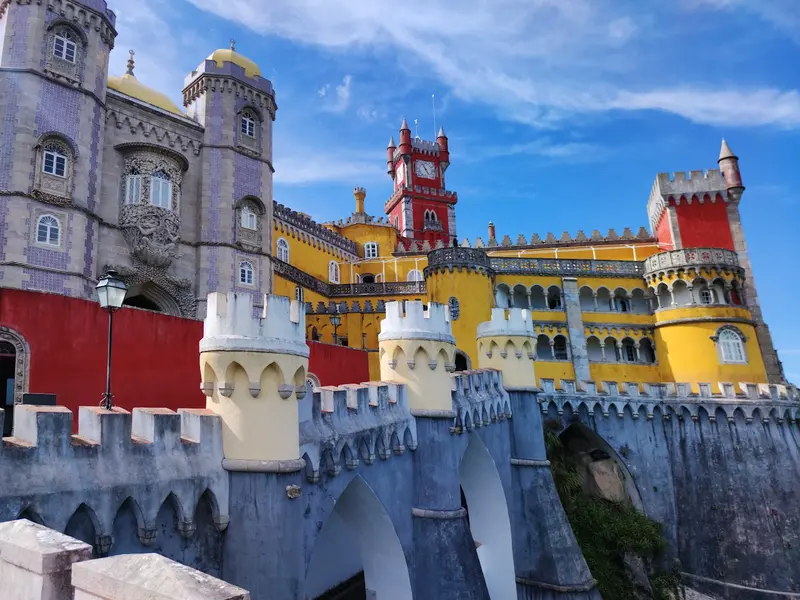
    King Ferdinand II. had the palace built from 1842 on the remains of a Hieronymite monastery on one of the highest peaks of the Sintra Mountains. Yellow and red facades, battlements, and domes blend Gothic, Manueline, and Moorish forms. The interiors display furnishings from the time of the last kings. The surrounding park, with its paths, ponds, and viewpoints like Cruz Alta, is equally worth seeing. Book timed-entry tickets in advance.
    Open in Google Maps
    Quinta da Regaleira
    Museum

    2Quinta da Regaleira

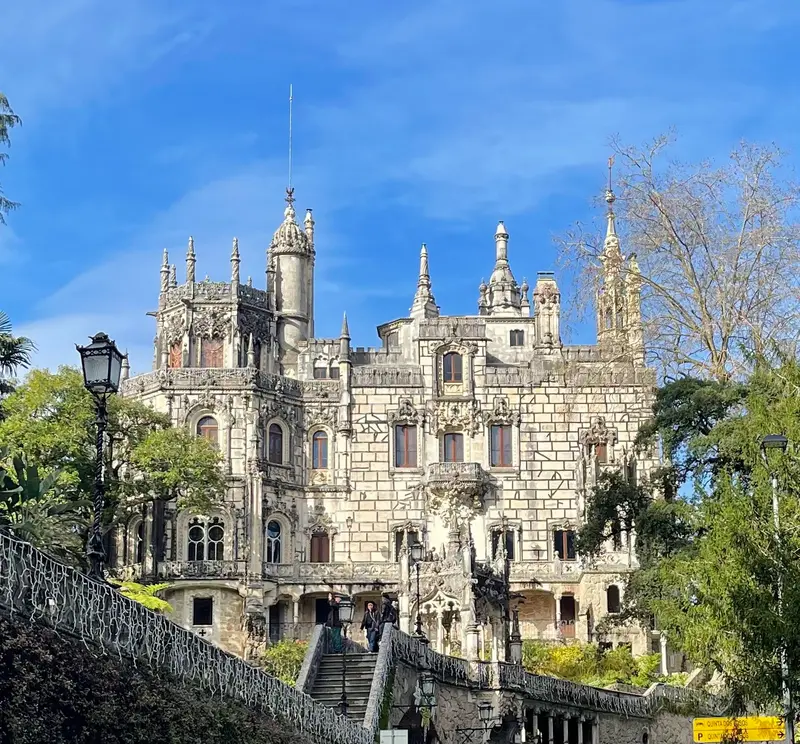
    The estate was built between 1904 and 1910 for the businessman António Augusto Carvalho Monteiro, based on plans by the Italian architect Luigi Manini. The Neo-Manueline palace includes a park with grottoes, ponds, towers, and underground passages. Its most famous spot is the Initiation Well (Initiationsbrunnen), a spiral shaft spanning nine levels, whose symbolism is often associated with Freemasons and Templars.
    Open in Google Maps
    Castelo dos Mouros
    Castle

    3Castelo dos Mouros

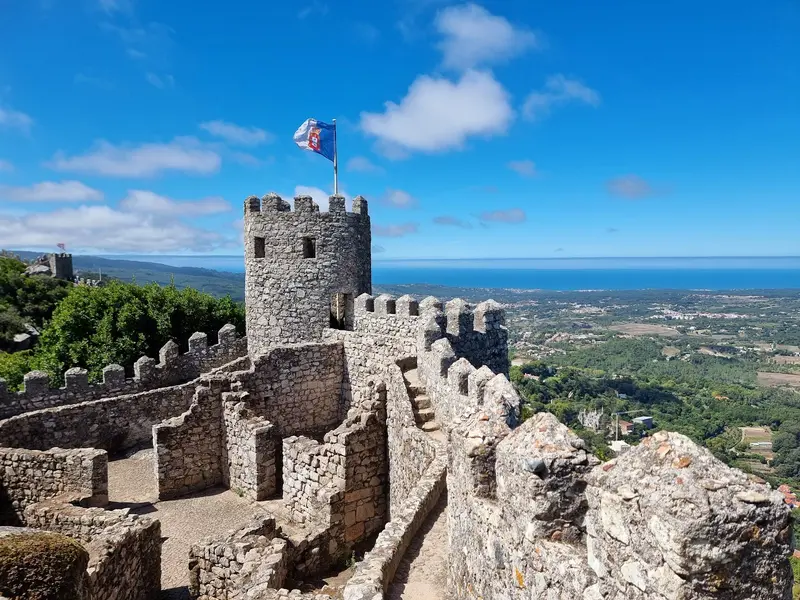
    The walls of the Moorish Castle from the 9th and 10th centuries stretch along a rocky ridge above Sintra. In the 19th century, Ferdinand II had the complex restored. Along the ramparts, you walk from tower to tower, with views of the Pena Palace, the plains stretching to Lisbon, and, in clear weather, the Atlantic. Sturdy shoes are advisable due to the steps.
    Open in Google Maps
    National Palace of Sintra
    Museum

    4National Palace of Sintra

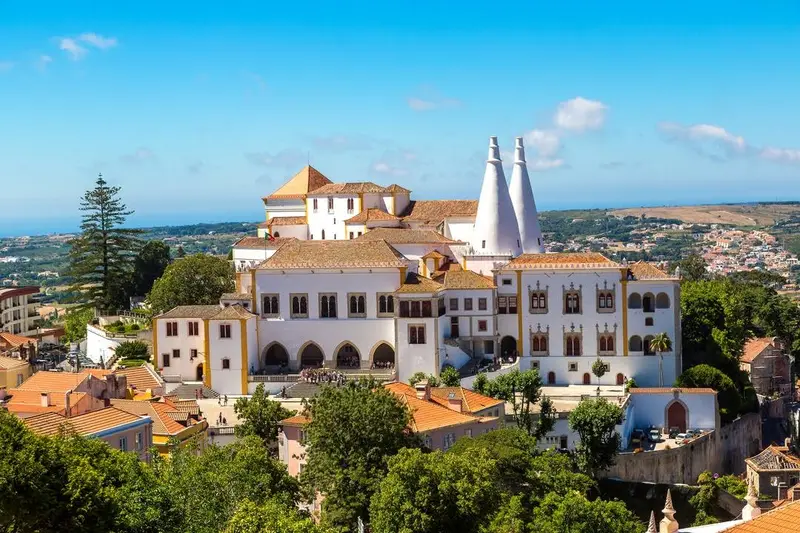
    The palace in the town center, a royal residence from the 15th to 19th centuries, is recognizable by its two 33-meter-high, conical kitchen chimneys. Inside, 15th and 16th-century Azulejos adorn the rooms. Notable are the Swan Room, the Magpie Room, and the Coat-of-Arms Room, featuring the nobility's coats of arms on its domed ceiling.
    Open in Google Maps
    Park and Palace of Monserrate
    Historic Landmark

    5Park and Palace of Monserrate

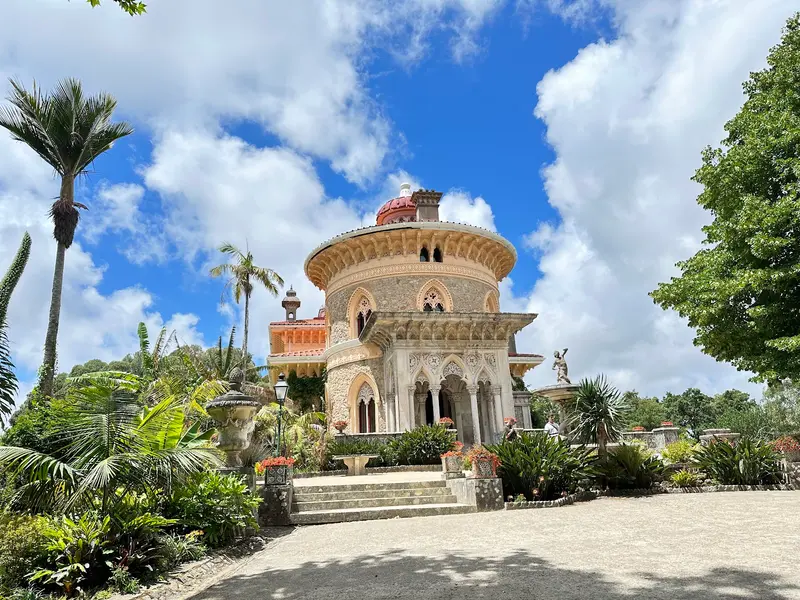
    From 1858, the Englishman Francis Cook commissioned a palace on the site of a former country estate, incorporating Moorish, Gothic, and Indian forms. The park is one of Portugal's most diverse gardens, featuring plants from Mexico, Australia, Japan, and the Himalayas, along with fern ravines, ponds, and an artificial ruin. Monserrate is located about four kilometers west of the center and is quieter than Pena and Regaleira.
    Open in Google Maps

    City walks in Sintra

    Curated walking tours through the city's highlights, handpicked by experienced travel journalists.

    Sintra's Heights & Fairytale Views: Castles, Palaces and Panoramas

    This walk takes you high above the town to Sintra's majestic landmarks. Explore the old walls of the Moorish Castle and dive into the colourful romanticism of Pena Palace while enjoying breathtaking views of the countryside. Experience a different side of Sintra, shaped by grand history and fantastic architecture.

    ~2 Std. 40 Min.
    Open in Google Maps
    Stops (6)

    Restaurants & Cafés

    1

    Tascantiga

    Small eatery in the Old Town with Petiscos to share, sandwiches and Portuguese wine, with a terrace on the alley.
    Show on Google Maps
    2

    Incomum by Luís Santos

    Modern Portuguese restaurant by Chef Luís Santos, near the station. Enjoy a cheaper lunch menu, or choose from seasonal à la carte dishes in the evenings.
    Show on Google Maps

    Piriquita

    Family pastry shop since 1862 in the Old Town, famous for Travesseiros (puff pastry cushions with almond-egg cream) and Queijadas de Sintra. Expect queues at lunchtime and weekends.
    Show on Google Maps
    3

    Piadina's, Wine & Co.

    A small eatery in the Old Town offering Italian piadine, filled flatbreads, and a selection of wines. A simple option for a quick lunch between the palaces.
    Show on Google Maps

    Food & Beverages

    Sintra offers a diverse culinary scene, ranging from traditional Portuguese flavors to modern interpretations. In restaurants like Tascantiga Sintra, you can discover regional specialties, while Casa Piriquita is known for its famous Queijadas and Travesseiros. This way, you'll experience the culinary breadth from savory dishes to sweet classics.

    Bed Pillows

    Puff pastry pocket with almond-egg cream, a traditional specialty from Piriquita patisserie.

    Queijadas de Sintra

    Small tarts of cream cheese, sugar, and cinnamon in a thin pastry shell, baked for centuries in Sintra.

    Wine of Colares

    Wine from the small growing region of Colares on the coast, where the vines grow in sandy soils.

    History & Character

    From Moorish Castle to Royal Summer ResidenceA Moorish castle was built on the ridge in the 9th-10th centuries. After its Christian conquest in the 12th century, Sintra became the Portuguese kings' favoured country seat. The town's National Palace largely dates from the 15th-16th centuries, featuring period Azulejos.19th-Century RomanticismKing Ferdinand II began building the Pena Palace in 1842 on monastery ruins. It became a major work of European Romanticism, blending Gothic, Manueline, and Moorish styles. Wealthy Britons and Portuguese followed with their own estates like Monserrate, and in the early 20th century, Quinta da Regaleira. This mix of architecture and landscaped nature led to its 1995 inscription as a World Heritage cultural landscape.

    Getting There & Around

    By Train and BusSuburban trains run from Lisbon-Rossio to Sintra station in about 40 minutes; the Navegante card is valid. From the station, it's about a ten-minute walk to the historic center. Bus 434 operates a circular route to Pena Palace and the Moorish Castle; other bus lines serve Cabo da Roca and Cascais.Sintra is not a good choice by car: The center is closed to through traffic, and parking spaces are scarce.Timed-entry tickets are sold for Pena Palace. Book online in advance.Those who are good on foot can hike from the center to the Moorish Castle via hiking trails, allow 45 to 60 minutes uphill.Excursions in the AreaCabo da Roca: Westernmost point of mainland Europe with a lighthouse, about 20 minutes by bus or car.Azenhas do Mar: White houses perched on a cliff above a rock pool by the sea.Praia da Ursa: Wild beach beneath steep cliffs, steep descent, swimming dangerous due to currents.

    Accommodations in Sintra

    Find perfect stay in Sintra

    Booking.com* (Affiliate link)
    Search Hotels
    Agoda* (Affiliate link)
    Search Hotels
    Airbnb
    Vacation Rentals

    * Affiliate link: if you book through it, we earn a small commission. The price stays the same for you.

    Campgrounds in Sintra

    Find perfect campground in Sintra

    Search via Google Maps
    Campgrounds nearby (15km)
    Camping.info
    Find Campgrounds
    Park4Night
    RV Parks & Camping

    Plan your trip to Sintra

    Save places, build a route and plan your city trip, all in one place.

    1. 1
      Sunrise over alpine peaks and a sea of clouds
      1234

      Round trip

      12 days · 4 stops

      Saved

      Pick a route

      Pick a ready-made one or save places and plan your own.

      Open bookmarks
    2. 2

      Trip to Sintra

      Live
      • 1National Palace of Pena3 days
      • 2Quinta da Regaleira4 days
      • 3Castelo dos Mouros5 days
      Budget

      Plan your trip

      The planner sorts stops, days and budget. Plan together in real time.

      Start trip planning
    3. 3
      9:41 No signal
      Sintra
      Available offline

      Use it on the road

      Download the guide to your phone and use it on site, even offline.

    Nearby

    Cascais

    Cascais

    Cascais is located about 30 kilometers west of Lisbon on the Atlantic coast. The former fishing village became a summer residence for the royal family in the 19th century and is now a popular beach resort and residential town with an old town, a marina, small city beaches, and a rocky coast that stretches west to Cabo da Roca.
    Belém

    Belém

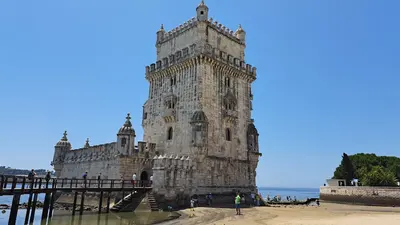
    Belém lies six kilometres west of the Old Town on the Tagus, the departure point for discovery voyages in the 15th and 16th centuries. The Jerónimos Monastery and Belém Tower are UNESCO World Heritage sites, alongside museums, parks, and the pastry shop where Pastéis de Belém have been baked since 1837.
    Lisbon Metropolitan Area

    Lisbon Metropolitan Area

    The **Lisbon Metropolitan Area** comprises the capital and 17 surrounding municipalities on both sides of the Tagus estuary. Besides Lisbon's Old Town, it includes the Sintra Palace Landscape, the coastal towns along the Linha de Cascais, and the Serra da Arrábida on the south bank, all accessible by suburban train or ferry.
    Bairro Alto

    Bairro Alto

    The Bairro Alto is located on a hill west of Baixa and was laid out in a grid in the 16th century. By day, a quiet residential area with small shops and studios, the narrow streets fill up from late evening with people standing outside tiny bars. On its edge lie Chiado and two of the city's most famous viewpoints.
    Baixa Pombalina

    Baixa Pombalina

    The Baixa Pombalina is the lower town located between Rossio and Tejo. After the 1755 earthquake, Marquês de Pombal had it rebuilt in a grid pattern, featuring uniform facades and one of Europe's earliest earthquake-proof constructions. Today, it serves as the old town's business center, offering pedestrian zones, squares, and traditional shops.

    Sources & method

    • Photos: Unsplash, Google Maps. Each photo carries its credit.
    • Place data such as addresses and ratings comes from Google Maps.
    • The content is based on web research from public, traceable sources. How the content is made · The role of AI