Campervan route from the North to the Algarve: Porto, the lagoon city Aveiro, Nazaré, Lisbon, the rice fields and beaches around Comporta, the Alentejo coast near Vila Nova de Milfontes and Lagos. Moderate daily stages; strict rules apply to wild camping along the coast, so plan for designated pitches. With 18 overnight stays, just under three weeks.
19 Days / 18 Nights
April–June & September–October
RV Friendly
7 stops
Why This Route?
For campers keen to explore the Portuguese coast from Porto to the Algarve in under three weeks.
Hidden Gems
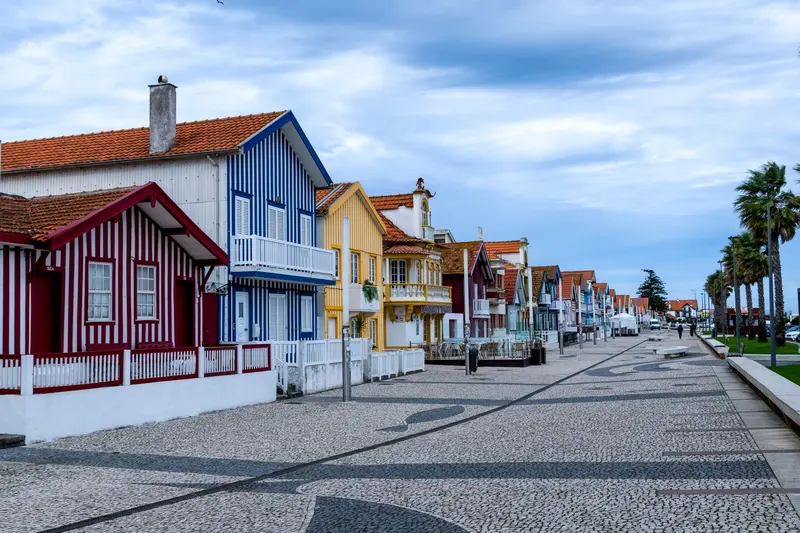
Costa Nova near Aveiro with its striped wooden houses
Cais Palafítico da Carrasqueira near Comporta, a fishing pier on stilts in the Sado Lagoon
Praia das Furnas on the south bank of the Mira opposite Vila Nova de Milfontes
Itinerary
Stop 1 • 3 Nights
Porto
City
Rich in culture and history. Culinary highlights and Perfect for an exciting city trip.
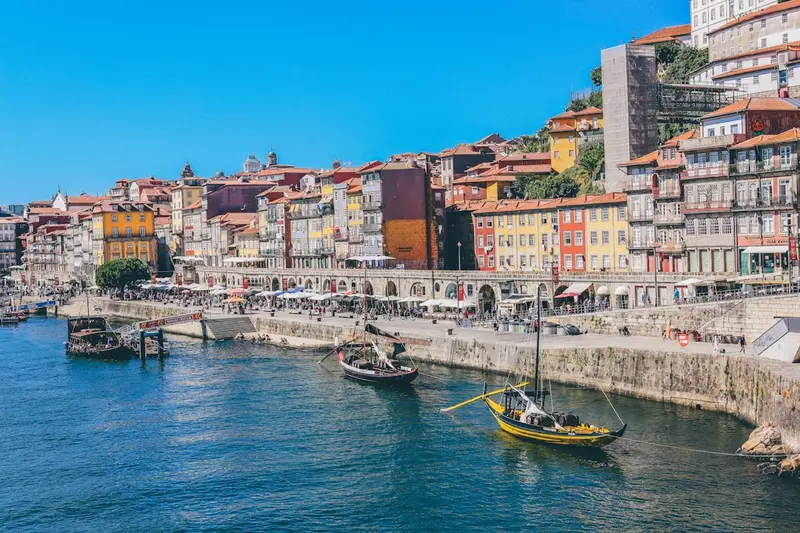
Porto is Portugal's second-largest city, on the steep banks of the Douro shortly before its mouth. Porto's Old Town, its Ribeira district, the Ponte Dom Luís I, and Serra do Pilar Monastery are UNESCO World Heritage since 1996. Opposite in Vila Nova de Gaia, Port wine houses store their wine. Plan time for the hills: Many paths lead steeply uphill.
12 Sights
4 Restaurants
Culture and History
Porto was a port and trading city, the country's name deriving from the Roman settlement Portus Cale. From the 17th century, the port wine trade with England shaped the city; many wineries still carry British names today. In the 18th century, Baroque master builder Nicolau Nasoni designed the Torre dos Clérigos, which became its landmark.The residents jokingly call themselves Tripeiros, tripe-eaters, after the dish Tripas à moda do Porto. The biggest festival is the Night of São João from June 23rd to 24th, when the city celebrates until morning, playfully taps heads with plastic hammers, and a fireworks display lights up the Douro at midnight. You'll find modern architecture in Rem Koolhaas' Casa da Música and in buildings by Álvaro Siza, such as the museum in Serralves.
Culinary highlights. Perfect for an exciting city trip and Perfect for unwinding and relaxation.
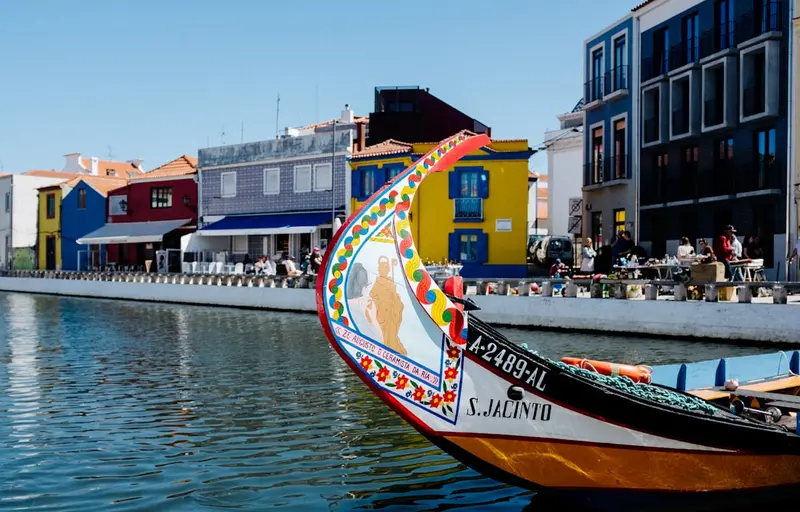
Aveiro lies on the Ria de Aveiro, a widely branching lagoon on the Atlantic coast between Porto and Coimbra. Canals run through the centre, with brightly painted Moliceiro boats on them, and many Art Nouveau facades line the banks. The sweet Ovos Moles comes from here, and salt is still harvested on the edge of town. The beaches of Costa Nova and Barra are 20 minutes away.
8 Sights
4 Restaurants
Culture and History
For centuries, Aveiro thrived on salt, fishing, and seaweed. In the 16th century, the connection to the sea silted up, and the city lost its importance. Only an artificial canal to the Atlantic in the early 19th century brought back prosperity. The Art Nouveau buildings date from the affluent period around 1900.The Moliceiros were working boats used for gathering seaweed, or Moliço, which served as fertilizer. Their painted bows often depict humorous scenes. The Ovos Moles, sweet egg yolk cream in a wafer shell, originated from monastery recipes and are a protected specialty.
For adventure seekers. Rich in culture and history and Perfect for unwinding and relaxation.
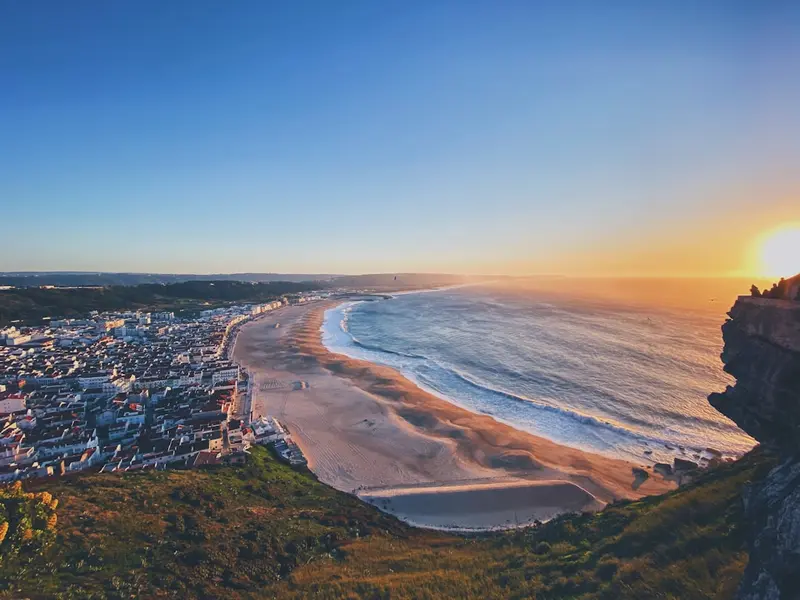
Nazaré is a fishing and beach town on the Costa de Prata, around 120 km north of Lisbon. The lower town is on the long sandy beach; atop the cliff sits Sítio, with a pilgrimage church and viewpoint. Nazaré is world-famous for its huge waves, breaking at Praia do Norte in winter and attracting big-wave surfers worldwide.
6 Sights
17 Restaurants
Culture and History
According to legend, in 1182, the Virgin Mary saved the knight Dom Fuas Roupinho, whose horse stopped in the fog at the Sítio cliff. From this, the pilgrimage site with the Church of Nossa Senhora da Nazaré emerged.Nazaré was long a fishing village where boats were pulled directly from the beach into the sea. Some elderly women still wear traditional skirts with multiple layers, and fish is dried on racks in the sun on the beach. The waves of Praia do Norte gained international fame starting in 2011 when surfer Garrett McNamara rode a record-breaking wave there.
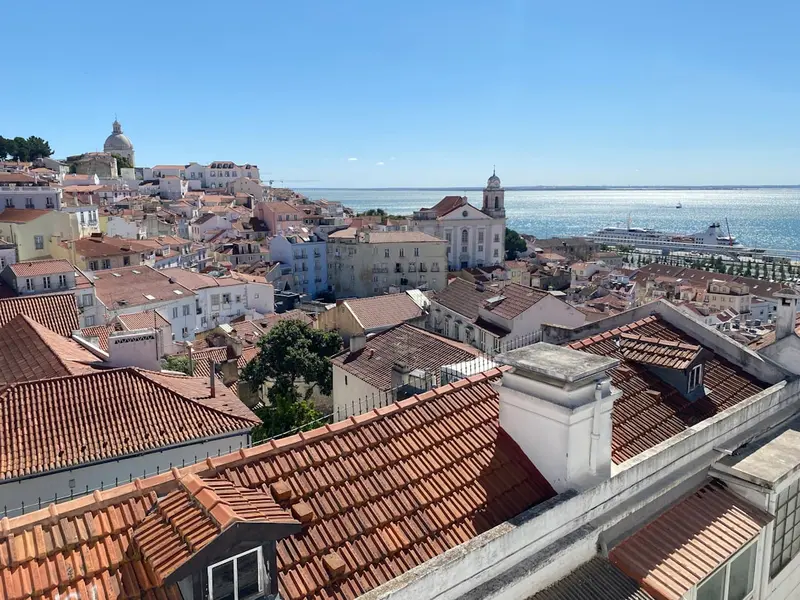
Lisbon is situated on several hills on the north bank of the Tagus Estuary, a good 15 kilometers from the Atlantic. The capital links the winding alleys of Alfama, the Baixa, rebuilt to plan after the 1755 earthquake, and the monuments of the Age of Discoveries in Belém. Viewpoints, yellow trams, and Fado venues are part of the city's everyday life.
7 Sights
5 Restaurants
Culture & History
From Olisipo to the EarthquakePhoenicians, Romans, and Moors shaped the city before Afonso Henriques conquered it in 1147. In the 15th and 16th centuries, Lisbon became the centre of a maritime empire; the Manueline style with its ropes, shells, and armillary spheres in stone is visible at the Jerónimos Monastery and Belém Tower. The earthquake of 1 November 1755 destroyed large parts of the city. The Marquês de Pombal subsequently had the Baixa rebuilt in a grid pattern.Fado, Azulejos, and Santos PopularesFado, a UNESCO Intangible Cultural Heritage since 2011, originated in Alfama and Mouraria and is still sung today in small Casas de Fado. Painted tiles adorn churches, train stations, and residential buildings. In June, the city celebrates the Santos Populares, culminating in the night of 13 June in honour of Saint Anthony with grilled sardines in the alleys.
Comporta is a small village nestled among rice fields, pine forests, and long sandy beaches on the Tróia Peninsula. Previously, people here lived off rice cultivation and fishing; today, the area is a popular summer destination for Lisboners and international guests.
4 Sights
4 Restaurants
Spirit
For a long time, this region was a secluded estate primarily cultivating rice. Characterized by low white houses and traditional thatched-roof fishing huts, a style now embraced by many new holiday homes. The menu features fish, seafood, and rice dishes like Arroz de Peixe.
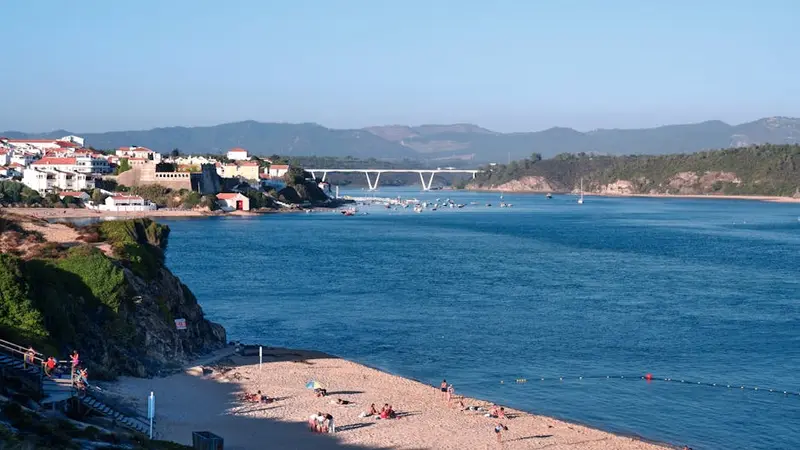
Vila Nova de Milfontes, located at the mouth of the Rio Mira, is the most famous town on the Alentejo Coast. Its white houses, river beaches, and wild Atlantic coves make it a popular summer destination; outside the season, it is very tranquil.
6 Sights
2 Restaurants
Spirit
Once a small fishing village, the town gained a fortress against pirate attacks around 1600, now the Forte de São Clemente. Restaurants prioritize fish and seafood; coastal staples are Ameijoas and fish stew. Since the Rota Vicentina's construction, hikers visit the region even outside summer.
For adventure seekers. Perfect for unwinding and relaxation and Perfect for an exciting city trip.
Lagos is a vibrant port city in the west of the Algarve, with a walled old town, many bars, and some of the coast's most beautiful rocky coves right on its doorstep. In the 15th century, expeditions along the African coast set off from here.
5 Sights
5 Restaurants
Culture
Under Henry the Navigator, Lagos was an important port for the Portuguese voyages of discovery. From 1444, enslaved Africans were sold here, now remembered by the Museum in the Mercado de Escravos. The 1755 earthquake destroyed large parts of the city. In restaurants, fish and seafood dominate, complemented by almond and fig sweets from the Algarve.