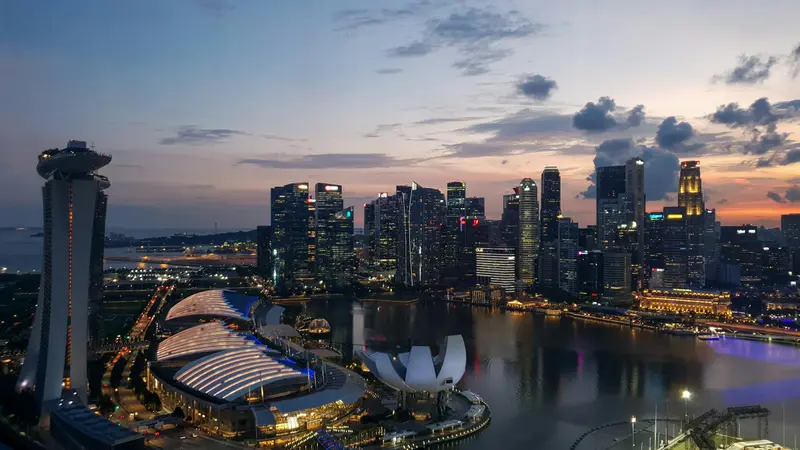
Photo by Arul Kumaran on Unsplash
City trip · Singapore
Singapore Stopover in 2 Days
by Felix Gillen
- 3 Days / 2 Nights
- Jewel Changi Airport → Jewel Changi Airport
Two days between two long-haul flights: Arrival at Jewel at Changi Airport, hotel base at Marina Bay, one day exploring Colonial Districts, Chinatown and Hawker food, a morning at the Botanic Gardens, and concluding with the Rain Vortex before departure. You'll cover all ground by MRT or on foot.
At a glance
- Duration
- 3 Days / 2 Nights
- Stops
- 6 · Jewel Changi Airport → Jewel Changi Airport
- Arrival
- Flight · Singapur Changi (SIN)
- Best Time to Go
- All year round
More on when to go
Bridge rain showers with museums or in Jewel
6 stops
Why This Route?
Singapore is ideal for a short stopover: The airport is close to the center, the MRT is fast, and key districts are close together. This route shows in two days skyline, colonial buildings, Chinatown's temples, a Hawker Centre, and the UNESCO Garden, without rushing.
Hidden Gems
- Green roof of Marina Barrage, accessible 24/7, with skyline views
- Spectra, the free light and water show at Marina Bay Sands Event Plaza at 8 PM and 9 PM, also at 10 PM on Fridays and Saturdays
- Free Singapore Tour for transit passengers with 5.5 to 24 hours layover
Getting there and back
Round trip, returning to where you started
- Arrival
- Flight · Singapur Changi (SIN)For stopover immigration, fill out the free SG Arrival Card online, earliest three days before arrival. From Changi Airport MRT, take the East-West Line, change at Tanah Merah for the city center, or take a taxi.
- Departure
- Flight · Singapur Changi (SIN)For the trip from city center to airport: MRT 35-45 min, taxi 20-30 min, longer during peak hours. For selected airlines, you can check in and drop bags at Jewel 3-24 hours pre-departure.
Itinerary
Start
Jewel Changi Airport
After landing, proceed through Terminal 1's arrival hall to Jewel: Rain Vortex and Forest Valley. Optional luggage storage on Level 1.
Train
MRT East-West Line from Changi Airport, change at Tanah Merah, around 35 to 45 minutes to Marina Bay
Marina Bay
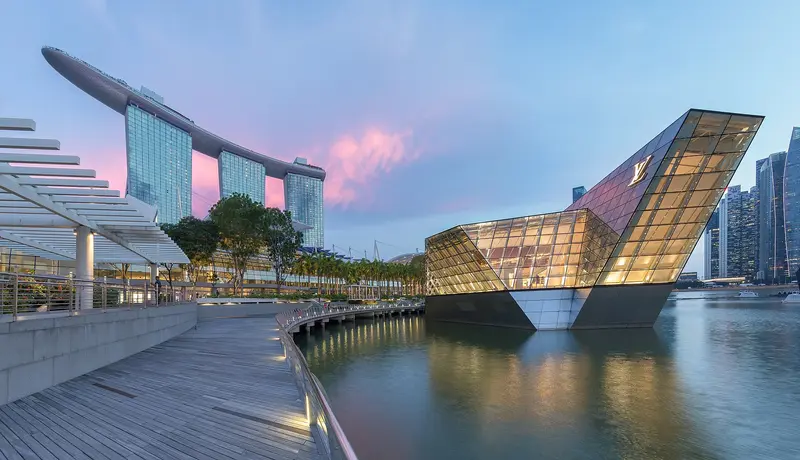
Marina Bay is Singapore's iconic skyline district: The Marina Bay Sands hotel, the ArtScience Museum, the Supertrees of Gardens by the Bay, and the towers of the financial district frame the bay here. You'll come for the gardens, the view from the SkyPark, and in the evening for the light shows on the water. The approximately 360-hectare area was reclaimed from the sea starting in 1971; the last 38 hectares at Bayfront were added in 1994. Since the construction of the Marina Barrage in 2008, the bay has been a freshwater reservoir.The best way to explore here is to walk along the waterfront promenade around the bay, from the Merlion across the Helix Bridge to the gardens. Five MRT lines serve the district; the most important stations are Bayfront, Marina Bay, Gardens by the Bay, and Esplanade.
Hotel stay. First evening: Gardens by the Bay with the Garden Rhapsody show at the Supertrees at 7:45 PM and 8:45 PM, then Spectra at the Marina Bay Sands promenade.
8 Sights
3 Restaurants
A District Built on Reclaimed Land
From Sea to SkylineAccording to the URA, Singapore began land reclamation along the downtown shoreline in 1971, with the final 38 hectares at the Bayfront reclaimed in 1994. The new land became home to the financial district around Marina Bay Financial Centre and Asia Square, the Esplanade, the Singapore Flyer, and eventually Gardens by the Bay. Significant portions of the Formula 1 Marina Bay Street Circuit also stand on reclaimed land.The Bay as a Water ReservoirIn 2008, the Marina Channel was dammed with the Marina Barrage. Since then, Marina Bay and the Kallang Basin have formed a freshwater reservoir that supplies additional drinking water, maintains stable water levels for water sports, and protects areas like Chinatown from flooding.
Civic District
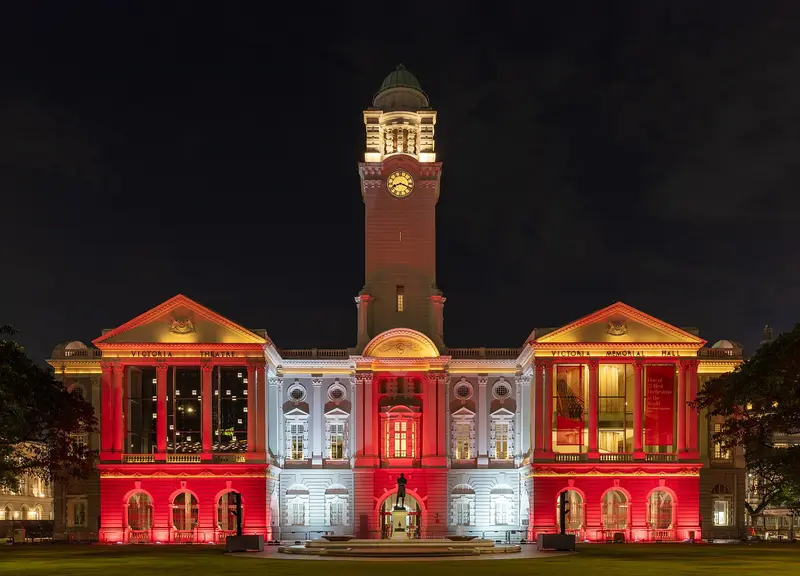
The Civic District on the north bank of the Singapore River is Singapore's government and museum quarter. You come for the National Gallery, the Asian Civilisations Museum, and the colonial buildings around the Padang, including St Andrew's Cathedral and the Raffles Hotel. The city's history began here: a port settlement existed by the river as early as the 13th and 14th centuries, and in 1819, the British settled at the same spot. The Padang, a sports field fronting the colony's former administrative buildings, was declared the 75th National Monument in 2022.The National Gallery occupies the former Supreme Court and City Hall, while the Asian Civilisations Museum is situated directly by the river. Fort Canning Park, located on the former King's Hill, is green and shady. Key MRT stations are City Hall (North-South and East-West Line), plus Esplanade on the Circle Line.
Day 2 morning: Merlion, Padang, National Gallery Singapore and Fort Canning Park.
6 Sights
3 Restaurants
Where Singapore's history begins
From Royal Hill to ColonyFort Canning Hill was called Bukit Larangan in Malay, the forbidden hill; in the 14th century, it was the seat of the Kingdom of Singapura. Excavations uncovered stoneware from the Yuan Dynasty and gold jewelry from the Majapahit era. After 1819, the British built a bungalow for Raffles on the hill and established the island's first botanical garden.Scene of National HistoryThe area witnessed the formal surrender of the Japanese in 1945 and the first parliamentary session in 1965. On the riverbank, a statue marks the spot where Raffles is said to have landed in 1819; the white figure is a copy from the 1970s, while the bronze original from 1887 was moved to Empress Place in 1919.
Chinatown
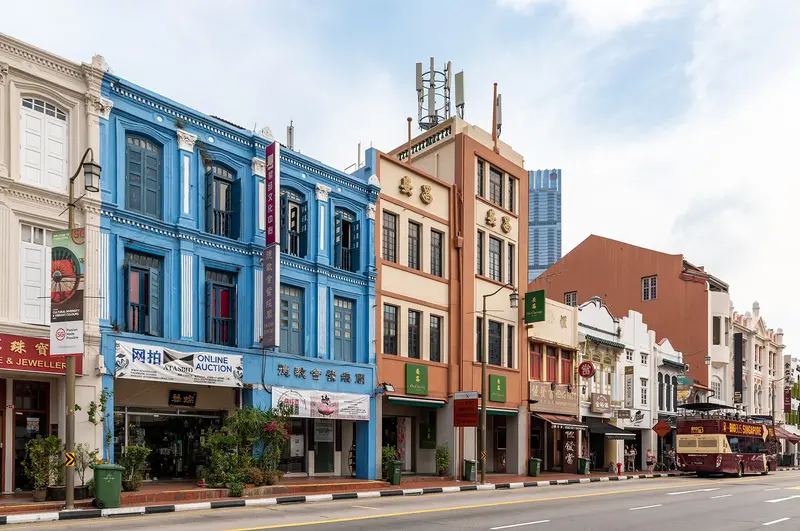
Chinatown is Singapore's historic Chinese quarter southwest of the Singapore River. You come for its temples of three religions, the restored shophouses, and the Maxwell and Chinatown Complex Hawker Centres. Raffles' 1822 town plan allocated the area to Chinese immigrants; the Chinese name Niu Che Shui, 'Bullock-Cart Water', recalls the water carts that supplied the district in the 19th century. Since 1989, it has been a conservation area; the urban planning authority URA divides it into four districts: Kreta Ayer, Telok Ayer, Tanjong Pagar, and Bukit Pasoh.Standing close together are the Buddha Tooth Relic Temple, the Hindu Sri Mariamman Temple, and the Masjid Jamae Mosque. The district is accessible via Chinatown and Maxwell MRT stations.
Midday: Sri Mariamman Temple, Buddha Tooth Relic Temple and Thian Hock Keng, plus food at a Hawker Centre. Evening: Satay on Boon Tat Street from 7 PM.
5 Sights
3 Restaurants
History and Faith
An Immigrant DistrictTelok Ayer, by the former shore, is the oldest part of Chinatown and developed from the 1820s, with Kreta Ayer following in the 1830s. Clan associations, organised by dialect groups, supported the newcomers. Shophouses were often overcrowded: at the Chinatown Heritage Centre, you can see reconstructed living cabins, such as those of a clog maker and a Samsui woman.Temples Side by SideThe district was never purely Chinese. Indian traders settled on South Bridge Road, where in 1826 the mosque of the Tamil Chulia Muslims and in 1827 the Sri Mariamman Temple were established. The Thian Hock Keng Temple on Telok Ayer Street is dedicated to Mazu, the Goddess of the Sea, whom sailors honoured after a safe voyage.
Singapore Botanic Gardens
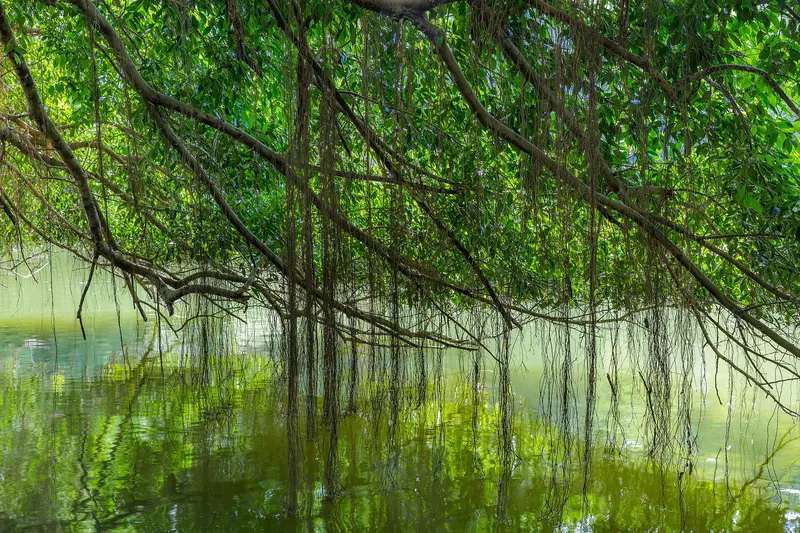
The Botanic Gardens in the Tanglin district is an approximately 82-hectare park featuring lakes, themed gardens, and the National Orchid Garden. Since July 4, 2015, it has been listed as the first and, to date, only tropical botanical garden on the UNESCO World Heritage list. It was established in 1859 by an Agricultural and Horticultural Society at its current location. Under Director Henry Nicholas Ridley, who took office in 1888, research into rubber cultivation was conducted here; his methods helped Malaya become the world's largest natural rubber producer.The Gardens are freely accessible daily from 5 AM to midnight. You can stroll from Swan Lake at Tanglin Gate across lawns and themed gardens to the National Orchid Garden, which is the only paid-admission area. Two MRT stations are located directly at the entrances: Botanic Gardens in the north and Napier in the south.
Day 3 early morning, while it's cool: UNESCO World Heritage Site since 2015, featuring the National Orchid Garden.
4 Sights
3 Restaurants
Rubber, Orchids and World Heritage
Research Garden of the Colonial EraFrom the start, the garden was more than a park: economic crops were trialled here, above all rubber. Henry Nicholas Ridley developed tapping methods and promoted cultivation among planters. Also from this period is Burkill Hall, an 1886 plantation bungalow that once served as the directors' residence and is named after directors Isaac and Humphrey Burkill.Orchids as a National SymbolOrchid cultivation is closely linked to the garden. According to NParks, the National Orchid Garden has displayed over 1,500 species and 3,000 hybrids since 1995. In 2021, the Tropical Montane Orchidetum was added, featuring cool and mist houses where plants from tropical mountain regions thrive.
Train
Back to the airport by MRT or taxi, plan enough buffer before departure.
End
Jewel Changi Airport
Before departure: check-in for selected airlines in the Early Check-in Lounge, then one more visit to the Rain Vortex or Canopy Park.
Plan this route as your trip
All stops, trains and nights go into your trip planner. You adjust dates and places to stay afterwards.
This route is a suggestion from our research. Please check timetables, times in port, opening hours and prices before you book – what your tour operator or carrier says is what counts.
Fernweh is a free travel guide and trip planner: routes researched by people, taken over in one click, used day by day on the road. More about Fernweh
6 stops
Route Summary
Duration3 Days
Stops6 Places
TypeCulture