Fernweh: Home
    ExploreTravel GuidesPlan a tripMy tripLast visited
    de|en
    All Places & RegionsAll highlightsAbout FernwehFAQPrivacy PolicyImprint
    ExploreTravel GuidesPlan a tripMy tripLast visited
    • Neighborhoods & highlights
    • Walking tours
    • Eat & drink
    • Culture
    • Getting around
    • Accommodation
    • Plan trip
    • Nearby
    Chinatown
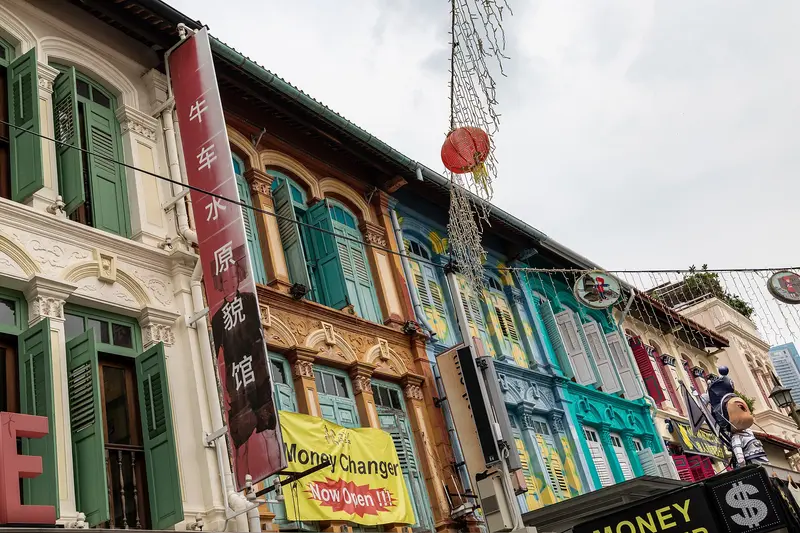
    Dietmar Rabich / Wikimedia Commons / CC BY-SA 4.0

    Singapore

    Chinatown

    City

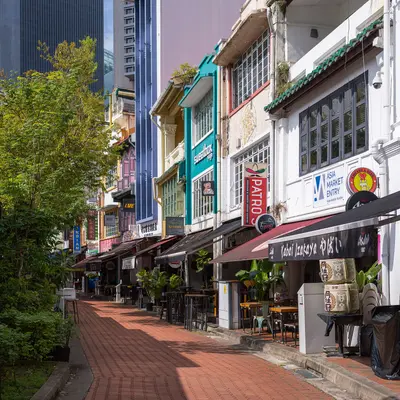
    Chinatown is Singapore's historic Chinese quarter southwest of the Singapore River. You come for its temples of three religions, the restored shophouses, and the Maxwell and Chinatown Complex Hawker Centres.

    by Felix Gillen

    1. Home
    2. Destinations
    3. Singapore
    4. Singapore
    5. Chinatown
    Chinatown is Singapore's historic Chinese quarter southwest of the Singapore River. You come for its temples of three religions, the restored shophouses, and the Maxwell and Chinatown Complex Hawker Centres. Raffles' 1822 town plan allocated the area to Chinese immigrants; the Chinese name Niu Che Shui, 'Bullock-Cart Water', recalls the water carts that supplied the district in the 19th century. Since 1989, it has been a conservation area; the urban planning authority URA divides it into four districts: Kreta Ayer, Telok Ayer, Tanjong Pagar, and Bukit Pasoh.Standing close together are the Buddha Tooth Relic Temple, the Hindu Sri Mariamman Temple, and the Masjid Jamae Mosque. The district is accessible via Chinatown and Maxwell MRT stations.

    Sights in Chinatown

    Discover the most important sights and attractions
    Buddha Tooth Relic Temple
    Place of Worship

    1Buddha Tooth Relic Temple

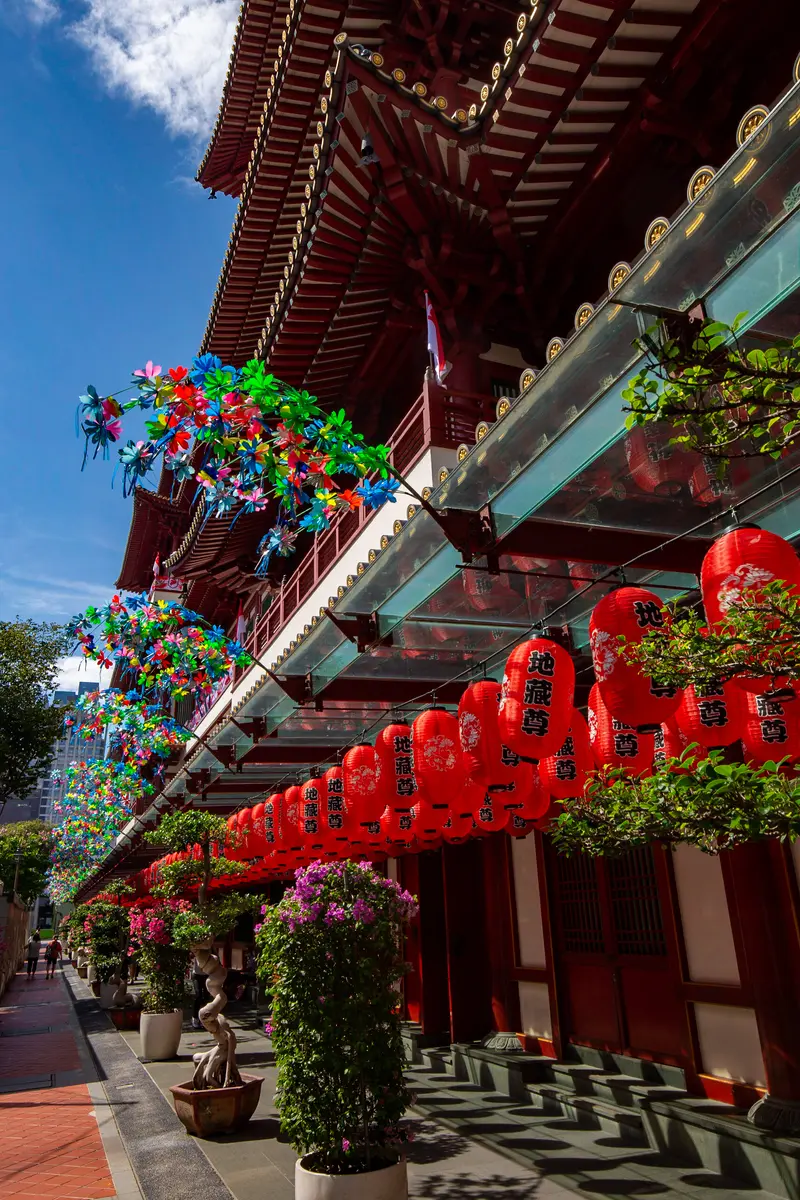
    Completed in 2007, the Buddhist temple is built in Tang Dynasty style and enshrines a relic revered as the Tooth of Buddha. In its rooftop garden, a large Vairocana prayer wheel of Tibetan design rotates.
    Open in Google Maps
    Thian Hock Keng Temple
    Place of Worship

    2Thian Hock Keng Temple

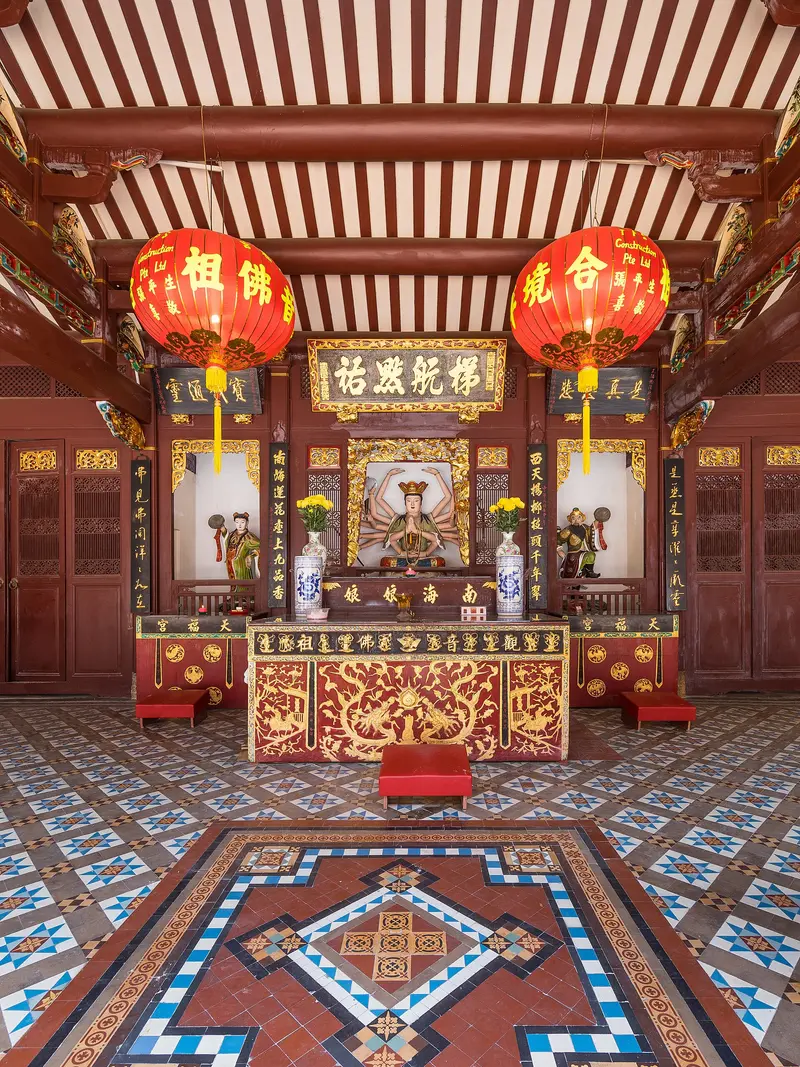
    The temple on Telok Ayer Street, built by the Hokkien community from 1839 to 1842, is dedicated to the sea goddess Mazu and is considered Singapore's oldest Chinese temple. It has been a National Monument since June 28, 1973.
    Open in Google Maps
    Masjid Jamae
    Mosque

    3Masjid Jamae

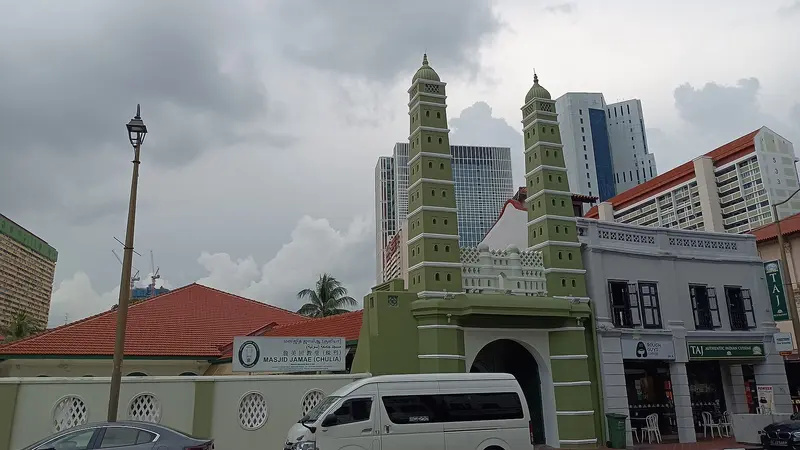
    Tamil Muslims from the Coromandel Coast, the Chulias, founded the mosque on South Bridge Road in 1826; the current building was erected between 1830 and 1835. It combines a South Indian gateway with neoclassical prayer halls and has been a National Monument since 1974.
    Open in Google Maps
    Chinatown Heritage Centre
    Museum

    4Chinatown Heritage Centre

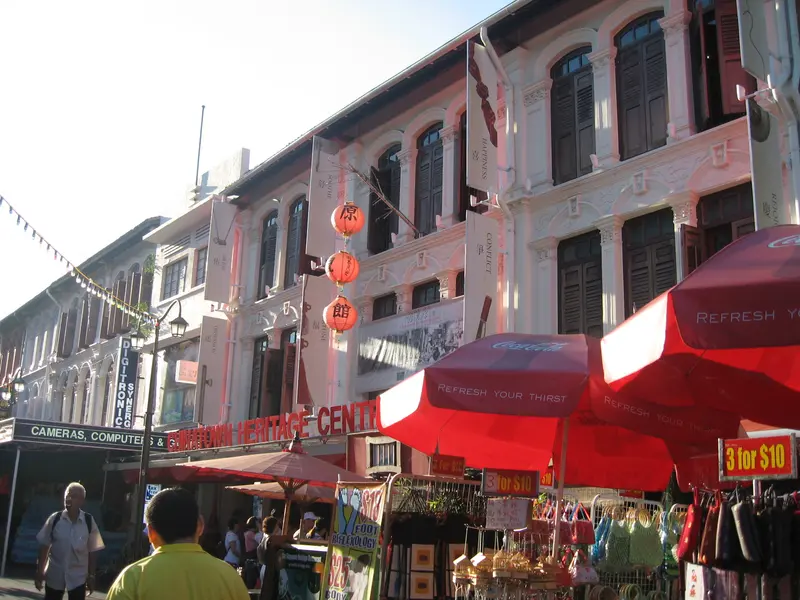
    Housed in three shophouses at 48 Pagoda Street, the museum reopened in January 2025 after a redesign. On the ground floor, you step into a recreated tailor shop with its workshop and living quarters; upstairs, narrow living cabins show how clog makers, hawkers, and Samsui women lived.
    Open in Google Maps
    Sri Mariamman Temple
    Temple

    5Sri Mariamman Temple

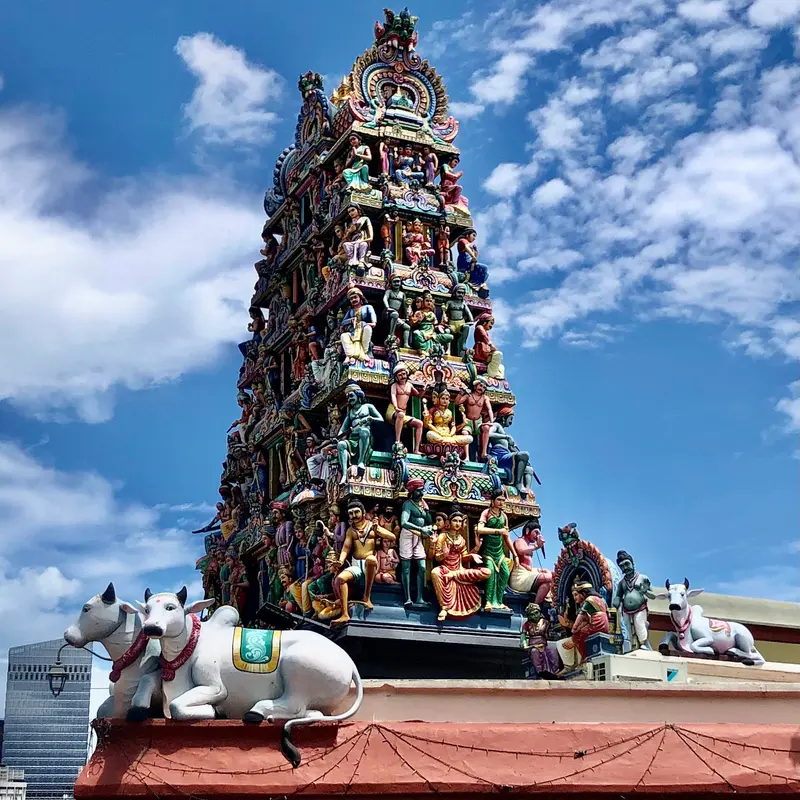
    Singapore's oldest Hindu temple, initially a wooden structure, was founded in 1827 by Naraina Pillai, who arrived with Raffles in 1819. In 1843, a brick building replaced the original; today, the temple is a National Monument.
    Open in Google Maps

    City walks in Chinatown

    Curated walking tours through the city's highlights, handpicked by experienced travel journalists.

    Temples and Hawker Food on South Bridge Road

    The tour begins at MRT Chinatown Station (Exit A, Pagoda Street) and ends at Thian Hock Keng Temple on Telok Ayer Street. The route is approximately 1.2 km long, with a pure walking time of around 20 minutes at approx. 4 km/h; with sightseeing and food, you should plan about 3.5 hours.

    Open in Google Maps
    Stops (6)

    Restaurants in Chinatown

    1

    Maxwell Food Centre

    The market hall, opened in 1928, was converted into a Hawker Centre in 1987, after street vendors from China Square relocated here. The most famous stall is Tian Tian Hainanese Chicken Rice, which the Guide Michelin features in its 2026 Bib Gourmand.
    Show on Google Maps
    2

    Hawker Chan

    In 2009, Chan opened his Liao Fan Soya Sauce Chicken Rice & Noodle stall in the Chinatown Complex; the stall received a Michelin star in July 2016. This was followed in November 2016 by the restaurant at 78 Smith Street, which serves soya sauce chicken with rice or noodles and roast pork daily from 10 AM to 9 PM.
    Show on Google Maps
    3

    Chinatown Complex Food Centre

    In October 1983, Chinatown's last street vendors, some 300 hawkers from the surrounding streets, moved into the S$18 million complex at 335 Smith Street. This is where Hawker Chan opened his Liao Fan stall in 2009, which was awarded a Michelin star in July 2016.
    Show on Google Maps

    History and Faith

    An Immigrant DistrictTelok Ayer, by the former shore, is the oldest part of Chinatown and developed from the 1820s, with Kreta Ayer following in the 1830s. Clan associations, organised by dialect groups, supported the newcomers. Shophouses were often overcrowded: at the Chinatown Heritage Centre, you can see reconstructed living cabins, such as those of a clog maker and a Samsui woman.Temples Side by SideThe district was never purely Chinese. Indian traders settled on South Bridge Road, where in 1826 the mosque of the Tamil Chulia Muslims and in 1827 the Sri Mariamman Temple were established. The Thian Hock Keng Temple on Telok Ayer Street is dedicated to Mazu, the Goddess of the Sea, whom sailors honoured after a safe voyage.

    Arrival and Routes

    Chinatown is located southwest of the Singapore River and is easily explored on foot; the temples on South Bridge Road and the Maxwell Food Centre are close to each other.Chinatown (NE4/DT19): Interchange station for the North East Line and Downtown Line, near the Buddha Tooth Relic Temple, Masjid Jamae, and Sri Mariamman Temple.Maxwell (TE18): Station on the Thomson-East Coast Line, operating since November 2022, directly at the Maxwell Food Centre and the Buddha Tooth Relic Temple.

    Accommodations in Chinatown

    Find perfect stay in Chinatown

    Booking.com* (Affiliate link)
    Search Hotels
    Agoda* (Affiliate link)
    Search Hotels
    Airbnb
    Vacation Rentals

    * Affiliate link: if you book through it, we earn a small commission. The price stays the same for you.

    Plan your trip to Chinatown

    Save places, build a route and plan your city trip, all in one place.

    1. 1
      Sunrise over alpine peaks and a sea of clouds
      1234

      Round trip

      12 days · 4 stops

      Saved

      Pick a route

      Pick a ready-made one or save places and plan your own.

      Open bookmarks
    2. 2

      Trip to Chinatown

      Live
      • 1Buddha Tooth Relic Temple3 days
      • 2Thian Hock Keng Temple4 days
      • 3Masjid Jamae5 days
      Budget

      Plan your trip

      The planner sorts stops, days and budget. Plan together in real time.

      Start trip planning
    3. 3
      9:41 No signal
      Chinatown
      Available offline

      Use it on the road

      Download the guide to your phone and use it on site, even offline.

    Nearby

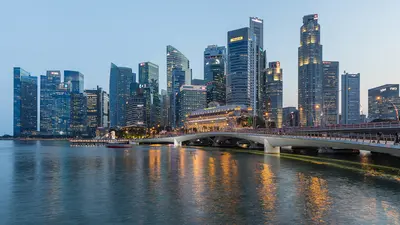
    Singapore River

    Singapore River

    The Singapore River is the city's historic lifeline. Along its banks today, the three quays, Boat Quay, Clarke Quay and Robertson Quay, brim with restaurants, bars, and clubs. You come here to stroll along the promenades and historic bridges, take a bumboat ride, and dine and drink by the water in the evening.In the 19th century, the river served as Singapore's port: in the 1860s, Boat Quay handled three-quarters of all ship trade, with lighters transporting goods to warehouses upstream. After a ten-year cleanup from 1977 to 1987, trade and pollution disappeared. The warehouses and shophouses were placed under conservation and repurposed starting in 1989. Three colonial-era bridges have been national monuments since 2019.
    Singapore

    Singapore

    Singapore is both a city and a state: Across 744.3 square kilometers, colonial buildings, temples, skyscrapers, and rainforests are often just a few MRT stations apart. You come for its districts shaped by Chinese, Malay and Indian communities, its Hawker Centres, and its gardens. According to the statistics authority, approximately 6.1 million people lived in the city-state by mid-2025. In 1819, Stamford Raffles established a British trading post here, and on August 9, 1965, Singapore gained independence after separating from Malaysia. Official languages are English, Malay, Mandarin, and Tamil, and this diversity continues to shape the city's districts today.The city center is divided into clearly distinct quarters: the skyscrapers and gardens of Marina Bay, the colonial buildings and museums in the Civic District, the temples and shophouses of Chinatown, and the spice shops of Little India. Beyond these, highlights include the UNESCO-listed Singapore Botanic Gardens, the Bukit Timah rainforest, and the Hawker Centres in residential areas. The MRT reaches almost all these destinations.
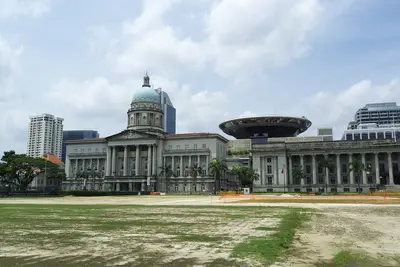
    Civic District

    Civic District

    The Civic District on the north bank of the Singapore River is Singapore's government and museum quarter. You come for the National Gallery, the Asian Civilisations Museum, and the colonial buildings around the Padang, including St Andrew's Cathedral and the Raffles Hotel. The city's history began here: a port settlement existed by the river as early as the 13th and 14th centuries, and in 1819, the British settled at the same spot. The Padang, a sports field fronting the colony's former administrative buildings, was declared the 75th National Monument in 2022.The National Gallery occupies the former Supreme Court and City Hall, while the Asian Civilisations Museum is situated directly by the river. Fort Canning Park, located on the former King's Hill, is green and shady. Key MRT stations are City Hall (North-South and East-West Line), plus Esplanade on the Circle Line.
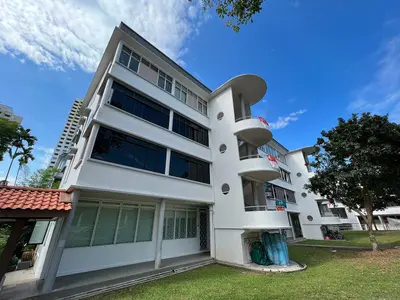
    Tiong Bahru

    Tiong Bahru

    Tiong Bahru is Singapore's oldest public housing estate, a tranquil neighbourhood of curved 1930s Art Deco blocks southwest of Chinatown. You come for the architecture, the Tiong Bahru Market, home to some of the city's most renowned hawker stalls, and the cafés and bakeries that have set up shop on the ground floors.The name means 'new cemetery', from the Hokkien word 'tiong' for cemetery and the Malay 'bahru' for new. In 1927, the Singapore Improvement Trust (SIT) acquired around 70 acres of land to build the country's first public housing estate here; the first block was ready for occupation in December 1936. Today, 20 pre-war blocks are heritage-listed. Between the blocks, you'll find a Monkey God Temple, murals depicting scenes from old Singapore, and one of the last surviving World War II air raid shelters.
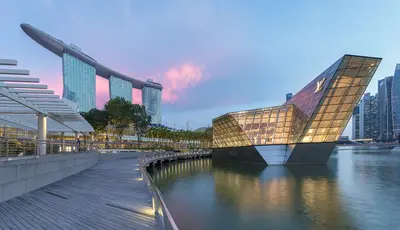
    Marina Bay

    Marina Bay

    Marina Bay is Singapore's iconic skyline district: The Marina Bay Sands hotel, the ArtScience Museum, the Supertrees of Gardens by the Bay, and the towers of the financial district frame the bay here. You'll come for the gardens, the view from the SkyPark, and in the evening for the light shows on the water. The approximately 360-hectare area was reclaimed from the sea starting in 1971; the last 38 hectares at Bayfront were added in 1994. Since the construction of the Marina Barrage in 2008, the bay has been a freshwater reservoir.The best way to explore here is to walk along the waterfront promenade around the bay, from the Merlion across the Helix Bridge to the gardens. Five MRT lines serve the district; the most important stations are Bayfront, Marina Bay, Gardens by the Bay, and Esplanade.

    Sources & method

    • Photos: Wikimedia Commons, Google Maps. Each photo carries its credit.
    • Place data such as addresses and ratings comes from Google Maps.
    • The content is based on web research from public, traceable sources. How the content is made · The role of AI