Tiong Bahru is Singapore's oldest public housing estate, a tranquil neighbourhood of curved 1930s Art Deco blocks southwest of Chinatown. You come for the architecture, the Tiong Bahru Market, home to some of the city's most renowned hawker stalls, and the cafés and bakeries that have set up shop on the ground floors.The name means 'new cemetery', from the Hokkien word 'tiong' for cemetery and the Malay 'bahru' for new. In 1927, the Singapore Improvement Trust (SIT) acquired around 70 acres of land to build the country's first public housing estate here; the first block was ready for occupation in December 1936. Today, 20 pre-war blocks are heritage-listed. Between the blocks, you'll find a Monkey God Temple, murals depicting scenes from old Singapore, and one of the last surviving World War II air raid shelters.
Sights in Tiong Bahru
Discover the most important sights and attractions
Point of Interest
1SIT's pre-war apartment blocks
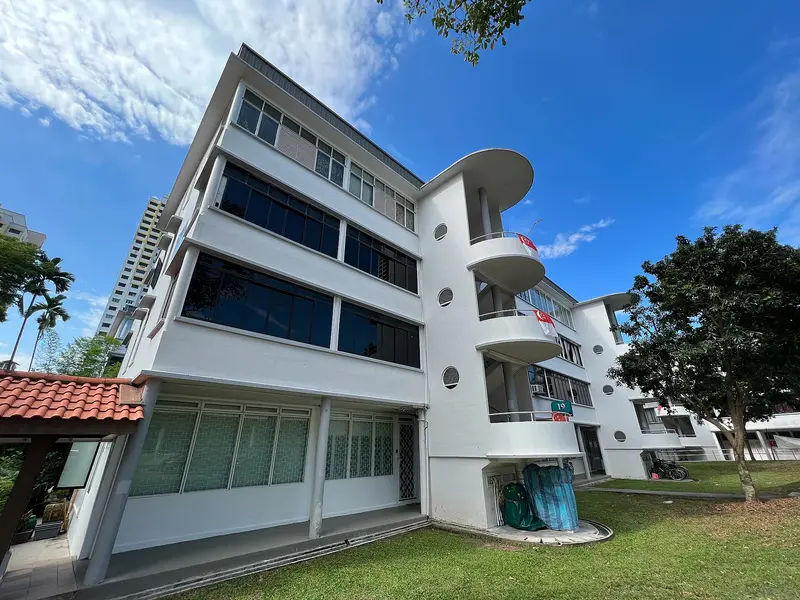
The 1930s blocks of the Singapore Improvement Trust were designed by Alfred G. Church in the Streamline Moderne style with rounded corners and open spiral staircases; the first, Block 55, was completed in December 1936. Since 2003, 20 pre-war blocks have been listed for conservation.
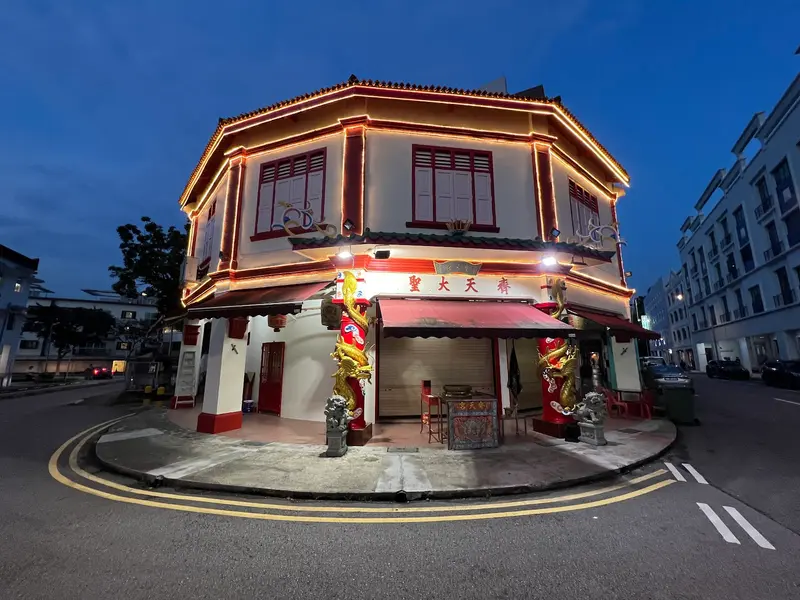
The Taoist temple is dedicated to the Monkey King Sun Wukong from "Journey to the West"; it began in 1920 as a hut in a taro field and moved in 1938 into a shophouse at 44 Eng Hoon Street. Inside, there are more than ten monkey god statues, and on his birthday, the 16th day of the eighth lunar month, a big celebration is held.
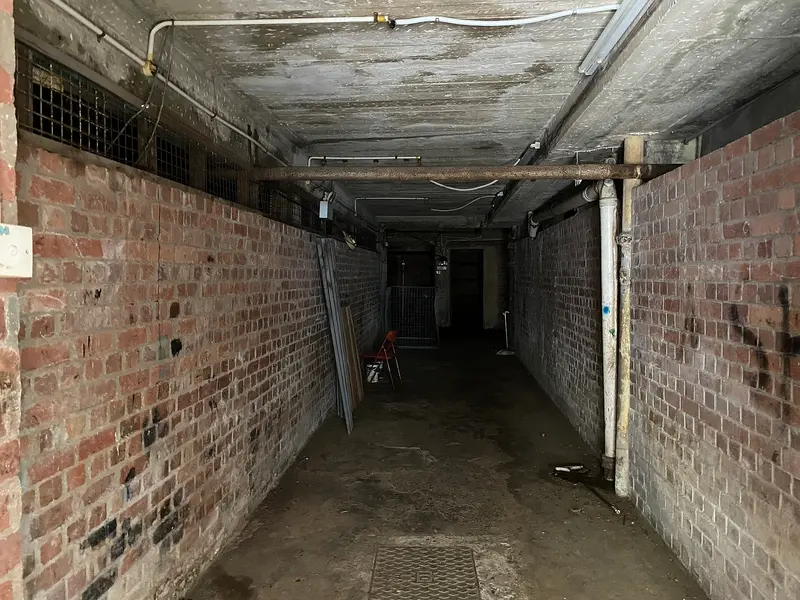
The horseshoe-shaped Block 78, between Moh Guan Terrace and Guan Chuan Street, was equipped with a semi-basement air-raid shelter between 1939 and 1941 for an estimated 1,600 people. According to the National Heritage Board, it is the only SIT residential block with an integrated bunker; the otherwise closed bunker is only accessible for special events and guided heritage tours.
The Hawker Centre on the upper floor of the market at 30 Seng Poh Road reopened in July 2025 after a three-month renovation. Try Chwee Kueh, steamed rice cakes with pickled radish, from the Bib Gourmand stall Jian Bo Tiong Bahru Shui Kueh or the Prawn Mee from Hong Heng Fried Sotong Prawn Mee, which the Michelin Guide has featured in its Bib Gourmand since its first Singapore edition.
The bakery at 56 Eng Hoon Street, a collaboration with French baker Gontran Cherrier, now has branches across the city. It's renowned for its croissants, especially the almond croissant, and kouign-amann.
The Zi-Char eatery at 55 Tiong Bahru Road serves wok dishes such as Sambal Clams, Coffee Pork Ribs, and Crab. It opens daily at 4 PM and stays open until the early hours of the morning.
The First Public Housing EstateBritish architect Alfred G. Church designed the pre-war blocks of the Singapore Improvement Trust in the Streamline Moderne style, a late variant of Art Deco: rounded corners, outdoor spiral staircases, horizontal window bands, and flat roofs. Between 1948 and 1954, blocks in the International Style were added. In 2003, the Urban Redevelopment Authority (URA) listed 20 pre-war blocks for conservation.Bunker, Blaze, and BirdsongBlock 78, at the corner of Moh Guan Terrace and Guan Chuan Street, received an air-raid shelter for up to 2,000 people between 1939 and 1941; it is considered the last surviving civilian air-raid shelter from the pre-war era. On February 13, 1959, a major fire in the vicinity left up to 12,000 people homeless. Artist Yip Yew Chong has painted murals on the blocks depicting daily life scenes of the old neighbourhood, such as the former bird-singing corners.Market as the HubThe market originated in 1951 as Seng Poh Road Market to accommodate street vendors from Chinatown and also served as a polling station. The current two-storey building was opened in 2006; it was renovated from April to July 2025.
Getting There and Around
Tiong Bahru is small and flat; all sights are within a few minutes' walk of each other, located between Seng Poh Road, Eng Hoon Street, and Moh Guan Terrace.MRT Tiong Bahru (EW17): East-West Line; from here, head into the neighbourhood via Tiong Bahru Road.MRT Havelock: Thomson-East Coast Line, access to the northern edge.Tiong Bahru Market: 30 Seng Poh Road; stall opening hours vary: many stalls open early in the morning and close in the early afternoon; some are closed on Mondays.Air-raid shelter: only accessible during guided tours and special events.