Fernweh: Home
    ExploreTravel GuidesPlan a tripMy tripLast visited
    de|en
    All Places & RegionsAll highlightsAbout FernwehFAQPrivacy PolicyImprint
    ExploreTravel GuidesPlan a tripMy tripLast visited
    • Neighborhoods & highlights
    • Eat & drink
    • Culture
    • Getting around
    • Accommodation
    • Plan trip
    • Nearby
    Orchard Road
    Uzoma Ozurumba / Wikimedia Commons / CC BY-SA 4.0

    Singapore

    Orchard Road

    City

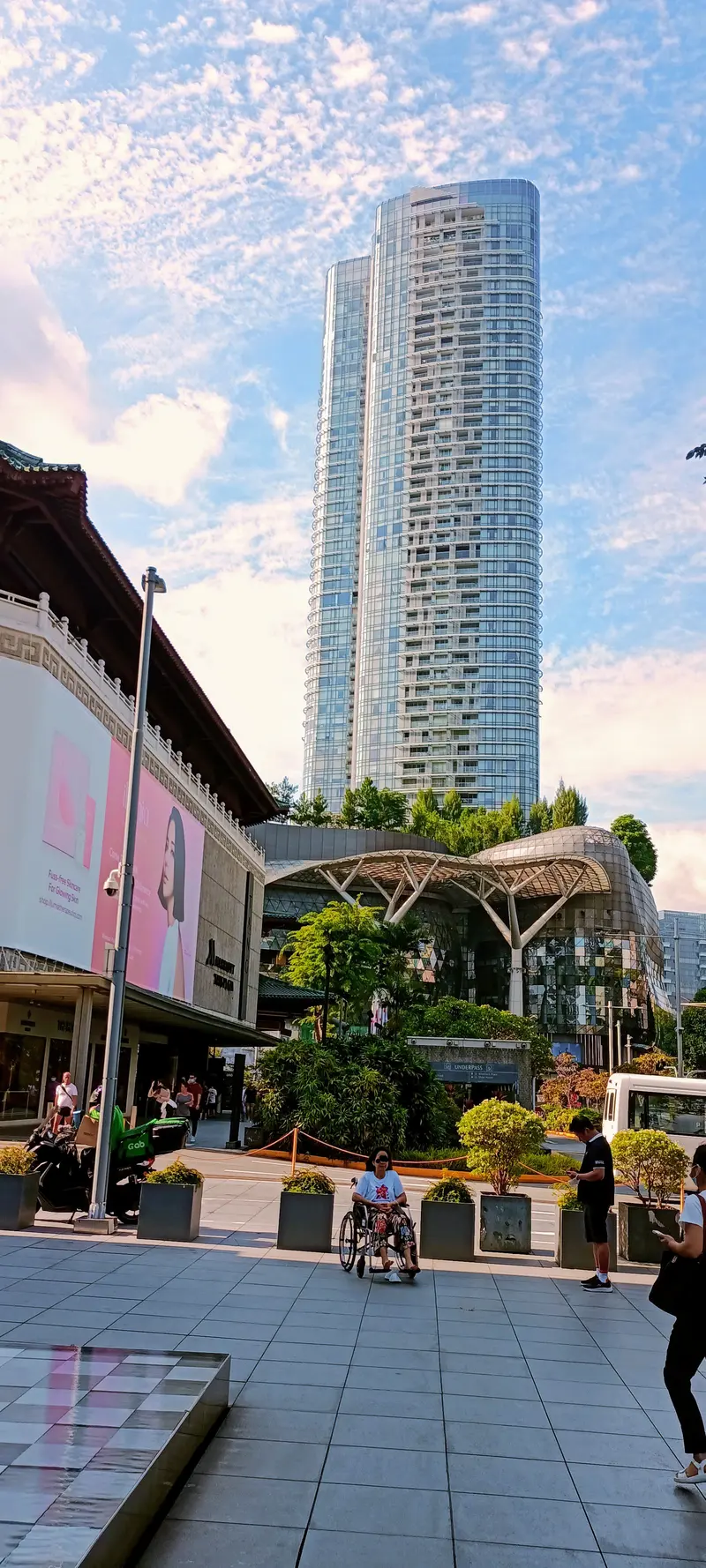
    Orchard Road is Singapore's most famous shopping street, stretching approximately 2.5 kilometers through the city center.

    by Felix Gillen

    1. Home
    2. Destinations
    3. Singapore
    4. Singapore
    5. Orchard Road
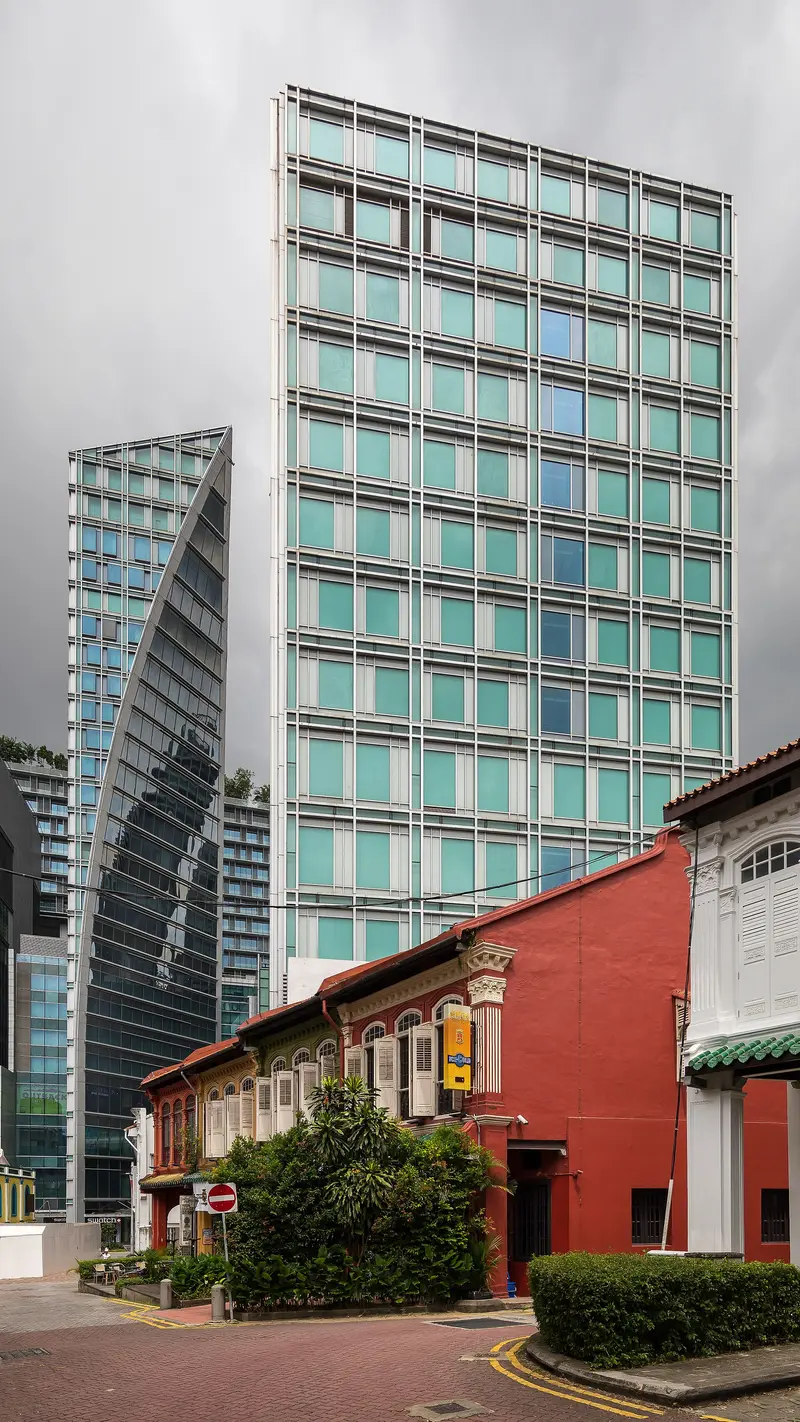
    Orchard Road is Singapore's most famous shopping street, stretching approximately 2.5 kilometers through the city center. You'll come here to shop at malls like ION Orchard and Ngee Ann City, and for the Peranakan terraced houses of Emerald Hill right next door. The street presumably owes its name to the nutmeg, pepper, and fruit plantations that the dirt path led to from the 1830s onwards. After the decline of the plantations, villas and residential buildings emerged, but the major development into a shopping mile only began in the 1960s.Away from the main street, you'll find quieter corners: the terraced houses of Emerald Hill Road, the restored shophouses of Peranakan Place, and at the southeast end, the Istana presidential palace with Istana Park. You can reach the street via several MRT stations, including Orchard, Somerset, and Dhoby Ghaut.

    Sights in Orchard Road

    Discover the most important sights and attractions

    Emerald Hill
    Attraction

    1Emerald Hill

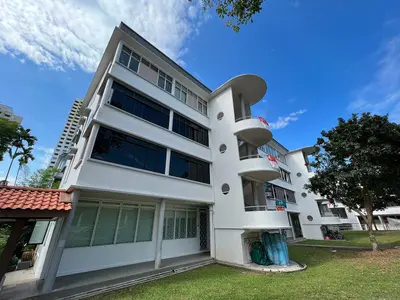
    The terraced houses on Emerald Hill Road were mostly built between approximately 1902 and the 1920s on a former nutmeg plantation. Many bear plaques detailing their history; the area has been under heritage protection since 1989.
    Open in Google Maps
    Peranakan Place
    Point of Interest

    2Peranakan Place

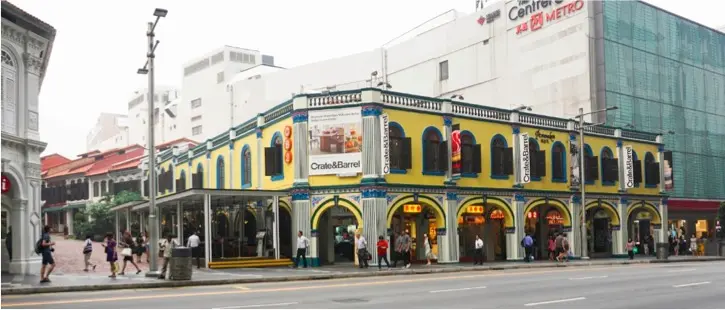
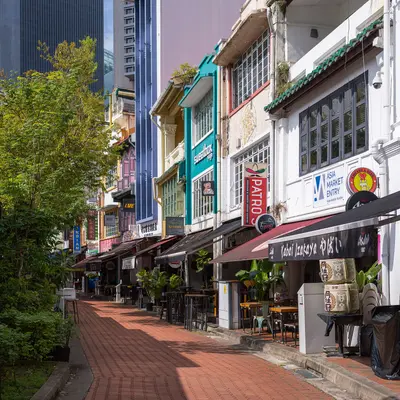
    The six two-storey shophouses at the corner of Orchard Road and Emerald Hill Road were built around 1902 and restored by the URA for S$2.2 million as a pilot project. Today, the section is closed to cars and houses bars and restaurants under arcades.
    Open in Google Maps
    Istana Park
    Park

    3Istana Park

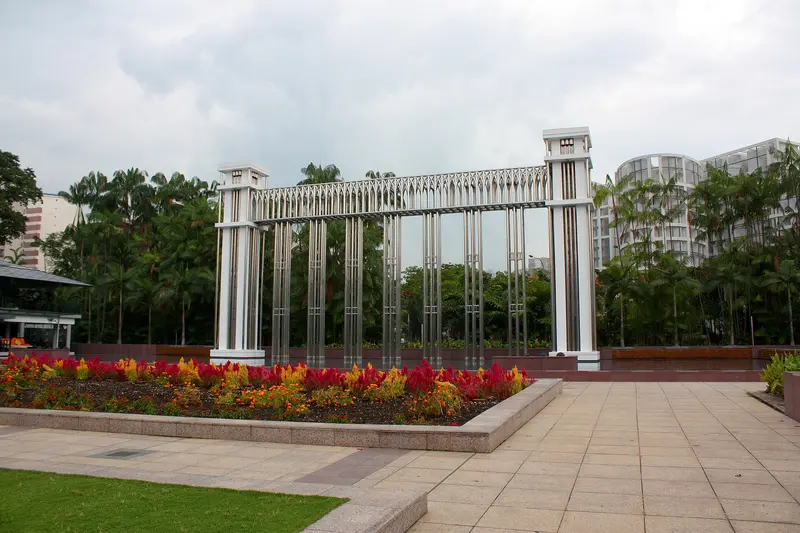
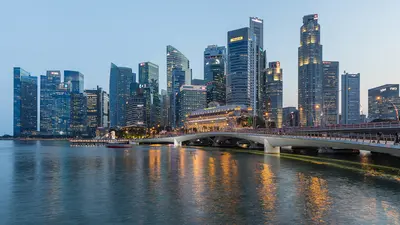
    The park opposite the Istana Gate was designed by Ren Matsui and officially opened in 1996. Its landmark is the Festival Arch, whose form is modelled after the gateposts and grilles of the Istana and marks the gateway to the Civic District.
    Open in Google Maps

    Restaurants in Orchard Road

    1

    Chatterbox

    The restaurant opened in 1971 in the then Mandarin Hotel and is now located on the fifth floor of the Hilton Singapore Orchard at the same address, 333 Orchard Road. It is famous for its Mandarin Chicken Rice, and the menu also features lobster laksa, among other dishes.
    Show on Google Maps
    2

    Imperial Treasure Fine Teochew Cuisine

    The restaurant on the third floor of ION Orchard specializes in Teochew cuisine. It is known for its chilled crab, of which, according to the Michelin Guide, only a limited number are prepared each day, and for steamed coral trout.
    Show on Google Maps
    3

    Food Opera ION Orchard

    The Food Court on the fourth basement level of ION Orchard reopened on September 28, 2026, after a three-month renovation, featuring 24 stalls and approximately 600 seats. New tenants include traditional establishments like Ming Chung White Lor Mee and Hillman Restaurant.
    Show on Google Maps

    Plantations, Peranakan and Presidential Palace

    From Nutmeg Plantation to Residential DistrictOn Emerald Hill, 19th-century postmaster William Cuppage operated a nutmeg plantation. After the land was parcelled out around 1900, terraced houses began to appear from about 1902, where many Peranakan families lived from the 1930s onwards. The facades combine European columns with colourful tiles and Chinese motifs; in 1989, the area was designated a conservation area. As the houses are inhabited, it's best to take photos respectfully.The IstanaThe Presidential Palace was built in 1869 as Government House, based on plans by Major John Frederick Adolphus McNair, on the site of a former nutmeg plantation. British governors resided here until 1959. Since 1965, it has been known as the Istana and serves as the official residence of the President. The gardens are accessible only on certain Open House days throughout the year, usually around public holidays such as Chinese New Year, Hari Raya Puasa, or National Day; visitors without Singaporean residency pay an entrance fee.

    Getting Around Orchard Road

    You should allow time for its full length: The street measures around 2.5 kilometres.MRT Orchard: Interchange station for North-South Line and Thomson-East Coast Line (TEL platforms since November 2022).MRT Orchard Boulevard: Thomson-East Coast Line, western end.MRT Somerset: nearest station to Emerald Hill and Peranakan Place, a few minutes' walk.MRT Dhoby Ghaut: at the southeast end, near Istana and Istana Park.Istana Open House: Dates are typically announced just a few weeks prior; admission for foreign adults S$20, children aged 4 to 12 S$10.
    Accommodations in Orchard Road

    Find perfect stay in Orchard Road

    Booking.com* (Affiliate link)
    Search Hotels
    Agoda* (Affiliate link)
    Search Hotels
    Airbnb
    Vacation Rentals

    * Affiliate link: if you book through it, we earn a small commission. The price stays the same for you.

    Plan your trip to Orchard Road

    Save places, build a route and plan your city trip, all in one place.

    1. 1
      Sunrise over alpine peaks and a sea of clouds
      1234

      Round trip

      12 days · 4 stops

      Saved

      Pick a route

      Pick a ready-made one or save places and plan your own.

      Open bookmarks
    2. 2

      Trip to Orchard Road

      Live
      • 1Emerald Hill3 days
      • 2Peranakan Place4 days
      • 3Istana Park5 days
      Budget

      Plan your trip

      The planner sorts stops, days and budget. Plan together in real time.

      Start trip planning
    3. 3
      9:41 No signal
      Orchard Road
      Available offline

      Use it on the road

      Download the guide to your phone and use it on site, even offline.

    Nearby

    Singapore Botanic Gardens

    Singapore Botanic Gardens

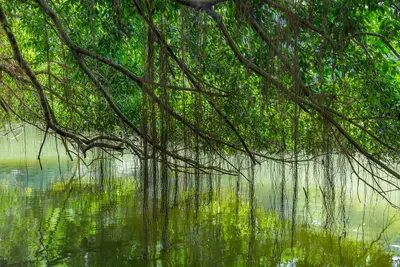
    The Botanic Gardens in the Tanglin district is an approximately 82-hectare park featuring lakes, themed gardens, and the National Orchid Garden. Since July 4, 2015, it has been listed as the first and, to date, only tropical botanical garden on the UNESCO World Heritage list. It was established in 1859 by an Agricultural and Horticultural Society at its current location. Under Director Henry Nicholas Ridley, who took office in 1888, research into rubber cultivation was conducted here; his methods helped Malaya become the world's largest natural rubber producer.The Gardens are freely accessible daily from 5 AM to midnight. You can stroll from Swan Lake at Tanglin Gate across lawns and themed gardens to the National Orchid Garden, which is the only paid-admission area. Two MRT stations are located directly at the entrances: Botanic Gardens in the north and Napier in the south.
    Little India

    Little India

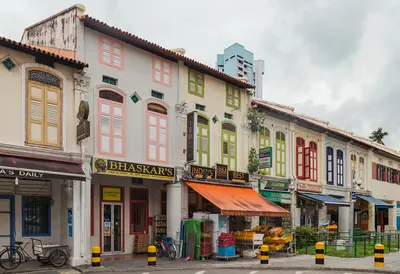
    Little India along Serangoon Road is Singapore's historic Indian quarter. You come for the Hindu temples, the biryani eateries, the Tekka Centre, and the 24-hour Mustafa Centre. It began as a cattle trading district: Indian immigrants, many of them cattle farmers, settled here, and in 1915, the Kandang Kerbau Market, named after the cattle trade, was established. The area was only named Little India in the 1980s at the initiative of the Singapore Tourism Board; in 1989, it was heritage listed. Many Singaporeans still call it Tekka today.Between the temples, eat at the Tekka Centre or Bismillah Biryani on Dunlop Street; afterwards, the Indian Heritage Centre is worth a visit. During Deepavali and Thaipusam, the district becomes a festival ground. The Little India MRT station is located on the North East Line and the Downtown Line.
    Tiong Bahru

    Tiong Bahru

    Tiong Bahru is Singapore's oldest public housing estate, a tranquil neighbourhood of curved 1930s Art Deco blocks southwest of Chinatown. You come for the architecture, the Tiong Bahru Market, home to some of the city's most renowned hawker stalls, and the cafés and bakeries that have set up shop on the ground floors.The name means 'new cemetery', from the Hokkien word 'tiong' for cemetery and the Malay 'bahru' for new. In 1927, the Singapore Improvement Trust (SIT) acquired around 70 acres of land to build the country's first public housing estate here; the first block was ready for occupation in December 1936. Today, 20 pre-war blocks are heritage-listed. Between the blocks, you'll find a Monkey God Temple, murals depicting scenes from old Singapore, and one of the last surviving World War II air raid shelters.
    Singapore River

    Singapore River

    The Singapore River is the city's historic lifeline. Along its banks today, the three quays, Boat Quay, Clarke Quay and Robertson Quay, brim with restaurants, bars, and clubs. You come here to stroll along the promenades and historic bridges, take a bumboat ride, and dine and drink by the water in the evening.In the 19th century, the river served as Singapore's port: in the 1860s, Boat Quay handled three-quarters of all ship trade, with lighters transporting goods to warehouses upstream. After a ten-year cleanup from 1977 to 1987, trade and pollution disappeared. The warehouses and shophouses were placed under conservation and repurposed starting in 1989. Three colonial-era bridges have been national monuments since 2019.
    Singapore

    Singapore

    Singapore is both a city and a state: Across 744.3 square kilometers, colonial buildings, temples, skyscrapers, and rainforests are often just a few MRT stations apart. You come for its districts shaped by Chinese, Malay and Indian communities, its Hawker Centres, and its gardens. According to the statistics authority, approximately 6.1 million people lived in the city-state by mid-2025. In 1819, Stamford Raffles established a British trading post here, and on August 9, 1965, Singapore gained independence after separating from Malaysia. Official languages are English, Malay, Mandarin, and Tamil, and this diversity continues to shape the city's districts today.The city center is divided into clearly distinct quarters: the skyscrapers and gardens of Marina Bay, the colonial buildings and museums in the Civic District, the temples and shophouses of Chinatown, and the spice shops of Little India. Beyond these, highlights include the UNESCO-listed Singapore Botanic Gardens, the Bukit Timah rainforest, and the Hawker Centres in residential areas. The MRT reaches almost all these destinations.

    Sources & method

    • Photos: Wikimedia Commons, Google Maps. Each photo carries its credit.
    • Place data such as addresses and ratings comes from Google Maps.
    • The content is based on web research from public, traceable sources. How the content is made · The role of AI