Fernweh: Home
    ExploreTravel GuidesPlan a tripMy tripLast visited
    de|en
    All Places & RegionsAll highlightsAbout FernwehFAQPrivacy PolicyImprint
    ExploreTravel GuidesPlan a tripMy tripLast visited
    • Neighborhoods & highlights
    • Eat & drink
    • Culture
    • Getting around
    • Accommodation
    • Plan trip
    • Nearby
    Singapore Botanic Gardens
    Basile Morin / Wikimedia Commons / CC BY-SA 4.0

    Singapore

    Singapore Botanic Gardens

    City

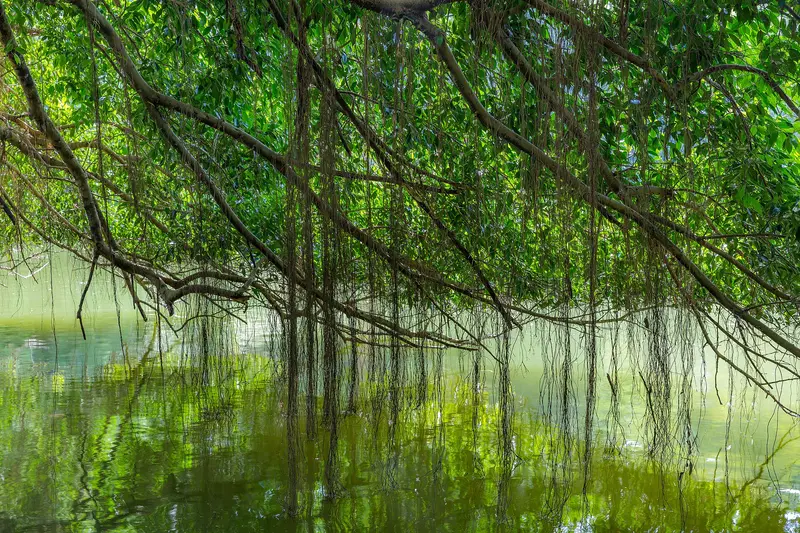
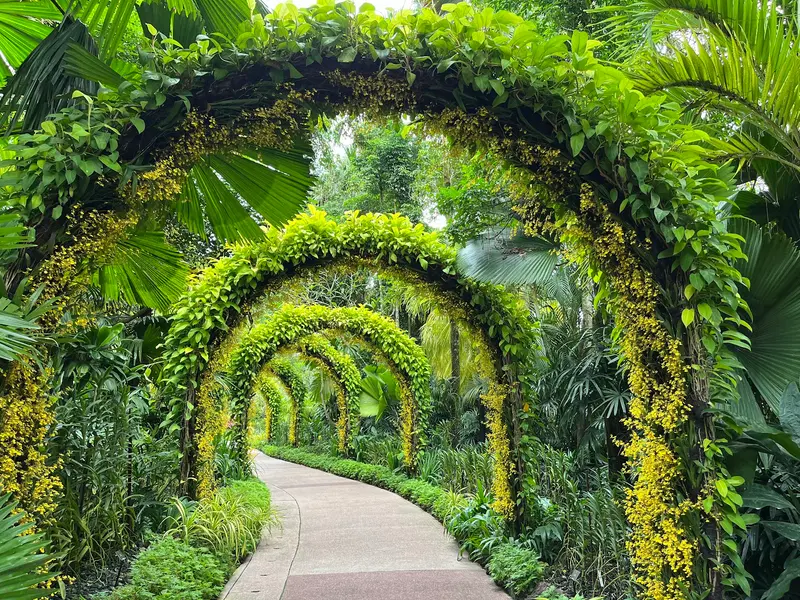
    The Botanic Gardens in the Tanglin district is an approximately 82-hectare park featuring lakes, themed gardens, and the National Orchid Garden.

    by Felix Gillen

    1. Home
    2. Destinations
    3. Singapore
    4. Singapore
    5. Singapore Botanic Gardens
    The Botanic Gardens in the Tanglin district is an approximately 82-hectare park featuring lakes, themed gardens, and the National Orchid Garden. Since July 4, 2015, it has been listed as the first and, to date, only tropical botanical garden on the UNESCO World Heritage list. It was established in 1859 by an Agricultural and Horticultural Society at its current location. Under Director Henry Nicholas Ridley, who took office in 1888, research into rubber cultivation was conducted here; his methods helped Malaya become the world's largest natural rubber producer.The Gardens are freely accessible daily from 5 AM to midnight. You can stroll from Swan Lake at Tanglin Gate across lawns and themed gardens to the National Orchid Garden, which is the only paid-admission area. Two MRT stations are located directly at the entrances: Botanic Gardens in the north and Napier in the south.

    Sights in Singapore Botanic Gardens

    Discover the most important sights and attractions

    National Orchid Garden
    Garden

    1National Orchid Garden

    Opened in 1995, the orchid garden displays more than 1,500 species and 3,000 hybrids, according to NParks, and has been complemented since 2021 by the Tropical Montane Orchidetum. It is the only ticketed area of the Gardens and is open daily from 8:30 AM to 7 PM.
    Open in Google Maps
    Swan Lake
    Park

    2Swan Lake

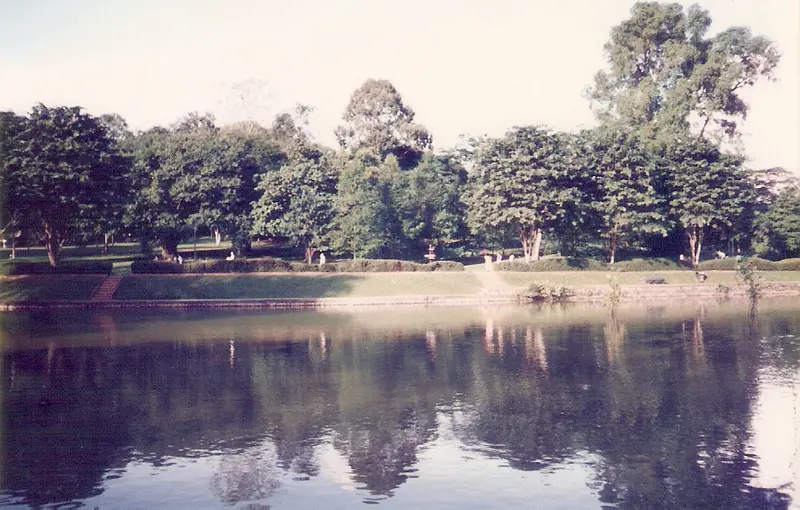
    Laid out in 1866 near Tanglin Gate, the lake is considered Singapore's oldest ornamental lake. Palms on its small island were planted in 1891, according to records.
    Open in Google Maps
    Bandstand
    Point of Interest

    3Bandstand

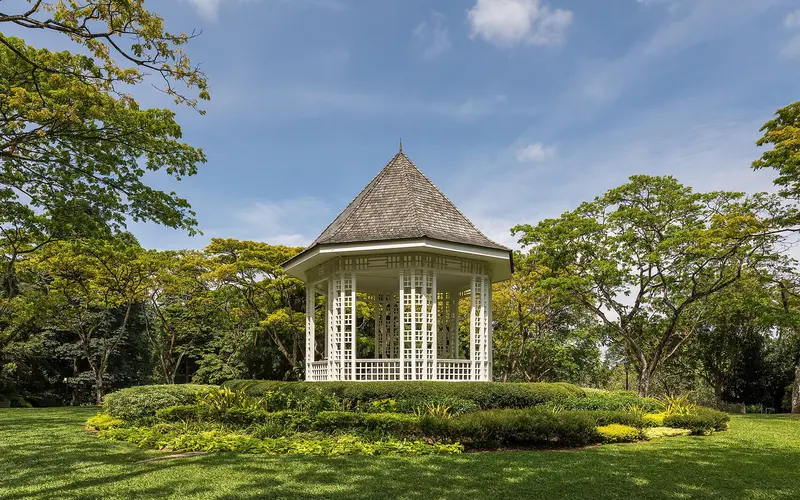
    Music bands played in the pavilion in the 1930s. Today, concerts no longer take place there, but it is one of the garden's most popular photo spots.
    Open in Google Maps
    Jacob Ballas Children's Garden
    Park

    4Jacob Ballas Children's Garden

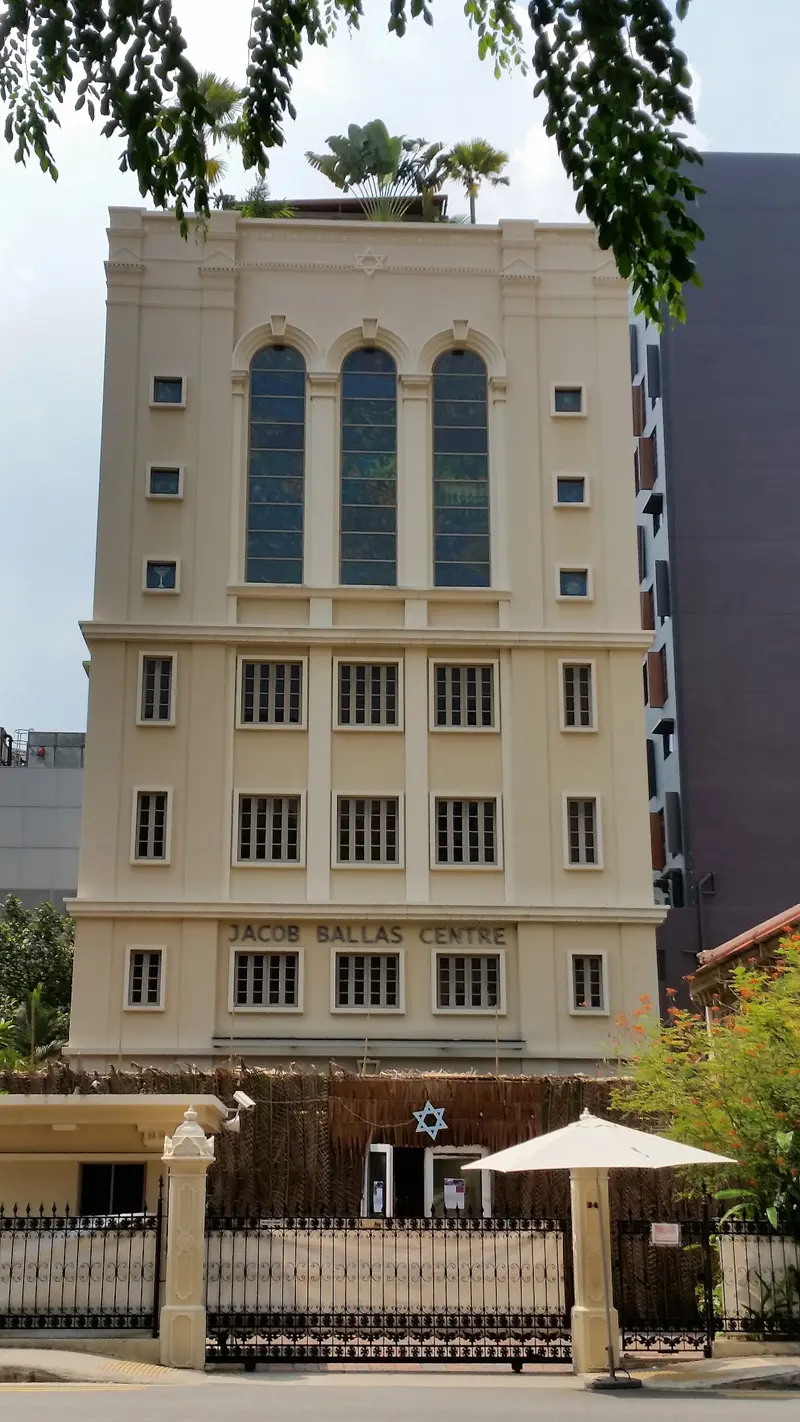
    Opened on October 1, 2007, this is, according to NParks, the first garden in Asia designed specifically for children, aimed at kids up to 14. Entry is free; it is closed on Mondays.
    Open in Google Maps

    Restaurants in Singapore Botanic Gardens

    1

    Tembusu

    The restaurant opened in August 2026 in the former Halia space at Ginger Garden, serving Straits cuisine with Malay and Peranakan influences. The menu includes Otak-Otak Sliders and Nasi Lemak, and it is open daily from 8 AM to 9 PM.
    Show on Google Maps
    2

    Bloomhouse by Little Farms

    Little Farms' all-day restaurant at Ginger Garden, right next to the National Orchid Garden, offers 112 seats in the air-conditioned Palm Alcove and on the Ginger Terrace. It also runs Picnic Basket by Little Farms for takeaway, and it is open daily from 7:30 AM to 8 PM.
    Show on Google Maps
    3

    Park Side by PS.Cafe

    The PS.Cafe Group's cafe near the Visitor Centre at Nassim Gate serves brunch until 4 PM, with items like Hummingbird Pancakes or spiced Fish & Chips. It includes an ice cream kiosk; the terrace is dog-friendly.
    Show on Google Maps

    Rubber, Orchids and World Heritage

    Research Garden of the Colonial EraFrom the start, the garden was more than a park: economic crops were trialled here, above all rubber. Henry Nicholas Ridley developed tapping methods and promoted cultivation among planters. Also from this period is Burkill Hall, an 1886 plantation bungalow that once served as the directors' residence and is named after directors Isaac and Humphrey Burkill.Orchids as a National SymbolOrchid cultivation is closely linked to the garden. According to NParks, the National Orchid Garden has displayed over 1,500 species and 3,000 hybrids since 1995. In 2021, the Tropical Montane Orchidetum was added, featuring cool and mist houses where plants from tropical mountain regions thrive.

    Entrances and Getting There

    The grounds stretch north-south; allow several hours for a tour.MRT Botanic Gardens: Circle Line (CC19) and Downtown Line (DT9), at the Bukit Timah Gate in the north, near the Jacob Ballas Children's Garden.MRT Napier: Thomson-East Coast Line (TE12), at the Tanglin Gate in the south, the main entrance near Swan Lake.Opening Hours: grounds daily 5 AM to midnight, free admission.National Orchid Garden: daily 8:30 AM–7 PM, last entry 6 PM; non-resident adults S$15, children under 12 free.Jacob Ballas Children's Garden: 8 AM–7 PM, closed Mondays (except public holidays).
    Accommodations in Singapore Botanic Gardens

    Find perfect stay in Singapore Botanic Gardens

    Booking.com* (Affiliate link)
    Search Hotels
    Agoda* (Affiliate link)
    Search Hotels
    Airbnb
    Vacation Rentals

    * Affiliate link: if you book through it, we earn a small commission. The price stays the same for you.

    Plan your trip to Singapore Botanic Gardens

    Save places, build a route and plan your city trip, all in one place.

    1. 1
      Sunrise over alpine peaks and a sea of clouds
      1234

      Round trip

      12 days · 4 stops

      Saved

      Pick a route

      Pick a ready-made one or save places and plan your own.

      Open bookmarks
    2. 2

      Trip to Singapore Botanic Gardens

      Live
      • 1National Orchid Garden3 days
      • 2Swan Lake4 days
      • 3Bandstand5 days
      Budget

      Plan your trip

      The planner sorts stops, days and budget. Plan together in real time.

      Start trip planning
    3. 3
      9:41 No signal
      Singapore Botanic Gardens
      Available offline

      Use it on the road

      Download the guide to your phone and use it on site, even offline.

    Nearby

    Orchard Road

    Orchard Road

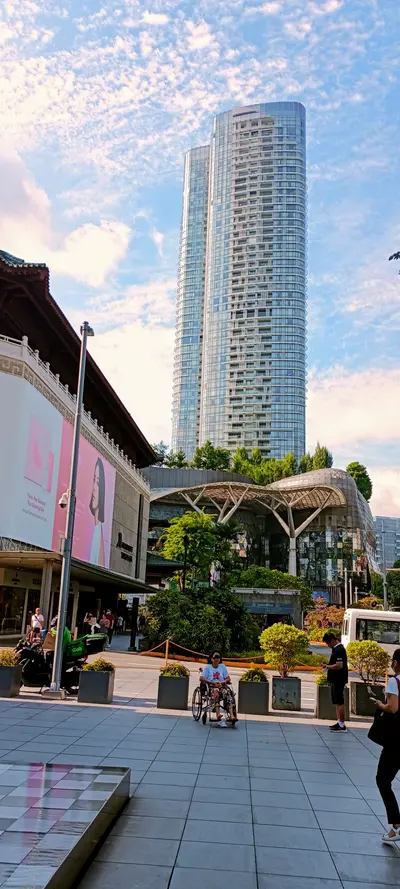
    Orchard Road is Singapore's most famous shopping street, stretching approximately 2.5 kilometers through the city center. You'll come here to shop at malls like ION Orchard and Ngee Ann City, and for the Peranakan terraced houses of Emerald Hill right next door. The street presumably owes its name to the nutmeg, pepper, and fruit plantations that the dirt path led to from the 1830s onwards. After the decline of the plantations, villas and residential buildings emerged, but the major development into a shopping mile only began in the 1960s.Away from the main street, you'll find quieter corners: the terraced houses of Emerald Hill Road, the restored shophouses of Peranakan Place, and at the southeast end, the Istana presidential palace with Istana Park. You can reach the street via several MRT stations, including Orchard, Somerset, and Dhoby Ghaut.
    Tiong Bahru

    Tiong Bahru

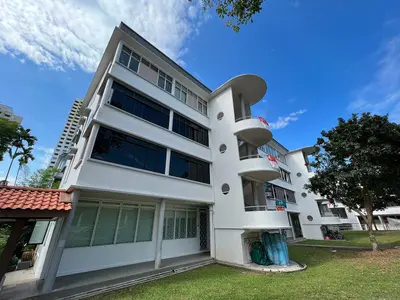
    Tiong Bahru is Singapore's oldest public housing estate, a tranquil neighbourhood of curved 1930s Art Deco blocks southwest of Chinatown. You come for the architecture, the Tiong Bahru Market, home to some of the city's most renowned hawker stalls, and the cafés and bakeries that have set up shop on the ground floors.The name means 'new cemetery', from the Hokkien word 'tiong' for cemetery and the Malay 'bahru' for new. In 1927, the Singapore Improvement Trust (SIT) acquired around 70 acres of land to build the country's first public housing estate here; the first block was ready for occupation in December 1936. Today, 20 pre-war blocks are heritage-listed. Between the blocks, you'll find a Monkey God Temple, murals depicting scenes from old Singapore, and one of the last surviving World War II air raid shelters.
    Singapore

    Singapore

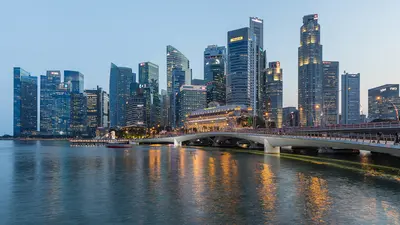
    Singapore is both a city and a state: Across 744.3 square kilometers, colonial buildings, temples, skyscrapers, and rainforests are often just a few MRT stations apart. You come for its districts shaped by Chinese, Malay and Indian communities, its Hawker Centres, and its gardens. According to the statistics authority, approximately 6.1 million people lived in the city-state by mid-2025. In 1819, Stamford Raffles established a British trading post here, and on August 9, 1965, Singapore gained independence after separating from Malaysia. Official languages are English, Malay, Mandarin, and Tamil, and this diversity continues to shape the city's districts today.The city center is divided into clearly distinct quarters: the skyscrapers and gardens of Marina Bay, the colonial buildings and museums in the Civic District, the temples and shophouses of Chinatown, and the spice shops of Little India. Beyond these, highlights include the UNESCO-listed Singapore Botanic Gardens, the Bukit Timah rainforest, and the Hawker Centres in residential areas. The MRT reaches almost all these destinations.
    Little India

    Little India

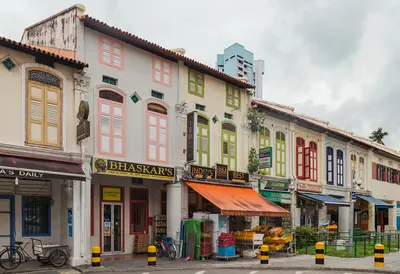
    Little India along Serangoon Road is Singapore's historic Indian quarter. You come for the Hindu temples, the biryani eateries, the Tekka Centre, and the 24-hour Mustafa Centre. It began as a cattle trading district: Indian immigrants, many of them cattle farmers, settled here, and in 1915, the Kandang Kerbau Market, named after the cattle trade, was established. The area was only named Little India in the 1980s at the initiative of the Singapore Tourism Board; in 1989, it was heritage listed. Many Singaporeans still call it Tekka today.Between the temples, eat at the Tekka Centre or Bismillah Biryani on Dunlop Street; afterwards, the Indian Heritage Centre is worth a visit. During Deepavali and Thaipusam, the district becomes a festival ground. The Little India MRT station is located on the North East Line and the Downtown Line.
    Chinatown

    Chinatown

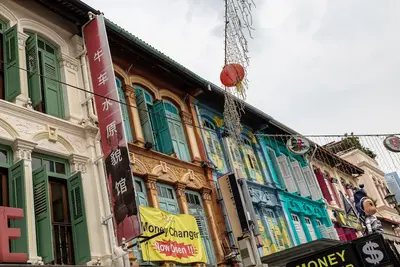
    Chinatown is Singapore's historic Chinese quarter southwest of the Singapore River. You come for its temples of three religions, the restored shophouses, and the Maxwell and Chinatown Complex Hawker Centres. Raffles' 1822 town plan allocated the area to Chinese immigrants; the Chinese name Niu Che Shui, 'Bullock-Cart Water', recalls the water carts that supplied the district in the 19th century. Since 1989, it has been a conservation area; the urban planning authority URA divides it into four districts: Kreta Ayer, Telok Ayer, Tanjong Pagar, and Bukit Pasoh.Standing close together are the Buddha Tooth Relic Temple, the Hindu Sri Mariamman Temple, and the Masjid Jamae Mosque. The district is accessible via Chinatown and Maxwell MRT stations.

    Sources & method

    • Photos: Wikimedia Commons, Google Maps. Each photo carries its credit.
    • Place data such as addresses and ratings comes from Google Maps.
    • The content is based on web research from public, traceable sources. How the content is made · The role of AI