Fernweh: Home
ExploreGuideDestinationsMy tripsMy trip
de|en
All Places & RegionsRound tripsNight trains in EuropeAll highlightsAbout FernwehFAQPrivacy PolicyImprint
Download on the App StoreGet it on Google Play
ExploreGuideDestinationsMy tripsMy trip
    • Neighborhoods & highlights
    • Recommendations
    • Walking tours
    • Eat & drink
    • Culture
    • Getting around
    • Accommodation
    • Plan trip
    • Nearby
    Varanasi

    Vyacheslav Argenberg / Wikimedia Commons / CC BY 4.0, mod.

    India

    Varanasi

    City

    Varanasi, situated on the Ganges in Uttar Pradesh, is the holiest city for Hindus and one of India's most impressive places.

    by Felix Gillen

    1. Home
    2. Destinations
    3. India
    4. Varanasi
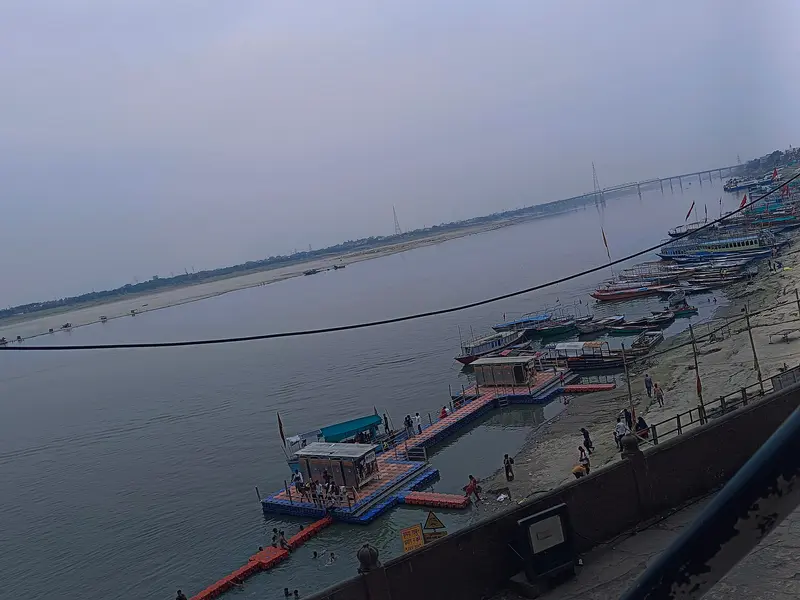
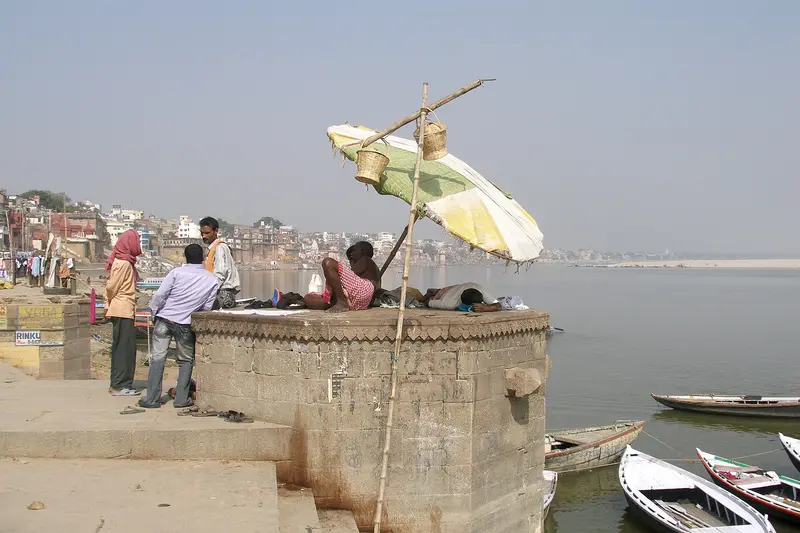
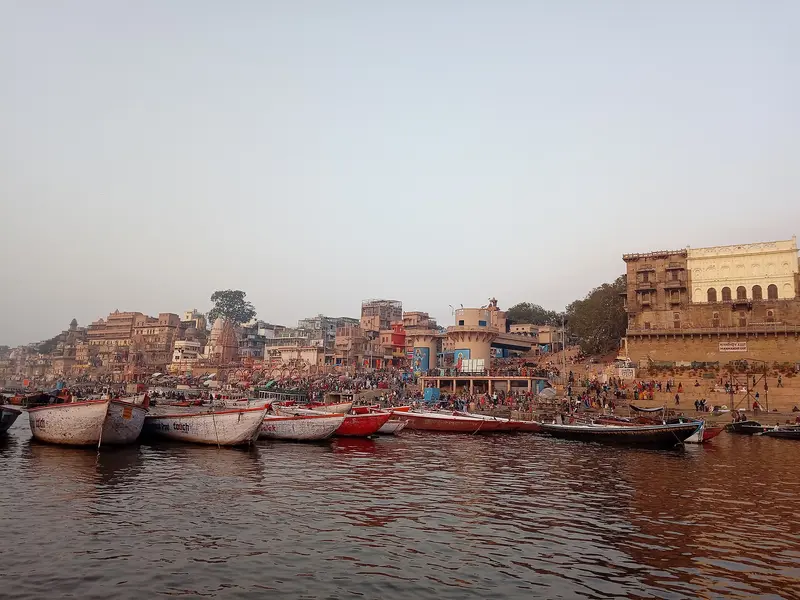
    Varanasi, situated on the Ganges in Uttar Pradesh, is the holiest city for Hindus and one of India's most impressive places. Here, at the ghats – the steps leading to the river – you witness rituals from morning ablutions to cremations as openly as nowhere else.The city boasts 84 ghats, stretching from Assi Ghat in the south to the ghats north of the Malviya Bridge. In the evenings, the Ganga Aarti at Dashashwamedh Ghat attracts hundreds of people, while early mornings see rowboats gliding along the ghats. Behind them lies the old town with its narrow lanes, the Kashi-Vishwanath Temple, and street food stalls selling Kachori and Lassi.Outside the city gates lies Sarnath, where Buddha delivered his first sermon. On the opposite bank of the Ganges stands Ramnagar Fort, once home to the Maharajas of Benares. The best time to visit is October to March. During monsoon season, the river can rise so significantly that many ghats become inaccessible.
    India travel guidePlan a trip with Varanasi

    Contents

    • Neighborhoods & highlights
    • Recommendations
    • Walking tours
    • Eat & drink
    • Culture
    • Getting around
    • Accommodation
    • Nearby

    Sights in Varanasi

    Discover the most important sights and attractions

    Manikarnika Ghat

    Gannu03 / Wikimedia Commons / CC BY-SA 4.0, mod.

    Temple

    1Manikarnika Ghat

    One of the city's oldest ghats, already mentioned in inscriptions from the Gupta era, and the most important cremation ground. The fires burn continuously; according to Hindu belief, those cremated here attain Moksha. Viewing is possible, but photography of the cremations is forbidden and will be prevented on site. Guidance: Maintain respectful distance and do not take photos. Unsolicited 'guides' often demand money for explanations or alleged wood donations. Well visible from a boat.
    Open in Google Maps
    Dashashwamedh Ghat

    Kasyap / Wikimedia Commons / CC BY-SA 4.0, mod.

    Attraction

    2Dashashwamedh Ghat

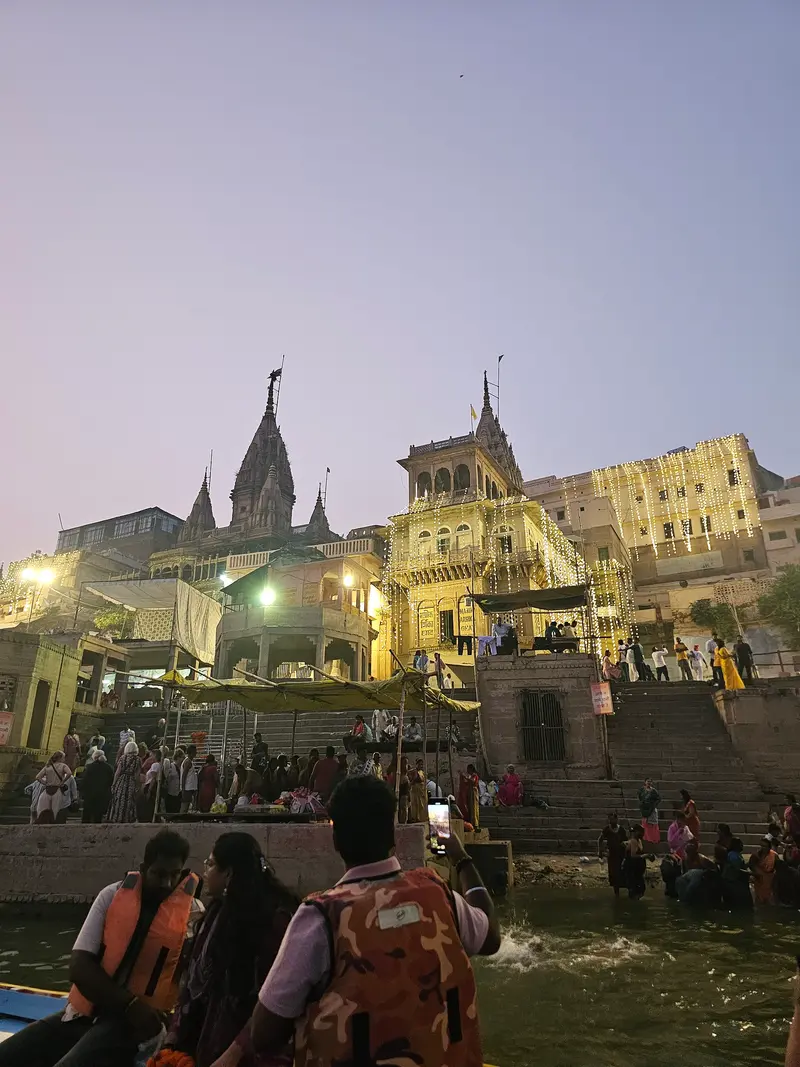
    The city's liveliest Ghat is located near the Kashi Vishwanath Temple; it received its current form in the 18th century under the Marathas. Every evening after sunset, priests, led by the Gangotri Seva Samiti, celebrate the approximately 45-minute Ganga Aarti here with multi-tiered brass lamps, conch shells, and bells. You can watch from the riverbank or from a boat on the river. Practical info: The Ghat is accessible around the clock, the Aarti takes place daily at sunset and is free of charge, the exact start time changes with the season.
    Open in Google Maps
    Assi Ghat

    Sonalyadav1234 / Wikimedia Commons / CC BY-SA 4.0, mod.

    Temple

    3Assi Ghat

    The southernmost and one of the largest Ghats lies where the Assi meets the Ganges. Mornings feature free Subah-e-Banaras (Vedic chants, ragas, yoga); later, nearby BHU students gather at tea stalls. Many boat trips begin here. Practical: Subah-e-Banaras daily before sunrise, lasts 2 hours, free.
    Open in Google Maps
    Ramnagar Fort

    Paramanu Sarkar / Wikimedia Commons / CC BY-SA 4.0, mod.

    Museum

    4Ramnagar Fort

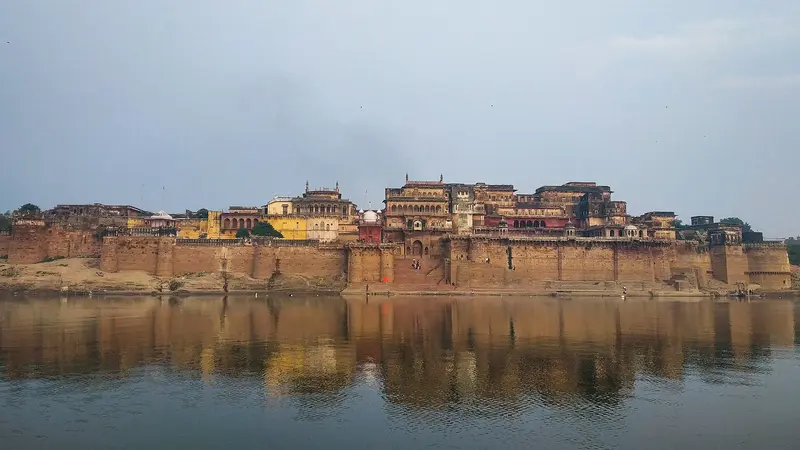
    The sandstone fort on the east bank of the Ganges was built by Maharaja Balwant Singh around 1750; it remains to this day the residence of the family of the former Maharaja of Benares. The museum in the former Durbar Hall showcases vintage cars, palanquins, weapons, and an astronomical clock from 1852. Around Dussehra in October, the fort is the venue for the month-long Ramlila. Practical info: Check opening hours and admission fees on site.
    Open in Google Maps
    Museum

    5Sarnath Museum

    Founded in 1910, the Archaeological Museum in Sarnath displays the Lion Capital of the Ashoka Pillar from the 3rd century BCE, today India's national emblem. Across five galleries, you'll also see a Buddha figure from the Gupta period and Hindu sculptures. Practical Info: Closed on Fridays, opening hours according to sources 9 or 10 AM to 5 PM. Admission costs 5 Rupees according to the museum portal, children under 15 free (as of 11.11.2026).
    Open in Google Maps
    Dhamek Stupa (Sarnath)

    Hardy Explorer / Wikimedia Commons / CC0

    Place of Worship

    6Dhamek Stupa (Sarnath)

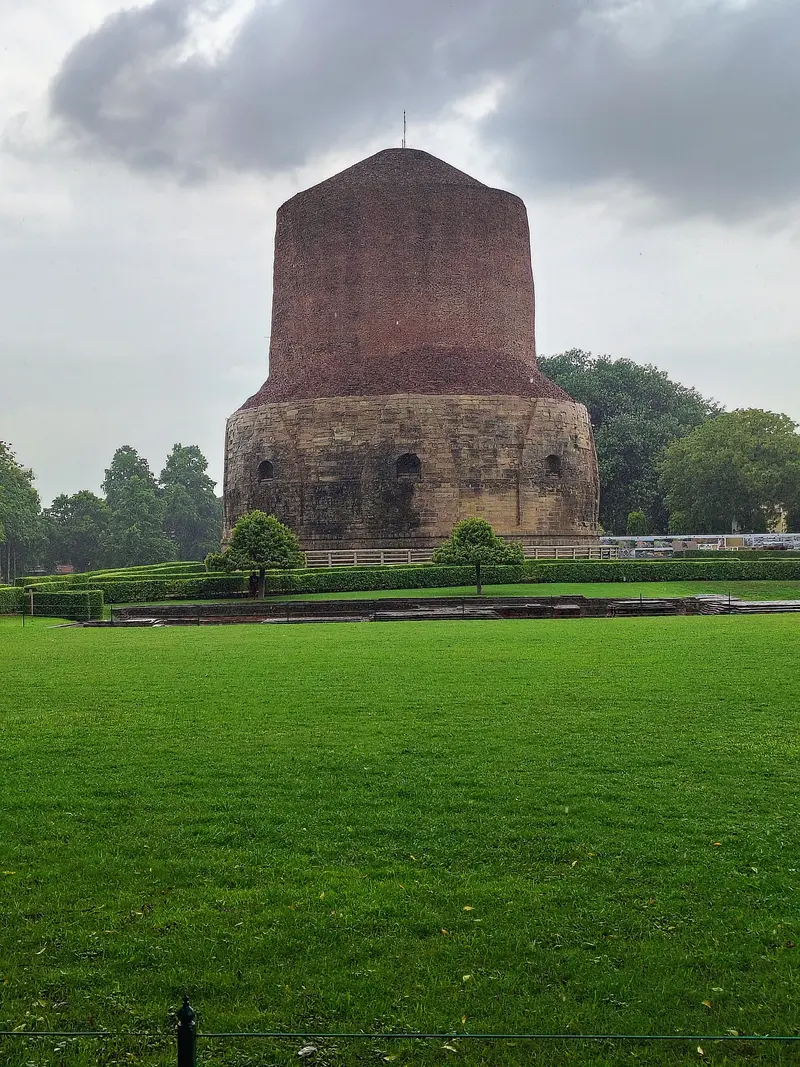
    Sarnath's massive stupa marks where Buddha reportedly delivered his first sermon. Roughly 43m high and 28m in diameter, it received its present form in the Gupta period (5th/6th C.), possibly atop an older Ashokan structure. Around it lie monastery ruins and the Ashoka Pillar's base. Practical Info: Per the Ministry of Culture's museum portal, park entry is 300 rupees for foreigners, 25 for Indians (as of 11/11/2026). Other sources vary; verify price locally.
    Open in Google Maps

    City walks in Varanasi

    Curated walking tours through the city's highlights, handpicked by experienced travel journalists.

    Along the Ghats from Assi to Manikarnika
    Walk along the riverbank from the quiet south, with students and tea stalls, to the burning ghat in the north. It’s best early in the morning or late afternoon, so you arrive for the Aarti at Dashashwamedh Ghat. During monsoon, the path is partly flooded. The route is about 3 kilometers long; with breaks, you should plan 2 to 3 hours.
    Open in Google Maps
    Stops (6)

    Restaurants in Varanasi

    1

    Kashi Chat Bhandar

    Popular chaat spot in Godowlia, famous for Tamatar Chaat, a spicy tomato dish, and other savory snacks.
    Show on Google Maps
    2

    Blue Lassi Shop

    Lassi shop since 1925 in Kachaudi Gali, on the way to Manikarnika Ghat, with around 80 to over 100 varieties, from classic to fruity.
    Show on Google Maps
    3

    Brown Bread Bakery

    Bakery and restaurant in the Old Town near Dashashwamedh Ghat with bread, pastries, pizza, and Tibetan dishes.
    Show on Google Maps
    4

    Ram Bhandar

    Classic breakfast spot in Thatheri Bazar for Kachori with vegetable curry and Jalebi.
    Show on Google Maps

    The City of Shiva

    Sacred to HindusVaranasi, also known as Kashi or Banaras, is considered the city of Shiva. According to Hindu belief, those who die and are cremated here attain Moksha, liberation from the cycle of rebirths. Therefore, pilgrims come from all over India, and many elderly people spend their final years in the city. At Manikarnika Ghat and Harishchandra Ghat, funeral pyres burn around the clock.Temples and ScholarshipThe present Kashi Vishwanath Temple was built in 1780 by Maharani Ahilyabai Holkar, and in 1835 Maharaja Ranjit Singh donated gold for its dome and spire. Since December 2021, the Kashi Vishwanath Dham Corridor has directly connected the temple to the river. Founded in 1916, Banaras Hindu University remains a center for Sanskrit, music, and art.Buddhist HeritageIn Sarnath, after his enlightenment, Buddha delivered his first sermon. Emperor Ashoka erected a pillar here in the 3rd century BCE, whose lion capital is now the State Emblem of India.

    Get there and around

    Getting ThereLal Bahadur Shastri International Airport (VNS) is located approximately 24 to 26 kilometers northwest of the city. Key train stations include Varanasi Junction (BSB), Banaras, and Deen Dayal Upadhyaya Junction. Trains to Delhi take 8 to 13 hours. From the station to the Old City, an auto-rickshaw costs around 200 rupees (Lonely Planet, Sept. 2025).Getting AroundTaxis and auto-rickshaws cannot enter the Old City; you walk. The area around Dashashwamedh Ghat is closed to cars and tuk-tuks from 9 AM to 9 PM. Along the ghats, you walk by the riverbank; it's about 3 kilometers from Assi Ghat to Manikarnika. Negotiate boat fares before boarding.Practical TipsBest Time of Day: Boat ride at sunrise, Ganga Aarti at sunset (approx. 45 minutes).Kashi Vishwanath: Mobile phones, cameras, electronics, and even pens are prohibited inside the temple. Free lockers are available at the temple. Admission is free.Manikarnika Ghat: Do not photograph cremations. Decline any offers that promise a guided tour or photos in exchange for money.During Rain/Monsoon: From July to October, the Ganges rises significantly, making ghats partially flooded and slippery. Museums in Sarnath and at BHU are a better option then.Low Budget/Free: The Ghats, Ganga Aarti, and Subah-e-Banaras at Assi Ghat are free of charge.Other: Monkeys can be intrusive, especially if you are carrying food. Alcohol near the river is frowned upon. For current safety advice, consult the Foreign Office.

    Accommodations in Varanasi

    Find perfect stay in Varanasi

    Booking.com* (Affiliate link)
    Search Hotels
    Agoda* (Affiliate link)
    Search Hotels
    Airbnb
    Vacation Rentals

    * Affiliate link: if you book through it, we earn a small commission. The price stays the same for you.

    Plan your trip to Varanasi

    Save places, build a route and plan your city trip, all in one place.

    1. 1
      Sunrise over alpine peaks and a sea of clouds
      1234

      Round trip

      12 days · 4 stops

      Saved

      Pick a route

      Pick a ready-made one or save places and plan your own.

      Open bookmarks
    2. 2

      Trip to Varanasi

      Live
      • 1Manikarnika Ghat3 days
      • 2Dashashwamedh Ghat4 days
      • 3Assi Ghat5 days
      Budget

      Plan your trip

      The planner sorts stops, days and budget. Plan together in real time.

      Start trip planning
    3. 3
      9:41 No signal
      Varanasi
      Available offline

      Vyacheslav Argenberg / Wikimedia Commons / CC BY 4.0, mod.

      Use it on the road

      Download the guide to your phone and use it on site, even offline.

    Nearby

    Khajuraho

    Khajuraho

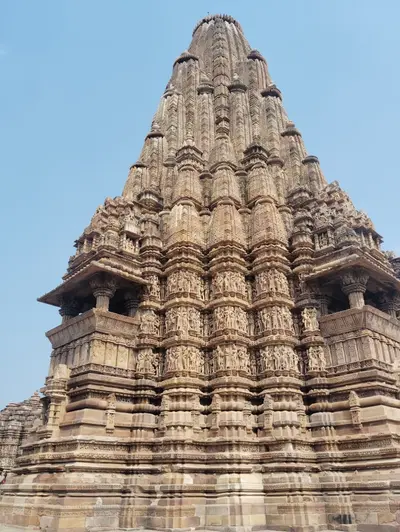
    Khajuraho, in northern Madhya Pradesh, is a small town home to one of India's most significant temple complexes. The temples of the Chandela dynasty, dating from the 10th and 11th centuries, have been on the UNESCO World Heritage List since 1986 and are famous for their intricate sculptural ornamentation.Of the original approximately 85 temples, just over 20 remain. They are divided into three groups: The Western Group, featuring the Kandariya Mahadeva Temple, is the most important; the Eastern Group comprises several Jain temples; and the Southern Group is somewhat secluded amidst fields. The erotic figures are well-known, but they constitute only a small portion of the reliefs, which primarily depict gods, dancers, musicians, and scenes of daily life.The town is manageable and can be explored by bicycle or rickshaw. One to two days are sufficient for the temples and the museum. The best time to visit is November to March; in February, the Khajuraho Dance Festival takes place against the backdrop of the temples.

    Imakanksha·CC BY-SA 4.0

    Agra

    Agra

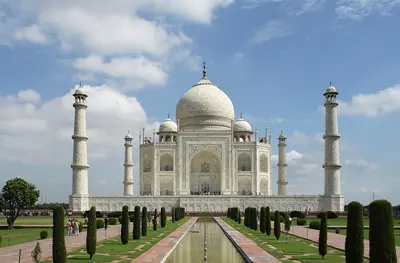
    Agra, in the state of Uttar Pradesh, around 200 kilometers southeast of Delhi, is the city of the Taj Mahal. Besides the famous tomb, attractions include the Agra Fort, the delicate Tomb of Itimad-ud-Daulah, and Akbar's Mausoleum in Sikandra, plus Fatehpur Sikri as a day trip. Agra was the capital of the Mughals before Delhi. Akbar built his fortress here between 1565 and 1573, and his grandson Shah Jahan had the Taj Mahal built starting in 1632 for his deceased wife Mumtaz Mahal. Many monuments are located on the banks of the Yamuna and can be easily combined in one day. Agra is a feasible day trip from Delhi by express train, but an overnight stay is worthwhile for the sunrise at the Taj. Note: The Taj Mahal is closed on Fridays.

    Yann; edited by Jim Carter·CC BY-SA 4.0

    Darjeeling

    Darjeeling

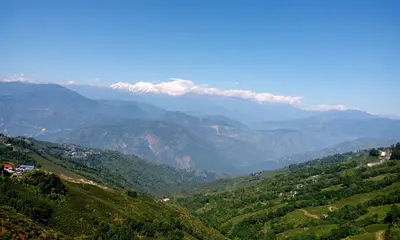
    Darjeeling is a former British hill station in the far north of West Bengal, situated on a Himalayan ridge. You come here for the tea, the historic narrow-gauge railway, and the views of Kangchendzönga.The Darjeeling Himalayan Railway, a UNESCO World Heritage site since 1999, winds its way up from the plains near Siliguri to the town. Early in the morning, visitors flock to Tiger Hill to witness the sunrise over the peaks.In and around the town, attractions include tea gardens like Happy Valley, the Himalayan Mountaineering Institute, a zoo specializing in Himalayan species, and Buddhist monasteries such as Ghoom Monastery.

    Souviknshm·CC BY-SA 4.0

    Fatehpur Sikri

    Fatehpur Sikri

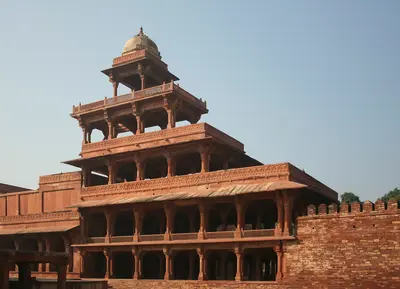
    Fatehpur Sikri, 36 to 40 kilometers west of Agra in Uttar Pradesh, is the abandoned planned city of the Mughal Emperor Akbar. The red sandstone palaces, courtyards, and grand mosque are among India's most impressive Mughal structures and have been a UNESCO World Heritage site since 1986. Akbar had the "City of Victory" built starting in 1571 on a ridge, in honor of the Sufi saint Salim Chishti. It served as capital for only about ten years; in 1585, the court moved to Lahore. The architecture combines Persian, Hindu, and Jain forms. Allow at least half a day. The complex consists of the Mosque Quarter, with Buland Darwaza and Salim Chishti's tomb (freely accessible), and the ticketed Palace Quarter.

    Diego Delso·CC BY-SA 4.0

    Ranthambore

    Ranthambore

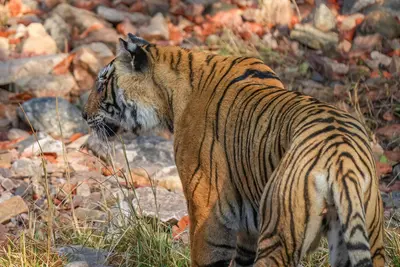
    Ranthambore National Park, near Sawai Madhopur in eastern Rajasthan, is one of India's most renowned locations for spotting tigers in the wild. Its dry forests shelter lakes, ruins, and Ranthambore Fort, which is a UNESCO World Heritage site.The protected area began as the Sawai Madhopur Game Sanctuary in 1955, became part of Project Tiger in the 1970s, and was designated a national park in 1980. Including the adjoining Kailadevi and Sawai Man Singh sanctuaries, it covers approximately 1,334 square kilometres, with the core zone spanning about 275 square kilometres.Make sure to plan more than one safari to increase your chances of a tiger encounter, and allocate an additional half-day for the fort.

    Giles Laurent·CC BY-SA 4.0

    Your next steps

    Varanasi is in India. Ways to carry on from here.

    • More in India

      Highlights, areas, routes and the best time to travel for all of India.

      India travel guide

    Sources & method

    • Photos: Wikimedia Commons, Pexels. Each photo carries its credit.
    • Place data such as addresses and ratings comes from Google Maps.
    • The content is based on web research from public, traceable sources. How the content is made · The role of AI